TL;DR

Turn quiet afternoons into listening time
- Thousands of audiobooks, podcasts and originals
- Listen on your phone, tablet or Echo — also offline
- Cancel anytime
Easy-open containers are designed to reduce effort and improve accessibility for everyday storage. They balance ease of use with sealing quality, helping everyone keep food, medicines, and household items handy and safe. Knowing what to look for makes choosing simple and smart.
Imagine reaching into your kitchen or pantry and effortlessly grabbing a container, one that opens with a gentle press or lift, not a struggle. That’s the promise of easy-open containers. They’re not just about convenience — they’re about reclaiming independence and reducing frustration in everyday chores.
Whether it’s a jam jar, a medicine bottle, or a storage bin, the right design can make a world of difference. This guide cuts through the clutter, showing you what features matter most, how to spot the best options, and how these simple tools can make your daily life easier and safer.
Look for large, textured tabs or push-buttons when choosing easy-open containers.
Test opening mechanisms with damp or weak hands before buying or using.
Choose wide-mouth containers for easier filling, cleaning, and access.
Materials matter: plastic is lighter, glass resists odors, but weigh your needs.
Always verify if a container is truly leakproof before storing liquids or transporting.
Easy-Open Containers for Everyday Storage
Storage should protect what is inside without turning access into a test of strength. The best easy-open containers balance a low-effort mechanism, a dependable seal, comfortable handling, and simple cleaning—helping more people manage food, medicine, and household essentials independently.
What makes a container truly easy to open?
Accessible design reduces tight pinching, strong gripping, and wrist twisting. Look for obvious controls, useful leverage, tactile feedback, and a closure that works predictably every time.
Large, textured controls
Broad tabs, ridged lids, and soft-touch surfaces create more contact area, helping weak or damp hands maintain a secure grip.
Push or flip action
Buttons and hinged lids replace sustained twisting with a short, intuitive movement that can often be performed one-handed.
Wide opening
A generous mouth reduces awkward reaching, supports larger utensils, and makes corners and seals easier to clean.
Clear confirmation
An audible click, raised indicator, or contrasting marker reassures the user that the container is fully open or securely closed.
Stable shape
Broad bases and oversized handles improve control when a container is full, reducing slips, drops, and unnecessary strain.
Simple construction
Fewer crevices and removable gaskets make cleaning easier while replaceable lids and seals extend useful life.
The seal-strength balancing act
A stronger seal can preserve freshness and resist spills, but it may demand more force. Choose the lowest-effort closure that still provides the protection your specific task requires.
Well-designed mechanisms can sharply reduce effort.
The illustrative comparison below shows the reported potential: easy-open design may require only 40% of the force associated with a conventional closure.
Which opening design fits the task?
No mechanism wins every category. Compare how the closure behaves during opening, storage, transport, and repeated use—not merely how it looks on the shelf.
| Feature | Best for | Opening ease | Seal potential | Watch for |
|---|---|---|---|---|
| Large textured tabs | Weak grip, arthritis, general food storage | Secure contact and useful leverage | Can support robust seals | Texture may trap residue or wear |
| Push-button lids | One-handed access and pantry staples | Minimal grip and twisting | Varies by button and gasket | Accidental activation on weak designs |
| Hinged flip-tops | Snacks, dry goods, frequent access | Fast thumb or finger action | Often better for dry contents | Hinge fatigue and incomplete closure |
| Oversized handles | Large bins and reduced hand strength | More control and leverage | Compatible with strong latches | Extra bulk may limit stacking |
| Flexible pull seals | Lightweight storage and simple access | Easy if the tab is large enough | Good contact around the rim | Small tabs still require pinching |
✓ Strong fit ~ Depends on execution ✗ Common limitation
Choose for the user, contents, and routine.
“Easy-open” is not a standardized performance claim across consumer storage. The safest evaluation is a short hands-on test using the container exactly as it will be used at home.
What goes inside?
Food, medicine, crafts, pet supplies, or household goods.
Can you open it?
Test grip, force, wrist movement, and one-handed control.
What seal is needed?
Match freshness, moisture, odor, pest, and spill protection.
Can it stay clean?
Check gasket removal, dishwasher guidance, and replacement parts.
Plastic
Light, affordable, and less breakable. It may scratch, stain, or retain odors over time.
Glass
Resists stains and odors but becomes heavy when full and can break if dropped.
Silicone
Lightweight and adaptable, with collapsible options. Soft walls may be harder to carry when full.
Stainless steel
Strong and odor resistant, though opaque walls make the contents harder to identify.
What better containers are doing now
Universal design is moving storage beyond basic convenience. Emerging systems pair low-force access with clearer feedback, coordinated organization, repairable parts, and more considered material use.
One-touch closure
Large buttons and hinged lids enable fast access without tight pinching or sustained twisting.
Visible feedback
Contrasting markers, raised indicators, and audible clicks confirm that the seal is secure.
Modular systems
Coordinated dimensions, interchangeable lids, stacking, and nesting make storage easier to manage.
Replaceable parts
New lids, gaskets, and latches extend container life while reducing unnecessary disposal.
Smarter food storage
Vented microwave lids and date-tracking features support safer heating and leftover management.
Reduced material impact
Recycled and reduced-plastic designs are increasing, though environmental claims still need scrutiny.
Airtight is not the same as leakproof. Microwave-safe does not mean a lid should stay fully closed during heating, and freezer-safe containers still need expansion room. Always follow the product’s specific instructions.
What Makes a Container Truly Easy to Open?
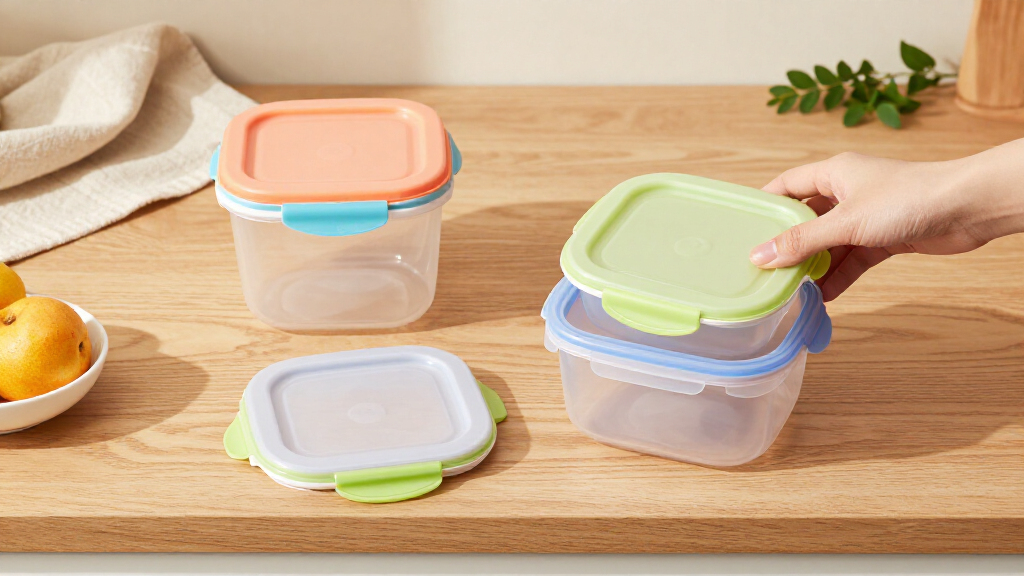
The secret to an easy-open container is a design that minimizes the effort needed to access its contents. Think large, textured tabs, push-buttons, or flip-top lids that don’t require tight pinching or twisting. These features are important because they directly impact how accessible and manageable the container is, especially for those with limited hand strength or dexterity. For example, a jam jar with a wide, ridged lid provides a better grip, reducing the force needed to twist open, which is crucial for people with arthritis. Similarly, push-button lids eliminate the need for gripping and twisting altogether, making the process almost effortless. Choosing designs that operate with one-handed ease is essential because it allows for quick, fuss-free access, even when your other hand is busy or weak. This is particularly important in situations where multitasking or limited mobility makes complex opening mechanisms impractical. The key takeaway is that these features not only make opening easier but also promote independence and safety by reducing the risk of slips, drops, or strain.
As an affiliate, we earn on qualifying purchases.
How to Pick the Best Easy-Open Containers for Your Needs
Choosing the right container involves understanding your specific needs, physical abilities, and the tasks you want to accomplish. This process is crucial because a container that’s easy to open in theory might still be challenging in practice if it doesn’t match your strength or routine. First, identify what you’ll store—food, medicines, craft supplies, or household items—as each has different requirements for sealing, size, and durability. Next, test the opening mechanism with your own hands, ideally in conditions similar to everyday use, such as with damp or weak grip. This helps you assess if it truly feels manageable and avoids frustration later. Consider the seal—an airtight seal is vital for freshness or spill prevention but can sometimes require more force to open; balancing sealing effectiveness with ease of access is key. The size and shape also matter: wide-mouth containers make filling, cleaning, and retrieving contents easier, reducing the need for awkward maneuvers. Materials influence usability and safety; lightweight plastics are easier to handle, but glass offers better odor and stain resistance. Finally, think about safety features like child-resistant locks if needed, but remember that these can sometimes conflict with ease of access. By carefully evaluating these factors, you can select containers that fit your abilities and lifestyle, making daily routines smoother and less stressful.
As an affiliate, we earn on qualifying purchases.
Comparison Table: Which Design Features Make a Difference?
| Feature | Best For | Advantages | Limitations |
|---|---|---|---|
| Large, textured tabs | People with weak grip or arthritis | Facilitates a secure grip, reducing the effort required to open, which is critical for those with limited hand strength or dexterity. The tactile feedback helps confirm successful opening, reducing frustration and the risk of spills. | May wear out faster with heavy or frequent use, requiring eventual replacement. Over time, textured surfaces can accumulate dirt or debris if not maintained properly, potentially affecting grip quality. |
| Push-button lids | One-handed operation, quick access | Require minimal force, often just a gentle press, which is ideal for users with limited strength. They provide clear feedback when activated, helping users confirm the lid is open or sealed. | Can be less secure if not well-designed, potentially opening unintentionally if pressed accidentally or if the button is too sensitive. Some models may not be completely leakproof if the sealing mechanism isn’t robust. |
| Hinged flip-top lids | Snacking, quick access | Operate with a simple flip of the thumb or finger, making them very convenient for quick access. They often allow for single-handed use, which is especially helpful in busy situations or when multitasking. | Sometimes less airtight, which can lead to spills or spoilage if not properly sealed. Over time, hinges may wear out or break, reducing reliability. |
| Oversized handles or grips | People with limited hand strength | Designed to provide enhanced control and leverage, reducing the force needed to open or close. They can significantly improve independence for users with arthritis or weak grip strength. | May add bulk to the container, making it less space-efficient in storage. Larger handles can sometimes interfere with stacking or nesting, especially in tight spaces. |
As an affiliate, we earn on qualifying purchases.
Design Trends Making Easy-Open Containers Even Better
Recent trends focus on creating products that anyone can use comfortably. One-touch closures with push-buttons or hinged lids are becoming common, especially in kitchen and medicine storage. These features not only simplify opening but also enhance safety by reducing the need for force or complex mechanisms, which can be challenging for users with limited strength or dexterity. For example, a new line of containers features a large, soft-touch button that clicks satisfyingly when sealed, providing both tactile and auditory feedback, which reassures users that the lid is secure. Modular systems are also gaining popularity because they allow users to stack and nest containers of different sizes, saving space and reducing clutter—important for those with limited storage options or mobility issues. Additionally, many designs now incorporate visual cues like contrasting colors, raised indicators, or textured surfaces to help users see and feel if the lid is properly closed, reducing accidental spills or spoilage. Eco-conscious options utilizing recycled plastics and replaceable parts are also on the rise, emphasizing sustainability without sacrificing functionality. These innovations collectively make containers more accessible, safer, and environmentally friendly, aligning with the needs of diverse users and lifestyles.
As an affiliate, we earn on qualifying purchases.
Key Points You Must Know About Easy-Open Storage
Here’s what every user should keep in mind: Not all “easy-open” claims are equal. Manufacturers may advertise features like large tabs or push-buttons, but the actual ease of use depends on factors like the force required, grip size, and tactile feedback. Always verify these features in real-world conditions, such as with damp or weak hands, to ensure they meet your needs. Additionally, an airtight seal doesn’t automatically mean the container is leakproof—testing is essential, especially if you plan to store liquids or transport items. Materials are another critical aspect; glass resists stains and odors but can break if dropped, while plastic is lighter and less fragile but may stain or degrade over time. Always check product labels for microwave, dishwasher, and freezer compatibility to ensure the container suits your routine. Importantly, an easy-to-open container isn’t necessarily child-resistant, so if safety is a concern, look for specific child-resistant features, understanding that these can sometimes conflict with ease of access. Making informed choices helps you select containers that are both practical and safe, ensuring they serve your needs effectively over time.
Conclusion
In the end, a simple change like switching to easy-open containers can turn everyday chores into moments of independence and ease. Think about your routine — which tasks could be smoother with a touch of clever design?
Imagine a kitchen where every lid opens effortlessly, every jar, bottle, and box within arm’s reach, waiting for you. That’s the comfort of choosing containers designed with your hands and your life in mind.
Cold & flu season Picks
humidifiers
As an affiliate, we earn on qualifying purchases.