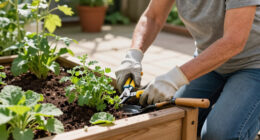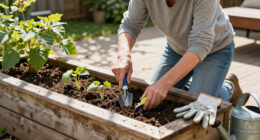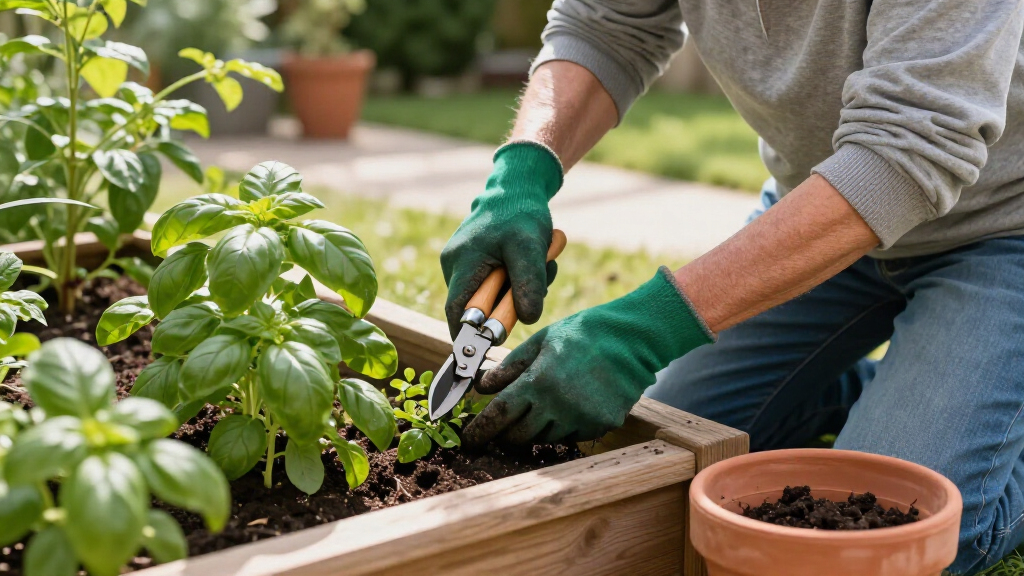
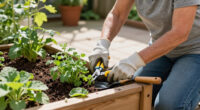
For older gardeners, the practical choice is often between ergonomic, long-handled tools and standard lightweight tools—not between gardening and giving it up. The difference is how much each tool asks of your body: longer handles and adapted grips can reduce bending or awkward wrist positions, while simpler lightweight tools tend to cost less and feel familiar. That difference matters most if kneeling, gripping, or reaching has become uncomfortable.

Get comfort and care essentials delivered free — and shop member deals
- Fast, free delivery on millions of items
- Access to Prime Big Deal Days deals on October 6–7
- Prime Video, Amazon Music and more included

Grampa’s Weeder Stand-Up Weed Puller with Bamboo Handle
- ✔ Tool type: Stand-up weed puller
- ✔ Handle length: 45 inches
- ✔ Handle material: Bamboo

VEVOR Heavy-Duty Folding Garden Kneeler and Seat
- ✔ Product type: Folding garden kneeler and seat
- ✔ Maximum weight capacity: 330 pounds
- ✔ Weight: 6.06 pounds (2.75 kg)

2-in-1 Garden Hoe and Weed Puller Rake with Adjustable 61-Inch Handle
- ✔ Tool type: 2-in-1 garden hoe and weed-puller rake
- ✔ Rake width: 3.75 inches
- ✔ Handle length: Adjustable up to 61 inches
Neither category is automatically better for every garden. Long handles can spare your back but may feel bulky in raised beds or tight spaces; lightweight standard tools can be easier to lift but may require more bending and repetitive effort. This comparison looks at reach, grip, weight, control, versatility, storage, and value. Choose ergonomic tools if reducing strain is worth paying extra for, and choose standard lightweight tools if you have good mobility and want affordable, uncomplicated equipment.
At a Glance
| Criteria | Ergonomic, long-handled gardening tools | Standard lightweight gardening tools | Winner |
|---|---|---|---|
| Reach and bending | Long handles help reach ground-level plants and reduce bending for suitable tasks. | Short handles usually mean bending or kneeling for work near the ground. | A |
| Grip and joint comfort | Shaped, padded, or enlarged grips may feel easier to hold; designs vary by tool. | Simple grips may suit users with comfortable hands but can be demanding with arthritis or weak grip. | A |
| Weight and handling | Can be heavier or longer than a basic hand tool, especially when made for leverage. | Lightweight versions are easy to lift and carry, though light construction may offer less leverage. | B |
| Control in tight spaces | Extra length can make precise work among dense plants more awkward. | Short tools are easier to maneuver around pots, containers, and close planting. | B |
| Task versatility | Useful for weeding, cultivating, and other tasks where extra reach helps. | Basic tools cover routine jobs, but may require more physical effort for difficult tasks. | Depends |
| Price and value | Usually costs more; added expense pays off most when it reduces recurring discomfort. | Typically the lower-cost choice and often good value for occasional gardening. | B |
| Storage and transport | Long shafts take more room and may be harder to carry around a small garden. | Compact tools are easier to store, transport, and keep close at hand. | B |
Grampa’s Weeder Stand-Up Weed Puller with Bamboo Handle
When the main obstacle is bending over to pull weeds, Grampa’s Weeder has the clearest purpose in this lineup. Its four-claw steel head is designed to grip weeds and roots, while the 45-inch bamboo handle lets us work from a standing position. That targeted design makes it a more direct answer to a sore back or difficulty kneeling than the VEVOR, which adds cushioning only once we are already working close to the ground.The tool’s usefulness depends on what is underfoot. The supplied description says it works best in softer soil, particularly after rain or watering, so it is a sensible choice for prepared garden beds rather than compacted clay or rocky ground. Compared with the adjustable hoe-and-rake, it focuses on extracting weeds rather than loosening soil or performing multiple tasks. That narrower role is a strength when weeds are the priority, but a limitation if we want one tool for broader bed maintenance.The 45-inch handle and no-chemical approach suit gardeners who want to pull roots while staying upright. Its lifetime guarantee is also a notable stated assurance, though it does not resolve the soil-condition limitation. We should skip it if our beds are consistently hard, stony, or difficult to penetrate, or if we need to cultivate soil as well as weed. Within this group, it earns the top spot because it addresses bending directly and simply—provided the garden conditions match the tool.
Pros:
- 45-inch handle supports weed removal without bending down to the plant.
- Four-claw steel head is designed to pull weeds and roots.
- Uses mechanical removal rather than chemicals.
- Includes a stated lifetime guarantee.
Cons:
- May be less effective in hard clay or rocky soil.
- Its specialized design does not replace a hoe or rake for broader soil work.
Best for: Gardeners who want to remove individual weeds and roots while standing, especially in softer soil that can be watered before use.
Not ideal for: People working mostly in hard clay or rocky ground, or those who need a multi-purpose tool for cultivating and loosening soil.
Bottom line: We rank it first for seniors whose main gardening challenge is bending to pull weeds, as long as the soil is not too hard or rocky.
“We rank it first for seniors whose main gardening challenge is bending to pull weeds, as long as the soil is not too hard or rocky.”
VEVOR Heavy-Duty Folding Garden Kneeler and Seat
Some gardeners prefer to work close to the soil but need help making that position more comfortable. The VEVOR kneeler and seat is our pick for that use: it converts between a kneeling surface and a seat, with an 18 mm EVA foam cushion and side handles. Those handles can provide support when getting up or changing position, while the Grampa’s Weeder takes a different route by helping users avoid kneeling for weed removal altogether.Its folding frame and two attached tool bags make it easier to keep supplies nearby and put the unit away between sessions. The stated 330-pound maximum capacity and steel frame describe its intended support, but they do not tell us whether the height or hand placement will feel comfortable for every user. We should check that the kneeler’s low working position suits our balance and mobility before choosing it: moving from standing to kneeling, even with side handles, may still be difficult for some people.Compared with the adjustable hoe-and-rake, this is not a soil-working tool; it is a comfort aid that supports tasks done near the ground. Its versatility comes from switching between seat and kneeler, rather than performing multiple gardening jobs. We would choose it over the stand-up weeder when the priority is cushioning and stable support at the planting bed, but skip it if getting down and back up is the biggest concern. It ranks second because its comfort features are substantial, yet they do not remove the need to adopt a ground-level position.
Pros:
- Converts between a kneeler and a garden seat.
- 18 mm EVA foam cushion helps soften contact with the ground.
- Side handles provide support when changing position.
- Folds for storage and includes two tool bags.
Cons:
- Still requires getting close to the ground, which may not suit every user.
- Does not remove weeds or loosen soil by itself.
- Designed primarily for gardening and similar tasks.
Best for: Gardeners who can safely kneel or sit near the ground and want a cushioned surface, side handles, and nearby storage for tools.
Not ideal for: People who cannot comfortably get down to a low position or rise from it, or anyone looking primarily for a weed-removal or soil-cultivation tool.
Bottom line: We recommend it for gardeners who can work at ground level but want cushioning, a seat option, and handles for added support.
“We recommend it for gardeners who can work at ground level but want cushioning, a seat option, and handles for added support.”
2-in-1 Garden Hoe and Weed Puller Rake with Adjustable 61-Inch Handle
For gardeners who want to loosen soil and tackle weeds without switching between separate hand tools, this 2-in-1 hoe and rake offers the broadest task coverage. Its 3.75-inch rake and trapezoid hoe are designed for soil loosening and weed removal, while the four-section handle adjusts up to 61 inches. That reach may help reduce bending compared with short-handled tools, and the adjustable sections allow close-up use when needed. Unlike the Grampa’s Weeder, it does not specialize in pulling a weed from its roots with a claw head.The tempered spring-steel head, corrosion-resistant finish, and stainless-steel fasteners are stated construction details that speak to weather resistance and intended durability. But the long handle is not automatically easier for everyone: controlling a tool at full extension can take grip, shoulder movement, and coordination. We should use its adjustability to find a manageable length rather than assuming the maximum reach will be most comfortable. Also, the product information does not provide hands-on performance details, so we cannot establish how easily it cuts through different soil types.Compared with the VEVOR, this pick helps us stay more upright while working but offers no cushion or support for seated planting. We would choose it for light, varied soil tasks and adjustable reach, especially where a rake and hoe are both useful. It ranks third because its versatility is appealing, yet its physical demands and lack of performance information make it a less direct solution for seniors than a dedicated stand-up weed puller or a supportive kneeler. Skip it if you need a tool that specifically avoids forceful soil work or provides a stable seat.
Pros:
- Combines a rake and trapezoid hoe for two types of soil work.
- Handle adjusts up to 61 inches for standing or closer work.
- Tempered spring-steel head is designed to resist bending or snapping.
- Weather-resistant finish and stainless-steel fasteners are specified.
Cons:
- Long reach may require more control and upper-body effort than a shorter tool.
- Does not offer the kneeling support of the VEVOR or the specialized claws of the Grampa’s Weeder.
- No customer reviews or hands-on performance details are provided in the supplied information.
Best for: Gardeners who want adjustable reach for loosening soil and managing weeds with one tool, and who can comfortably guide a long-handled implement.
Not ideal for: People seeking a dedicated claw-style root puller, a cushioned work position, or a tool with documented performance across varied soil conditions.
Bottom line: We would choose it for adjustable reach and two-in-one soil work, not as the simplest option for users who need targeted weed extraction or physical support.
“We would choose it for adjustable reach and two-in-one soil work, not as the simplest option for users who need targeted weed extraction or physical support.”
As an Amazon Associate we earn from qualifying purchases.
Key Differences
The most consequential difference is posture. A long-handled tool can let you weed, loosen soil, or reach a plant without leaning as far forward. For someone who finds bending painful or tiring, that can make a short garden session more manageable. The benefit is not universal: long tools are less useful inside crowded beds, and they do not remove the need to bend for every job. Ergonomic designs also vary, so a comfortable grip on one tool does not guarantee every item in a matching set will suit your hands.
Standard lightweight tools win on simplicity, price, and maneuverability. A small trowel or hand fork is easy to carry, store, and guide around containers. But working with a short handle can mean more bending, kneeling, and repeated gripping. The sensible choice is often a small, task-based mix rather than a full set: buy longer or adapted tools for the movements that cause strain, and keep compact tools for close, precise jobs. If pain or balance problems affect safe tool use, ask a clinician or occupational therapist about suitable adaptations.
Detailed Comparison
Reach and bending (Ergonomic, long-handled gardening tools wins — major)
Ergonomic long-handled tools win; the gap is major for gardeners who struggle to bend. A longer shaft can bring the working end closer while you stand or sit, especially for light weeding and surface cultivation. That may reduce time spent crouching and make routine work less tiring. Standard lightweight tools usually have short handles, so ground-level jobs can involve repeated leaning or kneeling. The advantage depends on the task: planting a small seedling still often calls for close, hand-level work, and a long handle cannot make every garden job upright.
Grip and joint comfort (Ergonomic, long-handled gardening tools wins — moderate)
Ergonomic tools usually win; the gap is moderate and depends on the actual grip. A larger, contoured, or padded handle may be easier to hold than a narrow straight one, particularly for users with stiff fingers or reduced grip strength. Some designs also angle the wrist more naturally. Standard tools may be perfectly comfortable for someone with healthy hands, and lightweight construction can help reduce fatigue. Check the handle size and shape in person when possible: padding alone does not guarantee a secure grip, especially if hands are weak or slippery.
Weight and handling (Standard lightweight gardening tools wins — moderate)
Standard lightweight tools win for easy lifting; the gap is moderate. A short, light tool is straightforward to pick up, carry between beds, and hold overhead or at arm’s length. Longer ergonomic tools can feel unwieldy even when their handles are designed for comfort, and a heavier head may tire the arm. On the other hand, some long-handled tools use leverage to reduce effort during a specific task. Compare the complete tool’s weight and balance, not only the handle material, and consider whether you can carry it safely around your garden.
Control in tight spaces (Standard lightweight gardening tools wins — moderate)
Standard tools win; the gap is moderate in crowded beds and small containers. A short tool is easier to guide precisely between nearby stems, work around pot rims, or use while seated at a raised planter. A long handle can require more room to angle and may bump neighboring plants. That extra length is useful in an open bed but can be a nuisance among dense growth. Garden layout matters: gardeners with spacious rows may value reach more, while container growers often benefit from compact tools.
Task versatility (moderate difference)
Neither category wins across all tasks. Long-handled tools are particularly useful when the job benefits from reach, such as loosening the surface around plants or removing weeds in open areas. Standard hand tools give better close control for transplanting, filling pots, and working around delicate roots. The difference is moderate because many gardeners do both kinds of work. Rather than buying a large set, match each tool to a task: a long-handled weeder may address back strain, while a compact trowel remains useful for precise planting.
Price and value (Standard lightweight gardening tools wins — moderate)
Standard lightweight tools win on initial cost; the gap is often moderate. Basic tools are commonly less expensive, making them a sensible choice for occasional jobs or a limited budget. Paying extra for an ergonomic design is worthwhile when its grip or reach addresses a problem you face repeatedly—not simply because a set is marketed for seniors. A single well-chosen adapted tool can deliver more value than replacing every item. If a tool sits unused because it is awkward or uncomfortable, its low price was not a saving.
Storage and transport (Standard lightweight gardening tools wins — minor)
Standard tools win; the difference is minor to moderate depending on storage space. Compact tools fit in a small tote, drawer, or wall rack and are easy to carry from a shed to a balcony. Long-handled tools need more storage length and can be cumbersome on stairs or in a narrow path. This is a small concern for a gardener with a roomy shed, but it can affect everyday convenience in an apartment or compact garden. Store either type securely so handles do not create a trip hazard.
Ergonomic, long-handled gardening tools: Pros and Cons
Pros:
- Reduces bending and reaching for tasks suited to a longer handle.
- Adapted grips may be more comfortable for stiff or painful hands.
- Can make open-bed weeding and light cultivation less tiring.
Cons:
- Often costs more than a basic lightweight tool.
- Longer handles can be harder to control in containers and crowded beds.
- May take more effort to lift, carry, and store.
Standard lightweight gardening tools: Pros and Cons
Pros:
- Usually less expensive and widely available.
- Lightweight, compact tools are easy to carry and store.
- Short handles provide precise control for pots and close planting.
Cons:
- Ground-level work can require more bending or kneeling.
- Narrow or basic grips may be uncomfortable for some hands.
- Light tools may require extra effort if they provide little leverage.
Who Should Choose What
Choose Ergonomic, long-handled gardening tools if:
- Bending to weed or cultivate causes back, hip, or knee discomfort.
- You want a larger or shaped handle because a narrow grip is difficult to hold.
- You work mainly in open beds where extra reach is more useful than close precision.
- You are willing to pay more for a tool that addresses a specific, recurring strain.
Choose Standard lightweight gardening tools if:
- You can bend and grip comfortably for the length of your usual gardening sessions.
- Your garden is mostly containers, raised planters, or densely planted small spaces.
- You want tools that are easy to carry, store, and buy on a limited budget.
- You garden occasionally and do not need adapted reach or grip.
Skip both if: If gardening with either tool type causes pain, unsteadiness, or unsafe lifting, pause the task and ask a clinician or occupational therapist about suitable adaptations, seating, raised beds, or help with heavier work.
Value for Money
Standard lightweight tools are the better value for occasional gardeners who can use them without discomfort. Their lower cost, compact size, and precise handling are real advantages, not merely budget compromises. Ergonomic tools justify a higher price when they solve a problem you encounter often: a longer handle that cuts down painful bending, or a grip you can hold securely without squeezing hard. Pay for the feature that changes your experience, not a matching set or an “ergonomic” label by itself.
A practical way to manage cost is to replace only the tool that causes the most strain. If weeding leaves your back sore, try a long-handled weeder before buying several adapted tools. If planting is difficult because of hand pain, prioritize a comfortable grip on a trowel or fork. Whenever possible, handle the tool before buying it; comfort, balance, and grip size are personal. The best-value choice is the one that makes the tasks you actually do easier and remains safe to use.
Final Verdict
For seniors whose main barrier is bending or painful gripping, choose ergonomic, long-handled tools for the tasks that trigger discomfort. Their extra cost is justified when they help you garden with less strain, particularly in open beds. Do not assume longer is always better: the added reach can reduce precision and make a tool cumbersome to carry.
Choose standard lightweight tools if you garden in containers or tight spaces, have comfortable mobility and grip, and value low cost and easy storage. For many people, the strongest practical choice is a small mix: one adapted tool for the job that hurts, plus compact hand tools for planting and close work. The deciding factor is not age; it is whether reach, grip, or maneuverability limits your gardening.
Frequently Asked Questions
Are long-handled gardening tools better for seniors?
They can be better when bending or reaching is uncomfortable, especially for open-bed weeding and light cultivation. They are not automatically easier: length and weight may make close work harder. Choose by task and try the grip and balance if possible.
Should I buy an entire ergonomic tool set?
Usually not unless several tools address problems you regularly face. Start with the task that causes the most discomfort and buy one suitable tool. Keep compact tools for precise work where a long handle gets in the way.
Which tools are easiest for gardening from a chair?
For raised planters or containers near your seat, lightweight hand tools with comfortable, secure grips can be easy to guide. A long-handled tool may help reach farther, but it can be awkward in a confined space. Make sure your seating position is stable and the tool is easy to control.
Are lightweight tools always easier to use?
No. Low weight makes a tool easier to lift and carry, but a very light tool may provide less leverage for some jobs. Handle shape, balance, task, and your grip strength all affect comfort. Choose a tool you can control without excessive force.
What if gardening still hurts with adapted tools?
Stop or change the task rather than pushing through pain. A clinician or occupational therapist can help identify suitable adaptations, and changes such as raised beds, seating, or shorter work sessions may help. Avoid using tools that make you feel unstable or unsafe.
Cold & flu season Picks
humidifiers
As an affiliate, we earn on qualifying purchases.