
TL;DR

Turn quiet afternoons into listening time
- Thousands of audiobooks, podcasts and originals
- Listen on your phone, tablet or Echo — also offline
- Cancel anytime
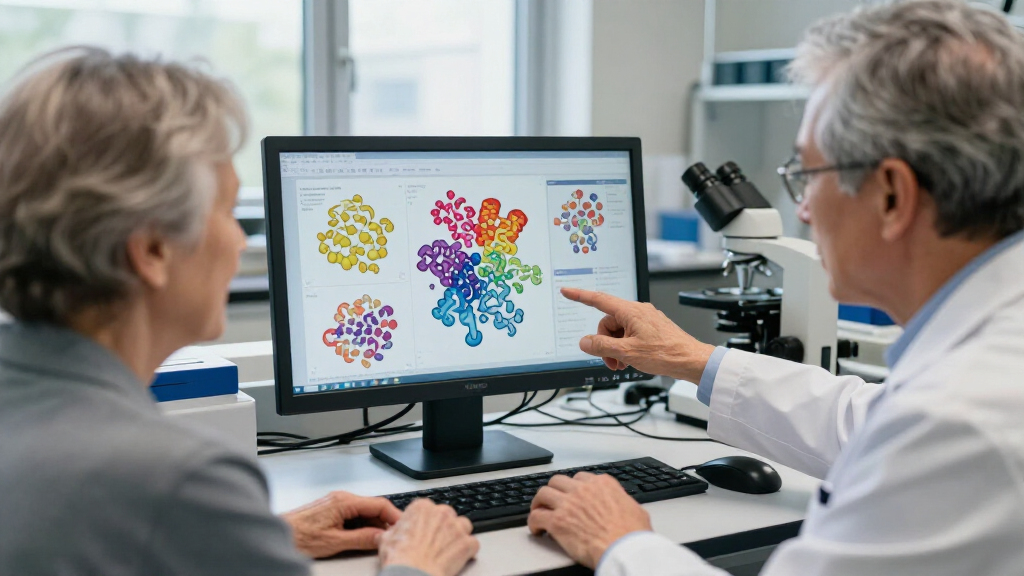
The Buck Institute and Georgetown University are co-leading Team SEEDS, a four-year research effort supported by an ARPA-H award of up to $51.7 million. The consortium will combine computational models and experiments to study how intrinsically disordered proteins change in different cellular environments, with an initial focus on Alzheimer’s disease and Ewing sarcoma. The project aims to improve early detection and treatment research, but it has not yet reported a diagnostic or therapy.
The Buck Institute for Research on Aging and Georgetown University will co-lead a four-year consortium backed by an ARPA-H award of up to $51.7 million to study how disease-linked proteins change shape before causing lasting cellular damage. Team SEEDS will pair computational predictions with laboratory experiments, initially examining proteins connected to Alzheimer’s disease and Ewing sarcoma.
The consortium, called SEEDS—Sequence-to-disease: Environment-aware Ensembles of Disordered proteins at Scale—aims to predict how a protein’s sequence and surroundings influence its behavior. It brings together expertise in protein science, artificial intelligence, computational modeling, cancer and neuroscience. The report says the team includes researchers from nine academic institutions and seven industry partners.
The research focuses on intrinsically disordered proteins, or IDPs. Unlike proteins that settle into a relatively stable three-dimensional structure, IDPs can occupy many shapes. Conditions inside cells—including acidity, molecular crowding, metals, metabolites and chemical modifications—can influence those shapes and the proteins’ behavior.
SEEDS plans to test its predictions experimentally under different conditions rather than rely on computer models alone. The project aims to build a platform for understanding when these proteins remain in functional states and when they begin to shift toward states associated with disease. Its stated goals include finding ways to detect, slow or treat harmful changes; the announcement does not report a completed test or treatment.
From Protein Shifts to Earlier Detection
Protein misfolding and aggregation are associated with Alzheimer’s disease, ALS and some cancers, among other chronic and degenerative conditions. Studying changes before proteins clump together could help researchers investigate whether harmful processes can be detected earlier than they are with approaches focused on later stages. That is the scientific ambition of the project, not a demonstrated clinical result.
Many proteins tied to these diseases have been described as “undruggable” because they lack the stable shapes and binding pockets that conventional drug development often targets. If the consortium can connect protein sequence and cellular conditions to changes in behavior, its findings could give researchers new targets or ways to test interventions. Any resulting diagnostic or treatment would require further validation, and the award itself does not establish that such an approach will work.
early detection Alzheimer's testing kits
As an affiliate, we earn on qualifying purchases.
As an affiliate, we earn on qualifying purchases.
Why Disordered Proteins Are Hard to Study
Researchers can capture snapshots of proteins, but the source report says those observations often come after proteins have already clumped. Predicting how IDPs behave as cellular conditions change—and identifying when a change first becomes harmful—remains difficult. Their flexibility can support important functions in healthy cells while also complicating efforts to understand and target disease-associated behavior.
AI systems such as AlphaFold have changed protein science by learning from accumulated structural data. Buck Institute assistant professor Chuankai (Kai) Zhou said researchers do not have a comparable volume of structural information for intrinsically disordered proteins, making their behavior harder to predict. SEEDS is part of ARPA-H’s BIOGAMI program, which focuses on early stages of protein dysfunction and uses the idea of a molecular “grammar” to describe rules connecting proteins, their environments and their behavior.
“We aim to uncover the principles that determine when these proteins remain in healthy functional ensembles and when they begin to shift toward disease-associated states.”
— Chuankai (Kai) Zhou, assistant professor at the Buck Institute
protein misfolding diagnostic tools
As an affiliate, we earn on qualifying purchases.
As an affiliate, we earn on qualifying purchases.
Results and Clinical Uses Remain Ahead
The announcement does not specify how much of the up to $51.7 million award will be disbursed, or provide detailed milestones for the four-year effort. It also does not identify particular protein targets, explain how early a harmful shift could be detected, or report validated predictions from the SEEDS platform.
Whether the models can reliably predict protein behavior across different cellular environments—and whether those predictions lead to practical diagnostics or treatments—remains unknown. The project is research intended to address those questions; no clinical benefit or timeline for patient use has been established.
disordered protein research laboratory equipment
As an affiliate, we earn on qualifying purchases.
As an affiliate, we earn on qualifying purchases.
Testing Models Against Experiments
During the four-year project, the consortium plans to develop models and compare their predictions with experimental measurements of protein behavior under varying conditions. Its initial disease focus is Alzheimer’s disease and Ewing sarcoma. The source report does not give dates for interim results or say when the first datasets or findings will be made public.
The next meaningful developments will be evidence that the platform can predict observed protein changes and clarify which conditions are linked to harmful states. Any proposed diagnostic or treatment strategies would then need additional testing; the announcement provides no schedule for that work.
biomarker detection kits for neurodegenerative diseases
As an affiliate, we earn on qualifying purchases.
As an affiliate, we earn on qualifying purchases.
Key Questions
What is Team SEEDS?
Team SEEDS is a research consortium co-led by the Buck Institute and Georgetown University. It will study how intrinsically disordered proteins behave in changing cellular environments, using computational predictions and experiments.
How much funding did the project receive?
ARPA-H awarded the effort up to $51.7 million for a four-year project. The report does not state the amount that will ultimately be disbursed.
Which diseases will the team study first?
The effort’s initial focus is Alzheimer’s disease and Ewing sarcoma. The broader research concerns protein misfolding and aggregation, which are associated with several diseases.
Does the announcement mean a new diagnostic or treatment is available?
No. The project aims to develop knowledge and methods that could support future detection or treatment research. It has not announced a validated diagnostic, a treatment, or a patient-use timeline.
Source: rss
Halloween Picks
halloween
As an affiliate, we earn on qualifying purchases.