

Use this guide to choose a comfortable outdoor rocking chair that fits your body, patio, porch, or deck, and local weather. It is for first-time buyers and anyone replacing a chair who wants to compare fit, rocking motion, materials, and care before ordering. Allow about 1–3 hours to measure, compare options, and test chairs; delivery and assembly may take longer.

Turn quiet afternoons into listening time
- Thousands of audiobooks, podcasts and originals
- Listen on your phone, tablet or Echo — also offline
- Cancel anytime

SERWALL HDPE Oversized Outdoor Rocking Chairs Set of 2, Gray
- ✔ Material: HDPE (high-density polyethylene)
- ✔ Dimensions: 35 x 26.9 x 41.3 inches (D x W x H)
- ✔ Seat width: 21.1 inches

Papasan Rocking Chair, Oversized Outdoor Egg Chair with Thick Cushion
- ✔ Frame material: Galvanized iron
- ✔ Cushion material: Polyester fabric
- ✔ Cushion thickness: 6.7 inches
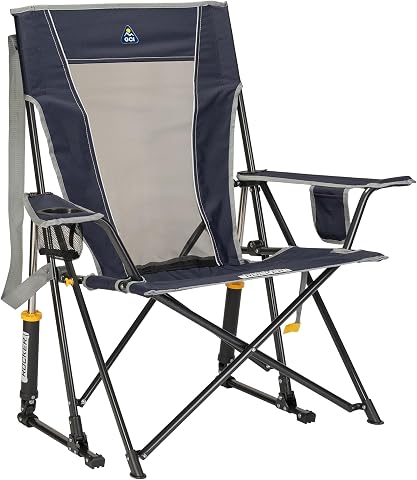
GCI Outdoor Comfort Pro Rocker Camping Chair – Indigo Blue
- ✔ Frame material: Sturdy metal frame
- ✔ Weight: 11 pounds
- ✔ Weight capacity: Up to 250 pounds
Difficulty: Beginner | Time: 1-3 hours for research and in-person testing; delivery and assembly time varies
What You’ll Need
Tools & Materials:
- Tape measure
- Phone or notebook for recording measurements and model details
- Chair specifications or product listings for the models you are comparing
Knowledge:
- Basic measurements of the space where the chair will sit
- Awareness of who will use the chair and whether they need extra seat width, height, or arm support
Measure the intended seating area and check the chair maker’s dimensions before shopping. Rockers need clear space for the runners to move; a chair that fits when still may hit a wall, railing, table, or neighboring furniture while rocking. If possible, test chairs in person with the shoes and clothing you normally wear outdoors.
SERWALL HDPE Oversized Outdoor Rocking Chairs Set of 2, Gray
For a comfortable outdoor rocker that can stay on the patio through changing weather, SERWALL is our most balanced choice. The pair of chairs has a 21.1-inch-wide seat, an ergonomic backrest, and a stated capacity of 350 pounds per chair. Compared with the cushioned Papasan, the seat is less plush, but the supportive, open design should be simpler to use for ordinary sitting and conversation. And unlike the folding GCI, it is built as permanent outdoor furniture rather than seating to pack away between trips.HDPE construction is the main practical advantage. The supplied details describe it as weather-resistant and designed to resist warping, fading, and rusting, so buyers can prioritize an outdoor-ready frame without managing a soft cushion. The set format also suits a pair of people furnishing a porch or patio. At 38.3 pounds per chair, however, these are not easy rockers to move around frequently. Partial assembly takes effort, and the gray color may not suit every outdoor scheme. Choose SERWALL for durable, supportive seating; skip it if you want sink-in softness or a chair that folds away.
Pros:
- Set includes two chairs for a coordinated seating area.
- Wide 21.1-inch seat and ergonomic backrest support relaxed sitting.
- HDPE is described as weather-resistant and designed to resist warping, fading, and rust.
- Each chair has a stated 350-pound capacity.
Cons:
- At 38.3 pounds per chair, moving them takes more effort than moving a folding rocker.
- Partial assembly is required.
- Limited color choice and no thick cushion for plush seating.
Best for: Patio owners who want two roomy, supportive rockers made for regular outdoor use and prefer a low-fuss hard surface over a thick cushion.
Not ideal for: Shoppers seeking portable seating, a plush lounge chair, or a lightweight rocker they can move around the yard often.
Bottom line: We recommend SERWALL for the best balance of supportive comfort, outdoor-ready construction, and two-chair practicality.
“We recommend SERWALL for the best balance of supportive comfort, outdoor-ready construction, and two-chair practicality.”
Papasan Rocking Chair, Oversized Outdoor Egg Chair with Thick Cushion
If softness is our first priority, the Papasan is the most lounge-oriented chair here. Its 6.7-inch-thick, water-repellent cushion creates a more enveloping seat than SERWALL’s supportive, uncushioned design or the GCI’s portable camp-chair format. The adjustable rocking amplitude is another distinction: buyers can choose a more restrained motion rather than accepting one fixed rocking feel. With a stated 450-pound maximum load, it also has the highest capacity in this lineup.The tradeoff is that the comfort depends on a substantial fabric cushion. Water-repellent and fade-resistant fabric can suit outdoor use, but it is still a soft component to maintain, unlike SERWALL’s HDPE seat. Its galvanized iron frame is described as rust-resistant, though the provided details do not give dimensions or an item weight, making it harder to plan a tight patio layout or frequent moves. Assembly may take effort, and the product notes that the cushion may need additional support for very long use. Compared with the GCI, this is a stationary-style lounging choice, not a convenient travel rocker. We’d choose it for cushioned relaxation and pass if easy storage or minimal upkeep matters more.
Pros:
- Thick 6.7-inch cushion provides a softer, more enveloping sit than the other picks.
- Adjustable rocking amplitude lets buyers tailor the motion.
- Stated 450-pound maximum load is highest in this comparison.
- Water-repellent, fade-resistant cushion and rust-resistant frame are suited to outdoor use.
Cons:
- The cushion may need extra support during very long sitting sessions.
- Assembly requires effort despite detailed instructions.
- No dimensions or item weight are provided, so fit and portability are harder to judge.
Best for: Buyers who want a single, generously cushioned rocker for relaxed lounging and value adjustable rocking over easy transport.
Not ideal for: Anyone with limited floor space, a preference for low-maintenance hard seating, or a need to carry and store a rocker regularly.
Bottom line: We’d pick the Papasan when plush cushioning matters more than compact storage or the simplest outdoor upkeep.
“We’d pick the Papasan when plush cushioning matters more than compact storage or the simplest outdoor upkeep.”
GCI Outdoor Comfort Pro Rocker Camping Chair – Indigo Blue
For outings where a patio chair would be impractical, the GCI Comfort Pro makes portability part of the comfort equation. It weighs 11 pounds, folds to 6.3 x 7.3 x 44.1 inches, and uses Spring Action Rocking Technology for rocking on compatible outdoor surfaces. A beverage holder, phone pocket, and armrests add useful camp-chair conveniences. Compared with the SERWALL pair and the cushioned Papasan, it is much easier to take to a campsite, tailgate, or fishing spot—and it can be folded away when not in use.That convenience comes with a different kind of sit. This is a folding camping chair, not a wide, fixed patio rocker or a deeply cushioned egg chair; buyers looking for plush support should lean toward the Papasan, while those furnishing a permanent outdoor space will likely prefer SERWALL. Its stated 250-pound capacity is the lowest of the three, and rocking depends on the surface being compatible with the mechanism. Although 11 pounds is comparatively light, the folded form is still 44.1 inches long, so it may feel bulky to carry for some people. Choose GCI when transport and quick setup lead; skip it for cushion-first lounging or a higher stated capacity.
Pros:
- 11-pound frame is easier to transport than either stationary-style chair.
- Folds for storage and travel.
- Spring Action Rocking Technology is designed for rocking on compatible surfaces.
- Armrests, beverage holder, and phone pocket keep essentials close.
Cons:
- 250-pound stated capacity is below both other options.
- Rocking performance is limited to compatible outdoor surfaces.
- The folded chair remains 44.1 inches long and may be bulky to carry.
Best for: Campers, tailgaters, and outdoor event-goers who want a folding rocker with useful storage features and can confirm the ground suits its rocking mechanism.
Not ideal for: Buyers seeking a wide stationary patio chair, thick cushioning, a higher weight capacity, or a small folded package.
Bottom line: We’d choose the GCI for portable rocking at outdoor outings, not as our first pick for cushioned, all-day patio lounging.
“We’d choose the GCI for portable rocking at outdoor outings, not as our first pick for cushioned, all-day patio lounging.”
As an Amazon Associate we earn from qualifying purchases.
Before You Start
Set a budget that includes delivery, assembly, cushions, and any protective cover you may need. Decide whether the chair will stay outdoors year-round or be stored during bad weather. Check the product’s weight limit, assembly requirements, warranty, and care instructions rather than relying on appearance alone. If the chair will sit on a porch or deck, confirm that the surface is firm, level, and suitable for rocking.
Comfort is personal: body proportions, preferred posture, and cushion firmness all affect the fit. Treat listed dimensions as a screening tool, then sit in the chair when possible. Do not assume that a thick cushion or a high price guarantees a comfortable fit.
Step-by-Step Instructions
Step 1: Measure the chair area and rocking clearance
Measure the available width and depth, then note nearby walls, railings, doorways, tables, and paths. Compare these measurements with the chair’s full dimensions and the maker’s recommended clearance. Mark the footprint on the floor with removable tape if you are unsure how much room it will take up.
Allow extra room in front of and behind the runners for the chair’s rocking arc, and leave a clear route for walking and getting in or out. Check the chair’s width with its arms included, not just its seat width.
Tip:Do not estimate clearance from a product photo; camera angles can make chairs look smaller than they are.
Check: You have a recorded space width and depth, and the chair can rock without contacting nearby objects or blocking a walkway.
Step 2: Decide who will use the chair and what support they need
List the main users and note any fit needs, such as a wider seat, a higher seat for easier standing, firm armrests, a supportive back, or room for a cushion. Check the listed seat width, seat height, seat depth, back height, and weight capacity against those needs.
Think about how you will use the chair: short breaks, reading, or longer periods outside. For longer sitting, prioritize a back that supports your preferred posture and armrests that let your shoulders relax. If more than one person will use it, test for the largest or least flexible user rather than choosing only for the person with the easiest fit.
Tip:Seat height and depth affect comfort as much as overall chair size. A deep seat may press behind shorter users’ knees; a low seat may make standing difficult.
Check: You can name the dimensions and support features that matter to the intended users, rather than comparing chairs by style alone.
Step 3: Choose materials for your weather and upkeep
Compare the chair’s frame, finish, and hardware with the conditions where it will sit. Common choices include wood, metal, resin, and outdoor-rated plastics or composites. Read the care instructions for the exact model: finishes, coatings, and fasteners vary even within a material type.
Consider sun exposure, rain, humidity, salty air, and whether you can move the chair under cover. Ask how often the finish needs attention, whether the chair should be covered or stored, and whether replacement parts are available. Select a material only after confirming that you are willing to follow its maintenance requirements.
Tip:“Weather-resistant” does not mean maintenance-free. Check the maker’s guidance for prolonged rain, winter storage, and direct sun.
Check: You have chosen a material and care routine that match your climate, storage options, and willingness to maintain the chair.
Step 4: Compare the rocking motion and build
Check the runner design, joints, fasteners, and overall construction in person or through detailed specifications and reviews. The runners should sit evenly on a level surface, and the frame should not appear twisted or have loose parts. Look for clear assembly instructions and a stated weight capacity.
If you can test the chair, rock gently through a small range first. The movement should feel controlled, with no sudden tipping, scraping, wobbling, or sharp noises. A smooth motion matters more than a long rocking arc; do not choose a chair that feels unstable simply because it rocks farther.
Tip:For an online purchase, review return terms and inspect customer photos for the assembled chair, not just the studio images.
Check: The chair’s construction and motion appear stable, and its capacity and assembly details are documented.
Step 5: Test the fit before buying
Sit in each candidate chair as you normally would outdoors. Place your feet comfortably on the ground or foot support, rest your arms on the armrests, and lean back without forcing your posture. Check that the seat supports your thighs without pressing hard behind your knees and that the back reaches the area you want supported.
Rock gently for several minutes. Notice pressure points, cushion movement, arm position, and whether you can get up without pulling yourself forward awkwardly. If you plan to use a cushion, test with that cushion or confirm its thickness and attachment method before ordering.
Tip:Do not judge the chair after a quick perch. A few minutes can reveal pressure or posture issues that are easy to miss while standing.
Check: You can sit and rock with relaxed shoulders, stable support, no uncomfortable pressure, and a manageable motion.
Step 6: Confirm the order details and assemble safely
Before placing the order, confirm the exact model, dimensions, color, included cushions, weight capacity, delivery method, return policy, warranty, and care instructions. Check whether assembly tools are included and whether the chair arrives in one piece or as a kit.
When it arrives, compare the parts with the instructions before assembly. Build the chair on a level surface, follow the specified order, and tighten fasteners as directed; avoid overtightening, which can damage material or threads. Keep children and pets away until the chair is assembled and checked.
Tip:Do not use the chair if parts are missing, cracked, or mismatched. Contact the seller or maker before improvising a repair.
Check: The assembled chair matches the ordered specifications, all required parts are fitted, and the frame sits evenly on a level surface.
Step 7: Place the chair and check it in use
Set the chair on a firm, level surface with the measured rocking clearance. Keep runners clear of rugs, cords, gravel, and uneven edges that could interrupt movement. Add only outdoor-rated cushions that fit securely and do not block the rocking mechanism.
Sit down carefully and test the movement at a gentle pace. Check for contact with nearby objects, shifting cushions, rocking noise, or movement of the chair across the surface. Reposition it or adjust the setup before regular use if anything feels unstable.
Tip:Check the chair again after moving it or changing the floor covering, since a different surface can alter stability and clearance.
Check: The chair rocks smoothly in its intended spot, remains stable, and leaves enough room for safe entry, exit, and walking around it.
Common Mistakes to Avoid
- Choosing a chair by its appearance or overall dimensions without checking seat fit. — Compare seat height, width, depth, and back support with the intended users’ needs, then sit in the chair when possible.
- Placing the chair in a space that fits its stationary footprint but not its rocking arc. — Measure front and rear clearance, mark the footprint, and test the full gentle rocking motion before settling on a location.
- Assuming an outdoor label means the chair can remain outside without care. — Read the model-specific instructions for rain, sun, cleaning, covers, and seasonal storage before buying.
- Using a chair that wobbles, rocks unevenly, or has loose fasteners. — Inspect the chair after assembly and after moving it; stop using it until loose parts or an uneven surface are corrected.
Troubleshooting
Problem: The chair feels comfortable at first but presses behind the knees.
Solution: Check whether the seat is too deep or the cushion adds excess depth. Try a shallower model or a thinner, correctly fitted outdoor cushion; do not force a posture that causes discomfort.
Problem: The chair rocks unevenly or wobbles after assembly.
Solution: Move it to a flat, firm surface and recheck that each part is installed in the correct orientation. Tighten fasteners to the maker’s instructions. If wobbling persists or a part is damaged, stop using the chair and contact the seller or maker.
Problem: The runners scrape or hit nearby furniture.
Solution: Move the chair to provide more clearance and remove objects from the rocking path. If the chair still scrapes on a level floor, inspect the runners for damage or incorrect assembly.
Problem: The chair shifts across a smooth surface while rocking.
Solution: Stop using it until the movement is controlled. Confirm the floor is level and the runners are correctly assembled. Use only a stable, compatible surface or maker-approved protective pads; do not add loose material that could slide under the runners.
What Success Looks Like
Your chosen chair fits the measured space with clear room to rock, supports the intended users without pressure or awkward posture, and has a motion that feels smooth and controlled. It is assembled according to its instructions, sits evenly on a firm surface, and has a care plan suited to the local weather. During a gentle test, it does not wobble, scrape, hit nearby objects, or shift unexpectedly.
Next Steps
Keep the assembly and care instructions with the chair. Recheck fasteners and moving parts after initial use and periodically thereafter, following the maker’s schedule. Clean and cover or store the chair as directed, and inspect it after severe weather or seasonal storage before using it again. Replace damaged parts with approved components; stop using the chair if a runner, joint, or frame becomes cracked or unstable.
Frequently Asked Questions
How much room does an outdoor rocking chair need?
Use the chair’s dimensions and the maker’s clearance guidance rather than a single general measurement. Leave enough room in front of and behind the runners for the chair to move, plus space to get in and out safely. Test the full gentle rocking arc at the planned location before regular use.
Should I choose a cushion with my rocking chair?
Choose a cushion if it improves comfort, but confirm that it is made for outdoor use and fits the seat securely. Account for its thickness when checking seat depth and height; a bulky cushion can change posture or cause pressure behind the knees.
Can an outdoor rocking chair stay outside all year?
That depends on the chair’s materials, finish, hardware, and the weather at your location. Follow the specific care instructions for the model. Some chairs need a cover, periodic finish care, or indoor storage during prolonged rain, freezing conditions, or off-season months.
How can I tell if a rocking chair is comfortable for me?
Sit in it for several minutes and rock gently. Your shoulders should relax, the seat should not press behind your knees, and the back and armrests should support your preferred posture. You should be able to stand up without struggling.
What should I do if my assembled chair wobbles?
Stop using it. Check that it is on a level surface, review the assembly instructions, and confirm that parts are oriented correctly and fasteners are tightened as specified. Do not use a chair with damaged parts or persistent instability; contact the maker or seller.