
TL;DR

Get comfort and care essentials delivered free — and shop member deals
- Fast, free delivery on millions of items
- Access to Prime Big Deal Days deals on October 6–7
- Prime Video, Amazon Music and more included
A 5-10 minute gentle morning stretch routine can ease stiffness, enhance joint movement, and promote a peaceful start. Consistency matters more than intensity, and simple routines adapt well to individual needs.
Start with gentle, slow movements to ease out of sleep and reduce stiffness.
Incorporate mobility exercises like ankle circles and shoulder rolls for better joint prep.
Hold each stretch for 15–30 seconds, and stop if you feel sharp pain or discomfort.
Build a consistent routine by linking stretching to existing habits, like waking or making coffee.
Always listen to your body — prioritize comfort and control over intensity.
Gentle Morning Stretches to Start the Day Well
A quiet five-to-ten-minute routine can ease overnight stiffness, restore comfortable movement, and create a calmer transition into the day. Move slowly, breathe naturally, and choose comfort over intensity.
Wake the body from top to toe
Begin with small mobility movements, then progress toward brief supported stretches. Every movement should feel controlled, refreshing, and easy to breathe through.
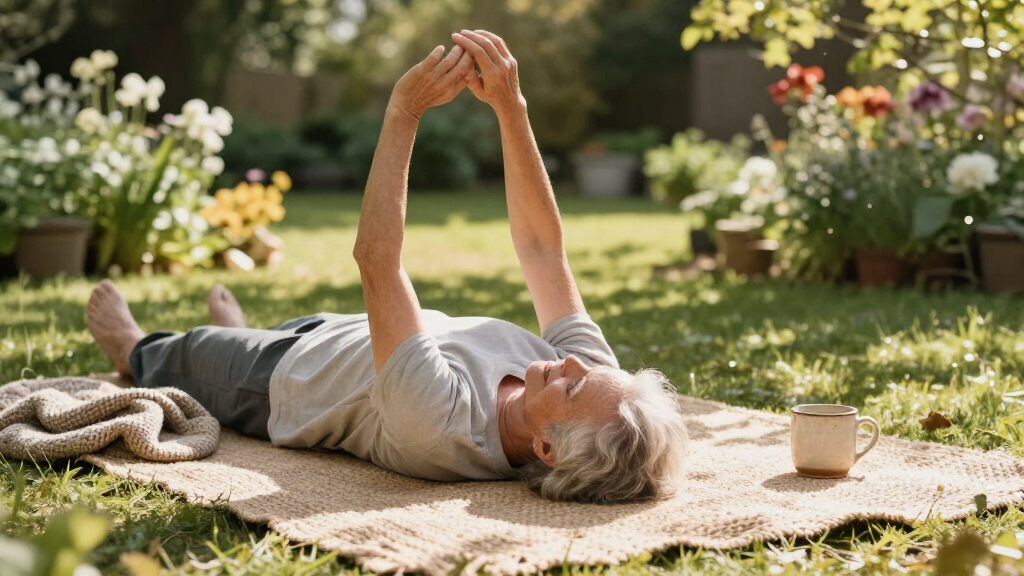
Full-body reach
Lengthen through the arms and legs without forcing the lower back. Take one or two unhurried breaths.
Ankle circles
Circle slowly through a comfortable range to prepare the feet and ankles for balance and walking.
Shoulder rolls
Make smooth circles without shrugging. Let the upper back, chest, and neck soften as you move.
Gentle neck movements
Turn side to side, then bring each ear toward its shoulder. Avoid full neck circles and sudden motion.
Cat–cow
On hands and knees, alternate gentle spinal rounding and extension while keeping the movement fluid.
Supported back stretch
Ease the hips backward while reaching forward. Add support until the position feels restful rather than demanding.
Hip-flexor stretch
Use a supported split stance and shift the pelvis forward slightly while keeping the torso upright.
Hamstring stretch
Place one heel forward, soften the knee, and hinge gently from the hips with a long spine.
Calf stretch
Step one foot back, keep the heel down, and lean forward only until mild tension appears.
Side reach and breathe
Reach one arm overhead and lean gently away. Finish tall, relaxed, and ready to move into the day.
Mobility first, intensity last
Current movement practice emphasizes comfortable control through a joint’s usable range—not simply pushing for maximum flexibility.
Start gradually
Use small motions first because muscles and connective tissues may feel less pliable immediately after waking.
Breathe normally
Slow, steady breathing discourages unnecessary tension. Never hold your breath to tolerate a stretch.
Use support freely
A wall, chair, pillow, or bed can improve balance and help you stay within a comfortable range.
Adapt every morning
Energy, stiffness, injuries, balance, pregnancy, age, and health conditions can all change what feels appropriate.
Where to place your effort
A practical emphasis guide—not a clinical measurement. Favor ease, control, and repetition over stretch depth.
Read the body’s signals
Gentle pulling can be normal. Sharp pain, pinching, numbness, tingling, or dizziness are signals to stop, change position, or seek appropriate guidance.
| Situation | Helpful response | Morning decision | Why it matters |
|---|---|---|---|
| Mild, even tension | Keep breathing and hold briefly | ✓ Continue gently | Comfortable tension can accompany a normal stretch. |
| Stiff but pain-free joints | Reduce the range and use slow repetitions | ✓ Modify and move | Small controlled motions can prepare the joint gradually. |
| Dizziness after standing | Sit or lie down and change positions slowly | ~ Pause and adapt | Seated or supported movement reduces avoidable balance risk. |
| Sharp pain, pinching, or burning | Release the position immediately | ✗ Stop the stretch | Pushing farther may irritate muscles, nerves, or joints. |
| Numbness or tingling | Stop and avoid repeating the provoking motion | ✗ Do not push through | These sensations are not a flexibility goal. |
| Severe, worsening, or prolonged stiffness | Discuss symptoms with a qualified clinician | ~ Seek assessment | Persistent symptoms may reflect more than overnight inactivity. |
Add walking, marching, or activity-specific dynamic movements before strength training, sprinting, or explosive sport. Stretching alone does not reliably prevent every injury or eliminate muscle soreness.
How a small habit supports the day
The most useful outcome is not extreme flexibility. It is a repeatable sequence that helps you notice your body, move comfortably, and carry more movement into daily life.
Wake slowly
Begin seated, lying down, or supported.
Mobilize joints
Circle ankles, roll shoulders, and move the spine.
Stretch briefly
Use mild tension with easy breathing.
Move into life
Walk, stand, and change position throughout the day.
Why Gentle Morning Stretches Matter for Your Body and Mind
Gentle morning stretches help reduce the stiffness that develops during sleep, especially in your hips, shoulders, and back. During sleep, your muscles remain relatively inactive, which can cause them to tighten and your joints to become less mobile. If left unaddressed, this stiffness can carry over into your day, making even simple movements feel more effortful and increasing the risk of falls or discomfort. By incorporating gentle stretches, you promote increased blood flow and flexibility, which can loosen tight muscles and improve joint responsiveness. This not only makes daily tasks easier but also helps prevent injuries caused by stiff, unresponsive joints. The longer-term implication is a more resilient musculoskeletal system that adapts better to daily stresses.
Moreover, these stretches have a calming effect on your nervous system. When you take time to stretch mindfully, your body responds with relaxation, which can lower stress hormones like cortisol and promote mental clarity. This dual benefit—physical ease and mental calmness—can significantly enhance your overall well-being, making it easier to face the day with a positive mindset. Regularly engaging in gentle movement also encourages better posture and reduces chronic discomfort, which often results from prolonged poor alignment or muscular imbalance. Recognizing the importance of these small but consistent efforts allows you to build a foundation of mobility and calmness that supports healthy aging and daily vitality.
gentle morning stretch exercise equipment
As an affiliate, we earn on qualifying purchases.
As an affiliate, we earn on qualifying purchases.
How to Do a 5–10 Minute Routine That Feels Good
Starting simple is best. Here’s a straightforward routine that fits into your morning and leaves you feeling refreshed. Each movement is designed to gently awaken your muscles and joints without overstressing them, which is especially important if you’re feeling stiff or have limited mobility. The goal is to create a rhythm of movement that prepares your body for the day ahead while fostering a sense of calm and connection.
- Full-body reach: Lie in bed or stand, stretch arms overhead and legs outward. Hold for 15 seconds, breathe deeply. This movement gently awakens your entire musculature, signaling your nervous system that it’s time to start moving. It helps increase circulation and prepares your muscles for more targeted stretches, setting a positive tone for the rest of your routine.
- Ankle circles: Sit or lie down, slowly rotate each ankle five times in both directions. This targets the often-overlooked joints in your feet and ankles, which are crucial for maintaining balance, gait, and overall stability. Improving ankle mobility can prevent falls and make walking feel more secure, especially on uneven surfaces or after periods of inactivity.
- Shoulder rolls: Roll shoulders backward five times, then forward five times. This relieves tension accumulated in the upper back and neck during sleep or daily activities. Looser shoulders can improve posture, reduce discomfort, and help you breathe more easily, especially if you tend to hold tension in these areas.
- Gentle neck movements: Turn your head slowly side to side, tilt ears toward shoulders, avoiding full circles. These movements release tension in neck muscles that often become tight from poor posture or stress, which can contribute to headaches or stiffness. Regularly doing this can also improve neck flexibility and reduce the risk of strain.
- Cat–cow pose: On hands and knees, alternate arching and rounding your back, five to eight repetitions. This dynamic stretch mobilizes your spine, enhances flexibility, and encourages better posture. It also stimulates spinal discs and muscles, reducing stiffness and pain, and promoting spinal health over time.
- Supported back stretch: Sit or kneel, reach forward or lean back against a chair or pillow. This gently opens the chest and relieves tension in your back muscles, promoting better breathing and spinal alignment. It also helps release accumulated tension from sitting or poor posture during the day.
- Hip-flexor stretch: In a supported stance, gently shift pelvis forward, hold 15–30 seconds per side. Tight hips can cause lower back pain, limit walking, and affect overall mobility. Gentle stretching here improves hip mobility, which is fundamental for comfortable movement, maintaining balance, and preventing joint discomfort.
- Hamstring stretch: Place one heel forward, hinge at hips, hold for 15–30 seconds, switch sides. Flexible hamstrings support lower back health, reduce strain during bending or walking, and help maintain overall leg flexibility, which is essential for everyday activities.
- Calf stretch: Step one foot back, heel down, lean forward slightly, hold 15–30 seconds per side. This stretch enhances ankle flexibility, crucial for walking, climbing stairs, and maintaining balance on uneven surfaces. Keeping calves flexible also helps prevent cramps and discomfort, especially with age.
- Side reach: Reach one arm overhead, lean to the opposite side, take slow breaths, switch sides. This movement gently elongates the sides of your torso, improving posture and reducing stiffness that can build up overnight. It also fosters a sense of space and openness in your body, supporting better breathing and relaxation.
Perform each movement gently, listening to your body’s signals. The aim is to feel good, not strained or uncomfortable. Adjust the routine based on how your body feels each morning, and remember that consistency over time leads to significant improvements. These mindful, gradual movements help your body adapt, increase flexibility, and reduce stiffness without risking injury, especially important as you age.
As an affiliate, we earn on qualifying purchases.
Common Mistakes to Avoid During Morning Stretching
Many folks start stretching with high hopes but end up doing more harm than good. The biggest mistake? Pushing into pain. Remember, gentle tension is fine, but sharp or burning sensations are warning signs. Ignoring these signals can lead to overstretching, muscle strains, or joint injuries, especially if you push beyond your current flexibility limits. Overstretching can cause micro-tears in muscle fibers, which may lead to soreness, inflammation, or longer-term damage. It’s essential to listen carefully to your body and respect your limits to prevent setbacks and allow your tissues to adapt safely. Recognizing your body’s signals helps you develop a sustainable routine that enhances mobility without risking injury.
Another common slip-up is holding your breath. When you hold your breath during stretching, it increases tension in your muscles and can make relaxation more difficult. Steady, deep breathing helps oxygenate your muscles, promotes a calming effect, and enhances the effectiveness of each stretch. Proper breathing also helps you maintain focus and control, reducing the likelihood of rushing or overexerting.
Finally, rushing through stretches or bouncing can irritate your tissues. Bouncing causes micro-tears in muscle fibers, which may lead to soreness or injury, and can set back your progress. Use slow, controlled movements to facilitate safe, gentle stretching. Always pay attention to how your body responds, and if a movement causes discomfort, modify or stop. Incorporating mindfulness and control ensures your routine remains safe, effective, and injury-free, supporting your mobility goals in the long run.
mobility exercise tools for seniors
As an affiliate, we earn on qualifying purchases.
As an affiliate, we earn on qualifying purchases.
Compare Static Stretching vs. Dynamic Mobility Moves
| Static Stretching | Dynamic Mobility Moves |
|---|---|
| Holding a stretch for 15–30 seconds to lengthen muscles allows tissues to relax and adapt gradually. This approach is especially beneficial after movement or at the end of your routine when muscles are warm. However, if done improperly or with excessive force, static stretching can overstretch muscles, especially in older adults with limited flexibility, potentially leading to strains or soreness. It’s important to perform static stretches gently and within your comfort zone to avoid these risks. | Moving joints smoothly through their range of motion—such as shoulder circles or ankle rolls—actively engages muscles and joints. These moves increase blood flow and warm tissues, which helps prepare your body for activity. They are particularly effective in the morning because they gently awaken your system without overstretching, reducing stiffness quickly and safely. Dynamic movements also promote better neuromuscular control, helping your body coordinate movements more efficiently throughout the day. |
| Best after warming up or at the end of exercise to improve flexibility over time. | Ideal in the morning or before activity to prepare muscles and joints for movement, reducing the risk of injury. |
| Less effective for warming up stiff muscles quickly or addressing immediate stiffness. | Enhances blood flow and joint lubrication, reducing stiffness faster and more effectively, especially in the morning. |
Incorporating both static and dynamic movements strategically can optimize your morning routine. Static stretches help improve flexibility gradually, promoting tissue lengthening and reducing tightness over time. Dynamic mobility exercises act as a warm-up, awakening your joints and muscles, and preparing them for daily tasks. Understanding the distinct roles of each allows you to balance safety with effectiveness, creating a routine that supports healthy aging. Think of static stretching as the gentle, deliberate lengthening of muscles, and mobility moves as the active oil that keeps your joints moving smoothly—both are essential for a comprehensive, safe, and effective morning practice.
As an affiliate, we earn on qualifying purchases.
Frequently Asked Questions
How long should a morning stretching routine take?
Just five to ten minutes is enough. Even a quick two-minute routine done consistently can make a noticeable difference in how your body feels each day.Is it better to stretch before or after breakfast?
Either works well. Gentle stretches in bed or seated are fine before eating. If you prefer deeper stretches, waiting until after you’ve had a light meal or a walk might feel more comfortable.How often should I do these stretches?
Daily practice is best. Making it a morning habit helps your body develop a gentle rhythm, easing stiffness and promoting calm for the whole day.Can stretching help with back pain?
Gentle movement can ease temporary stiffness, but if back pain persists or worsens, consult a healthcare professional. Avoid aggressive stretches that might aggravate your condition.What if I’m inflexible or have limited mobility?
Work within your comfortable range. Use supports like chairs or pillows, and focus on slow, gentle movements. Flexibility varies, and progress takes time—be patient with yourself.Conclusion
A few mindful, gentle stretches every morning can transform how your body feels and moves throughout the day. It’s a small act of kindness for your joints and muscles, helping you stay limber and calm. Imagine starting each day as a slow, peaceful dance — your body moving in harmony with the sunrise. Make this your new habit, and enjoy the quiet strength it brings.Fall Picks
fall essentials
As an affiliate, we earn on qualifying purchases.