
TL;DR

Turn quiet afternoons into listening time
- Thousands of audiobooks, podcasts and originals
- Listen on your phone, tablet or Echo — also offline
- Cancel anytime
Gentle yoga and stretching can help older adults maintain mobility, balance, and reduce stiffness. Short, regular sessions with proper modifications and safety precautions make movement safe and enjoyable at any age.
Imagine a peaceful morning with the soft scent of fresh herbs wafting through your kitchen window. You gently stretch, feeling the warm sun on your skin, knowing this simple move helps keep you steady and limber. That’s the power of gentle yoga and stretching—small moments that make a big difference in your daily life.
Whether you’re recovering from injury, managing stiffness, or just looking to stay active without strain, this guide shows you how to safely incorporate gentle movement into your routine. You’ll learn what makes a practice senior-friendly, key safety tips, and easy sequences you can do at home—no fancy equipment needed.
Gentle yoga and stretching improve mobility, balance, and confidence—without risking injury—making them perfect for older bodies.
Supportive props and modifications help adapt poses to conditions like osteoporosis or arthritis, ensuring safety and effectiveness.
Short, consistent sessions—10 to 20 minutes most days—offer the best results and are easy to fit into daily life.
Safety comes first: move slowly, breathe freely, and stop when you feel discomfort or dizziness.
The best practice respects your limits and emphasizes control, comfort, and enjoyment over intensity or competition.
Gentle Yoga and Stretching for Older Bodies
Small, comfortable movements can support mobility, balance, posture, and everyday confidence. The goal is control and comfort—never extreme flexibility, forced poses, or competition.
Reported with regular balance and low-impact movement routines.
Minutes of gentle movement on most days can build consistency.
Seconds per side, while breathing naturally and without strain.
Choose stable, pain-free movement over depth or intensity.
Daily life is the real practice
Gentle yoga targets common age-related challenges without pushing beyond a comfortable range. Progress may be gradual, but regular movement can make standing, reaching, walking, climbing stairs, and carrying groceries feel more manageable.
Keep useful range
Explore comfortable motion through the hips, shoulders, spine, ankles, and hamstrings to reduce the sense of stiffness.
Build steadier reactions
Supported standing poses and gentle weight shifts develop awareness and balance-related skills without unnecessary risk.
Support real tasks
Controlled movement can engage the legs, core, back, and shoulders for standing up, reaching, and carrying.
Ease stiffness gently
Motion supports circulation around the joints and may improve function for some people with osteoarthritis or chronic discomfort.
Create calm and focus
Slow breathing and restorative positions can reduce stress, improve body awareness, and support more restful sleep.
Protect independence
A predictable routine can make movement feel safer, while group classes add social connection and encouragement.
Six calm steps in 10–15 minutes
Stay seated whenever needed. Use a stable chair or wall before balance feels uncertain, and keep every transition slow.
Belly breathing
Sit tall. Inhale through the nose; exhale gently.
Neck turns
Look side to side within an easy, unforced range.
Shoulder rolls
Lift, circle back, and lower. Repeat five times.
Side reaches
Reach upward and lean gently through the ribs.
Calf stretch
Hold a chair or wall and press the heel downward.
Quiet rest
Sit or lie comfortably and return attention to breath.
Know what to do—and when to stop
“Gentle” describes how a movement is performed. Even a basic pose can become unsafe when it includes forced stretching, unstable balance, breath-holding, bouncing, or rapid transitions.
| Signal or situation | Best response | Status |
|---|---|---|
| Mild muscular effort or gentle stretch | Continue slowly while breathing freely. | ✓Proceed |
| Uncertain balance or shaky transition | Use a chair, wall, or seated variation immediately. | ~Modify |
| Sharp, burning, electric, or joint-centered pain | Stop the movement and choose a smaller range. | ✗Stop |
| Dizziness, faintness, chest pain, or sudden weakness | Stop immediately and seek appropriate medical help. | ✗Stop |
| Getting up after lying or bending forward | Rise in stages and pause before standing fully. | ~Slow down |
Favor upright posture and hip hinging
Avoid forceful rounded spinal flexion, loaded twisting, and abrupt movement—especially when fracture risk is high.
Warm up longer and reduce range
Use props and comfortable motion. During a flare, lower the intensity instead of forcing stiff or swollen joints.
Follow individual precautions
Respect the movement guidance supplied by the surgeon or physical therapist, particularly after hip or knee replacement.
Ask before beginning when needed
Seek individualized advice after recent surgery or injury, or with severe osteoporosis, major balance problems, frequent dizziness, or significant heart, lung, or neurological conditions.
Consistency beats intensity
A senior-friendly session is gradual, predictable, supported, and adaptable. These visual scales show where to place the emphasis.
Recommended session balance
An illustrative 20-minute session: adapt the mix to energy, ability, and medical guidance.
The comfort spectrum
Never force a joint to its maximum range. Control, breathing, and steadiness matter more than depth.
How small movements create meaningful change
Why Gentle Yoga and Stretching Are Perfect for Older Bodies
Gentle yoga and stretching target common age-related challenges—stiff joints, balance issues, and muscle weakness—without pushing beyond comfort. They help you move with grace and confidence, making everyday tasks easier. For example, a simple shoulder stretch can ease the tension from hours of gardening, and a seated twist can loosen a stiff back.
Research from health sciences shows that regular light activity can preserve or even improve your range of motion in areas like hips, shoulders, and spine. This is significant because maintaining flexibility reduces the risk of falls and injuries, which become more common with age. Moreover, gentle movement supports joint health by encouraging synovial fluid circulation, which nourishes cartilage and reduces stiffness. The tradeoff, however, is that progress may be slow and requires consistency—meaning patience and persistence are essential. It’s not about achieving perfect poses but about nurturing your body gradually, respecting its limits, and fostering a sense of independence and well-being.
As an affiliate, we earn on qualifying purchases.
What Makes a Yoga Practice Truly Senior-Friendly?
A truly senior-friendly practice respects your body’s limits and offers options for comfort and safety. It begins with a gentle warm-up—think slow shoulder rolls or ankle circles—before moving into poses that can be done seated, standing with support, or lying down.
Incorporate props like chairs, cushions, or straps to make stretches easier and safer. For example, a chair can support balance during standing poses, or a cushion can soften a stretch on sensitive knees. The key is to go at your own pace, with plenty of breathing space and no pressure to match an instructor’s speed or range. This approach reduces the risk of overstretching or losing balance, which can lead to falls or injuries. It also encourages mindfulness, helping you stay connected to your body’s signals and preventing pushing into pain. Ultimately, a senior-friendly practice promotes confidence, independence, and enjoyment, making movement a positive part of your daily routine rather than a source of stress or fear.
arthritis-friendly stretching bands
As an affiliate, we earn on qualifying purchases.
As an affiliate, we earn on qualifying purchases.
Safety First: Do’s and Don’ts for Older Adults
Safety is the foundation of any movement practice. Always move slowly, avoiding bouncing or quick transitions that can cause imbalance or strain. Stretch only to mild tension—think of gently tugging on a sweater—not to sharp or stabbing pain. Breathing should flow naturally, never strained or held.
If you feel dizzy, short of breath, chest pain, or severe discomfort, stop immediately. Use support—like a wall or chair—before your balance is compromised. Rise slowly from sitting or bending to prevent dizziness. And consult your healthcare provider if you have recent surgery, osteoporosis, or other health concerns.
Most importantly, listen to your body. Mild soreness or sensation is normal; sharp pain is not. When in doubt, modify or skip a pose altogether. Recognizing your limits and respecting them ensures that your practice remains safe and sustainable. Over time, these habits build confidence and reduce the likelihood of injury, making movement a positive, empowering experience rather than a risky endeavor.
balance support cushions for elderly
As an affiliate, we earn on qualifying purchases.
As an affiliate, we earn on qualifying purchases.
How to Modify Yoga Poses for Conditions Like Osteoporosis and Arthritis
Many older adults have specific health concerns—like osteoporosis or arthritis—that require gentle modifications. For osteoporosis, avoiding deep spinal flexion or twisting that loads the spine heavily is crucial because such movements can increase fracture risk. Instead, focus on upright positions, gentle hinges at the hips, and back-strengthening moves that promote stability and posture. These modifications help maintain bone density and prevent fractures, but they may also mean slower progress in flexibility, which is a tradeoff for safety.
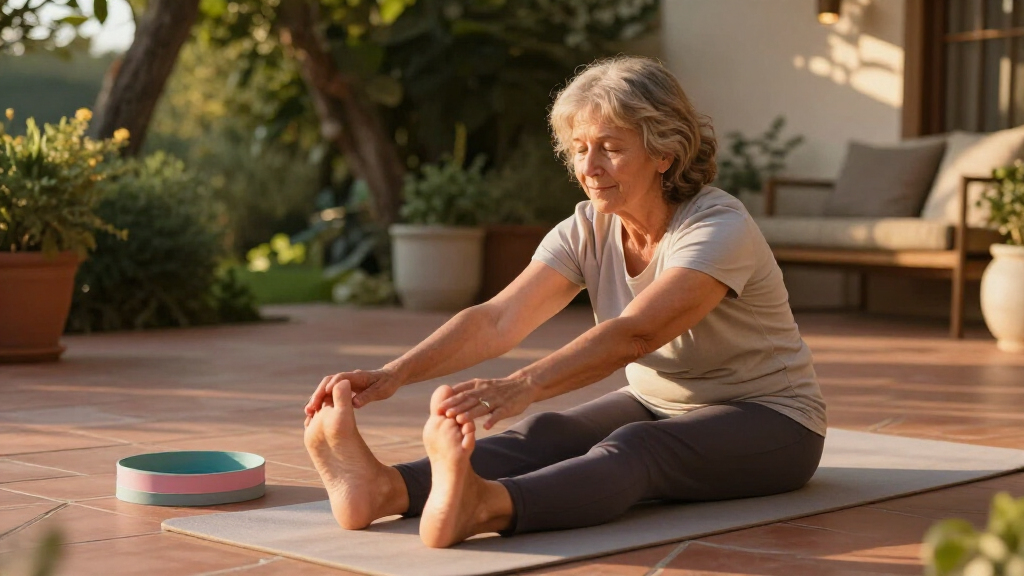
For arthritis, the goal is to reduce joint strain and inflammation. Use longer warm-ups and props to ease stiff joints. During flare-ups, reduce movement intensity and avoid painful ranges. For example, instead of full forward bends, try a gentle seated stretch reaching toward your knees or a wall-side stretch. These adaptations help preserve joint function and reduce discomfort, encouraging continued practice. The tradeoff is that some poses are less intense, which may limit immediate gains in flexibility but support long-term joint health. Always follow your doctor’s or therapist’s advice, especially after joint replacements or fractures, to ensure your practice is aligned with your healing process and specific needs.
non-slip yoga mats for older adults
As an affiliate, we earn on qualifying purchases.
As an affiliate, we earn on qualifying purchases.
A Simple, Gentle Routine You Can Do Today
- Start seated with deep belly breathing—inhale slowly through your nose, feeling your belly expand, then exhale gently. This helps calm the nervous system and prepares your body for movement.
- Gently turn your head side to side, avoiding quick or forced movements. This improves neck flexibility and reduces tension.
- Roll your shoulders up toward your ears, then back and down—repeat five times. This relieves shoulder tension and improves upper body circulation.
- While seated or standing, reach your arms overhead and lean gently side to side, feeling the stretch through your ribs. This promotes spinal mobility and enhances breathing capacity.
- Use a chair or wall to support your balance during a slow calf stretch—press your heel down and hold. This strengthens lower leg muscles and improves stability.
- Finish with a few minutes of quiet relaxation—lying down or seated—focusing on your breath. This consolidates the practice and fosters mental calmness.
Hold each stretch for about 10–30 seconds, breathing normally, and repeat on both sides. This routine can be done in just 10–15 minutes, fitting easily into your day. Consistency is key—regular practice helps build strength, flexibility, and confidence gradually, making movement a sustainable part of your lifestyle.
Emerging Trends in Gentle Movement for Older Adults
In recent years, there’s been a shift toward more inclusive, adaptive programs. Chair-based yoga, for example, makes movement accessible without floor work, reducing fall risk and accommodating limited mobility. These programs focus on strength, balance, and functional mobility—more than just flexibility—aiming to improve overall independence and quality of life.
Trauma-informed teaching emphasizes choice, consent, and respect, creating safe spaces that acknowledge individual limitations and promote empowerment. Online classes have increased accessibility, allowing participation from home, but in-person guidance remains vital for ensuring correct technique and addressing unique needs. Researchers are exploring yoga’s role in improving sleep, mood, and cognitive health, with promising results that suggest holistic benefits beyond physical movement. Most importantly, movement practices are becoming more personalized, recognizing that each person’s health, ability, and comfort are unique. This evolution helps ensure that movement remains a positive, sustainable, and enjoyable part of aging, emphasizing quality over quantity.
Understanding these trends enables you to choose practices that resonate with your needs and preferences, fostering a lifelong habit of gentle movement that supports your well-being at every stage.
What You Need to Start and How to Stay Safe
- A sturdy, non-wheeled chair and comfortable clothing.
- Optional props: cushions, straps, blocks, blankets.
- Clear, supportive instructions from a qualified instructor experienced in older-adult or adaptive yoga.
- Consult your healthcare provider before starting if you have recent surgery, osteoporosis, or medical conditions that affect movement.
- Practice in a safe, clutter-free space with good lighting.
Begin slowly, listen to your body, and focus on controlled, gentle movements. Remember, consistency beats intensity. Even a few minutes daily can make a difference. Keep your practice enjoyable and tailored to your needs. This mindful approach ensures that your practice supports your health without risking setbacks, fostering a sense of accomplishment and motivation to maintain regular movement.
Frequently Asked Questions
Am I too old or too stiff to start?
Absolutely not. Beginners can start with seated or supported movements tailored to their comfort. Even small, gentle steps help maintain mobility and confidence. Your body is adaptable—start slowly and listen to your limits.
How often should older adults stretch?
Most days are ideal for gentle movement, but even two or three sessions weekly can bring benefits. Consistency is key, so find a routine that feels good and easy to stick with.
How long should a stretch be held?
Hold stretches for about 10–30 seconds, breathing smoothly. Avoid bouncing or forcing the stretch—gentle, sustained tension is enough to keep muscles happy and limber.
Is yoga safe with arthritis?
Yes, with modifications. Use props, reduce range, and avoid painful movements. A knowledgeable instructor or therapist can guide you through safe options during flare-ups or stiffness.
Can yoga prevent falls?
While yoga can improve balance and strength, it should be part of a comprehensive fall prevention plan—including strength exercises and home safety checks—for the best results.
Conclusion
In the quiet moments of your day, a gentle stretch or seated pose can be a small act of kindness toward your body—building strength, easing tension, and fostering confidence. Movement at any age is a gift, not a goal.
So, grab a chair, roll your shoulders, and breathe deeply. Your body will thank you with steadier steps and a brighter spirit. After all, living with country charm means savoring the simple, everyday joys—and staying active is a vital part of that.
Halloween Picks
halloween
As an affiliate, we earn on qualifying purchases.