
TL;DR

Turn quiet afternoons into listening time
- Thousands of audiobooks, podcasts and originals
- Listen on your phone, tablet or Echo — also offline
- Cancel anytime
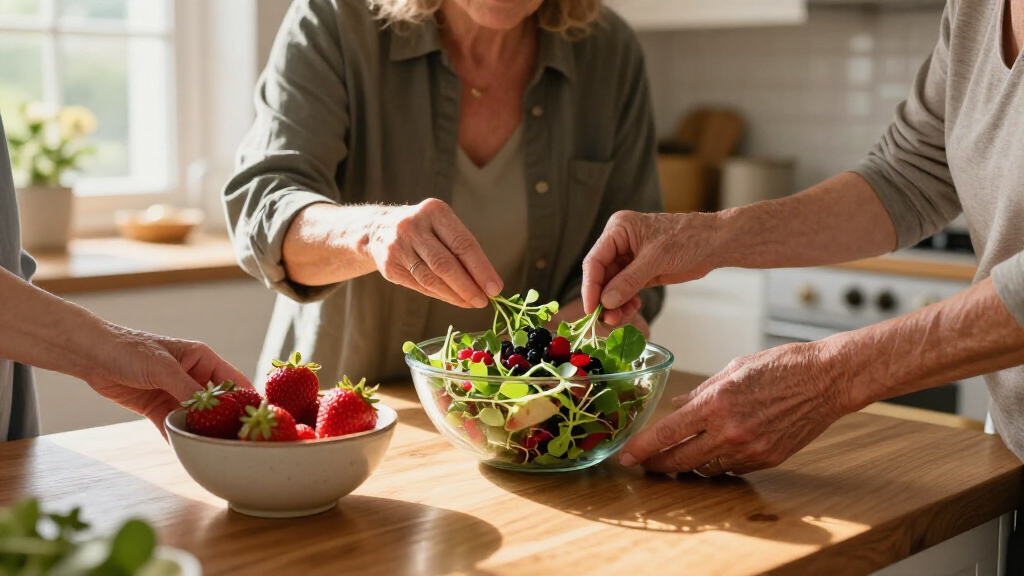
A Seniors Guide report drawing on Environmental Nutrition describes fruit as a source of carbohydrates, fiber and plant nutrients, and microgreens as a flavorful addition to meals. It recommends choosing whole fruit often, checking canned and frozen products for added sugars, and using microgreens as an add-on rather than a replacement for vegetables.
A report published by Seniors Guide and drawing on nutrition guidance from Environmental Nutrition outlines ways to add fruit and microgreens to everyday meals. It describes fruit as a source of fiber and plant nutrients and recommends treating microgreens as a flavorful addition—not a substitute for full servings of vegetables.
The report says fruit comes fresh, canned, frozen, dried and juiced, and supplies carbohydrates, fiber, vitamins, minerals and phytonutrients. It cites a general recommendation to eat five to nine servings of fruits and vegetables per day. The source does not identify who issued that recommendation or specify a serving size, so readers should not treat it as a personalized dietary target.
Environmental Nutrition contributor Heidi McIndoo, identified as a registered dietitian with a master’s degree, suggests planning to include whole fruit at meals. The report favors whole fruit over juice because juice lacks the fiber found in the intact fruit. For occasional juice, it recommends 100% fruit juice and a limit of no more than eight ounces a day.
The report also says canned and frozen fruit can be nutritious choices when selected without added sugars, sauces or syrups, and notes that these options may be easier on the budget. Microgreens, meanwhile, are young vegetables and herbs harvested after their first leaves appear. The report suggests adding them to salads, sandwiches, soups, grain bowls, tacos or burgers, or blending them into dressings and pesto.
Simple Ways to Add Plant Foods
The guidance offers readers practical options that do not depend on buying fresh produce alone. Frozen and canned fruit can provide alternatives, while checking labels for added sugars helps distinguish those products from fruit packed with sweetened sauces or syrups. The report does not compare prices or quantify any cost savings.
Microgreens may bring concentrated flavor and nutrients in a small amount, but the report explicitly cautions that they should not replace full vegetable servings. This framing matters: they are presented as one way to vary meals, not as a shortcut that can stand in for a broader diet. The advice is general and does not account for individual health needs or dietary restrictions.
As an affiliate, we earn on qualifying purchases.
What the Report Says About Produce
The article combines a fruit overview credited to Heidi McIndoo with a question-and-answer section about microgreens credited to Environmental Nutrition staff. It was republished by Seniors Guide from Environmental Nutrition, described in the source as an independent newsletter written by nutrition experts, and distributed by Tribune Content Agency.
In discussing fruit sugar, the report distinguishes naturally occurring sugars in fruit from added sugars in products such as soda, candy and sports drinks. It says there is no need to limit naturally occurring fruit sugars on that basis. That is the report’s general nutrition guidance; it does not discuss how recommendations might differ for people managing specific medical conditions.
For microgreens, the article names radish, kale and broccoli as examples. It says some varieties, including amaranth and cilantro, may contain higher levels of certain nutrients—such as beta-carotene and vitamins C, E and K—than their mature counterparts. The source does not give study details, nutrient amounts or a comparison across all microgreen varieties.
“Aim to include whole fruit at each meal.”
— Heidi McIndoo, MS, RD, Environmental Nutrition
As an affiliate, we earn on qualifying purchases.
Limits of the Nutrition Evidence
The source provides no publication date beyond a 2026 copyright notice, and it does not link to the research behind its comparisons of microgreens and mature vegetables. It is therefore unclear which studies, varieties, growing conditions or serving amounts support the nutrient claims. The report uses qualified language—certain microgreens may contain higher levels of selected nutrients—rather than claiming that all microgreens are more nutritious than mature produce.
The five-to-nine-serving recommendation is presented without an issuing authority, serving-size definition or information about how needs vary among individuals. The source also does not explain how its juice limit applies to different ages or health circumstances. Readers with medical conditions or individual nutrition concerns may need advice from a qualified health professional.
As an affiliate, we earn on qualifying purchases.
How Readers Can Apply the Guidance
The report does not announce a new policy, study or upcoming milestone. Its practical next steps are to plan for whole fruit, compare labels on canned and frozen options, and try microgreens in familiar dishes. It suggests using juice occasionally, choosing 100% juice and staying within the stated eight-ounce daily limit.
Further detail would be needed to evaluate the nutrient comparisons or apply serving recommendations to particular groups. The source directs readers to Environmental Nutrition for more information but does not say whether additional research or guidance is scheduled.
As an affiliate, we earn on qualifying purchases.
Key Questions
What are microgreens?
Microgreens are young vegetables and herbs harvested early, after their first leaves have developed. The report gives radish, kale and broccoli as examples.
Can microgreens replace vegetables?
No. The report says microgreens can help add flavor and nutrients but should not replace full servings of vegetables.
Are frozen or canned fruits suitable choices?
The report describes them as nutritious options when chosen without added sugars, sauces or syrups. It also notes that they may be easier on the budget than some fresh options.
Does the report recommend avoiding fruit because of its sugar?
No. It distinguishes naturally occurring sugars in fruit from added sugars in products such as soda and candy. The article says its discussion of limiting sugar concerns added sugars, not fruit’s natural sugars.
How much fruit juice does the article suggest?
For people who drink juice occasionally, the report recommends 100% fruit juice and no more than eight ounces per day. It favors whole fruit because juice does not provide the same fiber benefits.
Source: rss
Cold & flu season Picks
humidifiers
As an affiliate, we earn on qualifying purchases.