TL;DR

Turn quiet afternoons into listening time
- Thousands of audiobooks, podcasts and originals
- Listen on your phone, tablet or Echo — also offline
- Cancel anytime
Radiologist Michael Lipton told Being Patient that a conventional brain MRI can look normal even when a person has persistent neurological symptoms, because routine scans show structures visible to the radiologist rather than microscopic changes. He described quantitative MRI research aimed at measuring subtle brain differences, including volume changes and effects linked to repetitive head impacts; the interview does not establish these techniques as routine diagnostic tests.
Columbia University radiologist Michael Lipton says quantitative MRI research may help measure brain changes that a conventional scan cannot show, clarifying why a report described as “normal” does not rule out every source of neurological symptoms. In an interview with Being Patient, Lipton discussed subtle structural changes, including brain volume loss, and research on repetitive head impacts in soccer players; the material does not establish these methods as routine clinical tests or as diagnoses for individual patients.
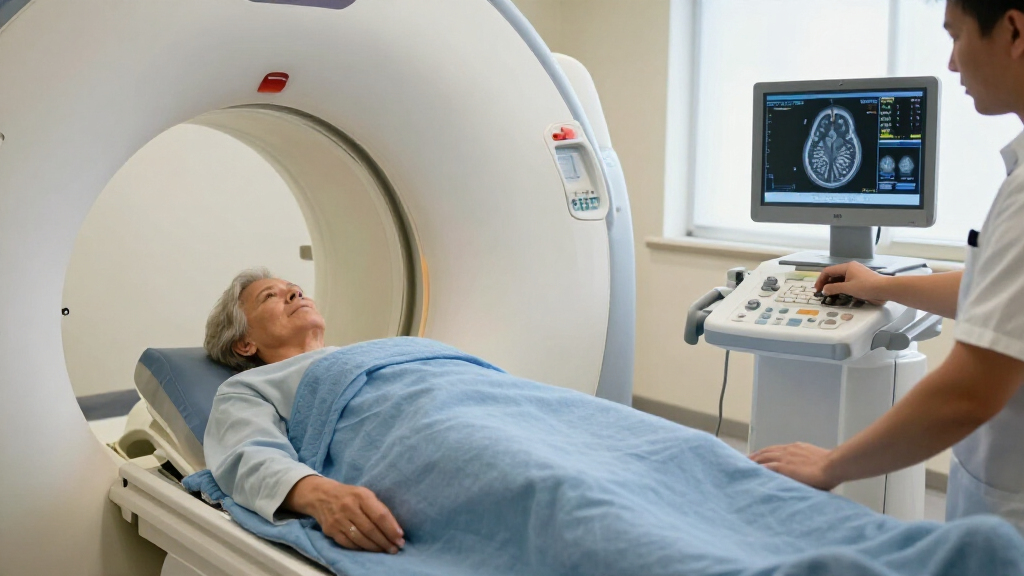
A conventional brain MRI produces many images that a radiologist reviews for visible abnormalities. Lipton, a professor of radiology at Columbia University Irving Medical Center and an attending radiologist at NewYork-Presbyterian, said a report of “normal” or “unremarkable” means that the reviewing clinician did not identify a relevant abnormality on those images. It does not mean that every microscopic feature or aspect of brain function has been shown to be normal.
Routine MRI can help identify sizable structural problems, Lipton said, including many strokes and brain tumors once they reach a detectable scale. But some conditions and symptoms involve changes too small to be apparent on standard images. Lipton pointed to difficulties with memory, attention, sleep, balance, or thinking as examples where brain-cell communication and networks may be involved, without a clear finding on a conventional scan.
Quantitative MRI refers here to approaches intended to measure features of brain tissue, rather than relying only on visual inspection of images. Lipton discussed the potential to detect subtle volume loss, including changes associated with Alzheimer’s disease, and research into repetitive head impacts among soccer players. The supplied interview does not give study sizes, numerical results, or evidence that these measures can independently determine the cause of a patient’s symptoms.
What a Normal Scan Can Miss
The distinction matters to people who continue to experience symptoms after receiving a reassuring scan. A conventional MRI can answer important questions about visible structural damage, but a normal-looking result is not a broad guarantee that the brain has no biological change. Understanding the scope of the test may help patients and clinicians interpret the report without treating it as either a complete explanation or a definitive dismissal of symptoms.
Quantitative methods could add measurements to imaging and support research into brain changes that are difficult to assess by eye. That possibility is relevant to conditions involving gradual tissue change or subtle injury. However, the interview describes research aims and examples, not a validated screening pathway, a replacement for clinical evaluation, or proof that quantitative MRI can identify a specific disease in every person.
The distinction also guards against overreading an advanced scan. A measured difference is not automatically a diagnosis, and the source material does not specify how such findings should be interpreted for an individual. Clinical meaning depends on the measurement, the person’s symptoms and history, and evidence that links the result to an outcome.
As an affiliate, we earn on qualifying purchases.
How Radiologists Read Brain MRIs
The interview centers on what a standard MRI report can and cannot say. A radiologist reviews images of the brain and reports abnormalities that are visible using clinical imaging and professional judgment. This approach is useful for identifying many substantial structural problems, but it is not the same as examining tissue under a microscope or measuring every small connection between brain cells.
Lipton’s work includes research on concussion and repetitive head impacts in soccer players. In the interview, he connected that research with broader efforts to understand brain changes that may not appear on conventional scans. The source describes his areas of study but does not supply specific findings from the soccer research, so no particular level of injury or risk can be inferred from it.
The article also notes that neurological symptoms can persist despite an unremarkable scan. Lipton used psychiatric disorders and problems involving higher brain functions as examples of conditions that may not produce a visible finding on a typical clinical MRI. That point is a general explanation of imaging limits, not a claim that a normal scan identifies the cause of any particular person’s symptoms.
““What they report is what they can see, what’s visible to their eye.””
— Dr. Michael Lipton, Columbia University Irving Medical Center, in an interview with Being Patient
As an affiliate, we earn on qualifying purchases.
Limits of the Evidence Described
The source is an interview about imaging concepts and Lipton’s research, not a report of a newly published clinical trial or a change in diagnostic guidance. It provides no study dates, sample sizes, performance figures, or comparison with established diagnostic methods. The precise quantitative MRI techniques discussed, their availability, and their ability to distinguish among diseases are not detailed in the supplied material.
It is also unclear whether any particular quantitative measure can explain a patient’s symptoms or predict how a condition will progress. The interview’s examples should not be taken to mean that every person with memory problems, headache, confusion, or balance issues has a detectable abnormality on advanced imaging. A normal conventional scan neither settles every diagnostic question nor, by itself, establishes a hidden disease.
advanced MRI for neurological symptoms
As an affiliate, we earn on qualifying purchases.
As an affiliate, we earn on qualifying purchases.
Research and Clinical Use Ahead
The next step is further research to establish what quantitative MRI measurements can reliably detect, how those measurements relate to symptoms and outcomes, and whether they add useful information beyond conventional imaging. The interview does not announce a specific upcoming study, timetable, or clinical rollout.
For now, the reported development is an explanation of a research direction rather than a change in standard care. People with ongoing neurological concerns should discuss their symptoms and imaging results with a qualified health professional, who can interpret them alongside medical history and other assessments. The source does not present quantitative MRI as a substitute for that evaluation.
As an affiliate, we earn on qualifying purchases.
Key Questions
Does a normal brain MRI mean the brain is completely healthy?
No. Lipton said “normal” generally means the radiologist did not see a relevant abnormality on the images. Some microscopic or functional changes may not be visible on a conventional scan.
What is quantitative MRI?
In the interview, the term refers to MRI approaches designed to measure features of brain tissue, rather than relying only on visual review. The source does not specify a single technique or provide clinical performance figures.
Can quantitative MRI diagnose Alzheimer’s disease?
The interview discusses measuring subtle brain volume changes associated with Alzheimer’s disease, but it does not establish quantitative MRI as a stand-alone diagnostic test. The clinical meaning of a scan must be assessed by qualified professionals.
Why might symptoms continue when a conventional MRI is unremarkable?
Some symptoms may involve microscopic structures or communication between brain cells that routine images do not show, Lipton explained. An unremarkable scan does not, on its own, identify what is causing symptoms.
Did the interview report new results from soccer-player research?
The supplied material says Lipton discussed research on repetitive head impacts in soccer players, but it does not provide specific results, participant numbers, or risk estimates.
Source: rss
Halloween Picks
halloween
As an affiliate, we earn on qualifying purchases.