
TL;DR

Turn quiet afternoons into listening time
- Thousands of audiobooks, podcasts and originals
- Listen on your phone, tablet or Echo — also offline
- Cancel anytime
A study presented at the American Heart Association meeting found that an AI model analyzing smartwatch ECGs could distinguish reduced left ventricular function in a clinical study, but results varied between Apple and Samsung watches and across repeated readings. The researchers say a single negative home reading cannot rule out the condition; how well the approach works for broader screening and clinical outcomes remains unknown.
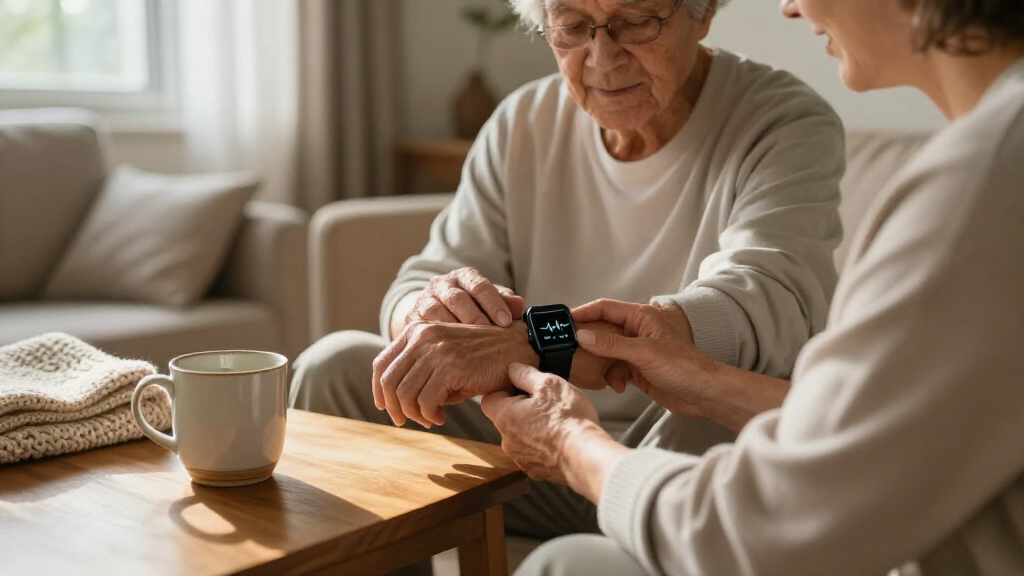
A Korean study presented at the American Heart Association annual meeting found that an AI model reading smartwatch ECGs could identify some cases of reduced left ventricular systolic function, but its results were not consistent across devices or repeated home recordings. The findings temper expectations that a smartwatch reading can reliably screen for left ventricular systolic dysfunction (LVSD), a condition that can be associated with heart failure.
The study included 2,211 patients at Incheon Sejong Hospital who were undergoing echocardiography for clinical reasons and used both an Apple Watch and a Samsung Galaxy Watch for ECG recordings. Researchers applied the same AI model cutoff to both devices. The model’s area under the curve was 0.907 for Apple Watch and 0.895 for Galaxy Watch, measures of how well the model separated people with and without LVSD in this study. Sensitivity was 69.2% and 53.4%, respectively, while specificity was 88.9% and 93.4%.
Those overall performance measures did not mean the watches agreed for every participant. At the shared cutoff, 9% of the cohort had discordant results: 158 people tested positive only on the Apple Watch and 42 only on the Galaxy Watch. Study presenter Hak Seung Lee, MD, said Apple Watch scores tended to be higher. The study defined LVSD as an ejection fraction of 40% or less, measured by echocardiography within 14 days of the ECG.
A separate group of 146 patients recorded ECGs at home using one smartwatch, mostly a Galaxy Watch. Among participants who took at least two readings a day, 49.3% had both positive and negative results within the same week at the study’s cutoff. Averaging readings over a week did not fully resolve the problem: a stricter approach reduced false positives but also missed more people with LVSD, according to the report.
Why Mixed Watch Readings Matter
The results matter because a smartwatch screening tool could make it easier to flag people who may need further evaluation for reduced heart function. But inconsistent readings create risks in both directions: false positives can lead to added testing and strain on health services, while false negatives may provide misleading reassurance or miss people who could benefit from assessment.
Jessica Golbus, MD, MS, of the University of Michigan, said health systems need to balance the demand to identify people with LVSD against the burden of follow-up for false alarms. She also stressed that screening is useful only if people with concerning results can be connected to care and appropriate treatment. The study did not establish whether smartwatch screening improves patient outcomes or how it would work as part of routine clinical care.
Products Worth Considering

EGO Power+ SNT2122 21-Inch Single-Stage Snow Blower with Two 4.0Ah Batteries and 320W Charger

EGO POWER+ 20-Inch Cordless Chainsaw with 56V 6.0Ah Battery and Charger (CS2005)

Husqvarna 330LK Gas String Trimmer
As an affiliate, we earn on qualifying purchases.
From Early Promise to Clinical Testing
Interest in smartwatch ECG screening followed a 2022 study that reported good accuracy for an AI model using a single-lead smartwatch ECG to detect LVSD. The current study examined two smartwatch models and repeated recordings, addressing whether performance holds across devices and over time.
Researchers used AiTiALVSD-1L, a single-lead AI-ECG model pre-trained on nearly 3 million unlabeled ECGs and then fine-tuned using about 360,000 clinical lead I ECGs. Its cutoff was selected using a separate Galaxy Watch tuning set to provide 98% specificity, then applied to both watch brands. In the device comparison group, 6.6% had known LVSD and 31% had known heart failure; in the home-reading group, 33.6% had LVSD and 55.5% had known heart failure.
“A single negative home recording is not reassuring on its own, and mixed results should prompt further evaluation.”
— Hak Seung Lee, MD, study presenter
Limits of the Current Evidence
The findings come from a single hospital and do not show how well the watches would perform in a broad population of people without known heart failure or a clinical reason for echocardiography. The investigators did not assess screening among asymptomatic people without heart failure, so the results cannot establish accuracy for general-population screening.
It is also unclear whether performance differs across age, race, ethnicity, or levels of ejection fraction. The study did not report whether acting on watch results changed treatment or health outcomes. The reported accuracy measures describe performance in the groups studied; they do not establish that either watch can diagnose LVSD on its own.
Testing Before Routine Use
Further research will need to test device-specific cutoffs in more varied patient groups and determine how repeated or conflicting readings should be handled. Researchers and health systems also need to study what follow-up pathway is appropriate when a watch flags a possible problem, and whether screening leads to earlier care without an unmanageable number of unnecessary evaluations.
Golbus said an important next step is examining how the results translate into clinical outcomes and whether patients can be connected to effective treatment. Until those questions are answered, Lee’s findings support treating smartwatch AI-ECG readings as a prompt for further evaluation, not as a stand-alone diagnosis or a rule-out test.
Key Questions
What did the study find about smartwatch detection of LVSD?
The AI model showed measurable ability to distinguish patients with and without LVSD in the study, but results varied between Apple and Samsung watches and across repeated home readings.
Does a negative smartwatch ECG rule out reduced heart function?
No. The study presenter said a single negative home recording is not reassuring on its own. The study does not establish smartwatch ECG as a rule-out test.
How common were conflicting results?
In the 2,211-person device comparison, 9% had results that differed between the watches at the shared cutoff. In the separate home-monitoring group, 49.3% of those recording at least twice daily had both positive and negative readings in the same week.
Can smartwatch AI diagnose LVSD?
The study did not establish that a smartwatch can diagnose LVSD. The researchers said more evidence is needed, and the study’s findings do not replace clinical evaluation or echocardiography.
What further research is needed?
Researchers need to test performance in broader populations, including people without known heart failure, examine differences across demographic groups, and determine whether screening improves clinical outcomes without creating excessive follow-up from false positives.
Source: medpagetoday.com