
TL;DR

Turn quiet afternoons into listening time
- Thousands of audiobooks, podcasts and originals
- Listen on your phone, tablet or Echo — also offline
- Cancel anytime
A Fit&Well report draws attention to muscle power—the ability to produce force quickly—as a fitness skill that may decline with age and inactivity. Trainer Kylie Hansen recommends adapting familiar exercises and prioritizing a few controlled, high-quality repetitions over working to exhaustion.
Fit&Well has highlighted muscle power—the ability to produce force quickly—as an often-overlooked part of fitness for women in midlife, featuring advice from personal trainer Kylie Hansen on ways to train it. Hansen says power supports rapid movements such as recovering balance after a trip; the report presents an exercise routine, but does not report new research or quantify how much power women lose with age.
Hansen, a NASM-certified personal trainer and coach at Busy Bariatrics, describes power as using strength at speed. She says quick, forceful movement can be useful when someone needs to catch themselves after a trip or move quickly to regain balance. The report says muscle fibers involved in rapid movement can decline with age and inactivity, attributing that explanation to Hansen.
Her suggested routine has four exercises: a burpee, a squat jump, a squat to upright row with dumbbells or kettlebells, and a plank dumbbell pull-through. The first three emphasize producing force during a whole-body or lower-body movement. The pull-through is different: it challenges the exerciser to keep the trunk and hips steady while shifting weight between arms.
The prescribed format is two or three sets of each exercise, with five to six repetitions per set; the plank pull-through is five to six repetitions on each side. Hansen recommends resting 60 to 90 seconds between sets. Her guidance stresses purposeful movement and adequate rest rather than turning the session into a high-repetition cardio workout.
Why Quick Force Matters With Age
The report draws attention to a distinction between general strength and the ability to use strength quickly. That skill is relevant to everyday actions that require a fast response, including regaining balance, according to Hansen. The practical implication is that a fitness routine focused only on slower strength work may not directly practice every kind of movement people use in daily life.
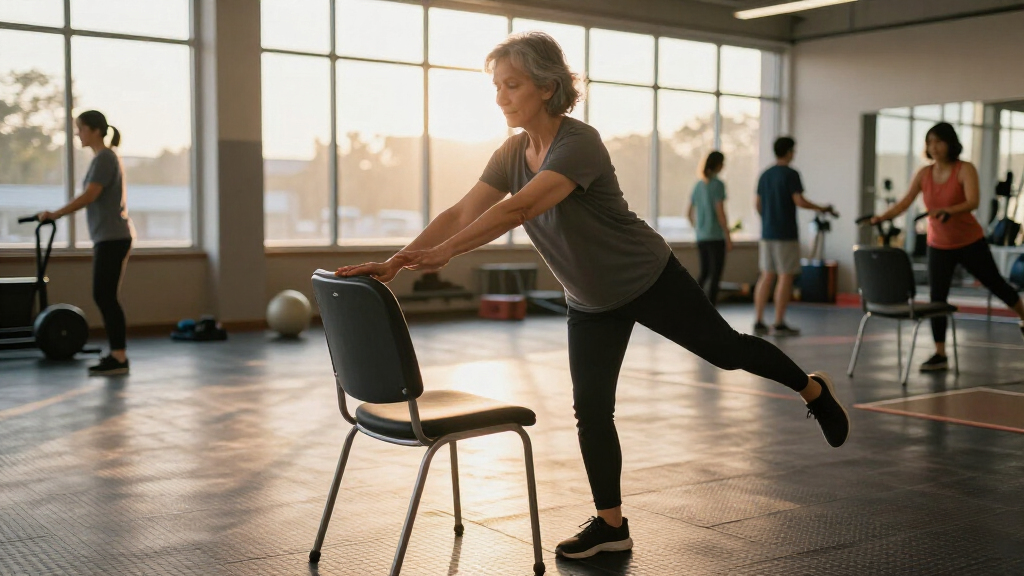
Hansen’s suggestions also frame power training as adaptable rather than necessarily requiring high-impact jumps. Beginners can step through a burpee or rise onto their toes instead of jumping, while the plank pull-through can be done from the knees. These modifications may help people choose a version that suits their current ability, though the report does not establish that these exercises prevent falls or extend lifespan.
The word “longevity” in the original headline signals the subject’s relevance to aging, but the supplied report does not present evidence that this specific workout increases lifespan. Its direct contribution is practical guidance from a trainer on training quick force and stability, not a clinical finding about long-term health outcomes.
As an affiliate, we earn on qualifying purchases.
How the Four-Move Routine Works
Hansen recommends keeping the focus on quality repetitions. As she puts it, “Power drops as fatigue builds.” She says she would rather see someone complete a small number of crisp, purposeful repetitions, rest adequately, and repeat them well than continue until the movement becomes a high-repetition cardio effort. This is her coaching guidance as reported by Fit&Well, not a comparison from a trial described in the source material.
The exercises offer different ways to practice force and coordination. A burpee can be stepped through or performed with a jump, while a squat jump involves pushing through the feet and landing softly with the hips and knees bending to absorb impact. In the squat to upright row, the exerciser stands from a squat and uses the movement’s momentum to bring weights toward the chest. Hansen says coordinating upper- and lower-body movement is part of its challenge.
For the plank dumbbell pull-through, the person moves a dumbbell across the floor from one side of the body to the other while maintaining a stable plank. Hansen describes the challenge as creating stability quickly as the base of support changes. The source recommends spreading the moves into two or three sets each, rather than specifying a weekly schedule or a progression plan.
“That means being able to use your strength at speed—a skill that matters when you need to catch yourself after a trip or move quickly to regain your balance.”
— Kylie Hansen, as quoted by Fit&Well
As an affiliate, we earn on qualifying purchases.
What the Report Does Not Establish
The source material does not provide a publication date, original study, or data measuring how quickly muscle power changes in women at different ages. It also does not compare this routine with other exercise programs or report outcomes such as improved balance, fewer falls, or longer life. Those points should not be inferred from the article’s headline or from the trainer’s exercise recommendations.
The suggested exercises may not suit everyone, and the report does not give individualized guidance about injuries, health conditions, or appropriate starting loads. It also does not set out how to increase difficulty over time or how frequently to perform the workout. Hansen’s modifications are general coaching suggestions, not a personal assessment of a reader’s fitness or safety.
As an affiliate, we earn on qualifying purchases.
How Readers Can Apply the Advice
The report offers a routine rather than announcing a new program or planned follow-up. Readers considering the exercises can review the step-back, toe-rise, and knees-down modifications and keep the rest periods and low repetition counts Hansen describes. The source advises controlled movement and quality over exhaustion; it does not prescribe a universal schedule.
Anyone unsure whether jumping or loaded exercises are appropriate for them should seek guidance from a qualified fitness professional or health professional familiar with their circumstances. Further evidence on age-related power changes, training frequency, and effects on functional outcomes would be needed to establish how this particular approach affects long-term health.
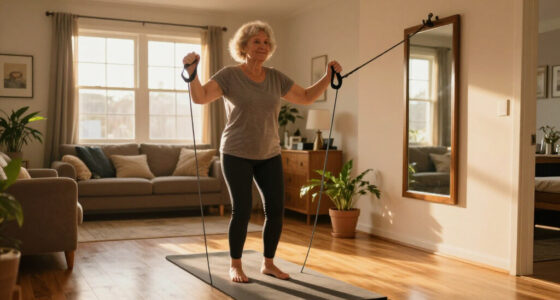
adjustable resistance bands for seniors
As an affiliate, we earn on qualifying purchases.
As an affiliate, we earn on qualifying purchases.
Key Questions
What does muscle power mean in this report?
Trainer Kylie Hansen defines power as the ability to produce force quickly—using strength at speed.
Which exercises does Hansen recommend?
The four moves are a burpee, squat jump, squat to upright row, and plank dumbbell pull-through. The pull-through focuses on stability while moving a weight across the body.
How many sets and repetitions does the routine suggest?
The report recommends two or three sets of five to six repetitions for each move, with five to six repetitions per side for the pull-through. Rest for 60 to 90 seconds between sets.
Do beginners have to jump?
No. Hansen suggests stepping the feet back during a burpee or rising onto the toes instead of jumping. The plank pull-through can also be modified by performing it from the knees.
Does the report show that power training extends lifespan?
No. The supplied report gives a trainer’s explanation and workout suggestions, but it does not present research showing that this routine extends lifespan or prevents falls.
Source: rss
Halloween Picks
halloween
As an affiliate, we earn on qualifying purchases.