
TL;DR
Tai Chi teacher Brian Thompson shared a five-minute morning routine with Fit&Well, combining self-massage, gentle arm movements, weight shifts and breathing. Thompson says the practice may help ease stiffness and support a calmer, more focused start; the report does not provide research showing that this specific routine produces those effects.
Tai Chi teacher Brian Thompson has shared a five-minute morning routine in a Fit&Well report, outlining four gentle practices that combine self-massage, arm movements, weight shifts and breathing. Thompson says the sequence can help people start the day with less tension and better focus, though the report does not cite research testing this particular routine.
The sequence begins seated, either on a chair or at the edge of a bed. Practitioners massage their neck, arms, midsection and legs, then cup their hands and pat the body with a light tapping motion. Thompson’s instructions emphasize relaxed shoulders, an upright posture and gentle contact.
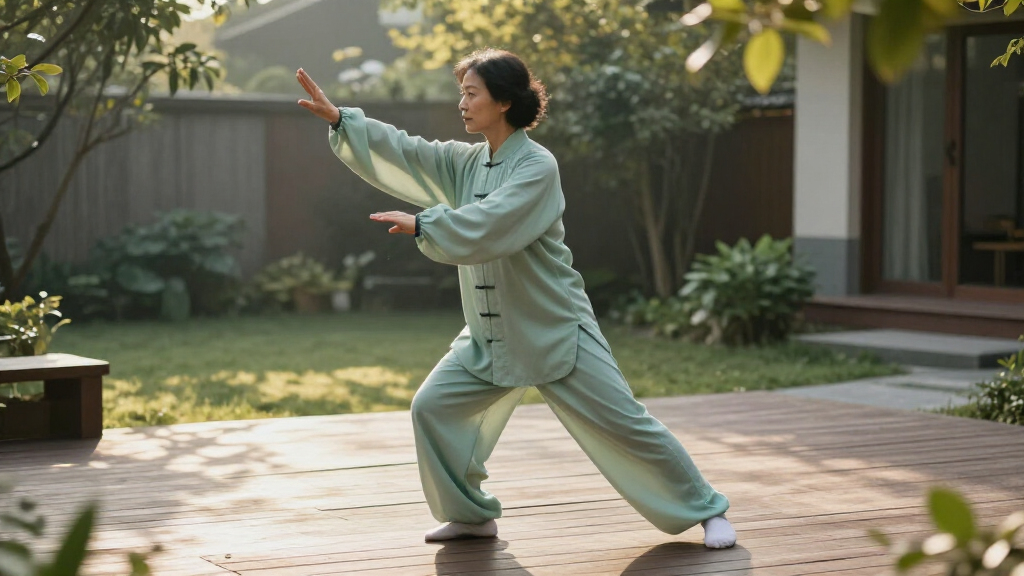
The remaining movements are done standing. In “lifting water,” participants raise their arms to shoulder height while inhaling, then lower them slowly while exhaling. Thompson recommends three to five repetitions, soft elbows and knees, and feet kept in line with the knees.
“Silk reeling,” also called chan si gong, uses a slow turn of the waist and a shift of bodyweight from one leg to the other while one hand traces a continuous arc. The final movement, “gather and release,” raises the arms to the sides and overhead before lowering them to waist height. The instructions call for soft joints and steady nasal breathing throughout.
A Brief Practice for Starting the Day
The report offers readers a short, structured movement sequence that can be done at home without equipment. Its instructions focus on controlled movements, posture and breathing, making the routine a practical example of how a Tai Chi teacher approaches a morning session.
Thompson says morning practice may help wake stiff joints, lift energy and support concentration. Those are his stated benefits; the Fit&Well report does not present clinical findings or measurements showing that this five-minute sequence has those effects. Readers should understand the routine as an instructor’s guidance rather than a verified treatment for pain, stress or concentration problems.
How Thompson Structures the Sequence
Tai Chi is described in the report as a mindful movement practice built around slow, intentional exercises. Thompson, identified as a Tai Chi teacher and founder of bnew4life, says the practice can address joint stiffness, muscle tightness and mental stress. These comments are attributed to him, and the report does not provide independent evidence alongside them.
Although Tai Chi can be practiced at different times of day, Thompson recommends this sequence for the morning. It moves from seated self-massage to standing arm and weight-shift exercises, then finishes with a broader raising and lowering motion. The report presents the routine as a five-minute way to begin the day, but does not specify a required schedule or explain how the movements were selected.
“It works to gently release deep-seated joint stiffness, muscle tightness, and mental stress.”
— Brian Thompson, Tai Chi teacher
Evidence and Individual Fit
The report does not say whether the five-minute sequence has been studied, how often it should be practiced to produce benefits, or how its effects compare with other morning activities. Thompson’s comments about easing tension and improving focus are attributed recommendations, not measured outcomes in the article.
It also does not discuss modifications for people with mobility limitations or existing injuries. The instructions repeatedly favor gentle movement and soft joints, but individual comfort may vary. The report gives no formal safety assessment or guidance on when to stop.
What Readers Can Take From It
Fit&Well’s report provides a step-by-step routine readers can try at their own pace, beginning with seated massage and moving through three standing exercises. The article does not announce a follow-up study or a next publication milestone. Further evidence about this particular sequence would require research that measures outcomes such as stiffness, stress or focus over a defined period.
Key Questions
What does the five-minute Tai Chi routine include?
It includes self-massage and light body tapping, lifting water, silk reeling and gather and release. The last three movements are practiced standing.
Who shared the routine?
Brian Thompson, identified by Fit&Well as a Tai Chi teacher and founder of bnew4life, shared the sequence and its instructions.
Does the report prove the routine improves focus or relieves tension?
No. Those are benefits Thompson says the practice may support. The report does not cite research testing this specific routine or establish those outcomes.
When does Thompson suggest practicing it?
He presents it as a morning practice to help people ease into the day. The report does not prescribe how often to repeat it.
Source: rss