
TL;DR

Get comfort and care essentials delivered free — and shop member deals
- Fast, free delivery on millions of items
- Access to Prime Big Deal Days deals on October 6–7
- Prime Video, Amazon Music and more included
Prevent slips on icy country steps by focusing on traction, timely de-icing, and proper drainage. Traditional tricks like grit and modern solutions like heated mats can make all the difference. Safety starts with what’s around your steps today.
Traction is your best defense—use grit, anti-slip treads, or textured coatings.
Pre-treat steps with liquid brine before storms to prevent ice bonding and save effort later.
Redirect meltwater away from your steps to stop refreezing and black ice formation.
Install sturdy handrails and good lighting to support safe footing in winter.
Consider heated stair mats or pet-safe de-icers to keep steps clear effortlessly.
How to Prevent Slips on Icy Country Steps
Safe winter steps come down to three things: create traction, stop ice from bonding, and keep meltwater from returning. Pair those basics with sturdy handrails and good lighting for safer footing from the first frost to the spring thaw.
Build grip before relying on chemicals
Ice offers little friction. A rough, stable surface gives boots immediate purchase—even when temperatures are too low for ordinary salt to work.
Scatter rural grit
Sand, gravel, chicken grit, wood ash, or dry litter adds instant footing. It does not melt ice, so reapply after snow, rain, or thawing.
Add outdoor treads
Use exterior-rated stair nosing, composite treads, or grip tape. Check adhesion after repeated freeze–thaw cycles.
Choose rubber mats
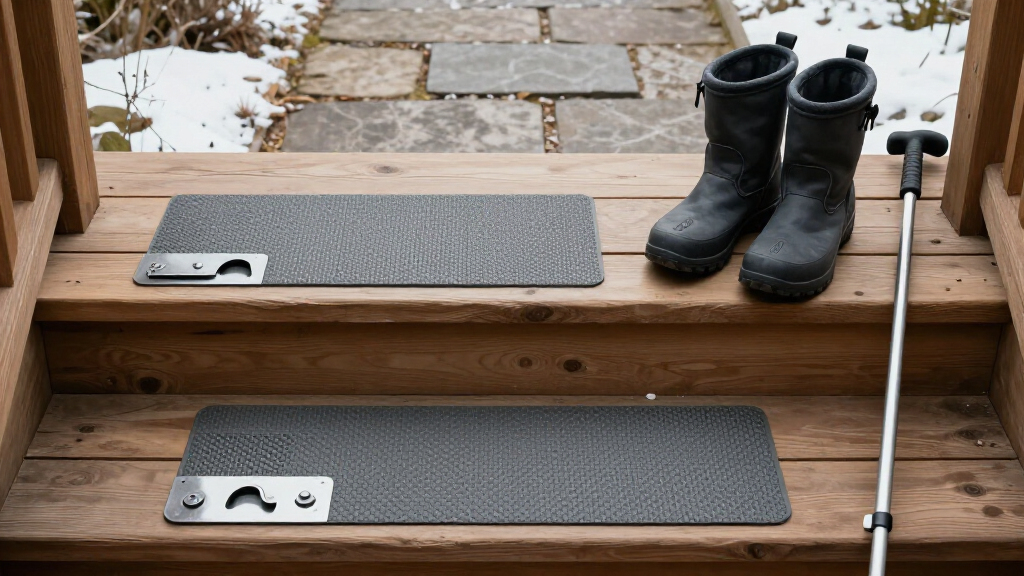
Select heavy mats that cannot slide and that let meltwater drain through instead of pooling underneath.
Paint in aggregate
Grit-infused coatings form a textured layer that generally lasts longer than older adhesive strips on weathered timber.
Wear boot traction
Cleats or microspikes add another layer of grip for steep approaches, chores before sunrise, and stubborn bonded ice.
Use heated mats
Electric stair mats can melt roughly 1–2 inches of snow per hour. Timers or smart plugs help control operating time.
Combine a traction treatment with good drainage. De-icer alone cannot correct a smooth, wet wooden tread.
Add traction in the right order
Fast mechanical removal prevents light snow from becoming a compacted, bonded ice layer.
Clear promptly
Shovel before footsteps compress fresh snow. Use a scraper or ice chopper only when the surface can tolerate it.
Scatter evenly
Spread grit across every tread, including edges and landings. Thin, uniform coverage is more useful than isolated piles.
Inspect and renew
Reapply after each thaw or snowfall. Replace peeling tape and reposition mats before they become trip hazards.
Pre-treat with liquid brine
A light, even application before snow or freezing rain helps prevent ice from bonding to the steps. That makes later shoveling easier and reduces overnight black-ice formation.
More is not safer
Excess chloride can damage concrete, corrode fasteners, burn paws, and harm vegetation. Match the product and dose to the surface and forecast.
Choose the de-icer for the actual cold
The cheapest product may fail when rural nights are coldest. Use chemistry selectively and keep grit available for immediate traction.
| De-icer | Effective to | Best use | Advantages | Cautions |
|---|---|---|---|---|
| Rock salt | 15°F / −9°C | ~Milder conditions | Cheap and widely available | Fails in deep cold; can pit concrete and corrode metal |
| Calcium chloride | −20°F / −29°C | ✓Severe rural cold | Fast acting; lowest working temperature | Harsh on surfaces, paws, plants, and fasteners |
| Magnesium chloride | −10°F / −23°C | ✓Moderate to deep cold | Somewhat gentler; useful middle ground | Costs more and loses effectiveness below its limit |
| CMA | 20°F / −7°C | ~Sensitive surfaces | Friendlier to pets, plants, and concrete | More expensive and unsuitable for very cold nights |
| Sand or grit | Any temperature | ✓Instant footing | Works when de-icers cannot | Does not melt ice; tracks indoors and needs reapplication |
Cold-weather working range
Longer bars indicate useful performance at progressively colder temperatures.
Stop meltwater before it refreezes
Many recurring ice patches are drainage failures. The lasting fix is to move water away from every tread and landing.
Today’s runoff becomes tomorrow’s hazard
Clear-looking steps can still hold a thin film of water. Once temperatures fall, that film freezes into transparent ice.
Sun and warmer air melt snow around the porch.
Runoff pools on treads, landings, and shaded edges.
Temperatures drop and the thin water layer refreezes.
Nearly invisible black ice meets low light and hurried footsteps.
Redirect downspouts
Extend outlets so roof runoff cannot discharge onto the stairs or upper landing.
Repair gutter leaks
Look for drips directly above steps, especially at seams and frozen downspout connections.
Correct the slope
Regrade soil and adjust landings so water naturally flows away from the stair approach.
Keep drainage paths open
Remove packed snow from channels and mat edges before daytime melting begins.
One connected winter routine
Each defense supports the next. Missing drainage or visibility can undermine even excellent de-icing.
Your five winter priorities
Start with what is already around the steps today, then invest where recurring hazards remain.
Traction
Grit, treads, coatings, or secure drainable mats
Timing
Pre-treat before storms and shovel before compaction
Drainage
Move roof runoff and daytime melt away
Support
Install sturdy handrails, ideally on both sides
Visibility
Light every tread for dark rural mornings
Why Traction Is Your Best Friend on Icy Steps
Traction is the core defense against slipping. Without it, even the best de-icers fall short. Think of traction as the grip that keeps your boots from sliding. Traditional methods like grit, sand, or chicken grit work instantly, especially when the ice is thick. These materials create a rough surface that increases friction between your footwear and the icy surface, which is crucial because ice itself is very slick and offers minimal grip. When you understand why traction matters, you realize it’s not just about immediate safety; it also reduces the risk of falls, especially during unpredictable winter conditions. Modern options such as anti-slip stair treads and grip tape are designed to provide a durable, textured surface that withstands repeated freeze-thaw cycles, maintaining safety over time. Rubber mats that drain meltwater help prevent pooling and refreezing, which are common causes of black ice—a particularly dangerous form of ice that’s nearly invisible. Prioritizing traction means prioritizing consistent, reliable footing, which directly impacts your safety and peace of mind during icy mornings and evenings.
As an affiliate, we earn on qualifying purchases.
How to Add Traction to Your Icy Steps in 3 Easy Steps
- Clear snow promptly with a sturdy shovel. Don’t let it sit and get compacted into ice. Removing snow quickly prevents it from melting and refreezing into a slick layer, which is much harder to deal with later. It also reduces the weight and pressure on your steps, minimizing structural stress.
- Scatter grit, sand, or chicken grit evenly across the steps. Reapply after each thaw or snowfall. These materials create a textured surface that increases friction, making your boots grip better. Regular reapplication is important because melting snow or rain can wash away the grit, leaving a smoother, more dangerous surface.
- Use anti-slip paint or coatings with embedded grit for wooden steps. These last longer and resist wear better than tape. Applying these coatings creates a durable, textured layer that adheres well even in harsh winter conditions, providing consistent traction without the need for frequent reapplication. For example, one country homeowner applies a layer of anti-slip paint every fall. This proactive approach ensures that the surface remains rough and slip-resistant throughout the winter season, reducing the likelihood of falls even after multiple freeze-thaw cycles.
heated stair mats for outdoor steps
As an affiliate, we earn on qualifying purchases.
As an affiliate, we earn on qualifying purchases.
Choosing the Right De-icer for Cold Country Nights
| De-icer Type | Effective Temp | Pros | Cons |
|---|---|---|---|
| Rock Salt | Above 15°F / -9°C | Cheap, widely available | Less effective in cold temperatures, causes surface spalling which can create rough patches that might trip or catch footwear |
| Calcium Chloride | Down to -20°F / -29°C | Fast-acting, works in colder weather, reduces ice buildup quickly | Harsh on surfaces, paws, and vegetation, and can cause corrosion if overused |
| Magnesium Chloride | Down to -10°F / -23°C | Gentler on surfaces, effective in moderate cold, less corrosive | More expensive, less effective below -10°F, may require higher quantities |
For example, calcium chloride is perfect for rural nights that often dip below zero. It melts ice faster and works in colder weather than regular salt, but use it sparingly to avoid surface damage or harm to plants and pets. Choosing the right de-icer isn’t just about immediate melting; it’s about balancing effectiveness with long-term surface and environmental health. Using the wrong product or applying too much can lead to surface deterioration or ecological harm, which ultimately increases costs and safety risks. Careful selection based on your climate and surface type ensures your steps stay safe without unintended consequences.
As an affiliate, we earn on qualifying purchases.
When and How to Pre-Treat Your Steps Before a Storm
Pre-treating with liquid brine before a storm prevents ice from bonding to your steps. Think of it as giving your steps a head start. Applying a liquid de-icer or brine solution when the forecast calls for snow or freezing rain creates a barrier that makes subsequent ice formation less adherent and easier to remove. This approach reduces the effort needed for cleanup and minimizes the risk of dangerous black ice developing overnight. For example, farmers often spray a simple saltwater solution on their barn stairs before a snowstorm, which helps keep the surface clear longer and makes shoveling less strenuous afterward. The timing is crucial: apply before the storm hits, not after. Using a garden sprayer or liquid de-icer evenly coats your steps, ensuring comprehensive coverage. This pre-emptive step can save you hours of scrubbing, shoveling, and worrying about hazardous conditions once winter storms arrive. It’s a strategic investment in winter safety that pays off by reducing physical effort and enhancing your confidence during icy conditions.
As an affiliate, we earn on qualifying purchases.
Fix the Drainage to Stop Refreezing Meltwater
Most icy steps are caused by meltwater that refreezes overnight. The fix? Redirect water away from your steps. Check gutters and downspouts—make sure they don’t pour directly onto your steps, which can create pooling and black ice. Properly directing water reduces the risk of refreezing and black ice formation, which are especially dangerous because they’re nearly invisible and can cause unexpected falls. Regrading the ground so water naturally flows away from your steps is another effective strategy. For example, a neighbor of mine regraded her porch to drain water into her garden, which kept her steps clear all winter. Adding small drain pipes or extending gutters can divert meltwater effectively, preventing it from pooling on your steps. Remember, water refreezes when temperatures drop after a warm day—managing runoff isn’t just about keeping your steps dry, but about controlling the environmental conditions that lead to black ice. These measures significantly reduce the hazards posed by black ice and improve overall safety during winter months.
Adding Safety Features That Hold Up in Winter
Safety features like sturdy handrails on both sides of your steps give you support when footing is uncertain. Well-installed handrails at the correct height provide a reliable grip, especially when steps are icy or slippery. Properly designed handrails can prevent falls by giving you something to hold onto, which is especially important for elderly or mobility-challenged individuals. Make sure they are firmly anchored into the ground or wall, and check periodically for stability. Additionally, consistent riser heights and tread depths reduce tripping hazards, since uneven steps can be more dangerous when icy. Lighting is often overlooked but vital. Solar path lights or motion-sensor lamps make dark mornings and evenings safer, allowing you to see icy patches or obstacles clearly. For example, a rural family installs solar-powered lights along their steps, making icy mornings much less nerve-wracking and reducing the risk of missteps. Combining physical safety features with good lighting creates a comprehensive safety system that minimizes fall risks and boosts confidence in winter conditions.
Why Wooden Steps Need Extra Care in Winter
Wooden steps are more prone to becoming slick because ice bonds easily to wood’s porous surface. The rough texture and grain of wood create micro-roughness that ice can latch onto, increasing the risk of slips. Applying traction treatments like grit-infused coatings or anti-slip paint helps by creating a smoother, yet textured, surface that reduces the likelihood of slipping. Additionally, wooden steps must drain well—standing water on wood can quickly turn to ice, making the surface dangerously slick. Regular maintenance, including sealing and anti-slip coatings, prolongs the safety and durability of wooden steps. For example, a cottage owner applies a coat of anti-slip paint each fall, which keeps her steps safe even after multiple storms. Using grit sand or chicken grit on top of those coatings provides extra grip, especially when ice bonds strongly to untreated wood. Recognizing the porous and absorbent nature of wood informs your choice of traction treatments, helping you maintain safe, ice-resistant wooden steps throughout winter.
Smart, Modern Tools to Keep Your Steps Clear
Heated stair mats are becoming popular for rural homes because they provide a continuous, reliable solution to icy steps. They melt 1–2 inches of snow per hour, effectively preventing ice buildup without manual labor. Many heated mats now come with timers or smart plugs, allowing you to control them remotely, saving energy and ensuring they operate only when needed. These mats are especially useful in areas with frequent snow or ice storms, as they eliminate the need for constant shoveling or scattering grit. Pet-safe liquid brines and eco-friendly de-icers are also widely available, offering environmentally conscious options that are less corrosive and safer for wildlife and pets. For instance, a family installs a heated mat on their porch, so even the coldest mornings see no ice, reducing fall risks and improving safety. These modern solutions are designed to integrate seamlessly into your winter safety routine, providing peace of mind and convenience while maintaining a safe, slip-free environment.
Frequently Asked Questions
What can I put on icy steps if I don’t have salt?
Grit, sand, chicken grit, wood ash, or kitty litter all provide traction. They won’t melt ice but give your boots something to grip onto. Remember, they need frequent reapplication, especially after melting or rain. While they don’t eliminate ice, they significantly reduce the risk of slipping, which is critical for safe footing. Each material has tradeoffs; for example, sand and grit can be messy and may require cleanup, but they are effective in providing immediate grip. Using these options thoughtfully ensures your steps remain safer, especially when combined with other safety measures like handrails and proper drainage.
What de-icer is safe for dogs and cats?
Look for pet-friendly de-icers like calcium magnesium acetate or environmentally safe blends. These options are less corrosive and less likely to harm paws or waterways. Traditional rock salt can burn paws and is toxic if ingested in large amounts, so it’s best avoided in households with pets. After applying pet-safe de-icers, always rinse your pet’s paws to remove any residual chemicals, preventing irritation or ingestion. Understanding the safety profiles of de-icers helps you balance effective ice melting with the health of your pets and the environment, ensuring your winter safety measures are comprehensive and responsible.
When is it too cold to bother de-icing at all?
If temperatures are well below freezing (-20°F / -29°C), de-icers lose their effectiveness because they cannot melt ice at such low temperatures. In these extreme conditions, focus on physical safety measures such as installing handrails, using non-slip surfaces, and ensuring proper lighting. Recognizing when de-icing becomes ineffective prevents wasted effort and potential surface damage. Instead, emphasize traction and structural safety features, which remain effective regardless of temperature, thereby maintaining safety during the coldest spells.
How do heated stair mats work, and are they worth it?
Heated mats work by melting snow and ice continuously, creating a safe, slip-proof surface. They are powered by electricity and often feature timers or smart controls, allowing customization to your needs. While the initial investment can be significant, they reduce labor, material costs, and the risk of falls, making them a worthwhile safety upgrade in areas prone to frequent ice accumulation. They are especially valuable for elderly homeowners or those with mobility challenges. The convenience of having clear steps without manual shoveling or scattering grit improves overall safety and peace of mind, making them a smart long-term investment for winter safety.
Conclusion
A little preparation goes a long way. When you add traction, manage water flow, and smartly upgrade your steps, winter becomes safer—and even cheerful. Picture yourself stepping out confidently on a crisp, icy morning—ready to enjoy the country charm without worry. Stay steady, stay safe, and enjoy every step of winter’s beauty.Halloween Picks
halloween
As an affiliate, we earn on qualifying purchases.