TL;DR

Turn quiet afternoons into listening time
- Thousands of audiobooks, podcasts and originals
- Listen on your phone, tablet or Echo — also offline
- Cancel anytime
Choosing a lightweight stick vacuum means comparing the complete cleaning setup, including its floor head and battery, alongside runtime, floor compatibility, dustbin size, and maintenance. Match those features to your rooms and routines: a compact model may suit quick pickups in a small home, while extensive carpet or a large floor plan may call for a fuller-sized vacuum.
A few crumbs by the kitchen table can turn into a whole production when the vacuum lives upstairs in a heavy cupboard. A lightweight stick vacuum can make those little jobs easier to fit between breakfast and watering the porch pots, especially if you have a small home or more than one floor.
But the number on a product label tells only part of the story. You’ll want to think about how it feels in your hand, how long it runs on the setting you’ll use, and whether its brush head suits your floors.
This guide walks you through those practical choices, from hair and dustbins to storage and replacement parts. The aim is simple: help you find a vacuum that makes routine cleaning feel like a quick sweep across the kitchen, not another chore to plan around.
Compare the complete vacuum, including battery and floor head, and pay attention to its balance as well as its stated weight.
Treat maximum runtime as a best-case figure; ask which setting produced it and relate the answer to your usual cleaning session.
Match the floor head to your surfaces, since carpet brushes and soft rollers suit different cleaning jobs.
Check that you can clear hair, empty the bin, maintain the filter, and find replacement parts without hassle.
Choose docks, screens, and extra tools when they solve a task or storage problem you actually have.
Choosing a Lightweight Stick Vacuum for Easy Cleaning
A compact stick vacuum can make everyday pickups easier. Choose by how the complete setup handles, cleans your floors, and fits your routine.
Start with real-world handling
The battery, wand, and floor head all affect weight and balance.
- Try steering and lifting it with the floor head attached.
- Consider how it feels overhead or on stairs.
- Easy storage and quick pickups can suit a small home.
- Large carpeted areas may call for a full-size vacuum too.
Match runtime to your cleaning
Maximum runtime is a best-case figure; the mode, floor head, and task affect how long the battery lasts.
Choose tools for your floors
Different brush heads suit different surfaces, and switching helps only if it fits your routine.
Soft roller
May gather dust and crumbs on smooth surfaces.
Powered brush
Can help lift debris from rugs and carpet.
Easy upkeep
Check for an easy-to-remove roller or anti-tangle design.
Check upkeep and ownership
Small bins and replaceable parts can shape the work and cost after purchase.
- See how cleanly the bin empties and whether it can be removed for washing.
- Check filter, battery, and brush-roll availability and cost.
- Choose docks and extra tools when they solve a real storage or cleaning need.
Start with the weight you’ll actually lift and steer
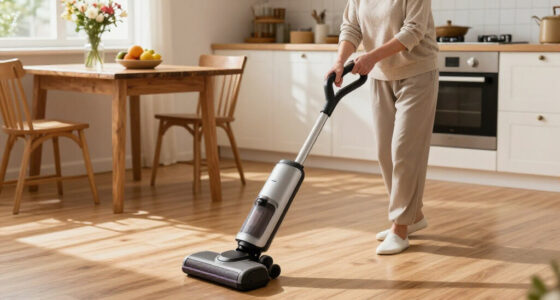
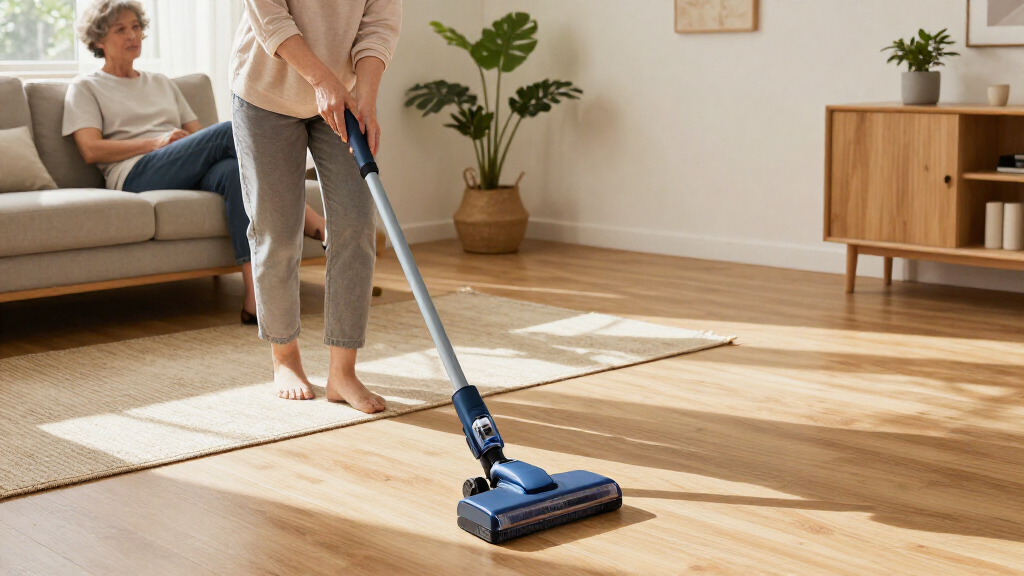
Choosing a Lightweight Stick Vacuum for Easy Cleaning starts with the complete vacuum, not a bare-body weight printed in large type. The battery, wand, and floor head all add weight, and their placement affects how easy the machine feels to steer, lift, or carry between floors. There is no universal weight cutoff that makes a vacuum comfortable for everyone. The practical question is where that weight sits and how long you have to support it: a model that glides easily across a floor may still feel tiring when held aloft on stairs.
Think of balance like carrying a basket of apples: a well-balanced basket feels steadier than one with all the weight pulling to one side. A vacuum that weighs a little more on paper may still feel easier if it sits naturally in your hand; a top-heavy design can feel tiring when you lift it to clean a stair or a cobweb near the ceiling. That difference matters because repeated awkward lifting can make you avoid those jobs, even if the vacuum’s total weight seems low.
Picture a routine trip from the living room to the upstairs landing. If you can carry the vacuum with a relaxed grip and guide its head around chair legs without wrestling it, the weight is working for you. If you can, handle the complete setup before buying, and check how its handheld conversion feels with the included tool attached. The handheld version may remove the floor head but concentrate weight near your wrist, so it can feel less comfortable than the assembled vacuum.
Choosing a lightweight stick vacuum can make quick cleanups easier, especially in small homes, apartments, and multi-level spaces. Still, your comfort matters more than a label. If you do most of your cleaning on one level, you might value easy steering more than a handle designed for frequent carrying. If stairs are a regular part of your routine, the ease of lifting and holding it becomes a bigger part of the decision.
Products Worth Considering

Greenworks 40V Cordless Leaf Blower/Vacuum, 505 CFM, 5.0 Ah Battery and Charger

EGO Power+ HT2601 26-Inch Cordless Hedge Trimmer with 56V 2.5Ah Battery and Charger

Greenworks 40V 16-Inch Cordless Snow Blower with 5.0Ah Battery and Charger
As an affiliate, we earn on qualifying purchases.
Match battery runtime to the rooms you clean
A stick vacuum’s advertised maximum runtime is a best-case clue, not a promise about every cleaning session. Runtime depends on the power setting, floor head, task, and battery condition, and higher suction or a powered brush roll can use battery faster. Ask which mode the maker used for its headline figure, then compare that with the way you plan to clean. The distinction matters because a long low-power runtime may be irrelevant if your rug needs a stronger setting; a shorter figure on a useful setting may tell you more about whether the vacuum can finish your usual route.
Imagine that the kitchen and entry need a quick pass after breakfast, while the bedrooms wait for Saturday. You may not need one charge to tackle every room at once; a vacuum that handles the daily crumbs and a small rug could fit your routine just fine. If you want to clean every floor in a larger home in one go, look more closely at runtime on a useful suction setting. Otherwise, the battery may run down before the job is done, leaving you to pause, recharge, or leave the remaining rooms until later.
Maximum runtime is not typical runtime. That plain distinction can save you from buying based on a number that applies only in an energy-saving mode. Removable batteries may let you swap in a charged spare, but check that replacements are available and what they cost before counting on that convenience. A spare can extend a cleaning session, though it adds expense and requires somewhere to store and charge it.
Some newer models add displays or automatic suction adjustment. A screen can make remaining battery easier to see, while automatic settings may change power as the floor changes. Neither feature tells you whether the vacuum will finish your particular rooms. Your floor plan and cleaning habits are the better guide. Treat these features as ways to manage or understand the charge, not as substitutes for enough usable runtime.
Choose a floor head that suits your rugs and hard floors
Floor compatibility depends on the brush head as much as the vacuum itself. A powered brush roll can help lift debris from carpet, while a soft roller may suit hard floors; some vacuums offer settings or different heads for different surfaces. There is no single brush that works best on every floor in every home. A head that agitates carpet can be helpful there, but on smooth floors it may push larger debris ahead or scatter it, so matching the head affects both pickup and how quickly you can clean.
Say your kitchen has smooth wood or tile, but the sitting room has a low-pile rug. A soft roller may gather crumbs and dust on the hard floor, while a powered brush can help with the rug. If you use one head everywhere, check whether it scatters larger bits on hard flooring or struggles to pull debris from carpet. Switching heads can improve results, but only if the change is simple enough that you will actually do it during an ordinary cleanup.
Many stick vacuums can handle rugs and low-pile carpet, though results vary with the carpet and brush design. A home with thick carpet or large carpeted rooms may need more than a compact stick model can comfortably provide. In that case, check independent performance reviews or consider whether your current full-size vacuum should remain part of the routine. A stick can still be useful for crumbs and quick surface pickups, while a more powerful vacuum takes on deeper or more extensive carpet cleaning.
A soft roller and a carpet brush are tools for different jobs, a bit like a garden broom and a stiff brush. If your home has a mix of surfaces, the ability to switch heads or adjust suction can be more useful than extra screens or a fancy display. Match the tool to the floors you actually have, and weigh the convenience of one all-purpose head against the better pickup a changeable setup may offer.
Make hair, dustbins, and filters easier to manage
A convenient vacuum needs manageable upkeep: check how easily you can clear its roller, empty its bin, and clean or replace its filters. Long hair and pet fur can wrap around a brush roll, while a small dustbin may need more frequent emptying. These routine jobs affect how ready the vacuum feels when crumbs appear. If maintenance is awkward, it can turn a quick pickup into a separate task, and neglected hair or filters can make the machine harder to use as intended.
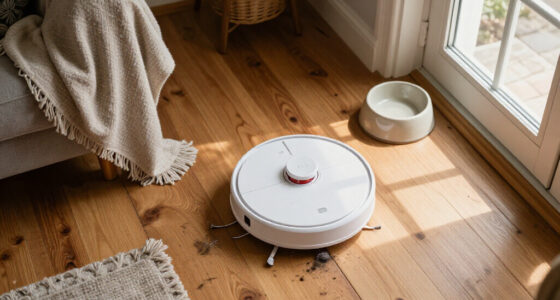
If you have a long-haired cat who naps in the sunny window, fur may collect around the chair and along a rug edge. An anti-tangle design, a roller you can remove, and clear maintenance instructions can make that pickup easier to manage. Hair-resistant does not mean hair-proof, so check whether you can reach the roller without wrestling with tools. Easy access matters especially when hair builds up often: a quick clean is more likely to happen than one that requires taking apart the floor head.
Small dustbins trade capacity for compact storage. You might empty one after a kitchen and hall cleanup, while a larger home could fill it faster. Look for a clear fill line and a bin that opens neatly over the rubbish. If it can be removed for washing, follow the manual and let it dry as directed. A smaller bin keeps the vacuum lighter and easier to park, but frequent emptying can interrupt longer sessions; the right balance depends on how much debris your regular route collects.
A sealed system and high-efficiency filter can help capture fine particles, but claims vary. “HEPA” refers to a defined level of particle filtration under specified test conditions; check what the manufacturer says about the filter and whether the vacuum itself is sealed. A high-grade filter cannot do its full job if air bypasses it through gaps elsewhere in the machine. Keep replacement filters available, and wash or replace them only as the manual directs. People with concerns about fine particles can ask a qualified professional for advice about their specific needs.
Use the tools and storage that fit your everyday routine
Attachments and storage features earn their place when they solve a job you do often. A crevice tool can reach crumbs beside a radiator or between sofa cushions, while an upholstery tool may help with the armchair where the dog curls up. A handheld conversion can work for stairs, furniture, and a car, depending on its weight and the tools included. Each extra tool adds something to store, so the useful kit is the one that makes a regular job easier without becoming clutter you never reach for.
For example, if you sweep grit from the front hall most afternoons and clean the car only twice a year, quick access to a wall-mounted vacuum may matter more than a large accessory kit. If the nearest outlet is in a crowded corner, a freestanding dock could be easier to place. Check that accessories stay together instead of disappearing into a kitchen drawer. Storage affects convenience directly: a vacuum that is charged and easy to grab is more likely to be used for small messes than one buried behind other items.
Newer designs may include docks that store tools or empty the dustbin, plus sensors and screens that display battery or maintenance information. A self-emptying dock can reduce how often you handle the bin, but it needs floor space, adds cost, and still needs care. Convenience features are useful when they suit your home, not just because they sound clever. Consider the trade: less frequent bin handling may be valuable in a busy home, while the dock’s size and ongoing care may outweigh that benefit if you have little space or only vacuum occasionally.
Try the storage question before you buy: where will the vacuum stand, charge, and wait between jobs? If you have a narrow pantry, a compact wall mount may be a better fit than a broad dock. A vacuum that has a sensible parking spot is more likely to be close at hand for those everyday crumbs. Make sure the chosen spot also has a practical outlet and leaves enough room to remove the vacuum and its tools without rearranging other things.
Follow a simple checklist before you choose
Choose a model by matching its real-world handling, runtime, floor pickup, and upkeep to your own cleaning routine. You don’t need every new feature; you need a vacuum that feels usable in the rooms where you will reach for it. This short checklist can help you compare models without getting sidetracked by a long list of extras. As you compare, think about how each feature changes the effort, time, or interruptions involved in your usual cleanup.
- Picture your usual cleanup. Name the rooms, floors, stairs, and furniture you clean most often. A studio with wood floors has different needs from a two-storey home with carpeted bedrooms. This sets the scale of the job, so you can judge runtime and floor tools against real rooms rather than a vague idea of “whole-home” cleaning.
- Check the complete weight and balance. Include the battery, floor head, and the handheld setup if you plan to use one. Consider how it steers around a table and lifts onto a stair. Comfort affects whether you reach for the vacuum regularly, particularly for small jobs that are easy to postpone.
- Ask about useful runtime. Find out which setting produced the maximum figure and whether it can handle your normal cleaning session. A model that runs longer only on a setting too weak for your floors may not save time in practice.
- Match the brush to your floors and hair. Look for a suitable roller, easy access for clearing wrapped hair, and an adjustment or head change if your home mixes carpet with hard floors. Better surface pickup can mean fewer passes, while a complicated head swap may discourage changing settings as you move from room to room.
- Check the bin, filters, parts, and warranty. Confirm that replacement filters, batteries, or brush rolls are available, and read the maker’s maintenance instructions. These details shape the long-term cost and whether the vacuum stays useful after its first year.
Think of Nora’s one-bedroom apartment: she has a small rug, hard floors, and a short hall that gathers garden grit. A compact vacuum with comfortable handling, a suitable hard-floor head, and a bin she can empty cleanly may serve her better than a heavier model with a dock she cannot fit beside the pantry. Her daily route is short, so she can accept a smaller bin and shorter runtime in exchange for easy storage and quick access.
If you have extensive or deep carpet, use this checklist to spot a limitation rather than talk yourself past it. A stick vacuum may serve well for routine pickups while a full-size vacuum handles larger carpeted jobs. For a tight budget, put comfortable handling, suitable pickup, and available replacement parts ahead of displays or docking features. Those basics influence whether the vacuum can do your regular work and remain maintainable; optional features are most valuable after those needs are covered.
Frequently Asked Questions
How light should a stick vacuum be?
There is no universal weight cutoff. Compare the complete cleaning setup, including the battery and floor head, and think about whether it feels comfortable to carry, steer, or lift. A balanced model can feel easier to use than a lighter but top-heavy one.
How long does a stick vacuum battery last?
Runtime varies with the power setting, floor head, task, and battery condition. Treat the advertised maximum as a best-case figure and ask which mode produced it. A short kitchen cleanup and a whole-home session put very different demands on a battery.
Can a stick vacuum clean carpets?
Many stick vacuums can handle rugs and low-pile carpet, but results depend on the machine and the carpet. A powered brush roll can help lift debris. For thick carpet or large carpeted areas, check independent performance reviews and consider whether you also need a fuller-sized vacuum.
Are stick vacuums useful for pet hair?
They can make frequent fur pickup convenient, especially around a pet’s favourite chair. Look for a powered brush, an anti-tangle design, and a roller you can access for clearing wrapped hair. Even an anti-tangle roller may need occasional maintenance.
Do I need a HEPA filter?
HEPA refers to a defined level of particle filtration under specified test conditions. Check the manufacturer’s specifications and whether the whole vacuum is sealed, since filtration claims and performance can vary. If fine particles are a concern for you, ask a qualified professional about your needs.
Are self-emptying docks worth the extra cost?
A self-emptying dock can reduce how often you handle the vacuum’s dustbin, but it takes up space, adds cost, and still needs maintenance. It may suit a household that values less frequent bin emptying. For occasional quick cleanups, a tidy bin that opens easily may be enough.
Conclusion
Start with the jobs you want to make easier: the kitchen crumbs, the hall grit, the fur on a favourite chair, or the stairs between floors. Then compare the whole vacuum in your hands, the runtime on a useful setting, and the upkeep you’ll need to do.
The right choice should feel ready for an ordinary Tuesday, not just impressive on a shelf. Give it a sensible place near the door, and those little messes can be gone before the kettle finishes its song.