TL;DR

Turn quiet afternoons into listening time
- Thousands of audiobooks, podcasts and originals
- Listen on your phone, tablet or Echo — also offline
- Cancel anytime
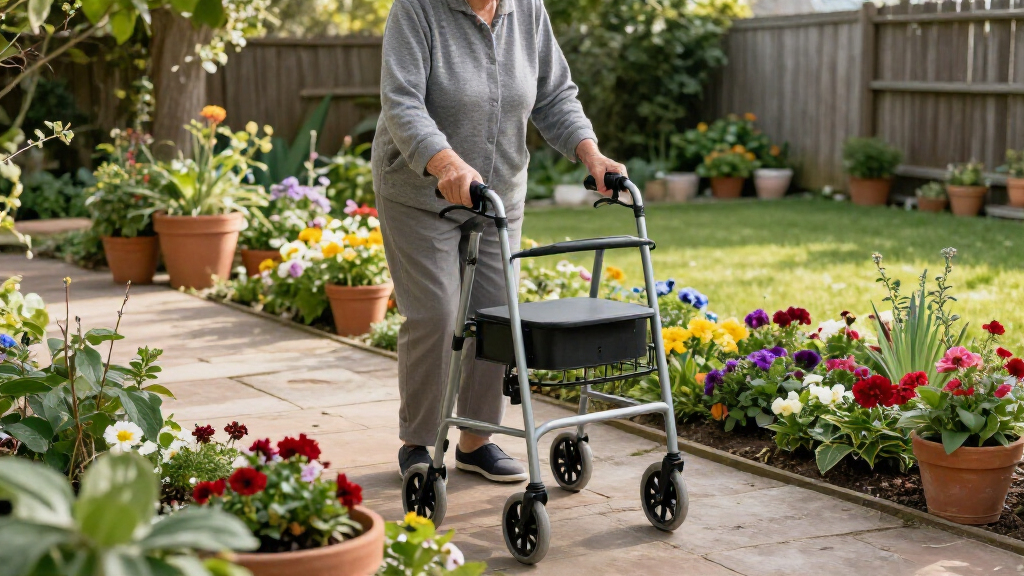
To get around the garden with a rollator, choose firm, level paths, clear hoses and clutter, and check that the wheels, handles, frame, and brakes work properly before you go out. Use the brakes before sitting or reaching, carry only light tools in a secure basket, and treat grass, gravel, slopes, and wet ground with caution. A rollator can help you enjoy outdoor tasks, but it is not suited to every person or garden surface.
A garden path can look perfectly friendly from the kitchen window, then tell a different story when a wheel meets loose gravel, a wet leaf, or a hose curled beside the flower bed. Outdoor ground asks more of a rollator than a smooth hallway does, so a little planning can make the difference between an easy afternoon among the dahlias and a frustrating trip back indoors.
This guide explains how to choose and prepare a route, check your rollator, use its brakes and seat thoughtfully, and make everyday gardening tasks easier to manage. You’ll also find practical ways to adapt the garden without giving up the pleasure of a morning among tomato plants or a quiet sit near the birdbath.
A rollator can support getting around, but no model makes every surface safe, and it should not replace a walking aid or support surface recommended for your individual needs. If you have recently fallen, feel unsure about the brakes, or find steering difficult, ask a qualified health professional or mobility specialist for advice tailored to you and your garden.
Choose firm, level paths and clear hoses, tools, leaves, and other clutter before rolling through the garden.
Check wheels, brakes, handles, frame, and seat before outdoor use, and follow the manufacturer’s instructions and load limits.
Lock the brakes before sitting or reaching; never sit on a moving rollator or pull yourself up by its frame.
Carry only a manageable load in a secure basket, and use nearby containers, raised beds, or long-handled tools to reduce bending and stretching.
Stop and ask for help if the rollator slips, tips, or feels difficult to control; seek professional guidance when your balance, strength, or confidence has cha…
Choose the firmest path before you head outdoors
To get around the garden with a rollator more comfortably, choose a firm, level, clear route and avoid loose, wet, or uneven ground where you can. The surface affects more than comfort: when wheels sink, slide, or catch, steering and stopping can take more effort and may feel less predictable. A smooth paved path is usually easier to steer across than long grass or deep gravel, but even a good path needs room to turn and space free of hoses, tools, and fallen leaves.
Walk the route with your eyes before you roll along it. Check where the path narrows, slopes, changes height, or passes through a gate. These transitions matter because a wheel can catch at an edge, and a narrow section may leave little room to correct your direction. For example, if you usually visit a raised bed beside the shed, notice whether the wheelbarrow has left soft ruts along the way or whether a hose crosses the entrance.
Width and visibility matter as much as the surface. A path needs to fit your rollator while leaving you room to steer; there is no single width that works for every frame or user. If you cannot turn comfortably, you may have to back up or make repeated adjustments, which can be tiring and awkward. Good lighting helps you see edges and debris before a wheel reaches them, while a contrasting border can make a path easier to distinguish from dark soil or grass.
Grass and gravel call for particular care. Soft, long, or wet grass may cause wheels to sink or veer, while deep, loose gravel can shift under the wheels and make steering or braking harder. Compact, level gravel may be more manageable for some people and rollators, but that depends on the actual surface and your ability to control the aid. A route that is technically passable may still be tiring or stressful, so consider whether a firmer detour would make the outing more manageable.
- Choose: a level, hard path with clear turning space.
- Clear: hoses, fallen branches, tools, pots, and slippery leaves.
- Rethink: steep slopes, muddy patches, exposed roots, and abrupt changes in height.
Say a short route to the herb bed crosses a patch of lawn. You might reach the bed by following the paved edge instead, even if it takes another minute. That small detour trades a little extra distance for more predictable wheel contact and room to steer—often a worthwhile exchange when the lawn is soft or uneven.
Products Worth Considering
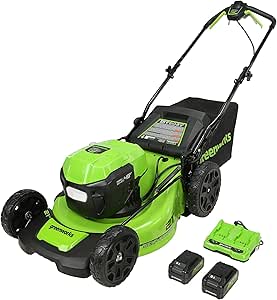
Greenworks 48V (24V x 2) 21-inch Self-Propelled Lawn Mower, Battery Kit

EGO POWER+ 21 Cordless Electric Lawn Mower Kit, Self-Propelled

Husqvarna Automower 550 Commercial Robotic Lawn Mower
As an affiliate, we earn on qualifying purchases.
Check your rollator before you leave the house
- Look over the frame and seat. Check that the frame is secure and that the seat and any attachments sit firmly in place. Loose parts can shift when you turn or stop, so do not treat an unfamiliar rattle or wobble as harmless.
- Test the wheels and brakes. The wheels should roll freely, and the brakes should engage and hold when you apply them. A brake that works poorly on level ground may be even less reassuring when you need to stop outdoors, while a catching wheel can make steering unpredictable.
- Check the handle height. Use the height recommended for you and your rollator; do not guess based on what looks right for someone else. A poor fit can make steering and maintaining a comfortable posture harder, especially over a longer route.
- Review the manufacturer’s guidance. Check load limits, maintenance instructions, weather exposure, and advice about slopes or outdoor use. These limits reflect how the device is designed to be used; exceeding them can affect stability or damage components.
A quick check before gardening helps you notice problems while you are still near the door, not halfway down the path. Working brakes and secure parts matter when you stop on a slight slope, reach the patio, or need to sit for a rest. If something seems different from usual, investigate before you rely on the rollator outside, where returning indoors may be harder.
Rollators vary in wheel size, frame design, folding style, and intended use. Some outdoor models have larger wheels or a sturdier frame, features that may help on particular routes, but labels such as “all-terrain” do not mean safe on every surface. Larger wheels or a heavier frame can bring tradeoffs, such as added weight or difficulty manoeuvring in a tight space. Match the equipment to your garden and your ability to steer and brake it.
For instance, you may manage comfortably on a broad stone path but struggle to turn a heavier model through a narrow greenhouse doorway. The best fit is not simply the one with the biggest wheels; it is the one you can handle on the routes you actually use, within its stated limits and instructions. A feature that helps outdoors may be less useful if it makes the rollator difficult to move or store.
If a brake does not hold, a wheel catches, or the frame feels loose, do not push on and hope for the best. Stop using it outdoors until the issue has been checked according to the maker’s guidance. If the rollator feels difficult to control even when it seems in good order, ask a qualified professional or mobility specialist to review its fit and use.
Use the brakes before sitting, standing, or reaching
Use your rollator’s brakes before sitting, standing, or reaching, and only sit on its seat when it is stationary, its brakes are locked, and the manufacturer permits it. A seat is not a moving perch, and the rollator is not a handle for hauling yourself upright; either move can make it roll or tip. The brakes reduce that risk by keeping the wheels from moving, but they do not make an unstable surface or an awkward movement safe.
Before taking a seat, stop on stable, level ground and apply the brakes as directed. Check that they have engaged before you sit. A slight slope can make a stopped rollator harder to keep in place, even with the brakes on, so choose a level resting spot rather than relying on the brakes to compensate for the ground. When you are ready to stand, follow the rollator’s instructions and avoid pulling hard on the frame; if the movement feels awkward, ask a physiotherapist or occupational therapist for guidance on a safer technique.
Reaching can be just as tricky as sitting. Leaning far over the frame to pluck a rose or pull a weed can shift your balance and may affect the rollator’s stability. The farther you reach, the more your weight moves away from your feet and the support area beneath you. Bring light, frequently used items within easy reach instead, and move the rollator closer before working rather than stretching across a bed.
For example, if you spot a ripe strawberry beside the path, it can be tempting to lean sideways from the seat. A safer plan is to stop, set the brakes, and position yourself so the plant is within comfortable reach—or leave the berry for someone else if reaching still feels uncertain. Moving closer may take longer, but it avoids turning a small task into a balance challenge.
Comfort and confidence matter more than finishing one last task. If getting on or off the seat is difficult, or you cannot operate the brakes reliably, do not treat that as a personal failing. The difficulty is useful information: the seat, technique, ground, or equipment may not suit the situation. Ask a qualified professional to help you review the rollator and the movements that feel challenging.
Carry tools without making steering harder
Carry gardening items in a suitable rollator basket or bag, keep the load within its stated limit, and leave your hands free to steer and use the brakes. Loose tools in your hands can make it harder to control the rollator, while a heavy or lopsided load can affect how it handles. The practical aim is not to bring every tool you might need, but to carry only what helps with the next small task.
Think through the job before you set out. For deadheading a few flowers, you may need only a small pair of shears, a light container, and perhaps a cloth. Secure sharp tools so they cannot slide, fall, snag on plants, or catch against your clothing; do not pack the basket so high that it blocks your view of the path. Keeping the load low and contained can also make it easier to notice if something shifts as you move.
A practical example: instead of carrying a full watering can from the shed to the patio bed, keep a smaller can near the bed or refill it at a closer tap if one is available. Water can become surprisingly heavy, and a sloshing load may be awkward to manage. You can also bring tools out in stages rather than trying to take everything in one trip. A second trip takes more time, but may be easier to steer than a rollator carrying an unwieldy load.
Raised beds, containers, and long-handled tools can reduce the need to bend or stretch. They do not remove every challenge, but they can bring routine jobs closer to a comfortable working position. A container of herbs beside a firm path, for example, may be easier to tend than a low bed reached across soft ground. Consider the space around the container too: bringing a plant closer is helpful only if it does not narrow the route or leave too little room to turn.
Make room for rest, too. A rollator seat may offer a place to pause only when its brakes are locked, the ground is stable, and its instructions permit sitting. If the surface slopes or the seat feels awkward, choose another suitable resting place rather than forcing the moment. That may mean planning a shorter route between stable places to pause, rather than carrying more and hoping to manage without a break.
Match garden tasks to your energy and the weather
Plan garden work in short, manageable spells, and pause when you feel tired, hot, or less steady than usual. Walking, turning, carrying, and reaching can take more effort outdoors than they do on a familiar indoor floor, especially on a warm afternoon or after a busy morning. When fatigue builds, tasks that felt simple at the start may require more concentration and control, so stopping early can help keep the outing comfortable.
Choose one small job at a time: water the pots near the door, check the beans, or deadhead a handful of blooms. You do not have to weed the whole border in one outing. A few minutes spent among the mint and marigolds still count as time outdoors, and the plants will be there tomorrow. Breaking work into smaller visits may take more trips, but it avoids making one long session the test of whether you can garden.
Weather changes the route even when the garden looks familiar. Rain can leave paving slick, wet grass may give way beneath the wheels, and fallen leaves can hide uneven patches. Sun and heat may leave you feeling worn out sooner than expected, so keep water handy and choose a cooler time if that suits you. The tradeoff is simple: postponing a job can be inconvenient, but a dry, cooler visit may make both the ground and your energy easier to manage.
Imagine that you planned to prune the roses but find the path damp after a morning shower. It may be wiser to tend a container on the sheltered patio or simply sit somewhere stable and enjoy the birdsong. Changing the task is not giving up; it is responding sensibly to the conditions under your wheels. The same visit can still be worthwhile even if you do less than planned.
A rollator is a mobility aid, not a guarantee of safe access on every route or a substitute for a walking aid or support surface recommended for your individual needs. If your balance, strength, or confidence has changed, or if you have had a recent fall, seek advice from a qualified professional before taking on more demanding garden routes. Their guidance can help you decide whether to adapt the route, the task, or the way you use your mobility aid.
Make a few small garden changes for easier access
Make the garden easier to use by keeping paths clear, firm, level, and well lit wherever practical. You do not need to rebuild the whole garden to improve a daily route; moving a pot, securing a hose, or clearing leaf litter can make the way to a favourite bench simpler. Small changes are useful because they address the obstacles that interrupt the route without requiring you to change the garden you enjoy.
Start with the places you visit most. If the route from the back door to the greenhouse always catches a hose, reroute or secure it away from the walking line. If paving stones have shifted, avoid that section until it has been repaired. Keep tools and watering cans in one storage spot instead of leaving them beside the path after a job. Reducing repeat obstacles means you do not have to navigate the same surprise every time you go out.
Resting places and turning space can make a route more comfortable. A stable place to stop lets you break a trip into shorter stretches, while a wider area near a gate or raised bed gives you room to turn without squeezing between planters. Good lighting and contrasting path edges may also help you see where paving ends and soil begins, giving you more time to adjust before reaching a boundary.
For example, a narrow route between a lavender bush and a stack of pots may be less useful than a slightly longer path around the patio with room to turn. Moving two pots could open the shorter route; if that is not practical, taking the broader path may feel calmer and easier to manage. The best option is not always the shortest one: a little extra distance can be a worthwhile trade for more space and fewer tight manoeuvres.
Raised beds and containers near a firm path can make gardening more accessible, though their placement still matters: leave enough room to manoeuvre and avoid reaching too far across them. Useful changes are personal; what helps depends on the rollator, the garden layout, and the person using it. Age-friendly features such as clear paths, gentle gradients, and places to rest can benefit visitors with different mobility needs, not only rollator users.
Know when a route or rollator needs a rethink
Stop and seek help if the rollator slips, tips, catches, or feels hard to steer; do not try to push through a problem on uneven ground. Those changes can be signs that the wheels cannot get dependable contact with the surface, or that the route is asking more of you than the equipment can manage. Move to a stable spot if you can do so safely, apply the brakes, and ask someone nearby for assistance rather than continuing along a difficult route.
A route that worked last summer may feel different after paving shifts, a hedge grows across the path, or your confidence changes. Likewise, a rollator that is comfortable on paving may be difficult on grass or gravel. Suitability depends on the user, the equipment, and the ground, so no single wheel style or feature is right for everyone. A problem on one route does not necessarily mean you cannot garden at all; it may mean that the route, task, or equipment needs to change.
Consider getting advice if you have had a fall, cannot manage the brakes consistently, feel unsteady on slopes, or struggle to get on and off the seat. A physiotherapist, occupational therapist, or mobility specialist can help assess how your individual needs fit the rollator and the garden setting. For medical decisions, speak with an appropriately qualified professional. Their advice can help distinguish between a technique or fit issue and a route that is simply unsuitable for the rollator.
For instance, suppose you can reach the patio bed easily but find the sloped path to the orchard stressful. That is useful information, not a reason to test your limits alone. You might choose the patio as your gardening spot for now and ask for a professional opinion about the route or equipment before trying it again. Keeping the accessible option preserves time outdoors while you work out whether the harder route can be made more manageable.
If a surface or movement feels difficult, pause and change the plan. Enjoying the garden does not depend on reaching every corner in one trip.
There is no shame in choosing the easy path, asking for help with a heavy pot, or leaving a job until another day. A garden can offer pleasure through scent, birdsong, a warm patch of sun, and a few familiar plants close to the door.
Frequently Asked Questions
Can I use a rollator on grass?
Sometimes, but soft, long, or wet grass can make wheels sink or veer, so a firm path is generally easier to manage. If you are uncertain about a particular lawn, choose a clear route around it or ask a qualified professional for guidance suited to your abilities and equipment.
Is a rollator safe to use on gravel?
It depends on the gravel, the rollator, and your ability to steer and brake it. Compact, level gravel may be easier to manage than deep or loose stones, which can make steering and braking harder. Do not assume a rollator described as all-terrain will suit every gravel path.
What kind of rollator should I use in a garden?
There is no single best rollator for every garden. Some outdoor models have larger wheels or a sturdier frame, but the right choice depends on the route, your needs, the rollator’s weight and features, and your ability to use its brakes. Follow the manufacturer’s instructions and ask a mobility specialist or qualified health professional if you need help comparing options.
Can I sit on my rollator outside?
Only sit when the rollator is stationary, on stable level ground, and secured with its brakes, and only if the manufacturer says the seat is intended for that use. Never sit while it is moving or treat it as a bench on a slope. If sitting down or standing up feels difficult, ask a physiotherapist or occupational therapist for advice.
Can I carry gardening tools on my rollator?
Use a suitable basket or bag and stay within the rollator’s stated load limit. Secure sharp tools so they cannot slip or catch, and keep the load from blocking your view or making the rollator harder to steer. For example, take a small hand tool and a light container rather than a full watering can and a bundle of equipment.
When should I ask a professional for advice?
Ask for tailored advice if you have had a recent fall, feel unsteady on your garden routes, cannot manage the brakes reliably, or find the rollator hard to steer. A physiotherapist, occupational therapist, or mobility specialist can help review the fit, your technique, and the garden setting. Consult a qualified professional for decisions about your individual health or mobility needs.
Conclusion
Choose the firmest route, check the rollator, and let the day’s conditions set the pace. Clear one path, bring only what you need, and stop when the ground or your energy tells you to pause. If the equipment or a movement feels hard to manage, ask a qualified professional for advice rather than pushing through.
There is no prize for reaching the far end of the garden. Sometimes the best outing is a slow roll to the herb pots, the smell of damp earth, and a quiet minute listening to the birds.