TL;DR
Effective brakes prevent falls, and comfortable seats support longer, safer outings. Choosing the right features means better safety and easier mobility, especially for those with limited strength or dexterity.
Imagine a peaceful country lane, the scent of fresh grass filling the air. Your trusty rollator rolls smoothly beneath you, ready for a gentle walk. But what truly keeps you safe and comfortable? It’s the brakes that stop sudden slips and the seat that provides a cozy rest. These aren’t just features—they’re your safety net, your comfort zone, your confidence on every outing.
In this guide, you’ll learn what really matters in rollator brakes and seats. No fluff, just practical insights to help you pick the best for your needs. Whether you’re new to using a rollator or upgrading your current one, understanding these details makes all the difference between worry and peace of mind.
Prioritize brakes that lock securely and are easy to operate, especially if you have limited hand strength.
Choose seats with good padding, adjustable height, and slip-resistant surfaces for maximum comfort and safety.
Regularly inspect and clean brakes and seats to prevent accidents and prolong their lifespan.
For outdoor use, select models with sturdy, weatherproof brakes and durable, waterproof seats.
Test drive different options in person to find what feels safest and most comfortable for your needs.
Rollator Brakes & Seats: What Really Matters
Effective brakes prevent uncontrolled movement. A supportive seat makes longer outings safer and less tiring. The right combination should match your strength, dexterity, body fit, terrain, and daily routine.
Reliable brakes are the heart of rollator safety.
The best brake is the one you can operate quickly, repeatedly, and comfortably. Test stopping and parking functions separately; both must feel secure.
Push-to-lock
A familiar manual system with strong control when correctly adjusted. It can require more hand or wrist effort than other designs.
Best when / grip is dependableLoop-lock
Usually activated with fingers or thumbs and often easy to understand. Older models can vary in feel, so inspect cables and tension.
Best when / intuitive control mattersAutomatic
Automatic or self-adjusting systems minimize effort and help maintain consistent grip. Confirm durability and maintenance requirements.
Best when / hand strength is limitedRelative ease of operation
Qualitative guide — confirm in personComfort is more than softness.
A good seat distributes weight, reduces pressure points, supports posture, and offers a stable surface for sitting and standing.
Padding
Memory foam or gel can absorb bumps and mold to the body. Check that cushioning remains supportive rather than collapsing.
Height
Adjustable height helps keep both feet flat and knees comfortable, reducing awkward posture and strain.
Width
The seat should accommodate the user without pinching, while still allowing safe access to handles and back support.
Surface
Slip-resistant, waterproof materials improve security outdoors and simplify cleaning after wet or muddy trips.
Choose for your body, your route, and your routine.
Specifications narrow the field. A real-world trial reveals whether the rollator feels safe, comfortable, and easy to live with.
Strength & dexterity
Can you squeeze, pull, and lock the brakes without pain? If not, prioritize low-effort or automatic mechanisms and easy-grip handles.
Safety & fit
Brake on different surfaces. Engage the parking lock. Sit, place both feet flat, then stand. Look for slipping, sticking, or wobbling.
Lifestyle & terrain
Choose durability for rough outdoor routes or lighter, foldable construction for transport. Confirm the tradeoff works every day.
Common brake options at a glance.
No mechanism is universally best. Ease, reliability, and durability depend on fit, adjustment, materials, and upkeep.
| Feature | Manual push-to-lock | Loop-lock | Automatic / self-adjusting |
|---|---|---|---|
| Ease of use | ~Moderate; requires deliberate effort | ✓Easy; often finger or thumb operated | ✓Very easy; minimal ongoing effort |
| Reliability | ✓High when correctly maintained | ~Consistent, though older models vary | ✓Designed for consistent performance |
| Hand-strength demand | ✗Can be demanding for weak or painful hands | ~Usually lower, but handle feel varies | ✓Often the lowest-effort option |
| Durability | ~Depends on materials and adjustment | ✓Generally sturdy | ~Often durable; design complexity varies |
| What to test | Lever pressure, lock security, cable response | Finger reach, cable tension, smooth release | Predictable engagement and service needs |
✓ favorable characteristic ~ depends on model or user ✗ potential concern requiring careful testing
Small checks prevent bigger problems.
Regular inspection supports safety and extends service life. Replace worn parts before performance becomes unpredictable.
Inspect brakes
Look for wear, rust, frayed cables, sticking parts, weak grip, or uneven braking.
Clean gently
Use a damp cloth and mild soap to remove dirt. Keep braking surfaces free of residue.
Secure the seat
Confirm the parking brake is locked and the seat has no wobble, loose bolts, or tears.
Replace parts
Consult the manufacturer or a mobility specialist for compatible brakes, seats, and fittings.
Rain, gravel, grass, and slopes raise the standard.
Outdoor models need sturdy brakes that grip on uneven or damp ground, plus durable seating that resists water and slipping. Test the complete rollator on terrain similar to your normal route.
Why Reliable Brakes Are the Heart of Your Safety
Effective brakes are the backbone of a safe rollator. They prevent accidental rolling, especially on slopes or uneven ground. Think of brakes as the reliable hand that steadies you when the ground gets tricky.
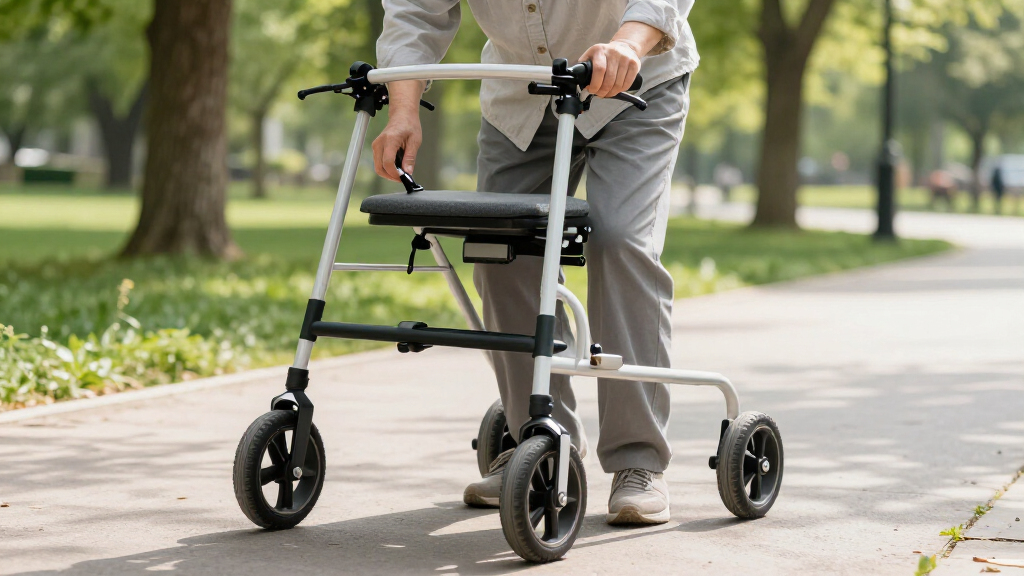
Manual push-to-lock brakes are common, requiring you to press down or pull a lever to stop. Loop-lock brakes, often found on older models, are easy to activate with a finger or thumb. Some newer models feature automatic or self-adjusting brakes, which keep grip consistent without extra effort. Choose brakes that suit your strength and dexterity, making it easy to stop and start without frustration.
Why does this matter? Well, brakes that are difficult to operate or unreliable can lead to dangerous slips or falls, especially for users with limited hand strength or dexterity. The tradeoff is often between ease of use and durability—automatic brakes might be easier but can sometimes be less robust if not properly maintained. Testing in different conditions helps ensure the brakes will perform reliably when you need them most. A well-functioning brake system provides peace of mind, reducing the risk of accidents and boosting confidence during every step you take.

Drive Medical Compact Folding Rollator with Seat and Brakes, 8-Inch Wheels
- Lightweight & Portable: Folds to compact size for easy storage
- Lightweight Design: Weighs only 15.4 lbs for easy carrying
- Sturdy Support: Supports up to 300 pounds with durable aluminum
As an affiliate, we earn on qualifying purchases.
As an affiliate, we earn on qualifying purchases.
What Makes a Seat Comfortable and Supportive?
Your seat isn’t just a place to rest; it’s your portable throne during outings. A comfortable seat supports your back and hips, easing fatigue on longer walks. Think about sitting on a lush, cushioned patch of moss—soft yet supportive.
Look for seats with padding made of memory foam or gel, which mold to your shape and absorb bumps. But beyond softness, the right seat should distribute your weight evenly to prevent pressure points that can cause discomfort or even skin breakdown over time. Adjustability is key—seats that can be customized for height ensure your feet rest flat on the ground, which helps maintain proper posture and reduce strain. A seat that’s too high or too low can cause awkward posture, leading to fatigue or joint pain.
For example, a friend of mine with arthritis found that a wider, padded seat with a backrest made her outings much more enjoyable. She could pause comfortably, chat with neighbors, and still enjoy her garden walks without discomfort. The tradeoff here is between weight and support; a sturdier, more supportive seat might be heavier but offers better comfort and safety, especially for longer periods of sitting. Many models now fold or detach easily, making transport and storage simpler. Choosing a lightweight, sturdy seat with slip-resistant surfaces enhances safety, especially on varied terrain. A well-designed seat supports your mobility by reducing fatigue and preventing discomfort, enabling longer, more enjoyable outings.

HOMLAND Foldable Rollator Walkers for Seniors with Seat, 16" Enlarged Seat
- Heavy-Duty Frame: Supports up to 350 pounds with reinforced construction
- Adjustable Comfort: Customizable seat and handle heights for users 4'7"-6'6"
- Breathable Backrest: Provides added comfort during use
As an affiliate, we earn on qualifying purchases.
As an affiliate, we earn on qualifying purchases.
How to Pick the Best Brakes and Seats in 3 Simple Steps
- Assess your strength and dexterity: If you have limited hand strength, prioritize easy-to-operate, automatic brakes and padded seats. Recognizing your physical capabilities helps avoid frustration and potential safety hazards. For example, if squeezing handles is difficult, automatic brakes reduce the effort needed. Similarly, choosing a seat with good padding and adjustability ensures comfort without extra strain.
- Test safety features in person: Try the brakes on different surfaces—are they firm and easy to lock? Sit on the seat—does it support your weight comfortably? These firsthand experiences reveal how the features perform under real conditions, which can be quite different from descriptions or photos. This step helps you identify potential issues like sticky brakes or inadequate support before making a purchase.
- Match features to your lifestyle: For outdoor adventures, choose sturdy brakes and durable, weather-resistant seats. For frequent transport, opt for lightweight, foldable options. Understanding your typical use helps prioritize which features matter most—robustness for rough terrain or portability for travel. Carefully weighing these tradeoffs ensures your rollator fits seamlessly into your daily life, enhancing safety and independence.
Take your time. Visit a local supplier, try different models, and see how each feature feels in real life. Remember, safety and comfort depend on your personal needs and how well the features match your lifestyle.

VOCIC Z21 Rollator Walker for Seniors with Seat, 8" All Terrain, 350 LBS
- Lightweight and Durable: Weighs 22lb, supports up to 350lb
- Compact Folding Design: Folds in 3 seconds to 31.5×23.6×13.8 inches
- Ergonomic Seat: Bionic, waterproof, 1.6-inch thick for comfort
As an affiliate, we earn on qualifying purchases.
As an affiliate, we earn on qualifying purchases.
Compare Common Brake and Seat Features at a Glance
| Feature | Manual Push-to-Lock | Loop-Lock | Automatic/Self-Adjusting |
|---|---|---|---|
| Ease of Use | Moderate—requires effort | Easy—one finger/thumb | Very easy—locks automatically |
| Reliability | High if maintained | Consistent but older models vary | Consistent, minimal effort |
| Durability | Depends on materials | Generally sturdy | Depends on design, but often durable |
Seats vary from padded cushions to ergonomic designs with adjustable heights. Consider the weight, padding quality, and whether the seat folds or detaches. For outdoor use, waterproof and slip-resistant surfaces are best. For indoor comfort, focus on padding and easy access.

Replacement Brake Clip for Walker, Brake Clamp Holder, Lock Clip for Rollator Transport Chair – Accessory (10)
- Material: Durable hard plastic
- Package Options: Multiple combinations available
- Installation: Easy to install without tools
As an affiliate, we earn on qualifying purchases.
As an affiliate, we earn on qualifying purchases.
Keep Brakes and Seats in Shape with Simple Maintenance
Regular checkups keep your rollator running smoothly. Inspect brakes monthly—look for wear, rust, or sticking parts. Clean brake components with a damp cloth and a little gentle soap to remove dirt and debris. Replace worn-out parts before they fail.
Seats benefit from occasional cleaning with mild soap and water. Check that the seat is securely attached—no wobbling or loose bolts. If your seat is padded, look for tears or flattening and replace if necessary.
Think of it like caring for a favorite pair of garden gloves—they last longer and perform better when well-maintained. A little upkeep goes a long way in keeping you safe and comfortable.
What to Know About Outdoor Use and Durability
Outdoor adventures demand more from your rollator’s brakes and seats. Look for models with heavy-duty brakes that can handle uneven terrain and slopes. The brakes should grip firmly on gravel, grass, or wet pavement.
Seats should be weather-resistant—waterproof materials and slip-resistant surfaces prevent soggy cushions and accidents. For example, a sturdy rollator with rubber tires and a sealed, padded seat can handle country paths and garden strolls with ease.
Remember, the best outdoor rollators support your sense of independence, no matter the terrain. They’re your trusty partner on every country road or park trail.
Frequently Asked Questions
How do I know if my rollator’s brakes are working properly?
Test the brakes by locking them and then trying to push the rollator gently. It shouldn’t move when brakes are engaged. Inspect for rust, sticking parts, or uneven locking. Regular checks keep you safe and prevent surprises during your walks.
What seat height is best for comfort?
The ideal seat height lets your feet sit flat on the ground with knees at a 90-degree angle. Usually, this is about 17-20 inches from the ground, but adjustability is key for personalized comfort, especially if you have joint issues.
Can I upgrade the brakes or seat on my existing rollator?
Many models allow for replacement parts like brakes and seats. Check with the manufacturer or a mobility specialist to find compatible upgrades. Properly functioning, newer parts keep your rollator safe and enjoyable to use.
Is it better to have automatic brakes for outdoor use?
Automatic or self-adjusting brakes are often easier to use, especially on uneven terrain. They maintain consistent grip without extra effort, making them a good choice if you want simple, reliable safety features for outdoor adventures.
What features should I look for if I want a rollator for rougher terrain?
Choose a model with sturdy, all-terrain tires, strong brakes that lock on uneven surfaces, and a weatherproof, durable seat. These features help you stay confident and safe no matter where your country walks take you.
Conclusion
When it comes to your rollator, safety and comfort go hand in hand. Good brakes give you peace of mind, while a supportive seat lets you enjoy your outings without worry. Take the time to choose wisely—your independence depends on it.
Imagine each step, each pause, feeling confident and secure. That’s the country-living magic, made possible by paying attention to what really matters in your rollator’s brakes and seats.