
TL;DR

Turn quiet afternoons into listening time
- Thousands of audiobooks, podcasts and originals
- Listen on your phone, tablet or Echo — also offline
- Cancel anytime
Start with one subject you enjoy, such as coins from a country you have visited or stamps showing garden birds, and set a monthly spending limit. Learn to identify items before buying, handle them gently, store them in suitable materials, and keep a simple record. Treat collecting as a hobby first: rarity, condition, authenticity, and demand all affect price, and none guarantees a profit.
A coin worth a few cents can carry the date of a family story, while an ordinary stamp can send your thoughts across an ocean. That little spark of curiosity is enough to begin a small collection; you do not need a glass cabinet or a dealer’s vocabulary.
This guide shows you how to choose a subject, keep spending comfortable, and learn what makes coins or stamps appealing to collectors. You will also find practical ways to handle, store, and record your finds, so your hobby stays tidy on the kitchen table and enjoyable for years.
Think of collecting like tending a window-box garden: a few well-chosen additions can give you plenty to notice. Whether you’re starting a small coin or stamp collection from pocket change or a family envelope, let curiosity lead and give yourself time to learn.
Choose one subject—such as coins from a country you love or stamps showing garden birds—to make your first collection easier to learn and organize.
Set a monthly spending limit and check recent comparable sales before paying a premium.
Use reputable references to check date, design, variety, condition, and typical market range before buying.
Handle coins by their edges and stamps with tongs; avoid cleaning coins or removing stamps from paper without informed guidance.
Store items in suitable holders in a cool, dry place, and record what you paid, where you found each piece, and its identifying details.
Starting a Small Collection Coins or Stamps
Choose a subject you enjoy, set a comfortable budget, and learn about each find before buying. Collect for curiosity and enjoyment; rarity does not guarantee profit.
Choose a focus
A clear theme makes your first finds easier to research and organize.
Places and history
Try coins from a country you have visited or an era that interests you.
Nature and stories
Garden birds, wildlife, or a family connection can guide your collection.
Set a comfortable limit
A monthly spending limit helps keep the hobby enjoyable as you learn.
Check the date, design, variety, and condition in a reputable guide.
Look at recent comparable sales and check seller details and return terms.
Note what you paid, where it came from, and its identifying details.
Collector value has several factors
Face value and age alone do not tell you what collectors may pay.
| What to check | Why it matters |
|---|---|
| Condition | Wear, scratches, centering, tears, or gum condition can affect desirability. |
| Authenticity | A listing or seller claim alone does not prove an item is genuine. |
| Scarcity and demand | Rarity alone does not determine collector value. |
Handle and store with care
Suitable handling and storage help protect the items you enjoy collecting.
- Hold by the edges with clean, dry hands.
- Avoid cleaning or polishing.
- Keep dry and away from PVC-containing plastics.
- Use stamp tongs.
- Do not peel stamps from paper without informed guidance.
- Protect from light, moisture, and adhesive contact.
Choose a Focus That Makes Every New Find More Fun
Starting a small coin or stamp collection gets easier when you choose one subject to guide your first purchases. A focus gives you a reason to pause over one coin or stamp and pass on another, much like choosing a row of tomatoes instead of planting every seed in the packet. You can always widen the collection later.
Pick something that connects with your interests: coins from a country you have visited, stamps showing birds you spot in the garden, or issues from the decade you were born. If a grandchild brings home a stamp with a bright red fox, you might start with wildlife stamps and see how different countries portray the same animal.
A clear focus also makes research more pleasant. Instead of trying to learn every date and denomination, you can study the designs and varieties tied to your chosen subject. A small collection is manageable when its boundaries make sense to you, your shelves, and your budget.
Try this short list before you buy:
- Choose one lane: coins or stamps are easier to learn at first, though collecting both can come later.
- Name a theme: a country, era, animal, holiday, or family connection can provide a natural starting point.
- Set a stopping point: one album page or a dozen items is a fine first chapter.
For example, someone who collects coins from places they have traveled might begin with a handful from a recent holiday, then research each mint mark and date over a cup of tea. The pleasure lies in the growing story, not in owning every issue.
Products Worth Considering

Traeger Westwood Wood Pellet Grill and Smoker, 653 sq. in., WiFIRE

EGO Power+ HT2601 26-Inch Cordless Hedge Trimmer with 56V 2.5Ah Battery and Charger

Husqvarna Automower 550 Commercial Robotic Lawn Mower
As an affiliate, we earn on qualifying purchases.
Set a Monthly Budget Before an Attractive Find Tempts You
Starting a small coin or stamp collection need not take much money; a modest monthly limit can keep the hobby comfortable while you learn. Set an amount that fits your household budget, then record purchases so the total never sneaks up on you. A beautiful item can still be enjoyable when it is inexpensive and common.
Collector value is not the same as face value or age. A coin’s denomination tells you what it was issued for in circulation, and a stamp’s printed amount served its postal purpose. Neither figure tells you what collectors may pay. Condition, authenticity, scarcity, and demand all play a part, and prices can shift over time.
Imagine finding a stamp with a lovely blue sailing ship at a weekend fair. It may cost only a little, yet give you more pleasure than a costly rarity that does not fit your theme. Keep notes on the price, date, and seller; after several months, you can see whether your spending matches the enjoyment you get from the hobby.
Use this simple check before paying a premium:
- Pause and identify the item with a reputable catalog or collecting guide.
- Compare its condition with descriptions and images of similar examples.
- Check recent comparable sales and account for seller fees or shipping.
- Walk away if the price feels rushed; another opportunity may come along.
Ordinary items are not automatically poor choices. A common coin with a design you love can be a fine centerpiece, while a rare piece may be a poor fit if it strains your budget.
Learn to Identify a Find Before You Buy It
Starting a small coin or stamp collection rewards a little research before a purchase: learn the item’s date, design, variety, condition, and typical selling range. A catalog is like a field guide for the collecting world, helping you distinguish two similar birds—or, here, two coins with a small mint-mark difference.
Begin with a reputable collecting guide or catalog and compare more than one reference before paying a high price. Online catalogs and digitized resources can make specialist information easier to reach, while collection tools can help you organize what you discover. For current prices, use recent comparable sales and up-to-date dealer information; old price lists may not reflect today’s market.
Look closely at condition. On a coin, wear, scratches, or unusual toning can affect desirability. On a stamp, centering, tears, and the condition of its gum may matter. A seller’s photo may not show every detail, so ask questions and read the description and return policy before you commit.
Online marketplaces and auctions offer access to items far beyond your local area, but a listing alone does not prove authenticity or condition. Check the seller’s history, request clear images when possible, and compare the offered item with independent references. For a costly purchase, seek a specialist’s opinion. Authentication and grading services can help assess some higher-value pieces, but their fees make them unnecessary for every inexpensive find.
For instance, if you see two nearly identical stamps, a catalog may show that a tiny design difference separates an ordinary issue from a scarcer variety. Research turns that small detail into a satisfying discovery, whether or not you choose to buy.
Find Your First Pieces Without Rushing a Purchase
Starting a small coin or stamp collection can begin with common, affordable items from a reputable local dealer, a collecting club, a show, or a well-reviewed online seller. You do not need to chase a rare piece; look for an item that matches your focus and comes with a clear description and sensible return terms.
Local shows can feel like a country fair for collectors: tables of albums, trays of coins, and friendly conversation. Ask how an item is stored, whether its condition has been described, and what the seller’s return policy allows. A knowledgeable dealer may help you identify a feature, but you should still compare the price with independent references, especially before spending more than your usual limit.
Online listings are convenient when a particular theme is hard to find nearby. They also require patience: photographs can hide scratches, creases, or poor centering, and a seller’s claim should not replace your own research. Check seller history, read the full description, and confirm shipping and return details before ordering.
A first purchase might be a low-cost set of coins from one country, or a small group of bird stamps that lets you fill the opening pages of an album. If a listing feels hurried or the seller cannot answer basic questions, save your money and keep looking. There is pleasure in coming home from a show with one carefully chosen item rather than a pocketful you bought on impulse.
Before you buy, note the item’s identifying details and the asking price. That small habit builds your judgment over time and makes it easier to spot a fair comparison when another example appears.
Handle Coins and Stamps So Their Surfaces Stay Safe
Coins and stamps keep their appeal best when you handle them gently and leave their surfaces alone. A beginner should not clean or polish a coin, and should not peel a stamp from paper without knowing the suitable method. Small scratches, chemical marks, or torn paper can be permanent.
Hold a coin by its edges with clean, dry hands, and place it on a soft, uncluttered surface if you need to examine it. Resist the urge to make a dull coin shine; abrasive cloths and chemical treatments can leave marks that collectors dislike. Even a well-meant polish may remove the original surface.
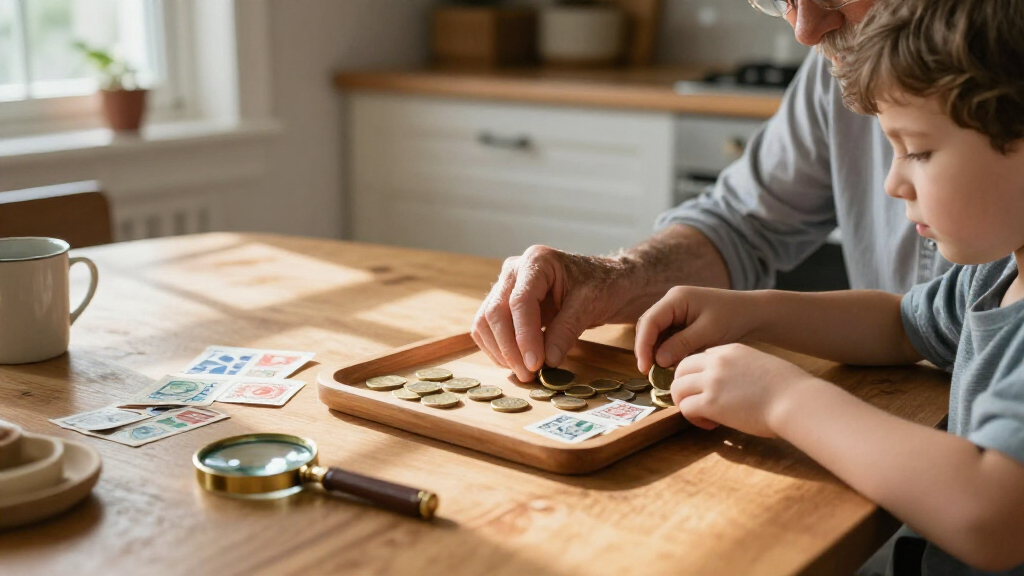
For stamps, use stamp tongs rather than fingertips. Oils from your hands can leave marks, and the thin paper can bend or tear easily. If an old stamp remains attached to an envelope, keep it there until you have learned whether and how it should be separated. A stamp that looks ready to lift may tear along its perforations.
Think of a coin’s surface like the patina on an old brass kettle: its history is part of what you see. That does not mean every mark is desirable, but it does mean scrubbing away age can change the item rather than improve it.
If you inherit a box of coins or stamps, resist sorting or cleaning it all in one afternoon. Photograph the contents, keep items in their existing safe arrangement, and seek informed advice before altering anything valuable. For example, a family envelope of stamps may contain ordinary issues beside one piece that deserves closer attention; gentle handling gives you time to learn which is which.
Store Your Collection in a Cool, Dry Place
Suitable holders, stable conditions, and a simple inventory protect a small collection from avoidable damage. Keep coins dry and away from PVC-containing plastics, which can harm surfaces, and protect stamps from light, moisture, and contact with adhesives. A drawer or shelf in a dry room often works better than a sunny windowsill.
Choose albums, holders, or pages made for long-term coin or stamp storage. Avoid improvised envelopes and plastics if you do not know what materials they contain. Sunlight can fade stamps, dampness can affect paper, and sudden changes in conditions may cause trouble for stored items.
A simple inventory makes it easier to remember what you own and how it came into your collection. Record the date you acquired each piece, its identifying details, what you paid, and where you found it. If your collection grows, these notes help you organize pages, research gaps, and answer questions about a particular item.
For example, a collector who labels each holder can find the 1970s coins quickly without emptying a box onto the table. The same record can be useful if you ever discuss insurance or seek advice about a valuable piece. Keep the inventory separate from the items, and store any especially valuable pieces securely.
Display can be part of the pleasure, but choose it carefully. A framed stamp near a bright kitchen window may look lovely at first and fade with prolonged light. Rotate display pieces or keep most of the collection protected in an album, bringing it out for a quiet afternoon’s browsing.
Keep the Hobby About Discovery, Not Promised Profit
A coin or stamp collection is most satisfying when you enjoy the learning, because prices can rise or fall and selling can take time and involve fees. Rarity by itself does not set a price; authenticity, condition, availability, and buyer demand all matter. Treat any future increase as uncertain, not as the reason to spend.
A common stamp can be personally meaningful because it depicts a familiar flower, while a rare stamp may be outside your budget or unrelated to your theme. Likewise, a coin with an attractive design can earn a proud place in your album even if many examples exist. Your collection can hold value in memories and knowledge alongside any market value.
Take care with high-priced offers and claims that a piece is guaranteed to appreciate. Before a major purchase, compare recent sales, learn what any grading or authentication service covers, and consider independent specialist advice. Services may be useful for higher-value items, but their cost may not make sense for a modest purchase.
Rules can also apply when buying, selling, importing, or exporting protected cultural objects or items made from restricted materials. If a piece raises that question, check the applicable local rules before completing a transaction. A little care helps keep a pleasant hobby on solid ground.
Suppose you have a small budget and two choices: a costly coin you barely understand, or several modest stamps that complete a page of garden flowers. Choosing the second may give you more chances to research, sort, and enjoy your collection. Let curiosity, comfort, and learning set the pace.
Frequently Asked Questions
Should I collect coins, stamps, or both?
Choose the one that interests you most and fits your budget and storage space. Starting with one focus makes it easier to learn the basics; you can add the other later if you wish. A collector who loves old travel postcards might naturally enjoy stamps, while someone curious about dates and mint marks may prefer coins.
How much money do I need to start?
There is no required minimum. You can begin with inexpensive common items and suitable basic storage, then set a monthly limit that feels comfortable. Record what you spend so an enjoyable hobby stays within your plans.
Where can I find my first items?
Try reputable local dealers, coin or stamp clubs, collecting shows, and well-reviewed online sellers. Read descriptions and return terms, and check seller history for online purchases. A small group of affordable items that fits your chosen subject is a good first find.
How can I tell if a coin or stamp is genuine or valuable?
Identify it with a reputable catalog or guide, examine its condition and features, and compare recent sales of similar items. Photos and seller claims may not show every flaw or prove authenticity. Seek a specialist’s opinion before making a high-cost purchase.
Should I clean coins or stamps before storing them?
Usually, no. Cleaning or polishing a coin can leave permanent marks, and careless handling can damage a stamp’s paper or gum. Hold coins by their edges, use stamp tongs, and ask an experienced specialist before attempting any treatment.
What supplies do I need for a small collection?
Start with suitable albums or holders, a magnifier, and stamp tongs if you collect stamps. Choose storage materials made for collectibles rather than improvised plastics, adhesives, or envelopes whose materials you cannot identify. You can add other supplies as your interests and collection grow.
Conclusion
Start with one subject that makes you smile, give it a comfortable budget, and learn the story behind each piece before you buy. A modest album can hold more than coins or stamps; it can hold travel memories, family history, and the pleasure of noticing small details.
Make your first page a little patch of curiosity, and let it grow one careful find at a time.