TL;DR

Turn quiet afternoons into listening time
- Thousands of audiobooks, podcasts and originals
- Listen on your phone, tablet or Echo — also offline
- Cancel anytime
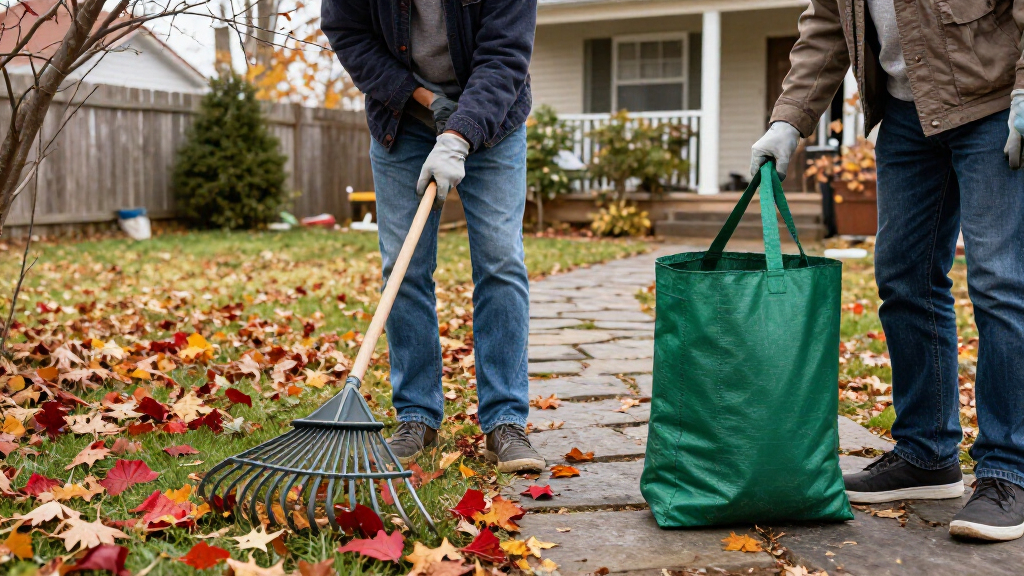
Long-handled rakes and grabbers, leaf scoops, bag holders, and lightweight tarps can reduce repeated bending during fall cleanup. Pick tools that fit your yard and feel steady in your hands, move manageable loads, and remember that wet leaves weigh more than dry ones.
One cold rain can turn a cheerful carpet of gold and red leaves into a slick, heavy mat. If you rake a little, bend to gather a pile, and repeat across the yard, the work can feel longer than the afternoon. A few simple tools can cut down on those repeated trips to the ground.
This guide explains how long-handled tools, leaf scoops, bag holders, and tarps each help with a different part of cleanup. You’ll see how to match them to your yard, move leaves in smaller loads, and choose a disposal method that fits your space. No tool removes every bit of lifting, but the right setup can make the work feel more settled and controlled.
Choose a rake or grabber long enough to reduce reaching, but short enough to control easily.
Use leaf scoops for modest loads; wet leaves are heavier and may need even smaller scoops.
A bag holder keeps the bag open, while smaller filled bags make hauling more manageable.
Use a tarp to move a large pile across a clear, level yard, and avoid overloading it.
Shred leaves only into a thin lawn layer, and check local rules for bags, blowers, and yard-waste pickup.
Rake and bag leaves with less bending
A few simple tools can reduce repeated stooping and make leaf cleanup easier to control. Match the setup to your yard, your comfort, and where the leaves need to go.
Gather with comfortable reach
A suitable handle helps you bring leaves within reach while staying upright.
Choose a steady handle
Long or adjustable handles can reduce stooping. Pick a length you can guide without awkward stretching.
Reach scattered leaves
A long-handled grabber can help with leaves outside a concentrated pile.
Transfer smaller loads
Leaf scoops keep hands farther from the ground. Wet leaves weigh more, so use a smaller scoop.
Set up the bagging spot
Keep the pile, bag, and path close together to make transfers more predictable.
Check that the frame fits your yard-waste bags and place it on level ground.
The holder keeps the bag open; it does not make a full bag lighter to carry.
Use smaller loads, especially when leaves are damp, and follow local collection limits.
Choose how to move the leaves
The best method depends on pile size, yard layout, and disposal point.
- Works with a bag holder and modest scoops.
- Smaller bags are easier to manage.
- Can move a large pile across a clear, level yard.
- A heavily loaded tarp may be difficult to pull.
Reuse leaves with care
Shredding can reduce volume, but lawn coverage matters.
| Option | Good to know |
|---|---|
| Mulch | Spread finely chopped leaves in a thin lawn layer. |
| Compost | Use a compost pile where available. |
| Yard-waste pickup | Check local rules for bags and collection. |
Start with a Long Handle to Rake Without Reaching Down
Simple tools to rake and bag leaves with less bending start with a rake or grabber that lets you work while standing comfortably upright. A longer handle can reduce how often you stoop to pull leaves into a pile, especially along a path or under shrubs. Choose a length you can control; extra reach helps only when the tool still feels steady in your hands. The aim is to bring leaves within easy reach, not to trade bending for repeated stretching or awkward pulling.
For example, if your usual rake leaves you leaning forward to reach the far edge of a lawn, try drawing leaves toward you in short strokes with a longer-handled rake. An adjustable handle can suit more than one person or let you change reach for an open lawn and a narrow flower bed. But a handle that feels too long may wobble or make it harder to guide the tines around a garden border. That control matters: missed leaves and repeated corrections can add effort, while a rake that turns easily lets you work in a consistent rhythm.
Look for a comfortable grip and a weight you can lift repeatedly without tiring quickly. Molded plastic and aluminum are common lighter materials, while wooden handles have a familiar feel and may suit someone who prefers a traditional rake. If your hands feel stiff in chilly weather, gloves with a secure grip can help you keep hold without squeezing too hard. A tool that feels manageable at first but tires your hands after a few minutes may slow the job down, so consider how it feels through several strokes, not just while standing in the shop.
Work from the far end of a small area toward your collection point, using a few measured pulls instead of reaching across the whole lawn. A tidy pile by the garden gate is easier to scoop than scattered leaves spread across the yard. Keeping the work area small also limits how far you have to move the rake and makes it easier to notice when a pile is large enough to transfer. You’ll still need to gather or transport the leaves, but a suitable handle can take many unnecessary bends out of the first part of the job.
Products Worth Considering

Sinimaka 8-Pack Twin-Wall Polycarbonate Greenhouse Panels, 8 x 4 ft

EGO Power+ SNT2425 24-Inch Two-Stage Snow Blower with Two 7.5Ah Batteries and Dual-Port Charger

Rachio 3 Smart Sprinkler Controller, 8-Zone
As an affiliate, we earn on qualifying purchases.
Use Leaf Scoops for Smaller, Easier-to-Control Loads
Leaf scoops are oversized hand tools that help you lift leaves from a pile while keeping your hands farther from the ground. They work best when you use them for modest amounts at a time, rather than trying to grab a whole mountain in one go. That distinction matters: the leaves may look light and bulky, but a large scoop can pull your arms away from your body and make the lift harder to steady. Scoops can reduce stooping, but an oversized load can still feel heavy in your hands, wrists, or shoulders.
Imagine a dry pile gathered beside the back steps. With a scoop in each hand, you can pinch up a manageable portion and drop it into a bag held open nearby. The scoop edges help contain the leaves, which can be easier than trying to rake them onto a shovel or pick them up with bare hands. For a few scattered leaves, though, a long-handled grabber might be simpler to store and use. The right choice depends on whether leaves are concentrated in a pile or spread out; scoops are most useful once the rake has brought them together.
Start with a small scoop and see how it feels before collecting more. Keep the leaves close to your body as you transfer them, and set the bag or container at a height that does not require a deep reach. If the pile is damp, take less: wet leaves clump together and weigh more than a similar-looking amount of dry leaves. Smaller loads may mean another trip or two, but they are easier to guide into a bag and less likely to make you twist or lose your grip.
These tools are often simple and relatively inexpensive, but comfort depends on more than price. Check that the scoop handles fit your grip and that the edges do not catch on grass or uneven paving. If your hands tire quickly or a full scoop feels unsteady, use a smaller load or ask for help moving the pile. A few extra trips can be easier than wrestling with one oversized armful, especially when the ground is uneven or the bag is already partly full.
Keep the Bag Open with a Holder That Fits
A bag holder or frame keeps a yard-waste bag open as you add leaves, so you do not have to hold the rim with one hand while scooping with the other. This is especially handy when you are working alone: both hands remain available to transfer leaves, and the open rim is less likely to collapse between scoops. Check the frame’s dimensions against the bags you already use; a holder that is too narrow or too tall can make loading awkward and waste the convenience it is meant to provide.
For instance, if you rake leaves beside the garage, set the holder on level ground and slide a bag over its rim before you start filling. The frame can stop the bag from slumping shut every time a breeze passes or a scoop bumps the side. Some holders fold away after the season, while others have handles or wheels that help move the empty frame between the shed and yard. Consider where you will store it and how far you need to carry it; a bulky frame can be less useful if it is hard to bring to the work area.
A holder solves one part of the job: keeping the bag open. It does not make a full bag lighter or easier to haul. Rather than packing leaves down until the bag is heavy, pause when it reaches a comfortable size and tie it off. This also leaves room to close the bag without struggling against a tightly packed rim. If your local collection rules specify bag size or weight, follow those limits; they can make pickup easier for everyone.
Think about where the bags will go before you choose a setup. A frame near the curb may save carrying, but it should not block a walkway or create a trip hazard. If you use a scoop, place the holder close enough that you can transfer leaves without twisting or taking a long step. A simple arrangement—pile, holder, and clear path—reduces unnecessary movement and makes each transfer more predictable. It can make an ordinary fall afternoon feel much less fussy.
Move a Big Pile on a Tarp Instead of Bagging It in Trips
A lightweight tarp or collection sheet lets you rake leaves into one place, then drag them to a compost area, curb, or yard-waste bin. It can reduce repeated trips with handfuls or partly filled bags across a larger yard. The tradeoff is straightforward: a tarp saves trips when the load stays manageable, but a heavily loaded tarp can be difficult to pull. In practice, fewer trips help only if each trip remains easy to control; a load that drags, snags, or spills can take more effort than carrying smaller amounts.
Say the maple in your back yard drops leaves across a broad patch of grass. Spread a tarp nearby, rake leaves onto the center, and stop before the pile gets so large that it hides the edges. Fold the sides in slightly if the leaves are dry and likely to scatter. Then pull the tarp along a clear, level path toward your collection point. Keeping the edges visible makes it easier to judge the load and grab the tarp securely, while a nearby destination limits the distance you have to drag it.
Check the ground first. Wet grass, sloped paths, loose stones, and slick paving can make a loaded tarp harder to move or control. If the path is uneven, carry smaller bundles or use a different collection spot rather than tugging hard. You can also work in two or three smaller tarp loads; fewer leaves per trip means less weight to manage. The extra trip is a useful trade when it lets you pull without straining or losing your footing.
A tarp is reusable and can take the place of many disposable bags where local rules allow loose leaves or reusable collection. It may not suit curbside programs that require tied bags, and some streets have rules about where yard waste can wait. Before leaf season, check your municipality’s pickup guidance and choose a tarp size you can fold and store without a struggle. A modest tarp beside the shed can earn its keep year after year, particularly if it matches the route from the main leaf pile to the place where leaves are actually collected.
Choose a Quiet Rake, Mulcher, or Powered Tool for Your Yard
Raking, mulching, blowing, and vacuuming each handle leaves differently, so the best choice depends on your yard’s size, the leaves’ condition, and local rules. A rake is quiet and needs no power; a leaf blower can move leaves quickly over open ground but creates noise and may be restricted. A mulching mower can chop dry leaves into smaller pieces, while a vacuum-mulcher gathers them into a bag or container. The practical tradeoff is where the work happens: some tools move leaves to a collection point, while a mower breaks them down where they fall. Think about whether you need to clear the area completely or can use some shredded leaves on the lawn.
Here’s a common comparison: a small garden with leaves scattered among flower beds may be easiest to manage with a rake and a bag holder. A broad, open lawn may suit a mulching mower if the leaves are dry and thin enough to pass through safely. A battery-powered blower offers cordless convenience, but check its weight, runtime, charging time, and replacement battery cost before buying. These features vary by model, so verify current details before making a purchase. Also consider the effort the tool shifts elsewhere: a blower may move leaves quickly but still leave you to gather them, and a vacuum-mulcher’s collection bag needs emptying as it fills.
Mulched leaves may be left as a thin layer on the lawn, but thick mats can block light and air, especially when they get wet. If a mower leaves clumps behind, collect or spread them rather than letting a dense blanket sit on the grass. Blowers should direct leaves toward your own collection point, never into the street, storm drain, or a neighbor’s yard. In other words, speed matters less if the tool leaves behind a new cleanup problem or sends leaves somewhere they can cause trouble.
Tools can reduce effort, but they do not remove the need to pace yourself. Wear stable, closed-toe shoes and take breaks, particularly when the ground is damp or uneven. If a powered tool feels too heavy, noisy, or hard to control, a quieter hand-tool routine may suit you better. Comfort and steady footing count as much as speed; a tool that lets you work steadily can be more useful over a full yard than one that feels fast for a few minutes.
Put Together a Simple Routine That Saves Repeated Bending
A practical leaf routine separates the work into three jobs: gather, transfer, and haul. When each job has a tool and a clear place, you can avoid frequent trips between scattered piles and the disposal point. For example, use a long rake to form small piles, scoops to load a nearby holder, and a tarp only for leaves that need to travel farther. Thinking in stages also makes it easier to spot the part that is slowing you down: if gathering is easy but carrying is tiring, changing the hauling method may help more than buying another rake.
- Pick a clear collection spot. Set a bag holder or folded tarp on firm, level ground, with a path you can walk easily.
- Gather leaves in a small area. Work with the wind where possible and rake toward yourself rather than reaching across the lawn.
- Transfer a manageable amount. Use scoops or a rake to fill the bag or tarp without compressing leaves into a heavy load.
- Move the leaves safely. Carry only a comfortable amount, or pull a lightly loaded tarp along a clear route.
- Pause and reassess. If the leaves are wet or your grip is tiring, shorten the work session or ask for help with hauling.
This routine can be adapted to a small front stoop or a yard with several mature trees. If you have a narrow path, a tarp may be more trouble than it saves; a holder near the curb could be simpler. If disposal is far away, several small tarp trips may beat carrying bags one at a time. The useful question is not “Which tool does everything?” but “Which tool makes the next part easier?” Matching the tool to that stage helps avoid carrying leaves farther than necessary or setting up equipment that does not fit the route.
People with significant pain, limited mobility, or balance concerns may find that help from a family member, neighbor, or yard-waste service is the most comfortable option. Asking someone to handle heavy hauling can leave you free to rake a smaller patch or tend the porch pots. Choose a pace and setup that let you finish feeling steady, not worn out. A routine that can be paused and resumed is often more workable than one that depends on finishing the whole yard in a single session.
Frequently Asked Questions
What tool helps pick up leaves without bending?
Leaf scoops and long-handled grabbers can reduce how often you reach down to collect leaves. A tarp can help move a larger pile, while a bag holder keeps a bag open as you fill it. The best choice depends on whether you need to gather, lift, or haul.
Do leaf scoops save your back?
Leaf scoops can reduce repeated stooping, but they do not remove lifting. Use small loads that feel steady in your hands, and take less when leaves are wet. If a scoop feels awkward or heavy, stop and adjust your method.
What is the easiest way to keep a leaf bag open?
A bag holder or frame usually provides the simplest support. Check that it fits the bags you already use, and set it on level ground. It holds the bag open but does not make a full bag lighter to carry.
Are tarps better than bags for leaf cleanup?
Tarps can reduce trips when you need to move a pile across the yard, especially toward a compost area. Bags may work better for curbside programs that require tied bags. Check local collection rules and avoid loading a tarp so heavily that it becomes hard to pull.
Should I rake leaves or use a leaf blower?
Raking is quiet and needs no power, while a blower may move leaves faster across open areas. Blowers can be noisy and may face local restrictions. For a small yard, a rake, tarp, or mulching mower may be enough.
Can I leave shredded leaves on the lawn?
A thin layer of shredded leaves may be left as mulch, but thick or wet mats can block light and air. If the mower leaves clumps, spread them more thinly or collect the excess. Conditions vary with the amount of leaves and the lawn.
Conclusion
Choose tools by the job: a long handle for gathering, scoops for lifting, a frame for filling, and a tarp for hauling. Keep loads small enough to handle comfortably, especially after rain, when leaves grow heavy and slippery. A few careful trips across the yard beat one difficult haul.
Set your tools by the garden gate, clear a steady path, and let the autumn leaves travel at your pace—one quiet pile at a time.