TL;DR

Turn quiet afternoons into listening time
- Thousands of audiobooks, podcasts and originals
- Listen on your phone, tablet or Echo — also offline
- Cancel anytime
A pressure washer can clean broad, dirty outdoor surfaces faster than repeated scrubbing because its focused water stream loosens buildup across a larger area. Your actual time savings depend on the surface, machine, setup, and technique, so group several suitable chores together and use the least aggressive setting that works.
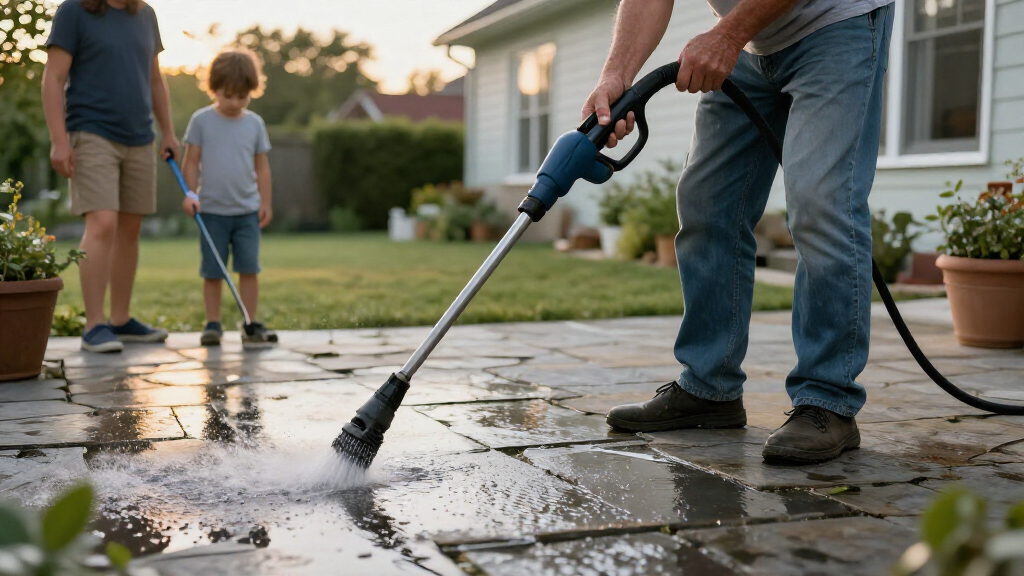
A patio that takes an afternoon of bucket, brush, and sore-armed scrubbing can often be cleaned in a much shorter session with a pressure washer. The change is easy to see: dull pavers brighten, and the gritty rinse runs toward the garden drain.
A pressure washer saves time by using a focused stream of water to loosen dirt and some surface buildup. You’ll learn which chores suit it, how to plan a session that makes setup worthwhile, and how to avoid turning a quick clean into a repair job.
There isn’t one clock-saving figure that fits every yard. A small porch with light dust may be quicker to rinse with a hose, while a wide, grimy driveway can reward the extra setup. The useful question is where the washer can replace repeated scrubbing without putting wood, paint, mortar, or your own footing at risk.
Use a pressure washer for broad surfaces with stuck-on dirt; a hose may be quicker for a light rinse.
Group several suitable chores together to make setup and cleanup worthwhile.
Pressure loosens grime while water flow carries it away, so PSI alone doesn’t predict cleaning speed.
Use a wide, gentler spray and test first, especially on wood, paint, mortar, and delicate finishes.
Plan for runoff, slippery ground, hoses, plants, and nearby electrical equipment before washing.
How a Pressure Washer Saves Time on Outdoor Chores
A pressure washer can loosen grime across broad surfaces faster than repeated scrubbing. The time saved depends on the surface, buildup, machine, and setup.
Where it saves effort
Large areas with stuck-on dirt are often worth the setup.
Patios and driveways
A focused stream loosens grime over broad paving, reducing repetitive brushing.
Grouped outdoor chores
With suitable settings, one session can cover furniture, bins, and fences.
Light rinsing
A hose may be quicker for loose dust or delicate items.
Make setup count
Preparing the washer takes time whether you clean one item or several.
Gather surfaces and objects to clean in one session.
Move loose items and plan for runoff, plants, hoses, and nearby electrical equipment.
Start gently on an inconspicuous patch and use steady, overlapping passes.
Follow the machine manual for cleanup and storage.
Choose by pressure and flow
Pressure loosens dirt; water flow carries it away. A higher PSI rating alone does not guarantee faster cleaning.
- Often lighter and quieter
- Can suit ordinary household chores
- Typically easier to store
- Tends to offer more mobility and power
- Requires fuel
- Needs more maintenance
Protect surfaces and people
The right technique can prevent missed patches and avoid turning a quick clean into a repair.
- Use the least aggressive setting that works and a wide, gentler spray where suitable.
- Keep the nozzle moving at a consistent distance; test wood, paint, mortar, and delicate finishes first.
- Keep spray away from people, pets, seals, and electrical equipment.
- Use only detergent compatible with both the washer and the surface.
Clean broad surfaces faster than you can scrub them by hand
A pressure washer saves time on broad, dirty surfaces because its focused stream loosens grime across a wider area than a hand brush can handle with each stroke. A driveway or patio is often a better fit than a small, delicate object. The exact time saved depends on the area, buildup, machine, and setup.
Think of a patio after a wet spring: grit has settled between pavers, and a green film has appeared along the shady edge. With a bucket and brush, you work patch by patch. A washer lets you move in steady lanes, so the water does much of the loosening while you guide the spray.
That doesn’t mean every surface becomes clean in one pass. A dark oil spot may need a suitable pretreatment, and old algae can cling in low spots. Washing by itself may reduce surface buildup without removing the cause, especially where shade keeps paving damp.
For one loose patch of dust, a garden hose may be simpler. The washer earns its setup time when the surface is large, the dirt is stuck on, or you have several chores waiting. In that way, it speeds up outdoor cleaning by using water pressure for the repetitive work.
Products Worth Considering

Orbit B-hyve XD 4-Port Smart Hose Watering Timer with Wi-Fi Hub

Traeger Pro 22 Wood Pellet Grill and Smoker, 572 sq. in.

Greenworks 80V 21-Inch Self-Propelled Lawn Mower with 4.0Ah Battery and Charger
As an affiliate, we earn on qualifying purchases.
Get more done by grouping chores into one washer session
A pressure washer saves the most time when you clean several suitable outdoor items in one session, because connecting hoses and preparing the area take time whether you wash one thing or four. Gather the patio chairs, bins, paving, and a suitable section of fence before you start. One setup can serve the whole list.
Picture a Saturday morning before guests arrive. Rather than scrub two chairs, put the washer away, then fetch it again for the paving, move the chairs aside first and rinse them in turn. When you finish, the water supply and equipment are already in place for the next task.
Plan the work so runoff doesn’t undo your progress. Clean higher or dirtier areas before lower, freshly rinsed spots, and move loose objects out of the spray path. If you use detergent, check that it suits both the washer and the material, and keep nearby plants in mind.
Setup still counts: you may need to connect a garden hose, check the water supply, arrange power or fuel, and later drain and store the equipment. If you only need to rinse a little dust from a flowerpot, that preparation can take longer than the chore. Several jobs make the arithmetic kinder.
- Make a short task list of washable surfaces and objects.
- Clear the work area and protect delicate plants or nearby items.
- Start with a cautious setting and test an inconspicuous patch.
- Work through the grouped chores, then rinse and store the equipment according to its manual.
Choose a washer by flow and pressure, not one big number
A washer’s cleaning pace depends on both its pressure and its water flow: pressure helps loosen dirt, and flow helps carry that dirt away. Pressure is usually listed in PSI or bar, while flow appears in gallons or litres per minute. A higher pressure rating alone does not guarantee faster cleaning.
Imagine two machines advertised with bold pressure figures. One may move more water, while the other has a stronger concentrated stream but less flow. On a broad patio, the amount of water moving across the surface matters alongside the force that breaks dirt loose.
Electric models are often lighter and quieter, which can suit ordinary household chores and easier storage. Gas models tend to offer more mobility and power, though they need fuel and more maintenance. Your choice depends on the surfaces, access to power and water, storage space, and how often you expect to use the machine.
Features such as adjustable pressure, interchangeable nozzles, detergent tanks, and surface-cleaner attachments can make particular jobs easier, but options vary by model. Compact electric and cordless designs have also appeared; battery runtime and performance vary, so check current manufacturer details if those matter to your yard. Choose for the chores you actually have, not a headline figure.
Use a steady technique to avoid missed patches and damage
A steady, overlapping pass cleans more evenly than sweeping the nozzle quickly back and forth, because each section gets consistent coverage. Keep a consistent distance from the surface, follow the manual’s nozzle guidance, and move the spray continuously. Start gently on an inconspicuous patch before tackling the visible area.
For example, on a paved path, imagine each pass overlapping the last by a few inches. If you rush or change distance, the cleaned lanes can look striped when the paving dries. A slower, even rhythm may feel less dramatic, but it saves a second round of washing.
Wide spray patterns generally spread force and are gentler; narrow patterns concentrate it and raise the chance of damage. A narrow jet held close can gouge wood, lift paint, weaken mortar, or force water into gaps. Deck boards deserve particular care: choose a suitable low-pressure setting, keep the nozzle moving, and test before continuing.
Take care with windows, vents, seals, outdoor electrical equipment, people, and pets. Don’t point the stream toward them, and protect delicate plants from harsh spray or runoff. A quick job is no bargain if it strips a finish or sends water where it shouldn’t go.
Know when a hose, brush, or detergent saves more effort
A pressure washer is most useful for stuck-on grime and large hard surfaces; a garden hose or hand brush is often easier for light rinsing and delicate items. The gentler method can be the faster one when there’s little dirt to remove or the material could be harmed by strong pressure.
Say you want to rinse pollen from a porch swing before sitting down. A hose and soft cloth are quick and give you better control around cushions or painted trim. But if the concrete path beyond it has months of ground-in dirt, the washer may spare you plenty of repetitive brushing.
Detergent isn’t always needed. Water can be enough for loose dirt, while a compatible cleaner or pretreatment may help with particular stains. Follow the machine instructions and the product label, and allow any recommended dwell time; washing alone may not remove oil, algae, or mildew completely.
Some outdoor furniture, fences, and vehicles can be cleaned with suitable settings, but the material and finish matter. Avoid assuming one nozzle or pressure works for everything. For a fine-painted chair, a gentle rinse and cloth may protect the finish better; for sturdy paving, a washer can do the heavy lifting.
Make the chore easier without rushing around the spray
A pressure washer can reduce repetitive scrubbing, but it still calls for calm, deliberate movement and care around wet ground. Wear footwear with good grip, keep hoses arranged so you don’t trip, and avoid directing the spray at anyone. The work may go faster, yet the area can become slippery as dirt and water collect.
For instance, if you’re cleaning a small patio beside a flower bed, clear a path for yourself before starting and keep the hose from looping across the walkway. Rinse in a direction that moves dirty water away from the area you’ve just cleaned. This makes the job tidier and helps you avoid stepping back onto a slick patch.
Take breaks if the task is longer than expected, and don’t stretch or lean to reach an awkward corner while holding the wand. Move your feet and reposition the hose instead. If the equipment feels unwieldy or the surface is high, uneven, or difficult to reach, choose a simpler method or ask someone to lend a hand.
Read the washer manual before use, including instructions for power, water supply, detergent, and storage. No single method suits every person or surface. A comfortable pace and a clear work area can make a useful tool feel more manageable.
Frequently Asked Questions
How much time can a pressure washer save?
There’s no universal time saving. Area size, buildup, washer flow and pressure, attachment, and setup all affect the job. A wide, grimy patio may be quicker than scrubbing by hand, while a light rinse may be faster with a hose.
Can I pressure wash a deck without damaging the wood?
It can be possible with a suitable low-pressure setting, a wider spray pattern, and a moving nozzle. Test an inconspicuous spot first and follow the equipment guidance. A narrow jet held close can gouge boards or strip a finish.
Do I always need detergent?
No. Water may remove loose dirt, while a compatible detergent or pretreatment can help with certain stains. Check that the product is approved for both the machine and the surface, and follow its label.
Is a pressure washer better than a garden hose?
For stuck-on grime across a large hard surface, a pressure washer can clean faster than a hose and brush. A hose is often simpler for light rinsing, delicate items, or a small patch of dirt.
Can pressure washing remove oil, algae, or mildew?
It may reduce or remove some surface buildup, but results vary by stain and surface. Oil or persistent growth may need an appropriate cleaner and time to work; washing alone may not address the underlying cause.
Which nozzle should I use?
Wider spray patterns are generally gentler, while narrow patterns concentrate force and increase the risk of damage. Follow your machine’s manual, begin cautiously, and test the surface before cleaning a visible area.
Conclusion
A pressure washer saves time when you match it to a broad, dirty surface, group jobs together, and use a steady spray suited to the material. For a few dusty pots or delicate painted furniture, a hose and cloth may still be the easier choice.
Choose the gentlest method that gets the job done, and let a Saturday’s work end with clean paving, a quiet porch, and time left to enjoy the yard.