
TL;DR

Turn quiet afternoons into listening time
- Thousands of audiobooks, podcasts and originals
- Listen on your phone, tablet or Echo — also offline
- Cancel anytime
To keep a garage tidy and safe, clear out items you no longer need, group the rest into labelled storage, and keep walkways and exits open. Store heavy items low, follow labels and local rules for chemicals and batteries, and check periodically for spills, pests, water, and unstable shelves.
A garden hose left across the garage floor can turn a quick trip to the potting bench into a stumble. The same clutter that makes it hard to find a trowel can hide a leak, block an exit, or leave a can of fuel too close to a heater. A tidy garage is easier to use and can reduce common risks, such as trips, falls, fires, and contact with household chemicals.
You don’t need to empty the whole garage in one weekend. Start with one shelf or one corner, then decide what to keep, donate, recycle, or dispose of. This guide shows you how to make a clear path, arrange storage to suit the things you reach for most, and handle paints, fuel, tools, and batteries with care.
Think of it as making room for the good parts of garage life: hanging up your coat after a brisk walk, finding the pruning shears before the roses need attention, or parking without threading your way past a teetering pile. A few simple ways to reset the space can make it calmer and more welcoming.
Clear one small zone at a time and sort belongings into keep, donate, recycle, and dispose.
Group similar items, label storage plainly, and keep frequently used belongings within easy reach.
Leave clear routes to the garage door and interior exit; put away hoses, cords, and tools after use.
Store heavy items low, secure tall shelving where practical, and follow rack and hook load limits.
Follow labels and local rules for chemicals, fuel, batteries, and hazardous-waste disposal.
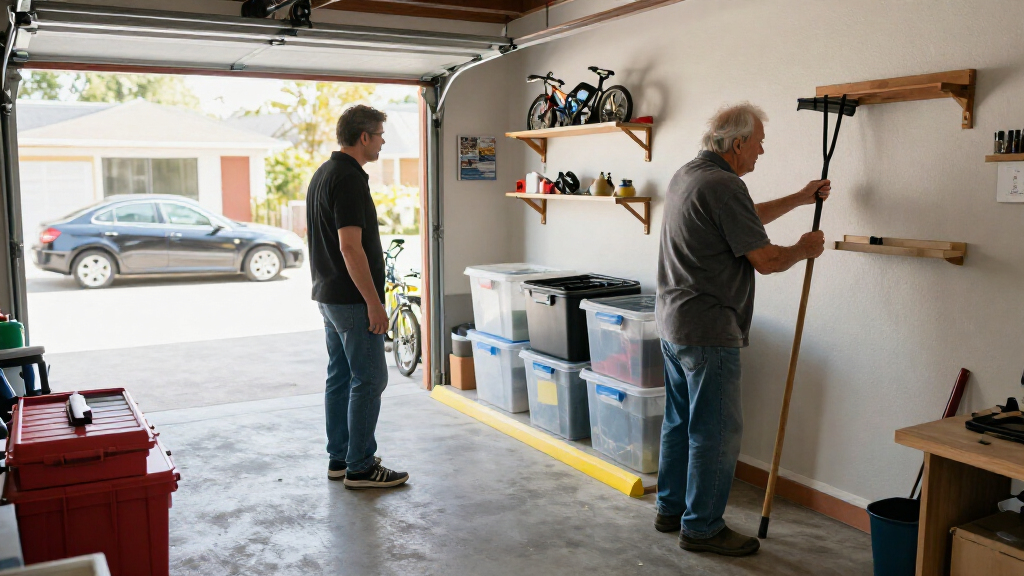
Simple Ways to Keep the Garage Tidy and Safe Clear paths, safer storage
A more usable garage starts with small clear-outs, easy-to-find homes for belongings, and clear routes to every exit.
Start with one small zone
Sort one shelf or corner at a time so the rest of the garage stays usable.
Begin with one shelf or patch of floor and remove obvious rubbish.
Separate items to keep, donate, recycle, or dispose of.
Use local guidance for paint, oil, batteries, pesticides, and other hazardous waste.
Give belongings a clear home
Group similar items and label storage in plain words to make finding and putting things away easier.
Keep essentials handy
Place frequently used tools where they are easy to reach.
Use walls carefully
Hooks, pegboards, and racks can free floor space when installed within load limits.
Keep heavy items low
Use stable lower shelves, secure tall storage where practical, and avoid overloading it.
Keep routes open
A brief reset after projects helps prevent everyday clutter from becoming an obstacle.
- Hoses and extension cords
- Tools and packages
- Unstable piles near doors
- Path to the garage door
- Route to the interior exit
- Doors and garage-door mechanisms
Handle hazards with care
Follow product labels and local rules for storage, use, and disposal.
| Item | Safer approach |
|---|---|
| Paint, fuel, and chemicals | Keep in original labelled containers, away from heat and flames. |
| Batteries | Follow manufacturer instructions; stop using damaged or swollen batteries. |
| Electrical equipment | Avoid overloaded outlets and cords; have damaged wiring checked by a qualified professional. |
Start with one small clear-out and make decisions easier
To keep the garage tidy and safe, start with a small area, remove obvious rubbish, and sort one kind of item at a time. A single shelf or a patch of floor gives you a clear finish line, while sorting tools separately from holiday decorations helps you make decisions without shuffling the same boxes all afternoon. Smaller rounds also mean you can keep the rest of the garage usable while you work, which matters if you need to reach the car, bins, or an exit during the clear-out.
Set out four destinations: keep, donate, recycle, and dispose. A spare rake with a sound handle may suit a neighbour; a broken plastic pot might belong in a local recycling stream, depending on local rules. The categories help distinguish useful items from things that only occupy space, but they also prevent a common shortcut: treating every unwanted item as ordinary rubbish. If you find old paint, oil, batteries, or pesticides, check your local hazardous-waste collection guidance before moving them into ordinary rubbish or pouring anything down a drain.
For example, you might clear the corner beside the side door first. Pull out the boots, empty flowerpots, and bag of potting mix, then wipe the shelf and look for damp patches or insect activity. Returning only what belongs there leaves room to inspect the surface later; a boot tray contains mud and water, while sealed potting mix is less likely to spill or attract pests. If the corner is damp, deal with the moisture source before putting everything back, or the same problem may quietly damage the items you just sorted.
Small rounds are easier to finish than a grand clear-out that leaves boxes across the floor for a week. Set a timer for 20 minutes if that helps, and stop when your chosen zone is usable. A tidy garage grows from completed little jobs, not from a perfect Saturday that never arrives. The useful measure of progress is whether the area is safer and easier to use, not how many belongings you have discarded.
Products Worth Considering

EGO Power+ ST1511T 15-Inch Cordless String Trimmer with Battery and Charger

Husqvarna Power Axe 350i Chainsaw, 18 Inch with Battery and Charger

Husqvarna 122C 22-cc 2-Cycle Gas String Trimmer, 17-Inch Curved Shaft
As an affiliate, we earn on qualifying purchases.
Give everyday tools and seasonal gear a home you can remember
A garage stays orderly when each group of belongings has a visible, easy-to-reach home. Put frequently used tools where you can reach them comfortably, label shelves or bins in plain words, and keep items used together in the same area. The goal is less rummaging, not a row of matching containers. When a home is obvious, putting things away takes less effort, so clutter is less likely to return to the floor where it can obstruct a route or hide a spill.
Keep garden supplies together, for instance: gloves in a small bin, hand tools on a pegboard, and seed trays on a shelf that stays dry. Store car-care products in their own labelled spot, away from food and drink. A label such as “Winter scarves” saves more time than an opaque tote whose contents you have to rediscover every November. Grouping items by use makes it easier to notice when something is missing or leaking, though the arrangement should still leave enough room to reach containers without pulling down a stack.
Use the door you walk through most as a guide. If you enter carrying muddy shoes after tending the beds, place a boot tray and a hook for your coat near that entrance. Keep the main walking route open, though; useful storage should not turn the entry into an obstacle course. A convenient drop zone can make cleanup more likely, but if it narrows the path, the storage convenience comes at the cost of safe movement.
Some belongings don’t suit garage conditions. Temperature swings and humidity can affect certain paints, electronics, medicines, or other products, so check the label or manufacturer’s storage directions. If you keep a small tin of touch-up paint for the kitchen trim, the label may point you toward a better place than a hot, damp garage shelf. Moving it may mean less convenient access, but protecting it from unsuitable conditions can preserve the product and prevent a damaged container from becoming another cleanup problem.
Keep a clear path to the door with a simple weekly reset
Clear garage floors and exits by putting away cords, hoses, and tools as soon as a job ends. Leave a walking route to the garage door and any door into the house, and keep boxes out of that route. These paths matter because people often carry groceries, laundry, or garden clippings through the space and may not be able to see what is underfoot. A few minutes of resetting the floor can reduce common risks such as trips and preserve a route you can use quickly when the garage is busy or poorly lit.
Use this quick reset after a project or once a week:
- Coil hoses and extension cords and hang them where they cannot slide back across the floor.
- Return hand tools to a drawer, pegboard, or labelled bin.
- Check both exit routes and move any bags, boots, or packages out of the way.
- Look for spills or leaks, and handle them according to the product label or the relevant local advice.
Imagine coming home on a rainy evening with a basket of groceries. A clear route from the car to the kitchen means you can watch where you step instead of looking down for a garden fork hidden beneath a raincoat. Good lighting helps too: it makes wet patches and stray screws easier to see before you step on them, though it works best alongside a clear floor rather than as a substitute for putting things away.
Be careful with items that could fall into the path later. A tall stack of garden pots may seem steady until someone nudges it. Keep piles low and stable, and don’t store things against a door where they could block it when you need to leave quickly. That habit addresses both immediate and delayed hazards: a route that is clear now can become obstructed if an unstable pile shifts or a door cannot swing freely.
Store heavy gear low and use wall space within its limits
Heavy containers and equipment belong on stable, lower shelves, while wall hooks and overhead racks can free up valuable floor space. Secure tall shelving and cabinets where practical, follow the storage system’s load limits, and keep stored items clear of lights, doors, and garage-door mechanisms. Open floor space helps movement, but using vertical space shifts the risks upward: an overloaded rack or a poorly secured shelf can drop items into the very area you have cleared.
Put bags of soil, car-care containers, and heavy tool cases near floor level. Keeping weight low reduces the chance of a container falling and makes lifting less strenuous. Keep lighter seasonal items higher if they are easy to reach safely, and avoid climbing on boxes or a wobbly chair to get them down. If a container feels awkward to lift, split its contents into smaller loads or ask someone for help rather than twisting to pull it from a high shelf; the extra handling takes time but lowers the chance of losing control of the load.
Wall-mounted hooks work well for a folding chair, broom, or garden hose, while a pegboard can keep hand tools visible. When the garage has little floor space, these can be simple ways to reclaim room. Check each hook’s fit and capacity, and don’t hang a heavy item above a spot where you stand or walk. A tidy-looking wall is useful only if the fixings suit the item and the wall, since a hook that comes loose can turn storage into a falling-object hazard.
Overhead racks need particular care. They can hold seasonal items when installed according to their instructions and kept within their rated capacity. Before storing a box of holiday lights, check that the rack won’t interfere with the garage door, tracks, opener, or lighting. Keep frequently used belongings lower so you aren’t reaching overhead every time you need a watering can. Overhead storage can reclaim floor space, but the tradeoff is harder access and more risk while lifting or lowering items, so reserve it for light things you rarely need.
Store fuel, paint, and household chemicals with care
Keep fuel and household chemicals in their original, labelled containers, follow each product’s label, and store them away from heat and flames. Don’t pour chemicals into old food or drink bottles: a familiar-looking container can confuse someone and may not be suitable for the product. The original container preserves the product information needed for safe use and disposal, while separation from ignition sources reduces the chance that a spill or vapour meets heat. Keep these items out of reach of children and pets, and follow local fire and disposal guidance.
For example, if you use a small amount of petrol for a garden machine, keep it in an approved container and place it where the product label and local guidance allow. Don’t set it beside a water heater or a space heater just because that corner seems convenient. A storage spot should be chosen for the conditions the fuel requires, not simply because it is out of the way; labels explain storage and handling for the specific product, so read them before deciding where a container belongs.
Old products deserve attention during a clear-out. A leaky can of paint or a bottle with a faded label isn’t a good candidate for an ordinary bin. Check local household hazardous-waste services for accepted materials and instructions; rules differ by location, and collection sites may ask you to keep items in their containers. Although arranging special disposal can take longer than putting something in the bin, it helps prevent unknown or hazardous material from entering waste streams that aren’t equipped to handle it.
Some supplies may be better stored elsewhere. Paints and other products can have temperature limits, while damp garages may not suit paper labels or cardboard packaging. If a label is unreadable, don’t guess what is inside or how to handle it; seek guidance from the local waste service. This careful approach may add a step now, but it avoids relying on a guess that could lead to unsafe handling or improper disposal later.
Reduce fire and electrical risks before they become a surprise
Reduce garage fire and electrical risks by keeping combustible materials away from heaters and other ignition sources, avoiding overloaded outlets and extension cords, and getting damaged wiring or equipment checked by a qualified professional. Paper, cardboard, fuel, and many household products can add risk when stored close to heat or sparks, so leave clear space around heaters and electrical equipment. This matters in a garage because ordinary storage and work equipment often share a compact area; a heater that is safe in an open spot may be surrounded by boxes after a delivery or project.
Picture a chilly morning when you switch on a portable heater beside a stack of flattened delivery boxes. Moving those boxes to a suitable storage spot and following the heater’s instructions is a practical change that gives the area breathing room. It also means the heater is less likely to warm or ignite nearby material. Keep cords from running under rugs or across the walking path, where they can be damaged or tripped over; routing them properly may take a little setup, but it reduces both electrical wear and everyday obstacles.
Battery-powered tools and e-bikes need their own attention. Follow the manufacturer’s charging and storage instructions, and stop using a battery that looks damaged or swollen. Keep charging equipment positioned as directed, away from clutter and materials that could burn. Batteries can behave differently when damaged or charged incorrectly, so a clear charging area makes it easier to notice a problem and keeps surrounding material from adding fuel. If a battery or charger behaves unusually, consult its manufacturer’s guidance or a qualified professional rather than trying to repair it yourself.
Look over plugs, cords, and equipment as you tidy. A frayed extension cord, cracked plug, or scorch mark calls for attention from a qualified professional. You don’t need to diagnose the fault yourself; your practical job is to notice the warning sign, stop using the damaged item, and get appropriate help. Spotting a problem early can prevent it from being hidden behind stored belongings and gives a professional a clearer chance to address the cause.
Make inspections part of the season, not a big project
A brief seasonal check can reveal spills, leaks, pests, water damage, expired products, or storage that has started to lean. Good lighting makes these signs easier to spot, and a quick look around the garage can help you deal with a small issue before it spreads across a shelf or floor. The point is not to inspect every object in detail; it is to notice changes that can worsen if they stay hidden, such as moisture under a container or a shelf beginning to sag.
Choose an easy routine, such as checking the garage when you change over winter coats for summer hats. Look along the floor for dampness beneath stored containers, scan shelves for tipping boxes, and check corners for signs of pests. If you find a leak, identify its source and seek suitable help when needed; don’t simply hide the wet patch beneath a storage bin. Catching moisture early can protect stored belongings and reveal a building or plumbing issue before the damage grows.
Keep items dry before putting them away. A damp umbrella or muddy garden gloves left in a closed box can create musty smells and invite trouble. Let wet things dry in an appropriate place, then store them where air can circulate. Sealed storage may keep dust or pests out, but packing damp items tightly can trap moisture, so let them dry first. Seal gaps where appropriate and address water entry, while taking care not to block vents or garage-door components.
After a pruning afternoon, you might notice the hose still stretched across the floor and a trail of damp leaves near the side door. Coil the hose, sweep the leaves, and take a glance at the shelf below the potting supplies. That small reset keeps the garage ready for the next job and helps you spot changes while they are still easy to address. A repeatable seasonal cue makes this check easier to remember than waiting until clutter or damage forces a larger cleanup.
Frequently Asked Questions
Where should I begin if my garage feels too cluttered?
Choose one shelf, corner, or short stretch of floor and clear only that area. Sort one category at a time, such as garden tools or sports gear, and set aside old paint, oil, batteries, or pesticides for local disposal guidance.
How can I organize a garage with very little floor space?
Use suitable wall hooks, pegboards, or shelves to reclaim floor area, while keeping the walking route and exits open. Store heavy items low, keep frequently used items easy to reach, and follow the storage system’s load limits.
Are overhead garage racks safe to use?
They can be used when installed as directed, kept within their rated capacity, and placed clear of lights, doors, and garage-door mechanisms. Store lighter seasonal belongings there and keep heavy or frequently used items lower for easier access.
How should I get rid of old paint, oil, batteries, or pesticides?
Check your local household hazardous-waste or recycling service for accepted items and handling instructions. Keep products in their labelled containers when possible, and don’t pour them down drains or place them in ordinary rubbish unless local guidance allows it.
What can I do to keep moisture and pests from becoming a problem?
Put away dry items, address leaks, and inspect corners and shelves when you do a seasonal reset. Seal gaps where appropriate and look for damp patches, damaged packaging, or signs of pests before storing more items in that area.
How often should I tidy my garage?
A short reset after a project helps keep hoses, cords, and tools off the floor, while a seasonal review gives you a chance to check storage and products. Choose a rhythm that fits your routines; even a few minutes at a time can stop clutter from building up.
Conclusion
Your garage doesn’t need to look like a showroom to feel good to use. It needs a clear path, steady shelves, and sensible homes for the things you reach for. Start with one corner, then put tools away and check the exits before you call it a day.
Let the space welcome you back: room for the car, the garden basket, and the small comforts of home, with nothing waiting underfoot.