TL;DR

Turn quiet afternoons into listening time
- Thousands of audiobooks, podcasts and originals
- Listen on your phone, tablet or Echo — also offline
- Cancel anytime
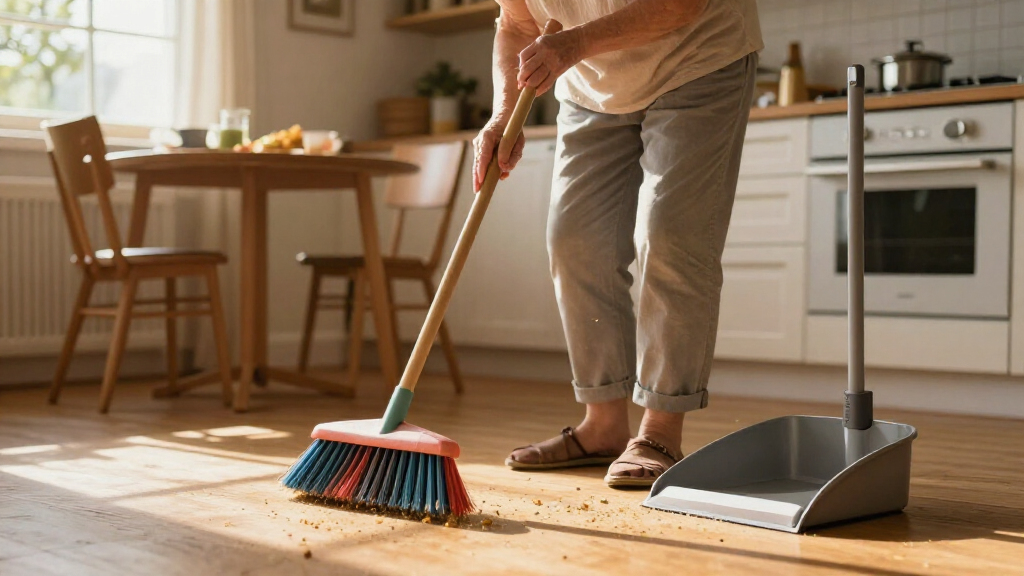
Choose a broom handle that lets you sweep with relaxed shoulders and a mostly upright posture, and pair it with a standing dustpan whose edge sits close to the floor. Match bristles and head width to your floors, then use short strokes and move your feet instead of twisting. These choices can reduce awkward bending and extra passes, though no broom or dustpan can promise to prevent or relieve back pain.
A broom that leaves you bent like a question mark can turn a quick kitchen sweep into an uncomfortable chore. The trouble often comes from a handle that does not fit, a dustpan that sits too low, or bristles that make you chase the same crumbs across the floor.
You can make sweeping more comfortable with a few practical choices: a handle that suits your height, a pan you can use while standing, and bristles suited to the floor and mess. This guide will help you check those details and use short, steady strokes around your home, from a sunny breakfast nook to the muddy back entry.
These tools may reduce awkward bending and reaching, but they cannot guarantee back-pain prevention or relief. If pain persists or feels severe, talk with a qualified healthcare professional about your situation.
Choose a broom handle that lets you sweep upright with relaxed shoulders; adjustable lengths can help households with multiple users.
A standing dustpan works best when its opening is easy to position and its edge sits close to the floor.
Use fine, soft bristles for small particles on smooth floors and denser, stiffer bristles for heavier debris or rougher areas.
Pick a broom-head width you can steer around your furniture, and check that the tool feels balanced in your hands.
Sweep in short strokes, move your feet to turn, and bring the pan closer as the pile shifts.
Choose tools for a more comfortable sweep
A well-fitted broom and standing dustpan can reduce awkward bending and extra passes. No tool can guarantee back-pain prevention or relief.
Fit the tools to you
Test the grip and handling as if you were sweeping; aim for relaxed shoulders and an upright posture.
Find a natural length
Adjustable handles can help you sweep upright and share the broom between users.
Check floor contact
A long handle helps you stay standing; a close-fitting edge helps keep dust from slipping underneath.
Choose a steerable head
A narrower head may be easier around furniture. A comfortable grip and balanced feel help with control.
Match bristles to the job
The right bristle feel depends on the floor and the debris you usually sweep.
| Bristles | Best suited to |
|---|---|
| Soft and fine | Dust and small particles on smooth floors |
| Dense and stiff | Heavier debris and rougher surfaces |
| Mixed | General household cleanup, with some tradeoffs |
Sweep with less reaching
Use a steady routine to limit repeated bending and twisting.
Guide debris into a small pile with controlled movements.
Reposition it as the pile shifts, and approach at a shallow angle.
Step to turn instead of twisting your back.
Keep expectations realistic
Choose a handle that lets you stand comfortably
A back-friendly broom handle lets you sweep with your shoulders relaxed and your back mostly upright. If the handle is too short, you may hunch over every stroke; if it is too long, the head can feel awkward to steer. The right length should feel natural in your hands while you guide the bristles across the floor.
There is no single handle measurement that fits everyone. Your height, reach, grip, and the rooms you clean all matter. An adjustable handle can help you find a comfortable setting, especially if more than one person shares the broom. For example, one person might lengthen it slightly for sweeping the porch, then shorten it a little to control crumbs around a kitchen table.
Before choosing, hold the broom as if you were sweeping and check how your body feels. Can you keep your elbows loose? Do you need to lift one shoulder or bend forward to bring the bristles to the floor? A label can list dimensions, but a few careful test strokes reveal whether the length suits you.
A snug, comfortable grip also helps you steer without squeezing hard. If the handle slides in your hands or feels tiring to hold, the fit may make even a small cleanup feel like work. Look for a nonslip grip that feels secure, then try steering the head in a relaxed way.
Products Worth Considering

Husqvarna 122C 22-cc 2-Cycle Gas String Trimmer, 17-Inch Curved Shaft

Husqvarna ST 124 212cc Two-Stage Snow Blower, 24-Inch

EGO POWER+ String Trimmer, Battery Powered, 16 Trimmer for Weeds and Grass with POWERLOAD, LINE IQ, Telescopic Carbon Fiber Shaft, Battery a
As an affiliate, we earn on qualifying purchases.
Use a standing dustpan that actually reaches the floor
A standing dustpan can reduce repeated bending because its long handle lets you collect a pile while staying upright. For it to work well, the opening needs to be easy to position and its edge should sit close to the floor. A gap beneath the lip can let dust and small crumbs slip through, leading to more sweeping and reaching.
Check the pan’s floor contact before you buy, if you can. A flexible or angled rubber edge may lie more closely against an even floor than a rigid, lifted edge. Imagine sweeping flour from a smooth kitchen floor: if the lip floats above the surface, a thin pale line can remain behind after each pass.
Position the pan near the pile and approach at a shallow angle. Sweep the debris into the opening with controlled strokes, then move the pan closer as the pile shifts. That small adjustment can save you from stretching your arms across the room or twisting to chase stray grit.
A standing pan needs to feel steady, too. If it tips whenever you touch the broom to its edge, you may find yourself reaching down to reset it. In a narrow mudroom, for instance, a stable pan that stands in place makes it simpler to sweep up dried soil without repeatedly crouching to retrieve the pan.
Match the bristles to your floor and the mess
The bristles determine how debris meets the floor and how much effort it takes to gather it. Soft, fine bristles can reach dust and small particles on smooth surfaces, where a stiff brush may scatter them. Denser, stiffer bristles tend to push heavier debris across rough surfaces, where fine bristles may bend around clumps instead of moving them. Matching the brush to the task can reduce repeated strokes; choosing one for every surface often means accepting a compromise.
For example, soft bristles can gather crumbs and a fine trail of garden soil from tile or another smooth floor. On a rough porch, denser bristles may move dried leaves and clumps of dirt more effectively. A general-use broom with mixed bristles can cover both kinds of cleanup, which saves switching tools, but it may not collect fine dust as neatly as a soft brush or shift heavy debris as decisively as a stiff one.
Think about the mess you meet most often, because the common task should guide the tradeoff. If you have a dog that sheds in the entryway, hair can wrap around or cling among bristles; a built-in comb may make cleanup easier, though it adds a feature to maintain. If your main task is crumbs beneath a table, close-set fine bristles may gather smaller pieces with fewer passes, reducing the need to reach back over the same area.
Floor condition matters as much as floor type. Rough or damaged bristles dragged across a delicate surface can leave marks, while very soft bristles may not push heavier porch debris well. Check the brush regularly: bristles bent outward no longer meet the floor evenly, and dirt trapped in them can scatter across a clean patch. Replacing or cleaning a worn broom can restore control and spare you extra effort.
Find a broom width you can steer around furniture
A broom head that fits your rooms is easier to control around chair legs, rugs, and tight corners. A wider head covers more floor with each pass, while a narrower one can be easier to guide in cramped spaces. The useful width depends on the room and how much force it takes you to steer.
Think about sweeping a wide porch with open floor space: a broader head may gather leaves efficiently there. In a small bathroom with a scale and a laundry basket, that same width could bump into objects and make neat strokes harder. A compact head may take more passes in a large room but feel simpler near the baseboards.
An angled head can help you reach along edges or into corners, though its benefit depends on how the angle feels in your hands. Try guiding it beside a wall and around a table leg, if possible. Does it follow your movement smoothly, or do you find yourself pulling hard and lifting your shoulder?
Weight and balance shape control, too. A lighter broom may be easier to maneuver, but it should still feel stable rather than top-heavy. For example, when sweeping around a breakfast table, a balanced handle lets you steer between chair legs without swinging the broom or leaning across the room.
Use a short, steady sweeping routine
A few simple movements can make sweeping less awkward: keep strokes short and controlled, bring the pan closer as the pile moves, and step to turn instead of twisting your back. A comfortable tool helps, but the way you move it matters too. Let the broom do the gathering rather than reaching far ahead with your arms.
- Clear a small area. Move lightweight items out of the way so you can see the floor and guide the broom without reaching around obstacles.
- Make a small pile. Use short strokes to bring debris together rather than pushing it across the whole room.
- Move your feet. Step and turn toward the next patch of floor instead of twisting your torso from a fixed stance.
- Bring the pan close. Set its edge near the pile and sweep into the opening at a shallow angle.
- Check the floor. A second pass may help with fine dust; move the pan and broom as needed rather than stretching.
Picture sweeping after breakfast: a few crumbs are scattered under the table, and a chair blocks the direct path. Shift the chair if it is easy to move, gather the crumbs into a small pile, then take a step to reach around the table leg. That approach can feel calmer than leaning and twisting to sweep in one long stroke.
For a larger room, work in manageable patches. If the broom and dustpan clip together, the set may be easier to carry and store between areas. A clip improves convenience, but it does not replace a comfortable handle and a pan that collects debris cleanly.
Compare the features that matter before you buy
To choose a broom and dustpan that save your back, put posture, floor contact, and control ahead of small convenience features. A telescoping handle, standing pan, rubber edge, or storage clip can be useful, but each feature matters only if you can use it comfortably for your everyday messes.
Try to handle the set in person when that option is available. Hold the broom at a natural height, guide it through a few strokes, and see whether the head feels balanced. Then set the pan down and check whether the opening reaches the floor and stays in place when you sweep toward it.
If you shop online, compare handle ranges, broom-head width, and pan design in the product details. Product photos may show a standing pan, but they cannot tell you how stable it feels or whether its lip sits flush on your floor. A return policy can be useful when fit is uncertain, but check the terms before relying on it.
Here is a practical order for weighing features: first, choose a length that lets you stand comfortably; next, check that the pan meets the floor; then match bristles and width to the surfaces you sweep. Finally, weigh convenience features such as clips or combs. This order keeps attention on the parts that shape your posture and the number of passes.
Know what a back-friendly broom can and cannot do
A well-fitting broom and dustpan can reduce some awkward bending and reaching during sweeping, but they cannot guarantee prevention or relief of back pain. Comfort varies by person, task, floor, and the way the tools feel in your hands. Keep your expectations practical: the goal is a more comfortable routine, not a promise about your health.
If sweeping becomes uncomfortable, pause and change the setup. A shorter work session, moving obstacles, or using a different tool for fine dust may suit the task better. For instance, a small pile of flour may need a second pass or a vacuum rather than repeated forceful strokes with a broom.
Take persistent or severe back pain to a qualified healthcare professional for advice about your situation. A tool choice cannot diagnose the cause or replace individualized guidance. You can still note which movements feel uncomfortable and share that information during a conversation with a professional.
Comfort is personal: a long handle and standing pan may reduce bending, but the right setup is the one you can control without awkward reaching.
That is why a simple trial matters. Sweep a few strokes in the posture you use at home, with the kind of floor and reach you encounter every day. If the broom feels balanced and the pan gathers debris without repeated repositioning, you have a more promising fit for ordinary chores.
Frequently Asked Questions
What broom handle length is best for my height?
Choose a handle that lets you sweep with relaxed shoulders and a mostly upright posture. The best length varies with your height, reach, and the space you clean, so adjustable handles can help you find a comfortable fit.
Is a long-handled dustpan better for your back?
A standing dustpan can reduce the need to bend each time you collect debris. Check that you can position its opening easily and that the edge sits close to your floor, or dust may slip underneath and prompt extra passes.
How do I stop dust from being left behind?
Gather debris into a small pile and approach the pan at a shallow angle with its edge close to the floor. Fine dust may still need another pass or a vacuum, especially when a rigid pan leaves a gap.
Which bristles work best on hardwood or tile?
Soft, fine bristles are generally suited to small particles on smooth floors. Check that the bristles are clean and in good shape, and avoid dragging rough or damaged bristles across delicate surfaces.
Can a broom and dustpan prevent back pain?
They can reduce awkward bending or reaching for some sweeping tasks, but they cannot guarantee prevention or relief. If back pain persists or feels severe, ask a qualified healthcare professional for advice tailored to you.
Conclusion
Choose your broom and dustpan by how they fit your body and your floors: stand comfortably, steer without strain, and check that the pan meets the ground. Then sweep in small patches, letting your feet carry you around the room.
A tidy kitchen should leave you with the warm hush of a clean floor, not a broom-shaped question mark in your back.