TL;DR
Gentle strength and balance activities, clearer walking routes, good lighting, suitable footwear, and a review of symptoms or medicines can all support safer movement. Start at a comfortable level, use a sturdy support when needed, and ask a qualified health professional for advice tailored to your abilities and fall history.
A familiar walk to the garden can feel different when the path is dim, a rug curls at the edge, or your legs feel less sure than they used to. Balance tends to change with age, but a fall is not an inevitable part of getting older. Small changes can make everyday movement feel more manageable.

Turn quiet afternoons into listening time
- Thousands of audiobooks, podcasts and originals
- Listen on your phone, tablet or Echo — also offline
- Cancel anytime
This guide offers gentle ways to improve balance and prevent falls, from supported movement to simple home adjustments. You’ll find practical ideas you can adapt to your own routine, along with signs that deserve a conversation with a clinician or pharmacist. Think of it as tending a well-loved path: a little care, given regularly, can make it easier to walk with confidence.
Pair walking with suitable balance and leg-strengthening activity; walking alone may not train both enough.
Practice at a comfortable level near a sturdy support, and ask a physiotherapist or clinician to tailor activities to your abilities and fall history.
Clear the routes you use most, secure loose rugs and cords, improve lighting, and wear stable footwear with good traction.
Ask a clinician or pharmacist to review dizziness, weakness, vision changes, or possible medicine effects; do not change prescribed medicine on your own.
Seek medical advice after an injurious fall, repeated falls, or new or persistent dizziness or unsteadiness.
Gentle Ways to Improve Balance and Prevent Falls
Small, steady changes to movement, home routes, and health check-ins can support safer everyday mobility. Adapt each step to your abilities and fall history.
Build steadier movement
Walking supports general fitness, but may not train balance and leg strength enough on its own.
Practice with support
Try suitable balance and strength activities near a sturdy counter or chair.
Keep sessions manageable
Short, repeatable practice can fit everyday life better than pushing through strain.
Tailor the activity
A physiotherapist or qualified health professional can advise based on your health and fall history.
Make familiar routes safer
Start with the paths you use most, including routes used after dark.
- Improve lighting in hallways, on stairs, and near steps.
- Clear cords, clutter, and low objects from walkways.
- Secure loose rugs or remove rugs that shift or curl.
- Wear stable, well-fitting footwear with good traction.
- Consider handrails or grab bars where support is useful.
Check changes in steadiness
Symptoms, vision, and some medicines can affect balance.
Record when dizziness, weakness, pain, or unsteadiness happens.
Ask a clinician or pharmacist to review symptoms, vision, or medicines.
Never stop or change prescribed medicine on your own.
Start with supported movement that fits your day
Gentle balance practice and leg-strengthening activity can support steadier movement when you choose an appropriate level and use support as needed. A sturdy kitchen counter or heavy chair can give you something stable to hold while you learn what feels comfortable. The point is to practice safely and regularly, not to push through strain or copy someone else’s routine.
For example, you might stand near the counter while waiting for the kettle, keeping both hands close enough to steady yourself. A physiotherapist or another qualified health professional can help choose movements suited to your abilities, health conditions, and fall history. If standing exercise doesn’t feel safe, ask about options you can do seated or with close supervision.
Tai chi, gentle yoga, and appropriate strength activities are often used to work on balance, control, and leg strength. Their movements can be adapted, though a class or video may not suit everyone as written. Use a chair or countertop when it helps, and stop if an activity brings on new dizziness, pain, or unsteadiness. Ask a professional what to do if that happens.
Movement can feel like keeping a garden path clear: each small, repeated effort helps you feel more familiar with the route. Begin with what you can manage comfortably. If you are returning after a fall or a long period without activity, a tailored plan can help you start in a safer way.
Products Worth Considering

Greenworks 80V Cordless Electric Leaf Blower with 2.5Ah Battery and Charger

Traeger Tailgater 20 Portable Wood Pellet Grill and Smoker, 300 sq. in.

Greenworks 40V 16-inch Push Lawn Mower with 4.0 Ah Battery and Charger
As an affiliate, we earn on qualifying purchases.
Build a routine with small sessions you can keep
Short, regular sessions are often an approachable way to practice balance and strength. A brief routine you can repeat on ordinary days may feel easier to maintain than an ambitious schedule that leaves you worn out. Walking is useful for general fitness, but it may not train balance and leg strength enough on its own.
Try tying a small activity to a familiar part of the day. For instance, after breakfast you might take a comfortable walk on a clear, even path, then do a few movements recommended by your physiotherapist beside a counter. On another day, you might practice a seated routine if you feel tired. The right schedule depends on your health and mobility, so ask a qualified professional for advice if you’re unsure where to begin.
A simple way to shape a safer habit is:
- Choose a steady place, such as a clear patch beside a heavy counter, and keep a phone nearby.
- Start with a comfortable activity recommended for your needs; use a stable support if needed.
- Notice how you feel during and after the activity. New dizziness or unusual unsteadiness calls for a pause and advice from a professional.
- Keep the routine modest and repeatable. Ask a clinician or physiotherapist how to adjust it over time.
If the weather keeps you indoors, a clear hallway or a seated activity may fit better that day. Consistency matters more than intensity; your routine should work with your life and abilities, not turn every morning into a test.
Make your favorite walking routes easier to see and use
Clear paths, good lighting, and secure surfaces can reduce everyday tripping hazards at home. Start with the routes you use most: bed to bathroom, favorite chair to kitchen, and back door to garden. A small hazard in a familiar place can be easy to overlook until you meet it in the dark or while carrying something.
Take a slow look at each route at the time of day you usually use it. Are cords crossing the floor? Does a rug bunch up near a doorway? Is there enough light to see the threshold clearly? One practical example: if you head to the bathroom overnight, a working lamp or night light and a clear path can make the trip easier to see.
Common changes to consider include:
- Improve lighting along stairs, hallways, and routes used after dark.
- Clear walkways of loose cords, low objects, and clutter.
- Secure loose rugs or remove them if they shift or curl.
- Add handrails or grab bars where they make sense; ask a qualified professional about placement and installation.
- Wear stable, well-fitting footwear with good traction indoors and outdoors.
For example, a person who enjoys watering planters might make the back-door route safer by moving a hose out of the walkway and improving the light by the step. Walk through one room at a time. A safer home can support independence by making familiar daily tasks easier to approach.
Check symptoms, vision, and medicines when your steps change
Changes in vision, dizziness, pain, weakness, and some medicines can affect steadiness, so a new or ongoing change deserves a conversation with a qualified professional. A clinician can review symptoms, while a pharmacist or clinician can review medicines. These conversations help identify factors that may deserve attention without asking you to guess at the cause yourself.
Notice when the change happens. Do you feel unsteady after getting up from a chair, when turning your head, or only on uneven ground? You might jot down the time and what you were doing before you speak with a clinician. For instance, if a new prescription seems to leave you drowsy in the morning, write down when you take it and how you feel. Bring the details to your clinician or pharmacist.
Never stop or change a prescribed medicine on your own. Some medicines may contribute to dizziness or drowsiness, but only a qualified professional can advise on your situation and possible next steps. If your vision has changed, ask about a suitable eye check. If pain or weakness changes how you walk, mention that too.
This is a practical check-in, not a reason to panic. Your body’s usual rhythm can shift for many reasons, and a professional can help you sort through them. If unsteadiness is new, persistent, or getting worse, don’t wait for a near-fall to bring it up.
Use a fall or near-fall as useful information
A fall or near-fall is a reason to look for what may need attention at home or in your health—not a reason to feel ashamed. Repeated falls, a fall with an injury, or new or persistent dizziness, weakness, or unsteadiness warrant medical advice. A clinician can help decide what follow-up is right for you.
After you are safe, make a few notes about what happened. Were you rushing to answer the phone? Did your foot catch on a rug, or did you feel dizzy before you lost your footing? A clear example helps: “I stumbled near the back step at dusk because the path was hard to see” gives you a starting point for reviewing lighting, the step, and your symptoms.
If fear of another fall makes you avoid movement, mention that to a clinician or physiotherapist. It is understandable to feel cautious, but staying still all day may make it harder to keep up strength. A tailored activity plan and help with the home setup can give you a safer way to rebuild confidence at your own pace.
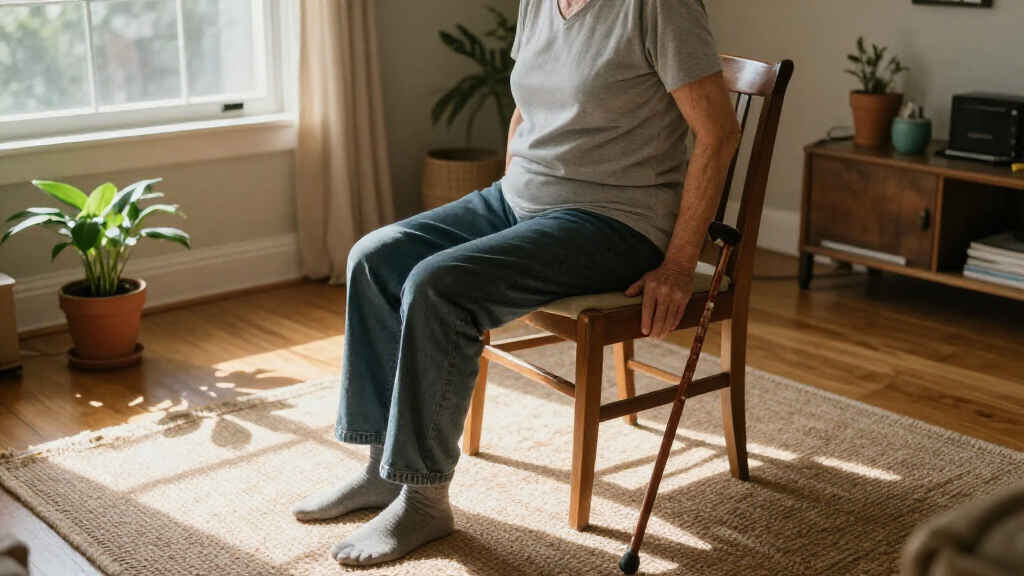
A mobility aid, such as a cane or walker, may provide support when it is recommended and properly fitted. Ask a qualified professional whether one suits your needs and how to use it. Wearable alarms can help someone call for assistance, but they do not prevent a fall by themselves. Pair any aid with movement practice, attention to symptoms, and sensible home changes.
Choose changes that work together, not one magic fix
Fall prevention usually calls for several practical steps, because no single exercise, shoe, or gadget can address every reason someone may fall. Strength and balance activity can support movement; good lighting can make a path easier to see; a medicine review can help address possible side effects. The useful combination depends on your circumstances.
Imagine that your usual route to the garden includes a dim step and a loose mat. Better shoes alone won’t fix the mat, and a night light won’t build leg strength. You might secure or remove the mat, improve the light, and ask a physiotherapist for a suitable balance routine. Each change handles a different part of the picture.
| Area | What it may help with | A practical example |
|---|---|---|
| Movement | Balance and leg strength | Practice a recommended activity near a sturdy counter. |
| Home setup | Tripping and visibility hazards | Clear a hallway and light the route to the bathroom. |
| Footwear | Grip and fit | Choose stable shoes that fit well and have good traction. |
| Health review | Symptoms or medicine effects | Discuss dizziness or drowsiness with a clinician or pharmacist. |
Be wary of promises that one supplement, shoe, or piece of equipment can guarantee prevention. No product replaces individualized advice or everyday hazard checks. Think of safety as a set of small supports that work together, like a sturdy handrail alongside a well-lit step.
Frequently Asked Questions
Can balance improve at any age?
Strength and balance can often improve with appropriate practice, though progress and safe activities vary from person to person. A physiotherapist or qualified health professional can suggest movements that suit your abilities and health.
Which exercises can help with balance?
Tai chi, gentle yoga, supported balance practice, and suitable strength exercises are common options. Use a stable support when needed, and ask a professional which activities fit your mobility and fall history.
Is walking enough to help prevent falls?
Walking supports general fitness, but walking alone may not train balance and leg strength enough. Ask a clinician or physiotherapist about adding appropriate, supported activities to your routine.
What should I change at home first?
Start with clear, well-lit routes you use every day. Secure loose rugs, move cords out of walkways, and consider handrails or grab bars where support is useful. Stable, well-fitting footwear with good traction can also help.
Can medicines affect balance?
Some medicines can contribute to dizziness, drowsiness, or unsteadiness. Ask a clinician or pharmacist to review your medicines and symptoms, and do not stop or change a prescription on your own.
When should I seek medical advice after a fall?
Seek medical advice after a fall with an injury, repeated falls, or new or persistent dizziness, weakness, or unsteadiness. A clinician can help you decide what follow-up is appropriate.
Conclusion
Choose one small step this week: clear a familiar route, improve a dim light, or ask a qualified professional about supported balance practice. Then build from there at a pace that feels right for you. Steadier living is less like a race and more like a garden path kept clear with regular care—one safe step at a time.