This checklist is for older adults and caregivers comparing hearing support options for conversations, television, and everyday device care. It is a starting point for matching a product type to a specific listening need.

Turn quiet afternoons into listening time
- Thousands of audiobooks, podcasts and originals
- Listen on your phone, tablet or Echo — also offline
- Cancel anytime
The sections follow the listed picks: personal sound amplifiers, TV listening headphones, hearing aid dryers, cleaning kits, amplified telephones, and captioned phone guidance. Each product occupies a different support role, so compare within the intended use rather than treating the options as interchangeable.
Start with the situation that causes the most difficulty, then check fit and compatibility before choosing. Confirm connection requirements, included accessories, and whether the person who will use it can manage its controls and routine; ask a hearing care professional for help when needed.
Personal Sound Amplifiers
A personal sound amplifier can be a practical option to consider when the goal is support for in-person listening. The Pocketalker 2.0 Personal Sound Amplifier Kit with Batteries is the listed pick for this slot. Before choosing, think through where it will be used, who will operate it, and whether carrying and handling the kit suit the listener’s routine.
A common mistake is assuming an amplifier is a substitute for hearing aids or a solution for every hearing concern. This checklist does not establish that. Check the product’s controls, microphone and listening accessories, and the kit contents against the intended setting. Confirm that the included batteries are appropriate and that replacements are manageable. Consider how the listener will position the microphone and keep track of the device between uses. If the person already uses hearing aids, ask a hearing care professional whether adding an amplifier makes sense for their needs. Ease of handling matters as much as the product category: choose only if the user can comfortably manage setup and everyday use.
What to look for:
- Controls the intended user can operate comfortably
- Included listening accessories suited to the planned use
- Battery type and replacement routine
- A manageable way to carry and store the kit
- Professional guidance if the listener also uses hearing aids
Pocketalker 2.0 Personal Sound Amplifier Kit with Batteries

The Pocketalker 2.0 amplifies nearby voices for conversations, TV listening, and other one-on-one situations. It includes headphones, earbuds, a plug-in microphone, a 12-foot extension cord, a lanyard, and 10 AAA batteries, and offers volume and tone controls, a built-in T-coil, and an external microphone jack.
Pros:
- Large volume and tone knobs make adjustments simple.
- Built-in T-coil works with hearing loop systems.
- Includes headphones, earbuds, microphone, TV extension cord, and batteries.
- Can use rechargeable NiMH AAA batteries.
Cons:
- Rechargeable batteries and the optional charging kit are not included.
- Designed for nearby listening and one-on-one conversations.
Best for: Listeners seeking a personal amplifier option for in-person use
Not ideal for: People who need a hearing care assessment or a hearing aid replacement
Bottom line: Choose this kit only after confirming its controls, accessories, and battery routine suit the listener.
TV Listening Headphones
TV listening headphones address a specific situation: hearing television audio through a dedicated listening setup. The Avantree Duet Aura Dual Wireless TV Headphones with HDMI ARC is the listed pick. Its name identifies HDMI ARC and dual headphones, so make sure those features align with the television and the number of listeners who will use the setup.
A frequent buying mistake is overlooking the TV’s available audio connections or assuming that any wireless headphones will connect the same way. Check the television’s ports and audio settings, and confirm the product’s connection requirements before purchase. Consider whether both listeners need headphones at once, how each person will adjust volume, and whether wearing headphones is comfortable for the planned viewing time. Think about charging, storage, and who will handle initial setup. If the television is shared with others who listen through its speakers, check whether the desired headphone-and-speaker arrangement is supported. Connection compatibility should be settled before considering convenience, since the product needs to work with the actual television and listening routine.
What to look for:
- TV compatibility with the HDMI ARC connection
- Whether two listeners need headphones simultaneously
- Comfort and simple volume adjustment for each user
- Charging and storage routine
- Audio settings needed for the intended headphone-and-speaker arrangement
Avantree Duet Aura Dual Wireless TV Headphones with HDMI ARC
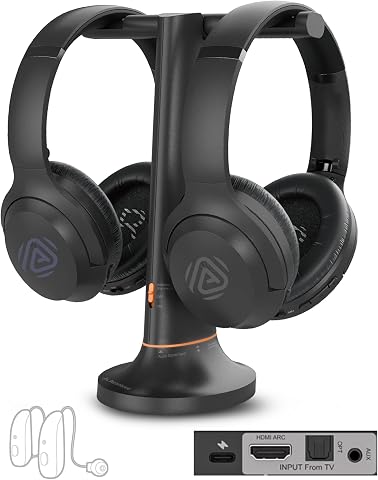
The Avantree Duet Aura includes two wireless over-ear headphones and a transmitter with a charging dock, letting two people listen to the same TV at separate volume levels. It supports HDMI ARC, optical, and AUX connections, with Clear Voice EQ modes, volume boost, and Auracast audio sharing.
Pros:
- Two headphones let listeners set different volume levels.
- Clear Voice EQ modes and volume boost can help dialogue stand out.
- Includes a charging dock and supports HDMI ARC, optical, and AUX.
- Supports Auracast sharing with compatible devices.
Cons:
- HDMI cable is not included.
- HDMI ARC may mute TV speakers depending on the TV and its settings.
- Additional Auracast devices are sold separately; hearing aid compatibility should be checked.
Best for: Households looking for a dual headphone TV setup
Not ideal for: People whose television connection or audio settings are incompatible
Bottom line: Verify the television connection and shared listening needs before selecting this headphone system.
Hearing Aid Dryers
People who wear hearing aids may want a routine for device care; this slot lists the Redux Pro Link Professional Vacuum Hearing Aid Dryer and Dehumidifier. A dryer or dehumidifier is a care accessory, so consider it alongside the hearing aid maker’s instructions rather than as a replacement for them.
One buying mistake is choosing a device without checking whether it suits the specific hearing aids and the user’s care routine. Confirm compatibility and operating instructions with the manufacturer or a hearing care professional, especially before using a vacuum or other drying function. Consider how the unit is powered, where it will sit, how easy it is to load and unload hearing aids, and whether the person can follow the steps independently. Also check what maintenance the unit itself requires and whether its controls are easy to distinguish. The product name alone does not establish compatibility or the appropriate routine for every device. Manufacturer guidance is the key fit check: confirm that the process is suitable for the hearing aids before making this the user’s regular care method.
What to look for:
- Compatibility with the exact hearing aid models
- Care instructions approved by the hearing aid maker
- Simple loading and controls for the intended user
- Power and placement that fit the daily routine
- Maintenance steps the user or caregiver can manage
Redux Pro Link Professional Vacuum Hearing Aid Dryer and Dehumidifier

This app-controlled vacuum dryer removes moisture, sweat, and humidity from rechargeable hearing aids, earbuds, and cochlear implants in about 4–8 minutes. It has one-touch operation and a compact design that runs at 62 dBA for home or clinic use.
Pros:
- Removes moisture, sweat, and humidity
- App control allows device tracking over Bluetooth
- One-touch operation
- Compact design for home or clinic use
Cons:
- Listed drying time is 4–8 minutes
- App control requires a Bluetooth connection
Best for: Hearing aid wearers whose device maker approves this care approach
Not ideal for: Users who cannot confirm compatibility or safely follow the instructions
Bottom line: Check the hearing aid maker’s guidance before adding this dryer to a care routine.
Hearing Aid Cleaning Kits
This slot is for a cleaning and care option: the PerfectClean Hearing Aid and Earbud Cleaner, Dryer, and Dehumidifier. The product name includes both hearing aids and earbuds, but users should still verify that the specific device model can be cleaned with the kit’s method and accessories.
A common mistake is treating a combined cleaner and dryer as universally suitable. Check the hearing aid or earbud maker’s care instructions first, then compare those directions with the kit’s included tools and operating steps. Look for components that the intended user can handle without strain, a routine that is easy to repeat, and clear guidance on cleaning and drying. Consider where the kit will be stored and how its parts will be kept together. Do not put a device through a cleaning or drying process simply because it fits physically; materials and care requirements can differ. If instructions are unclear, ask a hearing care professional or the device maker before use. Care compatibility matters more than the broad product label, particularly when one kit is presented for multiple device types.
What to look for:
- Approval for the exact hearing aids or earbuds
- Included tools that match the maker’s care instructions
- Clear, manageable cleaning and drying steps
- Parts that are easy for the user to handle and store
- Maintenance directions for the kit itself
PerfectClean Hearing Aid and Earbud Cleaner, Dryer, and Dehumidifier

PerfectClean cleans and dries hearing aids, earbuds, in-ear monitors, and other compatible devices in a 60-minute cycle. It uses a spinning wash system, pulsed warm air, and a UV-C lamp; a cleaning solution cartridge is required and one is included.
Pros:
- Combines washing and drying in one 60-minute cycle
- Designed for a wide range of hearing and listening devices
- Automatic temperature regulation limits heat to 102°F
- Includes a cleaning solution cartridge and a 2-year warranty
Cons:
- Requires replacement cleaning solution cartridges
- The listing recommends using only authentic PerfectClean cartridges
Best for: Users whose device instructions support the kit’s cleaning and drying method
Not ideal for: People whose devices require a different care process
Bottom line: Confirm each device’s care instructions before using this combined cleaning and drying kit.
Amplified Telephones
A telephone with amplification and photo memory keys may help make calling more straightforward for some older adults. The listed pick is an Amplified Corded Landline Phone for Seniors with 9 Photo Memory Keys. Start by confirming the person has access to a compatible landline connection and that a corded phone suits where it will be placed.
A common mistake is focusing on amplified audio while overlooking dialing, setup, and calling habits. Check whether the user can see and press the keys comfortably, whether the photo memory layout fits the people they call most, and who will program those keys. Confirm the phone’s connection and power requirements from its product details, and consider whether the handset, cord, and location work for the user’s mobility and reach. Photo keys are useful only if the intended contacts are set up clearly and kept current. If the user needs captions or a different form of communication support, compare those needs separately rather than assuming amplification covers them. Everyday operation is the deciding fit factor: the person should be able to place and answer calls in their usual setting.
What to look for:
- A landline connection available at the intended location
- Keys the user can see and press comfortably
- Photo memory setup suited to frequently called contacts
- Clear programming and updating steps
- Handset and cord placement that suit reach and mobility
Amplified Corded Landline Phone for Seniors with 9 Photo Memory Keys

This corded landline phone has nine photo memory keys for one-touch calling, hands-free operation, adjustable extra-loud ringtone and earpiece volume, and a flashing LED call alert. It connects to an RJ11 phone line and needs no batteries or separate power supply; it does not support caller ID, voicemail, or message recording.
Pros:
- Nine photo memory keys enable one-touch dialing.
- Extra-loud adjustable volume and a flashing LED alert support users with hearing difficulties.
- Hands-free calling and phone-line power require no batteries or separate power supply.
Cons:
- Requires an RJ11 landline connection and cannot connect directly to the internet.
- Does not support caller ID, voicemail, or message recording.
- Disconnecting the phone line may erase stored photo contact numbers.
Best for: Landline users who want amplification and photo memory keys
Not ideal for: People who need captioning or do not have a compatible landline
Bottom line: Confirm the connection and make sure the user can comfortably manage the photo keys.
Captioned Phones
No product is listed for captioned phones, so treat this section as advice only. Captioning may be worth exploring when seeing spoken conversation as text would support a person’s phone calls. Start by identifying the user’s needs, preferred phone setup, and comfort with reading captions while listening or speaking.
Before choosing a service or device, check current availability and eligibility directly with the relevant provider, along with any setup requirements. Confirm whether the user needs a landline or internet connection, how captions appear, and whether the controls are manageable. A common mistake is assuming captioning works the same across providers or that a particular phone will suit every caller. Consider call privacy, screen readability, language needs, and who can assist with setup. Ask a hearing care professional or qualified service representative for guidance if the right option is unclear. Current requirements can vary, so verify them with the provider before planning around a specific captioned phone service.
What to look for:
- Provider eligibility and availability requirements
- Connection type and setup steps
- Caption readability and manageable controls
- Privacy and the user’s preferred calling routine
- Support available for installation and troubleshooting
For a budget-first buying order, begin by identifying the listening situation that matters most, then compare only the matching product type. Check fit, compatibility, connection needs, and included accessories before moving to optional conveniences. For hearing aid care, confirm the maker’s instructions first; for captioning, verify provider availability and requirements. This needs-first order helps keep attention on what the user can actually use.
Small practical checks can make a support choice easier to live with: confirm the setup, consider who will help with routine care, and involve the listener in decisions about comfort and controls. If hearing needs are changing or uncertain, a hearing care professional can help clarify the next step. Use this checklist as a clear starting point and choose at a pace that feels manageable.