TL;DR
Easy gardening tools for seniors are the ones that suit your hand, strength, reach, and favorite tasks. Cushioned grips, lightweight balanced tools, long handles, ratcheting pruners, stable seating, and raised beds can make gardening more comfortable, but you should try a tool when possible and check that you can use it safely.
A trowel can weigh very little and still leave your wrist aching if its handle is narrow, slippery, or awkwardly angled. The best garden tools fit the gardener holding them, whether that means a soft grip, a longer reach, or a sturdy stool beside the marigolds.

Turn quiet afternoons into listening time
- Thousands of audiobooks, podcasts and originals
- Listen on your phone, tablet or Echo — also offline
- Cancel anytime
This guide helps you choose easy gardening tools for seniors by looking at comfort, safety, and control. You’ll find practical ways to match tools to tasks, test a handle before buying, and make a garden easier to reach without giving up the pleasure of tending it.
There is no single “senior-friendly” standard, and people’s needs vary. A gardener with sore fingers may value pruners with extra leverage; someone who dislikes kneeling may get more use from a raised bed. Start with what you enjoy growing, then choose tools that make that work feel manageable.
Choose grips that feel secure and comfortable in your hand; “ergonomic” does not guarantee a good fit.
Check a tool’s balance and working reach, not only its listed weight.
Use long-handled tools, raised beds, or containers to reduce some bending and carrying.
Try ratcheting pruners before buying; they can reduce force per squeeze but may feel bulky.
Keep paths clear, tools within safe reach, blades maintained, and sessions paced with breaks.
Choose a tool that fits your hand and the job
Easy gardening tools for seniors should match the task, the gardener’s grip, and a comfortable working position. Cushioned nonslip handles can feel more secure, while an angled grip may help keep the wrist straighter. A tool labeled “ergonomic” still needs to feel right in your own hand.
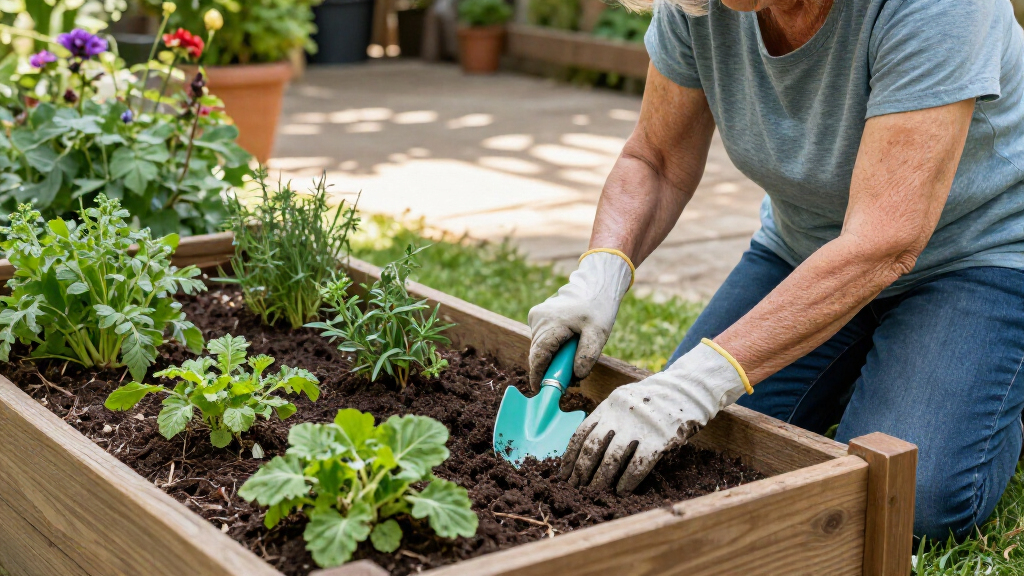
Think about a familiar job: planting pansies in a window box. A short trowel with a broad grip might work well there, but a long-handled planting tool may feel clumsy in a small container. For a gardener with stiff fingers, a handle that fills the palm comfortably can be easier to hold than a thin metal shaft.
Balance matters alongside listed weight. A lightweight cultivator with a heavy head may feel tiring as you reach across a bed, while a slightly heavier tool balanced near the handle may feel steadier. If you can, hold the tool as you would while working and check whether your wrist, shoulder, and fingers stay relaxed.
Comfort, safety, and control are the most important aspects of easy gardening tools. Rather than assuming every older gardener has the same needs, choose one job to make easier first. If gripping or reaching causes significant discomfort, a qualified clinician or occupational therapist can offer advice about suitable adaptations.
Products Worth Considering

EAGLE PEAK 8 x 6 ft Pop-Up Walk-In Greenhouse, Clear and Green

Greenworks 48V Cordless 3-in-1 Leaf Blower, Vacuum and Mulcher with Two 6.0Ah Batteries

Orbit B-hyve XD 4-Port Smart Hose Watering Timer with Wi-Fi Hub
As an affiliate, we earn on qualifying purchases.
Use long handles and raised beds to cut down on bending
Long-handled tools and raised growing spaces can bring garden work closer, which often means less stooping and kneeling. A long-reach weeder can help you remove a dandelion from a path edge while standing, and a raised bed can bring herbs closer to a seated gardener.
For example, imagine pulling weeds from a low bed beside the shed. A long-handled cultivator may let you work from a stable standing position, but an extra-long handle can become awkward if you need to reach over a wide bed. Choose a length that lets you work without stretching far or leaning on the tool for balance.
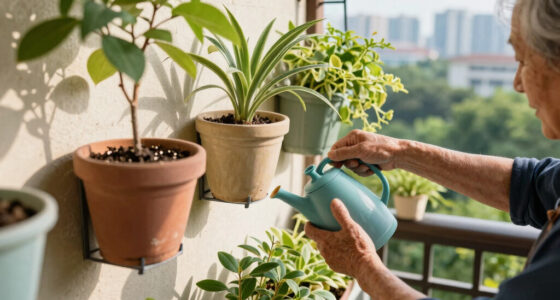
Raised beds and containers can change more than your reach: they may also reduce the need to carry soil and plants across the yard. A gardener who grows parsley, lettuce, and chives in waist-height containers by the back door can tend them with a small watering can close at hand. The tradeoff is that raised planters need suitable construction, accessible paths, and regular watering.
Try a simple layout before spending on a large structure. Put a few pots on a sturdy table and see whether the height feels comfortable from a chair or while standing. The best setup lets you reach the plants without twisting, stretching, or relying on a pot or tool to steady yourself.
Make pruning easier with sharp, well-matched cutters
Ratcheting pruners and geared loppers can make cutting easier by adding leverage, while sharp blades reduce the effort needed for a clean cut. A standard bypass pruner may suit some gardeners perfectly; the best choice depends on hand strength, branch size, and how the mechanism feels.
Picture trimming lavender along a sunny path. A ratcheting pruner may cut through a stem with several smaller squeezes, which can feel manageable for someone who finds one hard squeeze difficult. But the tool may feel bulky, and repeated squeezes can take longer. Try opening, locking, and closing the pruners before buying them if you have the chance.
Keep the task and branch size in view. Hand pruners are intended for smaller stems; a geared lopper can provide more leverage for thicker branches, though its longer handles may need two hands and room to move. Forcing a tool beyond its intended use can make it harder to control.
Clean and dry cutting tools after use, check their lock, and keep blades sharp according to the maker’s instructions. A dull blade often takes more force, while a secure lock and safely covered edge help with storage. If a cut feels difficult or the tool slips, pause and choose a safer approach rather than forcing it.
Compare tool features before you buy
Compare the features you will notice in use: grip size, weight, balance, reach, controls, and storage. These details can tell you more than a “senior-friendly” label because a tool that feels comfortable to one gardener may be awkward for another.
For instance, if you are choosing a weeder for the narrow strip beside a fence, reach and control may matter more than a wide head. If you want to prune roses from a garden seat, a lighter tool with an easy-to-see lock may be the better match. Use the table as a starting point, then try the tool if possible.
| Feature | What to check | Example task |
|---|---|---|
| Grip | Comfortable size, cushioning, and nonslip surface | Holding a trowel to plant bulbs |
| Weight and balance | How the tool feels at the working end | Reaching across a raised bed |
| Handle length | Whether you can reach without stretching | Weeding from a standing position |
| Controls | Clear, secure locks and easy adjustments | Storing bypass pruners safely |
| Power | Weight, noise, operation, and charging needs | Trimming a larger patch of growth |
Battery-powered tools may reduce repeated hand effort for some jobs, but they can add weight and may require two-handed operation, charging, or upkeep. Compare the whole task: carrying the tool to the garden, operating it, and putting it away. A hand tool can be a better fit for a small, quiet job close to the house.
Set up your garden for a steady, comfortable session
A stable seat, clear path, and reachable tool storage can make gardening more manageable from start to finish. A garden stool or kneeler with handles may help you change position, while a firm chair beside a container can give you a place to rest between jobs.
Consider a Saturday morning spent planting lettuce. Set the seedlings, hand trowel, and watering can on a small table before you begin; that keeps you from repeatedly bending to a bucket on the ground. Leave a clear path to the bed and put tools away at a height you can reach without climbing or stretching.
Keep the session comfortable. Take breaks, drink water, protect yourself from the sun, and avoid gardening during extreme heat. Ergonomic tools can reduce strain for some tasks, but they do not prevent every injury or replace pacing. If you feel pain, dizzy, unusually short of breath, or unsteady, stop and rest; seek medical advice for persistent or concerning symptoms.
Tool upkeep matters, too. Clean and dry equipment, check for loose parts, cover sharp edges, and store tools where you can reach them safely. A tidy corner by the back door, with gloves and a hand fork on a low shelf, can be more useful than a crowded shed that requires a step stool.
Follow five steps to find a tool you will enjoy using
Find a useful tool by starting with one task, then checking its fit, balance, controls, and storage needs. This keeps you focused on what would actually make gardening easier rather than buying a whole matching set that may spend the summer in the shed.
- Pick one job. Choose the task that feels awkward, such as weeding a path or pruning a rose.
- Choose a working position. Decide whether you want to work seated, standing, or at a raised bed.
- Test the tool. Hold it, operate its lock, and mimic the motion without forcing your hand or shoulder.
- Check reach and balance. See whether you can reach the target without stretching or leaning on the tool.
- Plan safe storage. Make sure you can keep it dry, secure, and within easy reach.
Say you want to give your aunt a gardening gift. She enjoys deadheading flowers from a chair, so a comfortable pair of pruners may suit her better than a heavy battery trimmer. A gift receipt or a chance to try the tool respects the fact that grip and weight are personal.
Small changes can be enough. A better handle, a pot moved to a stable table, or a sharp blade may make a favorite task pleasant again. Match the tool to your real garden routine, and keep the option to return or exchange it if it does not feel right.
Frequently Asked Questions
What gardening tools may help someone with arthritis?
Large cushioned grips, lightweight balanced tools, long handles, and ratcheting pruners are worth trying. The right choice depends on the person’s hand comfort and the task; a ratcheting mechanism can reduce force per squeeze but may require several squeezes.
Which tools can reduce bending or kneeling?
Long-handled weeders and cultivators can help you work from a standing position. Raised beds, table-height containers, and a stable garden stool can also bring planting closer, though paths and working height still need to suit you.
How do I know whether an ergonomic handle fits?
Hold it as if you were doing the task and check whether your grip feels secure without squeezing hard. Look for a comfortable size, a nonslip surface, and an angle that lets your wrist stay relaxed; try another handle if it feels too large or small.
Are electric garden tools a good choice for older adults?
They can reduce repetitive manual effort for some jobs, but may be heavy, noisy, or harder to control. Check the weight, balance, safety features, charging needs, and whether you can operate the tool confidently.
Are raised beds worth the cost?
They can make planting and harvesting easier by bringing soil closer and reducing some bending. Before building one, consider whether its height and access suit you, whether the path is stable, and how you will water it.
How should I care for my gardening tools?
Clean and dry tools after use, check for loose parts, and sharpen cutting blades as needed. Cover sharp edges and store tools somewhere you can reach without climbing or stretching.
Conclusion
Start with the garden task you most want to enjoy, then choose a tool or setup that makes that job feel comfortable and controlled. Try the grip, reach, weight, and lock before you buy when you can, and remember that a raised pot or a sturdy seat may help more than another tool.
Keep the garden close, the path clear, and the afternoon gentle. A few snips of lavender and a pot of parsley by the door can still make a lovely day.