TL;DR

Turn quiet afternoons into listening time
- Thousands of audiobooks, podcasts and originals
- Listen on your phone, tablet or Echo — also offline
- Cancel anytime
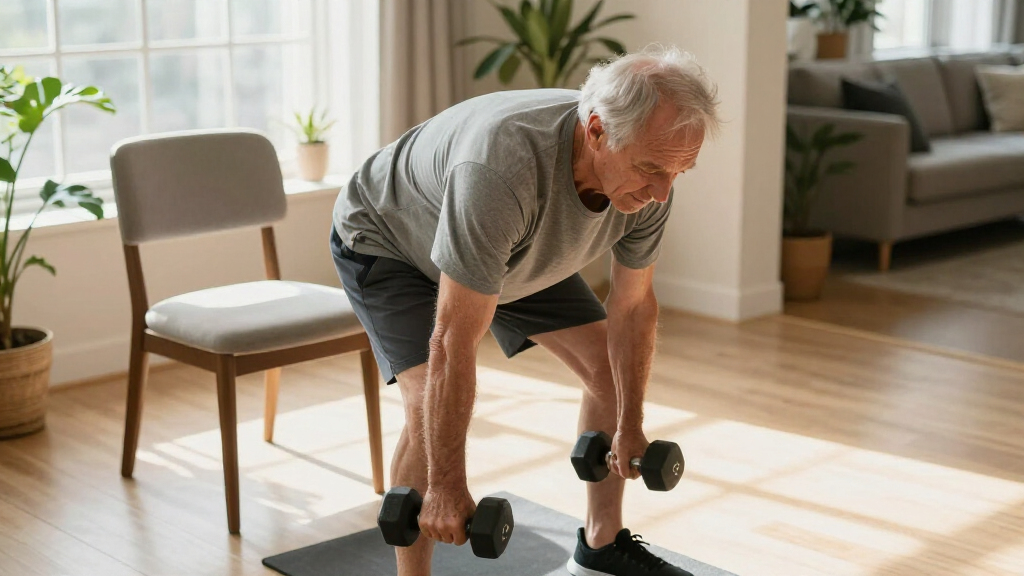
A Fit&Well contributor says he helped his 73-year-old father resume strength training with goblet squats, single-arm rows and overhead presses. The article suggests three sets of eight to 12 repetitions for each move, with easier variations; it does not report measured results or establish that the routine is suitable for everyone.
Fit&Well has published a first-person report describing how one contributor helped his 73-year-old father return to strength training with three dumbbell exercises: a goblet squat, a single-arm row and an overhead press. The piece presents the routine as a time-conscious plan for practicing everyday movements, but it does not provide measured outcomes or independent evidence that the program is appropriate for every older adult.
The contributor says his father had been active but had recently let strength training slide while helping care for his wife, who has Parkinson’s. He bought him light-to-medium dumbbells and reviewed basic lifting technique, including keeping a weight close to the chest, engaging the core and maintaining an upright position. Before adding weights, they spent several weeks practicing bodyweight squats, hip hinges, lunges and pushing movements.
The suggested plan calls for three sets of eight to 12 repetitions of each exercise. In the goblet squat, the weight is held vertically at the chest as the person bends at the hips and knees, then pushes back to standing. The article links the movement to everyday sit-to-stand actions and suggests starting with a bodyweight squat or using a chair for support.
For the single-arm row, the exerciser hinges forward with one hand supported on a sturdy surface and pulls a dumbbell toward the ribcage, lowering it under control. The overhead press starts with dumbbells at shoulder level and raises them overhead while the trunk stays braced. Fit&Well suggests a kneeling row for added stability and a seated, supported press—or pressing one arm at a time—as easier options. These are the article’s exercise instructions, not evidence of a tested training program.
Exercises Linked to Daily Tasks
The routine’s practical focus is on movements that can support common tasks: standing from a chair, lifting objects from the floor and reaching overhead. Those examples make the plan easy to understand for readers looking for simple strength exercises rather than a complex gym program. The report also highlights a common constraint in its subject’s life: limited time because of caregiving responsibilities.
However, the article is a personal account, not a clinical trial or a report of independently measured changes in strength, mobility or health. Its value is in describing how one contributor approached a family member’s return to exercise, including preparation and easier variations—not in proving that three movements will produce a particular result for all people in their seventies.
Products Worth Considering

Solo Stove Ranger 2.0 15-Inch Smokeless Fire Pit with Stand

Greenworks 40V 12-Inch Cordless Chainsaw with 2.0Ah Battery and Charger

Greenworks 48V Brushless 3-in-1 Leaf Blower, Vacuum, and Mulcher with Two 4.0Ah Batteries
As an affiliate, we earn on qualifying purchases.
How the Routine Was Prepared
According to the contributor, his father’s previous activity did not prevent him from falling out of the habit of strength work. The contributor first reviewed technique and then used several weeks of bodyweight practice before introducing dumbbells. That sequence is part of the account and helps explain why the piece does not describe simply starting with loaded exercises immediately.
The report frames the movements around squat, pull and overhead-pushing patterns. It gives an easier option for each: chair-assisted or bodyweight squats, a kneeling row, and a seated or single-arm press. For a harder press, it mentions increasing the weight or using a push press, which adds a knee bend and leg drive. The article does not specify how often the routine should be performed each week or how the weights should be increased over time.
Results and Individual Suitability
The report does not say how long the father followed the dumbbell routine, what weights he used, or whether his strength or mobility changed. It also does not identify a measured outcome or provide a comparison with another training plan. The title’s reference to building strength describes the routine’s aim; the article does not establish a verified result.
Readers’ abilities and health circumstances vary, and the report does not give an individualized assessment or detailed screening guidance. It is not clear whether the suggested number of sets and repetitions would suit someone with pain, balance difficulties, a medical condition or limited experience lifting weights. The article’s easier variations offer alternatives, but they do not replace personalized guidance when that is needed.
The Routine’s Next Milestones
The source does not announce a follow-up, a formal training schedule or a next publication date. Any next step for the father—such as continuing the routine, changing weights or tracking progress—is not reported. The article’s stated program is limited to the three exercises and the described set-and-repetition range.
For readers, the report can serve as an example of a basic routine and its modifications, rather than a universal prescription. Anyone considering strength exercises can use the article to understand the movements, while seeking qualified advice if they have concerns about whether particular exercises are suitable for them. No further outcome from the father’s training is confirmed in the source material.
Key Questions
Which three exercises are in the routine?
The Fit&Well report describes a dumbbell goblet squat, a single-arm dumbbell row and a dumbbell overhead press.
How many sets and repetitions does the article suggest?
It lists three sets of eight to 12 repetitions for each exercise. The report does not state how many days per week the routine should be done.
What easier versions does the report offer?
It suggests bodyweight or chair-assisted squats, a kneeling row for stability, and a seated press with back support or a one-arm press. These are options described in the article, not individualized recommendations.
Does the article show that the routine improved the father’s strength?
No measured improvement is reported. The piece describes a plan intended to build functional strength, but does not give results, training duration or strength tests.
Source: rss