
TL;DR

Turn quiet afternoons into listening time
- Thousands of audiobooks, podcasts and originals
- Listen on your phone, tablet or Echo — also offline
- Cancel anytime
A chilly bathroom can be transformed into a cozy retreat with proper insulation, smart heating solutions, and thoughtful design choices. Recent innovations make warming up easier, greener, and more customizable than ever. Small adjustments can make a big difference in comfort and warmth.
Proper insulation and sealing are the foundation of a warm bathroom, reducing heat loss by up to 50%.
Modern heating options like underfloor systems and smart thermostats provide consistent, energy-efficient warmth.
Warm colors, textured tiles, and plush textiles instantly boost the cozy feeling of your space.
Smart ventilation controls prevent moisture buildup without cooling the room down.
Eco-friendly solutions like solar-powered towel rails and reflective barriers help keep your bathroom warm and green.
Adding Gentle Warmth to a Chilly Bathroom
A warmer bathroom begins before the heater switches on. Seal the shell, choose targeted heat, control moisture, and layer in tactile comfort to create a room that feels like a warm hug on a cold morning.
Give the room a warm blanket
Insulation is the foundation. Treat walls, ceilings, floors, windows, doors, and vents as one connected system: a single overlooked draft can undermine an otherwise efficient heater.
Trap warmth inside
Add moisture-appropriate foam board or mineral wool behind finished surfaces, with particular attention to external walls.
Best result: fewer cold spots and less condensationClose tiny escape routes
Use bathroom-safe caulk, weatherstripping, and effective door seals around frames where moving air can be felt.
Quick test: check edges on a windy dayBlock rising chill
Insulate beneath tiles when the bathroom sits above a garage, basement, crawl space, or other unheated area.
Comfort gain: warmer feet before active heatingWarm where and when it matters
Modern systems trade continuous whole-room heating for targeted, programmable comfort. The right choice depends on renovation scope, response time, floor area, and whether warm surfaces or quick air heating matter most.
| Solution | Warmth style | Speed | Efficiency potential | Install effort | Best use |
|---|---|---|---|---|---|
| Electric underfloor mat | Even, radiant | ~ Moderate | ✓ High with schedule | ~ Renovation-friendly | Warm tiles and daily routines |
| Hydronic floor system | Even, whole-room | ✗ Slow | ✓ High at scale | ✗ Complex | Larger remodels and new builds |
| Infrared wall panel | Direct, focused | ✓ Fast | ✓ Targeted | ✓ Moderate | Instant person-and-surface comfort |
| Heated towel rail | Gentle, local | ~ Moderate | ~ Supplemental | ✓ Moderate | Dry, welcoming towels |
| Wall-mounted fan heater | Quick air heat | ✓ Very fast | ~ Short bursts | ✓ Simple | Fast pre-shower warm-up |
Comfort leverage
Relative impact when each measure is thoughtfully specified and used.
The radiant lift
Underfloor heating can raise bathroom temperature evenly by approximately 2–3°C.
The larger benefit is often sensory: the floor no longer pulls warmth from bare feet.
Make comfort visible
Thermal performance handles the temperature. Color, texture, textiles, and light shape how warmth is perceived, turning a practical bathroom into a restorative retreat.
Earthy undertones
Terracotta, honey, clay, beige, and deep brown soften the visual chill of stark white fixtures and hard surfaces.
Matte over icy
Textured tiles, timber-look details, woven baskets, and matte finishes create depth and tactile warmth.
Layer softness
Plush towels, a dense bath mat, and a substantial shower curtain reduce the room’s hard, echoing feel.
Trade clinical glare for a soft glow
Warm LEDs, dimmers, and layered wall lights soften shadows and mimic sunset tones. Keep task lighting clear around mirrors, then use ambient lighting to make early mornings and late evenings feel calmer.
Vent without throwing warmth away
A cozy bathroom still needs reliable moisture control. The goal is responsive ventilation: enough airflow to protect finishes and discourage mold, without a fan or open vent cooling the room long after humidity has cleared.
Control moisture precisely
Move from constant extraction to ventilation that responds to actual bathroom use.
- Choose a humidity-sensitive or timer-controlled fan.
- Use adjustable dampers to reduce unwanted winter drafts.
- Seal gaps around duct penetrations and vent housings.
- Let the fan finish clearing moisture, then switch off.
Add smarter, greener warmth
Recent options make comfort more customizable while reducing unnecessary runtime.
- Schedule heating shortly before morning and evening use.
- Use Wi-Fi controls to avoid heating an empty bathroom.
- Consider low-energy infrared panels for focused warmth.
- Explore reflective barriers, insulating paint, or solar-assisted towel rails.
Start with the shell, finish with the feeling
Quick fixes can improve tomorrow morning, but the most durable comfort comes from combining airtightness, efficient heating, controlled ventilation, and sensory warmth.
Seal → insulate → heat → automate
Why it works: each stage makes the next one more effective. A smart heater cannot compensate efficiently for a drafty room, while a well-sealed room needs less energy to remain comfortable.
Four quick wins
Weatherstrip gaps, add a dense bath mat, switch to warm dimmable LEDs, and program short pre-use heating periods.
How to Insulate Your Bathroom for Long-Lasting Warmth
Insulation is the backbone of keeping your bathroom warm. Properly insulating walls, floors, and ceilings traps heat inside and prevents drafts from sneaking in. For example, adding foam board or mineral wool behind drywall can make a noticeable difference. Sealing gaps around windows, doors, and vents stops cold air from slipping in, which is especially important during winter. A well-insulated bathroom can reduce heat loss by up to 50%, according to an anonymous researcher. Think of it as giving your room a warm blanket that keeps heat from escaping.
To start, check for cracks or gaps around external walls and seal them with weatherstripping or caulk. Don’t forget to insulate the floor if it’s over unheated space or an uninsulated basement. This prevents the chilly air from seeping up through the tiles and grout. The more airtight your bathroom, the less energy you’ll need to keep it warm.
Deep insulation not only maintains warmth but also reduces energy bills over time. It’s a tradeoff worth considering, as the initial effort and cost can lead to significant long-term savings and comfort. Proper insulation also minimizes cold spots that can cause discomfort or condensation, which could lead to mold growth. Therefore, investing in quality insulation and sealing is fundamental for a cozy, energy-efficient bathroom.
electric underfloor heating for bathroom
As an affiliate, we earn on qualifying purchases.
As an affiliate, we earn on qualifying purchases.
Smart Heating Solutions That Make a Difference
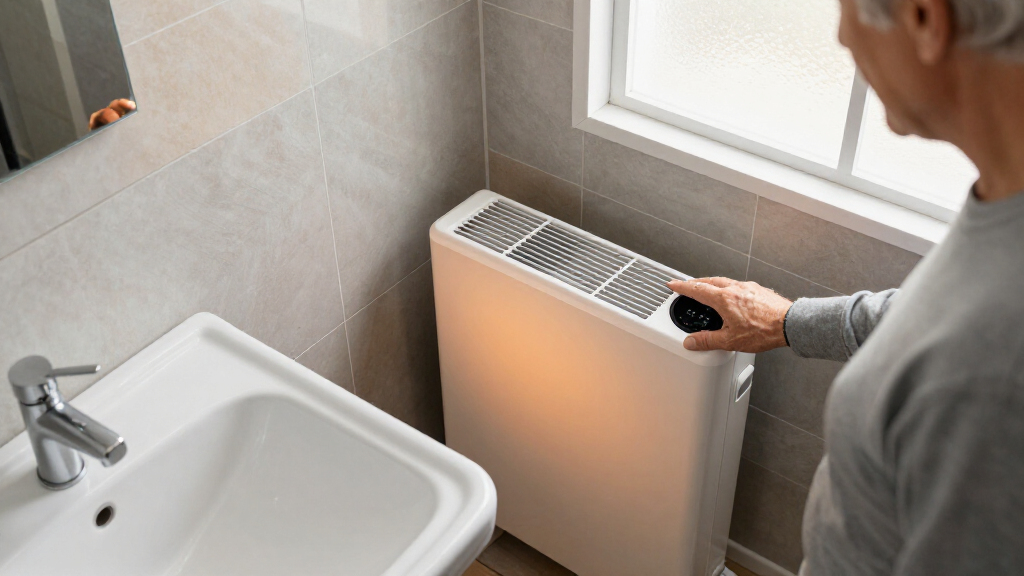
Smart heating options are transforming how we warm bathrooms. Electric underfloor systems, like radiant mats, provide even, gentle heat that feels like walking on warm sand. These systems can raise bathroom temperatures by 2-3°C (3.6-5.4°F), according to recent data. Heated towel rails aren’t just for drying — they add a cozy, warm layer to your space. Wall-mounted electric heaters or infrared panels can be installed quickly and controlled via smartphone apps, giving you just the right amount of warmth when you need it.
Choosing modern heating solutions isn’t just about comfort; it’s about energy efficiency and convenience. For instance, programmable thermostats allow you to set schedules that match your routines, avoiding unnecessary heating when the bathroom isn’t in use. Infrared panels heat objects and people directly, reducing wasted energy and providing instant comfort. The tradeoff is that some systems may have higher upfront costs but pay off through lower energy bills and improved comfort. Smart controls also prevent overheating, which can save money and extend the lifespan of your heating equipment. In essence, these solutions turn your bathroom into a smart, efficient space that adapts to your lifestyle while reducing environmental impact.
As an affiliate, we earn on qualifying purchases.
Materials and Colors That Make Your Bathroom Feel Warmer
Color and texture play a big role in how warm your bathroom feels visually. Warm-toned tiles in earthy shades like terracotta, honey, or deep browns create a cozy atmosphere. Textured tiles or matte finishes add a tactile warmth, making the space inviting. Soft textiles — plush towels, shaggy bath mats, and shower curtains — also boost comfort. A fluffy beige towel hanging on a heated towel rail can make you feel wrapped in warmth even before stepping into the shower.
Choosing materials and colors isn’t just about aesthetics; it influences how your space is perceived and experienced. Warm hues and tactile textures can psychologically enhance comfort, making the room feel more intimate and inviting. Conversely, stark whites and cold materials might look clean but can make a space feel sterile and unwelcoming. By thoughtfully combining color and texture, you can craft a space that visually and physically envelops you in warmth, encouraging relaxation and comfort even on the coldest days. This strategic choice impacts the overall ambiance, making your bathroom a true sanctuary of coziness.
As an affiliate, we earn on qualifying purchases.
Lighting That Adds a Soft, Warm Glow
Lighting can turn your chilly bathroom into a cozy retreat. Warm-colored LED bulbs with a color temperature around 2700K mimic the soft glow of sunset, making the space feel inviting. Dimmable lights allow you to adjust the ambiance, so even a small flickering candle can add a dash of country charm. A well-placed wall sconce or a ceiling light with a warm hue can soften shadows and create a sense of intimacy.
Lighting isn’t just functional; it’s a powerful tool to influence mood and perceived warmth. Warm lighting reduces harsh shadows and creates a more inviting environment, especially in the early mornings or late evenings. Combining warm lighting with textured, earthy tiles enhances the cozy atmosphere, making the room feel more like a retreat than a utilitarian space. Thoughtful lighting design can also help highlight design features and textures, adding depth and warmth to the overall aesthetic. When used intentionally, lighting becomes an essential element in creating a space that feels both functional and soothing, especially during colder months.
As an affiliate, we earn on qualifying purchases.
Managing Ventilation Without Losing Heat
Good ventilation prevents moisture buildup, but it can also cool down a chilly bathroom. The key is to balance airflow with insulation. Use vent covers with adjustable dampers or install a timer-controlled extractor fan. This way, you can keep moisture out without letting cold drafts in. For example, a homeowner installed a quiet, humidity-sensitive fan that activates only when needed. During winter, sealing gaps around vents and using draft stoppers can keep the warmth inside.
Effective ventilation is crucial for maintaining a healthy bathroom environment, but improper airflow can lead to heat loss, increased humidity, and mold growth. The tradeoff lies in finding the right balance—adequate moisture control without sacrificing warmth. Using adjustable vent covers allows you to fine-tune airflow, preventing drafts while still venting excess humidity. Timer-controlled fans ensure ventilation only when necessary, reducing unnecessary heat loss. Sealing gaps around vents and installing draft stoppers further minimizes cold air infiltration. Properly managing this balance prolongs warmth, reduces energy costs, and preserves the integrity of your bathroom’s structure. It’s a strategic compromise that enhances comfort without compromising health or efficiency.
Recent Tech and Eco-Friendly Ways to Keep Warm
Latest innovations make warming your bathroom easier and greener. Smart thermostats can be programmed to heat only when you’re around, saving energy. Eco-friendly options like solar-powered heated towel rails or infrared panels reduce your carbon footprint. Reflective barriers and insulating paints inside bathroom walls trap heat better, keeping your space warmer longer. For example, a country home installed solar-powered towel rails that heat just before morning, reducing their reliance on grid electricity.
These advances turn your chilly bathroom into a cozy haven while supporting sustainability. Incorporating eco-friendly technology often involves an initial investment but can lead to significant savings over time. They also promote a more sustainable lifestyle by reducing reliance on fossil fuels and decreasing carbon emissions. Tailoring these solutions to your routine ensures you get maximum benefit without unnecessary waste. Overall, embracing these innovations not only enhances comfort but aligns with environmentally conscious living, making your bathroom a model of efficiency and warmth.
Frequently Asked Questions
What is the most cost-effective way to warm up a chilly bathroom?
Sealing gaps around windows and doors, combined with adding a small electric heater or heated towel rail, offers a quick, budget-friendly warmth boost. Insulation pays off long-term by reducing energy costs.How do I install underfloor heating myself, or should I hire a professional?
While DIY kits exist, installing electric underfloor systems often requires electrical knowledge. For safety and efficiency, hiring a professional is recommended to ensure proper setup and code compliance.Are there energy-efficient options for heating a bathroom?
Yes, low-energy infrared panels, programmable smart thermostats, and solar-powered heated towel rails are all great eco-friendly choices that save energy while keeping your bathroom warm.What quick fixes can I do this winter?
Use draft stoppers on vents and doors, add a cozy rug, hang warm textiles, and turn on a small space heater or heated towel rail during your routine to feel immediate warmth.How can I prevent moisture buildup and mold while adding warmth?
Ensure proper ventilation with adjustable exhaust fans, seal leaks around vents, and wipe down surfaces to keep moisture at bay. Warm, dry air discourages mold growth.Conclusion
A chilly bathroom can become your favorite cozy corner with a few thoughtful upgrades. Invest in insulation, embrace smart heating, and choose materials that hug you with warmth. Before you know it, those cold mornings will be a thing of the past, replaced by a space that feels as comforting as your favorite country porch.Fall Picks
fall essentials
As an affiliate, we earn on qualifying purchases.