TL;DR

Turn quiet afternoons into listening time
- Thousands of audiobooks, podcasts and originals
- Listen on your phone, tablet or Echo — also offline
- Cancel anytime
Microfiber and faux leather are the easiest fabrics to clean on a recliner. Recent innovations like stain-resistant treatments and water-repellent coatings make maintenance simpler, helping your furniture stay cozy and inviting longer.
Imagine sinking into your favorite recliner after a long day, the soft fabric warmed by the sun, smelling faintly of pine or fresh linen. But spills happen—coffee, a splash of tomato sauce, or a pet’s accident. Choosing a fabric that’s easy to clean isn’t just about convenience; it’s about protecting your comfort and peace of mind.
In this guide, you’ll learn how to pick fabrics that stand up to life’s messes, discover recent innovations making cleaning easier, and get practical tips to keep your recliner looking fresh for years to come. Because your home should be a sanctuary, not a battleground against stains.
Microfiber and faux leather are the easiest fabrics to clean, especially with recent stain-repellent treatments.
Advanced fabrics with nanotech finishes repel liquids, making cleanup faster and less stressful.
Regular maintenance—vacuuming, prompt spill cleanup, and protective sprays—extends your recliner’s life.
Always check manufacturer instructions before using household cleaners to avoid damage.
Eco-friendly fabrics are catching up in durability and stain resistance, offering a sustainable option.
Choosing a Recliner Fabric That’s Easy to Clean
Life leaves marks: coffee, tomato sauce, muddy paws and everyday dust. The right upholstery protects your comfort without turning your favorite chair into a maintenance project.
Which fabrics make cleaning a breeze?
Balance cleanability with softness, abrasion resistance and the way your household actually uses the chair. There is no universal winner—but two options stand out.
Microfiber
Tightly woven fibers help liquids remain near the surface, while the soft texture preserves a cozy, fabric-like feel.
Faux Leather
A smooth, non-porous surface makes spills easy to remove. Watch for scratches and follow conditioning guidance.
Performance Fabric
Engineered fibers and stain-repellent finishes resist fading, spills and abrasion in busy, high-traffic homes.
Cotton / Linen
Comfortable and breathable, but more absorbent. A compatible protective treatment can improve everyday resilience.
How modern protection stops a spill
Nanotech and water-repellent treatments form a microscopic barrier, buying valuable time before liquid reaches the fibers.
Liquid lands
A drink or pet accident reaches the upholstery surface.
Barrier reacts
Fine protective particles reduce contact with the fibers.
Droplets bead
Moisture collects on the surface instead of soaking inward.
You blot
A clean, absorbent cloth lifts the spill with less stain risk.
Protective finishes can wear down after repeated cleaning. They may cost more initially and sometimes require approved products or periodic reapplication.
Cleaning-friendly fabric comparison
Use this matrix to match upholstery performance with your priorities: quick cleanup, durability, comfort or a natural appearance.
| Feature | Microfiber | Faux leather | Performance fabric | Cotton / linen |
|---|---|---|---|---|
| Ease of cleaning | ✓Very high: vacuum and spot clean | ✓Excellent: wipe with damp cloth | ✓High: often stain-resistant | ~Moderate: treatment may help |
| Spill resistance | ✓Good: tight fibers repel liquid | ✓Excellent: non-porous surface | ✓Excellent: engineered barrier | ~Variable: naturally absorbent |
| Durability | ✓High abrasion resistance | ~Moderate; can scratch or crack | ✓Very high; designed for wear | ~Moderate; may wear sooner |
| Feel & appearance | Soft, plush and cozy | Sleek, smooth and leather-like | Varied, textured and modern | Natural, breathable and soft |
| Watch for | Care-code restrictions | Scratches and conditioning needs | Finish wear and approved cleaners | Fast absorption and set-in stains |
✓ Strong fit ~ Check the specific product and care label
Small habits, longer comfort
Prompt, gentle care is more effective than aggressive deep cleaning after a stain has already set.
Vacuum regularly
Use a soft brush attachment to lift dust, crumbs and pet hair from seams.
Blot immediately
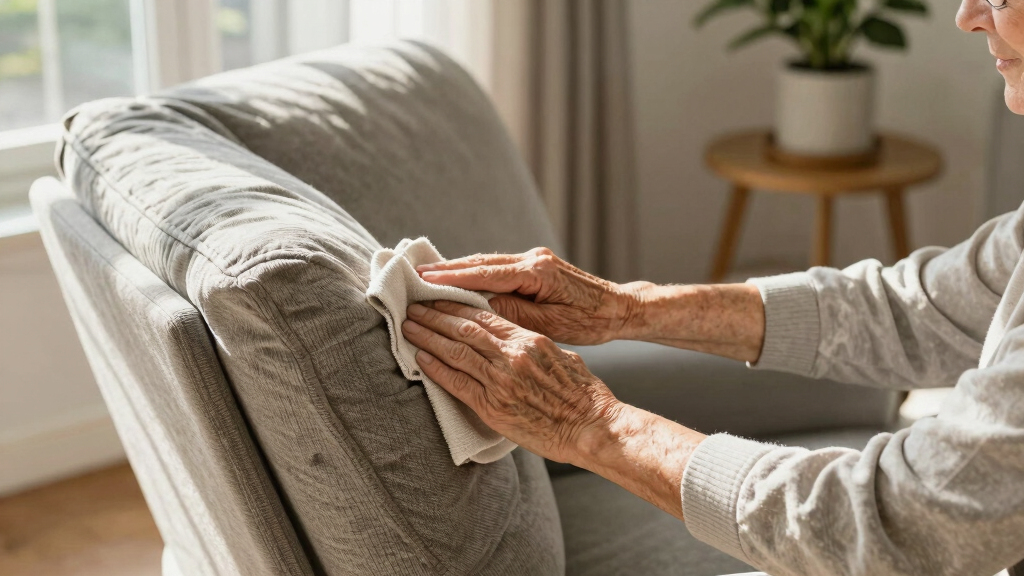
Press gently with a clean cloth. Avoid rubbing liquid deeper into the fibers.
Test first
Try mild soap and water on a hidden area before treating a visible spot.
Refresh protection
Reapply a compatible protector every 6–12 months when recommended.
Quick answers before you buy
What works best in a busy household?
Microfiber and faux leather are typically the easiest to maintain, especially around children and pets.
Are stain-resistant fabrics worth it?
Often, yes. They can reduce cleaning effort, resist everyday damage and help extend the upholstery’s useful life.
Can household cleaners be used?
Mild soap and water suit many fabrics, but the manufacturer’s care code should always decide the method.
What about sustainable fabrics?
Recycled and biodegradable options are increasingly durable and stain-resistant. Verify the individual product specification.
Make the chair a sanctuary—not a stain battleground.
Choose microfiber for a soft, practical all-rounder; faux leather for the fastest wipe-down; or performance fabric for maximum engineered resilience. Pair the material with prompt cleanup and label-safe maintenance for years of inviting comfort.
What fabric types make cleaning a breeze?
Some fabrics naturally resist stains and are easier to wipe clean. Microfiber tops the list—its tightly woven fibers repel liquids and dirt, making spills sit on the surface instead of sinking in. This means that even if a spill occurs, you can often clean it up quickly before it soaks into the fabric, reducing the risk of staining or lingering odors. Faux leather, with its smooth, non-porous surface, is another champion for busy households because it can be wiped down easily, preventing dirt buildup. Performance fabrics are engineered with stain-repellent finishes, often using nanotechnology to create a microscopic barrier that prevents liquids and dirt from penetrating the fibers. This technology enhances durability and simplifies maintenance, but it’s important to consider that some of these finishes may diminish over time or with improper cleaning, which is a tradeoff worth understanding. Overall, choosing these fabrics can save time and effort, especially in homes with children or pets, but they may sometimes feel less natural or plush than traditional textiles, which is a tradeoff between comfort and practicality.
As an affiliate, we earn on qualifying purchases.
How recent tech makes fabrics stain-resistant and water-repellent
Modern fabric treatments have revolutionized how we approach cleaning and maintenance. Nanotechnology involves applying ultra-fine particles that form a microscopic barrier on the fabric surface, causing liquids to bead up and roll off instead of soaking in. This means that accidental spills—like red wine or coffee—can often be cleaned with a quick blot, significantly reducing stain risk. Similarly, water-resistant coatings create a protective layer that prevents liquids from penetrating the fabric fibers, which can be especially beneficial in households with children or pets that are prone to accidents. However, these treatments can sometimes wear down over time or with repeated cleaning, which means their effectiveness may decrease, requiring reapplication or more careful maintenance. The implications are substantial: fabrics with these innovations can extend the lifespan of your furniture by resisting stains and damage, but they may also come at a higher initial cost or require specific cleaning products to preserve their protective qualities. Understanding these tradeoffs helps you choose the right fabric based on your lifestyle and budget.
As an affiliate, we earn on qualifying purchases.
Compare the most cleaning-friendly fabrics side by side
| Feature | Microfiber | Faux Leather | Performance Fabrics | Cotton/Linen Blends |
|---|---|---|---|---|
| Ease of cleaning | Very high — vacuum, spot clean, wipe | Excellent — wipe with damp cloth | High — stain-resistant, often washable | Moderate — may need protective spray |
| Spill resistance | Good — fibers repel liquids | Excellent — non-porous surface | Excellent — engineered to resist stains | Variable — natural fibers susceptible to stains |
| Durability | High — abrasion-resistant | Moderate — can scratch, needs conditioning | Very high — designed for wear | Moderate — may wear faster |
| Appearance & feel | Soft, plush, fabric feel | Sleek, smooth, leather-like | Varies — often textured, modern look | Natural, soft, comfortable |
As an affiliate, we earn on qualifying purchases.
Simple tips to keep your recliner looking fresh
- Vacuum regularly using a soft brush attachment to remove dust and dirt.
- Clean spills immediately with a damp cloth—don’t wait for stains to set.
- Use mild soap and water for spot cleaning, testing first on a hidden area.
- Apply a fabric protector spray every 6-12 months for extra stain resistance.
- Avoid harsh chemicals and abrasive scrubbers that can damage delicate fabrics.
Picture yourself with a spray bottle and a soft cloth, quickly wiping away a coffee spill before it stains. These simple habits keep your favorite chair cozy and inviting for years.
water-repellent upholstery for recliner
As an affiliate, we earn on qualifying purchases.
As an affiliate, we earn on qualifying purchases.
Frequently Asked Questions
What is the easiest fabric to clean for a busy household?
Microfiber and faux leather lead the pack. They resist spills and are easy to wipe clean, making them perfect for active households and pet owners.
Are stain-resistant fabrics worth the extra cost?
Absolutely. They save you time, effort, and frustration, often lasting longer because they resist damage from everyday messes.
Can I clean my fabric recliner with household cleaning products?
Most spot cleaning can be done with mild soap and water. Always check the care label first, and avoid harsh chemicals that could harm the fabric or finish.
How do I maintain my recliner’s fabric over time?
Vacuum regularly, wipe spills immediately, and consider applying a protective spray periodically. Professional cleaning every year or so can also keep it looking fresh.
Are eco-friendly fabrics as durable and easy to clean as traditional options?
Many eco-friendly fabrics now feature durability and stain resistance comparable to conventional materials. Verify specific product features to ensure they meet your needs.
Conclusion
Choosing a fabric that’s easy to clean transforms your recliner from a potential mess magnet into a lasting comfort spot. With the right fabric and a few simple habits, you can enjoy your cozy country home without the worry of stains ruining your favorite chair.
Remember—your home is your sanctuary. A little care today keeps it warm, inviting, and beautifully maintained for years to come.
Cold & flu season Picks
humidifiers
As an affiliate, we earn on qualifying purchases.