
TL;DR

Turn quiet afternoons into listening time
- Thousands of audiobooks, podcasts and originals
- Listen on your phone, tablet or Echo — also offline
- Cancel anytime
Adding ramps and easing thresholds are affordable, quick fixes that significantly improve safety and ease of access at doorways. Whether you’re DIY-ing or hiring a pro, these small changes make a big difference in preventing falls and boosting independence.
Imagine stepping into your favorite cozy room and feeling a smooth, level surface beneath your feet instead of a sudden bump or trip hazard. Small fixes like ramps and threshold modifications can turn that vision into reality, without breaking the bank or turning your home upside down. These simple updates are powerful tools for creating a safer, more welcoming space for yourself or loved ones.
Whether you’re aging in place, caring for someone with mobility challenges, or just want to prevent falls, understanding how to make doorways easier to navigate matters. In this guide, you’ll learn practical tips, costs, and the best materials to transform your home into a secure haven — one small step at a time.
Measure carefully: a 1-inch rise needs a 12-inch ramp for safety.
Choose the right material based on your climate and budget—rubber and aluminum are durable outdoors, foam for indoors.
Small hardware upgrades like offset hinges can widen doorways without major construction.
Secure and slip-proof your ramps to prevent falls, especially in wet weather.
Funding options like VA grants and Medicaid waivers can help cover costs—check local resources.
Home Accessibility · Fall Prevention
Ramps & Thresholds: Small Fixes for Easier Doorways
A sudden bump at the door is one of the most common — and most fixable — trip hazards in the home. Threshold ramps and simple hardware upgrades are affordable, often DIY-friendly, and frequently the very first modification families make for aging in place. One small step at a time, they turn a hazard into a smooth, level welcome.
1:12 slope ratio
1 inch of rise needs 12 inches of ramp run — the ADA-aligned rule of thumb for a safe, gentle slope
$20 starting point
Entry-level rubber threshold ramps and offset hinges start under $30 — the best-value fixes in accessibility
+2″ clearance
Swing-clear offset hinges add 1.5–2 inches of doorway width with zero reframing or construction
#1
Falls are the leading cause of injury among adults 65+
½″
Any threshold over ½ inch generally requires a ramp
32″
Minimum clear opening for wheelchair access — 36″ is comfortable
$300+
Where full contractor doorway widening begins — vs. $20 fixes
Know Your Threshold
The Three Tiers of the ADA Rulebook
Not every bump needs a ramp. ADA guidelines sort thresholds into three tiers — measure yours first, then match the fix to the height. A ¼-inch lip is barely noticeable; a 1-inch step is a fall waiting to happen.
Tier 01 · Leave As-Is
≤ ¼ inch
No action needed
A rise up to ¼ inch can stay exactly as it is. It sits below the trip-hazard threshold for nearly every user, including most mobility-device wheels.
Tier 02 · Bevel It
¼ – ½ inch
Beveled edge required
In this band the edge must be sloped (beveled) rather than left square. Many low-profile rubber ramps and bevel strips handle this range in minutes.
Tier 03 · Ramp It
> ½ inch
A ramp is the safe answer
Anything over ½ inch generally requires a proper ramp at a 1:12 slope. This is where falls cluster — and where a $20–$150 ramp pays for itself in peace of mind.
Step by Step
Measure Your Doorway in 3 Easy Steps
The #1 practical question readers ask — answered. Precise measurement is what separates a gentle, safe incline from a steep slip risk, so grab a tape measure before you shop.
Measure the height
Find the total rise from the ground to the top of the threshold — the bump your foot hits. Measure on both sides of the door; they often differ.
Calculate ramp length
Multiply the rise by 12. A 1.5-inch rise needs an 18-inch ramp. This gradual slope is what protects elderly users and mobility-aid wheels.
Check width & clearance
Match the doorway width (a few inches wider is better) and confirm the ramp won’t block the door swing or interfere with locks and sweeps.
Example: a 1-inch rise with a 12-inch ramp creates a gentle slope that complies with ADA guidelines and measurably reduces fall risk — the key insight behind every fix in this guide.
Buyer’s Guide
Which Ramp Material Fits Your Home?
Durability, weather, grip, and budget pull in different directions. Rubber and aluminum dominate outdoors; foam and wood suit temporary or indoor spots. Choose for your climate first, your wallet second.
| Material | Best Setting | Pros | Cons | Slip Safety |
|---|---|---|---|---|
| RubberMost Popular | Indoor + outdoor | Durable, slip-resistant, trims easily to fit, recycled-tire options | Can smell rubbery indoors, slightly heavier to handle | ✓ Excellent |
| Aluminum | Outdoor / adjustable | Lightweight, adjustable heights, weather-resistant | May be slippery when wet, can dent or bend | ~ Needs texture |
| Wood | DIY / covered areas | Cheap, easy DIY, fully customizable | Warps over time, needs maintenance, potential slip hazard | ✗ When worn |
| Foam | Indoor only | Feather-light, easy to carry and store | Less durable, indoor use only | ~ Temporary |
Cost Snapshot
What These Fixes Really Cost
Most small fixes land under $300 — a fraction of one emergency-room visit. Full structural widening is the outlier, which is why hardware-first fixes are the smart starting point.
Don’t Pay It All Yourself
- Medicaid HCBS waivers — many states fund home modifications like ramps and doorway work.
- VA grants — HISA, SAH and SHA programs cover accessibility upgrades for eligible veterans.
- USDA Section 504 — rural development grants and loans for low-income homeowners.
- Local resources — Area Agencies on Aging and nonprofit ramp programs often install free or low-cost.
No Demolition Required
Wider Doorways Without Tearing Out Walls
Standard interior doorways run 24–30 inches, but wheelchairs need a 32-inch clear opening. Before calling a contractor, try the $30 hardware trick — it resolves a surprising share of tight doorways.
The $30 Fix · DIY
+1.5–2 inches gained
Offset (swing-clear) hinges
Swapping standard hinges for offset hinges moves the door fully out of the opening. A cramped 24-inch bathroom door becomes 26–28 inches — no framing, no drywall, under $50 a pair.
Space-Savers & Pro Work
32–36 inch target
Pocket doors, barn doors, or full reframing
In tight halls, pocket or barn doors reclaim swing space entirely. When that’s not enough, full widening is a contractor job — typically $300–$2,500+, more for load-bearing walls.
Non-Negotiables
Keep It Secure & Slip-Free
A ramp that slides or a surface that skids negates every safety benefit. Run this checklist at install — and again every season, especially before wet or icy weather.
Slip-resistant surface
Choose textured rubber or grit-coated aluminum; add grip tape to smooth surfaces. No sharp edges or trip lips on the ramp itself.
Secured against sliding
Fix portable ramps with screws, adhesive strips, or friction pads. Movement underfoot is how falls happen.
Door swing clearance
Ramps on both sides of a threshold can block the door sweep. Test the full swing before final fastening — a classic gotcha.
Weight capacity & wear checks
Mobility scooters far outweigh manual wheelchairs — match the rating. Inspect regularly for cracks, looseness, or wear.
The Safe-Doorway Loop
From Bump to Smooth Passage
Every safe doorway follows the same chain — measure honestly, match the material, lock it down, then keep an eye on it.
Step 01
Measure the rise
Step 02
Apply the 1:12 rule
Step 03
Pick the material
Step 04
Secure & slip-proof
Step 05
Inspect every season
What exactly are threshold ramps and how do they work?
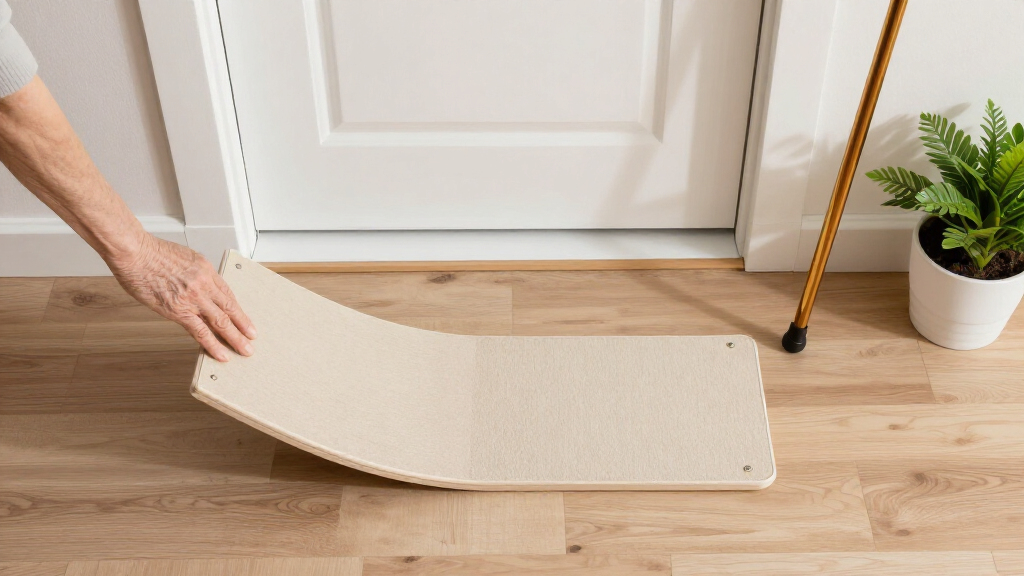
Threshold ramps are gentle slopes designed to bridge the gap between indoors and outdoors, or between rooms, where a step or raised threshold exists. They work by reducing the height difference, creating a smooth transition that’s safer and easier to navigate. For example, a 1/4-inch threshold might be barely noticeable, but a 1-inch or higher step needs a ramp to prevent tripping.
Most ramps follow a simple rule: 1 inch of rise requires 12 inches of length for a safe, gentle slope. This ratio is crucial because it balances safety and practicality — a steeper slope increases the risk of slipping or losing balance, especially for those with limited mobility or balance issues. Choosing the right material is equally important; a slippery surface can negate the safety benefits. Materials like rubber or textured aluminum provide grip, reducing fall risk. When selecting a ramp, consider the environment: outdoor ramps need weather resistance, while indoor ramps should be smooth and unobtrusive. Understanding these mechanics helps ensure your ramp not only looks good but genuinely enhances safety.
As an affiliate, we earn on qualifying purchases.
How to measure your doorway for the perfect ramp in 3 easy steps
- Measure the height: Use a tape measure to find the total rise from the ground to the top of the threshold—think of it as the bump your foot hits. Precise measurement ensures you select a ramp that provides a gentle incline, which is critical for safety and ease of use.
- Calculate the ramp length: Multiply that height by 12 for a gentle slope. For example, a 1.5-inch rise needs an 18-inch ramp. This ratio reduces the likelihood of slips or trips, especially for elderly users or those with mobility aids, by providing a gradual transition.
- Check the width: Make sure the ramp is at least as wide as your doorway opening, preferably a few inches wider for safety and ease of use. Most doors need a minimum 36-inch width for wheelchair access, but 32 inches can work with careful maneuvering. Widening the doorway or choosing a wider ramp can significantly improve accessibility, but keep in mind that wider ramps require more space and materials, which may influence your budget and installation options.
Always double-check the clearance around the door to ensure the ramp won’t interfere with door swings or locks. Proper measurement and planning prevent costly mistakes and ensure the ramp integrates seamlessly into your home, providing a safe and comfortable passage for everyone.
As an affiliate, we earn on qualifying purchases.
Best materials for threshold ramps — which one fits your home?
| Material | Pros | Cons |
|---|---|---|
| Rubber | Durable, slip-resistant, trims easily, good indoors/outdoors | Can smell rubbery indoors, slightly heavier |
| Aluminum | Lightweight, adjustable, weather-resistant | May be slippery when wet, can dent or bend |
| Wood | Cheap, easy DIY, customizable | Warps over time, needs maintenance, potential slip hazard |
| Foam | Lightweight, easy to carry and store | Less durable, best for indoor use only |
Choosing the right material depends on your specific needs and environment. Rubber and aluminum are excellent for outdoor use because they withstand weather and provide good traction, which is essential in wet or icy conditions. Inside, foam or wood can be suitable for temporary or low-traffic areas, but they may require more frequent replacement or maintenance. Consider the tradeoffs: durability versus ease of installation and cost. For example, rubber ramps offer longevity and slip resistance but can be heavier to handle, while aluminum provides lightweight adjustability but may need surface treatments to prevent slipping when wet. Understanding these nuances helps you select a ramp that balances safety, aesthetics, and budget.
As an affiliate, we earn on qualifying purchases.
Widening doorways without tearing out walls? Yes, it’s possible!
Widening a doorway might sound like a major project, but small tricks can make a big difference. Offset hinges are a simple fix that can add 1.5 to 2 inches of clearance without any framing work. This allows for easier passage of walkers or wheelchairs and can prevent the need for costly renovations. For example, replacing standard hinges with offset hinges on a narrow bathroom door might turn a 24-inch opening into a more comfortable 26-28 inches, significantly improving accessibility.
If more space is necessary, temporary solutions like pocket or barn doors can be installed to save space and improve flow, especially in tight areas. Full widening involves a contractor, structural modifications, and higher costs, but for many, hardware upgrades like offset hinges offer an effective and budget-friendly alternative. These small adjustments can make everyday navigation smoother, reduce strain, and help maintain independence without extensive construction.
Imagine a cozy hallway where a few extra inches make it easier to roll a wheelchair or walker through — small fixes, big impact that enhance safety and comfort.
As an affiliate, we earn on qualifying purchases.
Cost snapshot: what do these fixes really cost?
Here’s a quick look at typical prices for common accessibility upgrades:
- Rubber threshold ramps: $20–$150
- Modular aluminum ramps: $50–$300
- Offset door hinges: $20–$50 per pair
- Portable entry ramps: $100–$400+
- Full doorway widening (contractor work): $300–$2,500+
While the costs vary depending on size, material, and whether you hire a professional, most small fixes like threshold ramps and hinges are affordable and often DIY-friendly. Larger projects, such as structural modifications, involve professional labor and higher expenses but can significantly enhance long-term safety and accessibility. Budgeting for these improvements requires understanding your specific needs and weighing the benefits of each option.
Safety tips to keep your ramps and thresholds secure and slip-free
Safety should always come first. Make sure your ramp has a slip-resistant surface and no sharp edges or trip lips. Secure the ramp firmly with screws, adhesive strips, or friction pads, especially if it’s portable. Proper installation prevents movement that could cause slips or falls. Regularly inspect the ramp for signs of wear, cracks, or loose fasteners, and address issues promptly.
Ensure the door can swing freely over the ramp without catching or causing instability. If you’re using a ramp on both sides of a doorway, check that it doesn’t block door clearance or lock mechanisms — this prevents accidental lock-ins or difficulty opening the door. For heavier mobility devices, verify the ramp’s weight capacity, as exceeding it can lead to structural failure and accidents. For example, a rubber ramp with textured surface and secure fastening can prevent slips during rainy or icy weather, but it must be maintained and replaced as needed. These safety measures are vital to prevent falls and ensure the ramp functions as intended over time.
Latest trends that make ramps easier, smarter, greener
The home accessibility market is buzzing with innovation. Adjustable, modular ramps are now available that can stack or telescope to fit different door heights — perfect for renters or visiting family. These versatile designs eliminate the need for custom fabrication and allow for quick adjustments, making them highly practical. Eco-friendly ramps made from recycled tires or sustainable materials are gaining popularity, combining durability with environmental responsibility. Such options reduce waste and often come with added benefits like weather resistance and slip-proof surfaces.
Smart home technology is also influencing accessibility solutions. Automatic door openers, low-profile thresholds, and sensor-activated ramps are making homes more welcoming for everyone, especially those with mobility challenges. Certified Aging-in-Place Specialist (CAPS) credentials among remodelers ensure safety and quality, providing peace of mind for homeowners investing in these upgrades. These innovations demonstrate how accessibility can be integrated seamlessly into modern, eco-conscious, and technologically advanced homes, making daily life safer and more convenient.
Imagine a porch with a sleek, adjustable ramp that folds away when not in use, or a recycled rubber ramp that blends into your landscape — these innovations bring safety and style together, emphasizing that accessibility improvements can be both functional and aesthetically pleasing.
Your top questions answered: making home modifications work for you
Q: How do I measure for a proper threshold ramp? Use a tape measure to find the height of the bump, then multiply that by 12 to get the ramp length. Precise measurement ensures your ramp provides a safe, manageable incline that reduces fall risk and eases movement.
Q: Can I install a ramp myself? Yes, many threshold ramps are DIY-friendly, especially rubber or aluminum types. Following manufacturer instructions and safety guidelines is essential. Proper securing and leveling prevent movement or instability, which could cause accidents.
Q: Will a ramp block my door from closing? It can if placed improperly. Carefully measure door clearance, and consider adjustments like offset hinges or weatherstripping to maintain proper door function without compromising accessibility.
Q: Are there funding options? Yes. Some Medicaid waivers, VA grants, and local programs can help cover costs. Contact your local aging services or veteran affairs office to explore eligibility and application processes, as financial assistance varies by location and program.
Q: How long do these fixes last? Quality ramps can last 5–10 years with proper care. Regular inspection, cleaning, and prompt repairs extend their lifespan and ensure continued safety and functionality.
Conclusion
Making doorways easier doesn’t have to mean big renovations. A simple ramp or a quick tweak with offset hinges can turn a trip hazard into a smooth passage. These small, affordable fixes keep your home safe, cozy, and ready for the years ahead.
Think of your doorway as a bridge — each easy step you add creates a more welcoming, fall-free path. What small change can you make today to keep your home safe and your independence strong?
Cold & flu season Picks
humidifiers
As an affiliate, we earn on qualifying purchases.