
TL;DR

Turn quiet afternoons into listening time
- Thousands of audiobooks, podcasts and originals
- Listen on your phone, tablet or Echo — also offline
- Cancel anytime
Talking about home safety with parents requires empathy and tact. Focus on shared goals, offer practical solutions, and use recent safety strategies like smart tech and fall prevention to keep your loved ones safe without risking their independence.
When it’s time to talk about home safety with parents, it can feel like walking a tightrope. You want to keep them safe, but you also don’t want to offend or make them feel like they’re losing independence. The trick is approaching the subject with kindness and understanding. It’s about partnership, not pointing fingers.
This guide will help you find the right words, the best moments, and practical tips to support your parents’ safety while respecting their dignity. You’ll learn how to make these conversations feel natural and caring, so everyone feels heard and involved.
Approach safety talks with empathy and shared concern, not criticism.
Focus on small, practical modifications that can prevent falls and accidents.
Use technology to boost safety without intruding on independence.
Assess the home together, making it a collaborative, non-judgmental process.
Be patient with resistance—gentle persistence often works best.
A Gentle Guide to Talking About Home Safety with Parents
Keeping someone safe should never feel like taking control away. Lead with respect, focus on shared goals, and make practical changes together—so home remains both secure and unmistakably theirs.
before critique
the home together
manageable change
and independence
Choose connection before correction
A calm setting and collaborative language lower defensiveness. Begin when no one is rushed, acknowledge your parents’ experience, and ask permission to explore—not permission to take over.
Find an easy moment
Talk over coffee or during a quiet weekend. Avoid raising concerns in the middle of a stressful event or immediately after an argument.
Lead with care
Use “I’m concerned” and “Could we look together?” instead of language that sounds like blame, judgment, or an assessment of capability.
Name independence
Explain that the purpose of each change is to make daily routines easier and help them stay comfortably at home for longer.
“I noticed a couple of tricky spots in the house. Would you be open to looking at ways we could make them easier and safer together?”
Three small changes that matter
Prioritize familiar hazards with straightforward solutions. These improvements support balance, visibility, and clear movement without changing the character of the home.
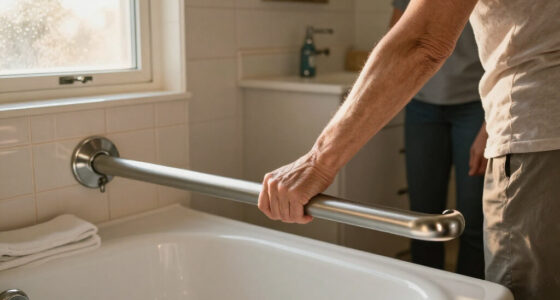
Install bathroom grab bars
Stable support beside the shower, bath, and toilet helps reduce balance loss during transfers on slippery surfaces.
Improve halls and stair lighting
Brighter, even illumination makes edges, obstacles, and changes in floor level easier to recognize—especially at night.
Secure or remove loose rugs
Non-slip backing, rug tape, or removal prevents edges from sliding, lifting, or bunching underfoot.
A friendly home-safety scan
Invite your parent to be the expert on how the home is used. Move through the space together, ask what feels awkward, and frame every observation as a solvable design problem.
Watch real routines
Notice how your parent enters, cooks, bathes, climbs stairs, and moves at night. Daily patterns reveal more than a generic checklist.
Invite their insight
Try: “Is there anywhere you feel less steady?” or “What part of the house has become more difficult lately?”
Fix one friction point
Choose a visible, manageable improvement first. A quick success builds trust and makes later suggestions easier to consider.
Treat safety as ongoing
Needs change gradually. Recheck after a fall, mobility change, medication change, illness, or return from hospital.
Safer can still feel independent
Smart tools work best when they solve a problem your parent recognizes. Explain what each device does, who receives information, and how privacy settings can be controlled.
| Safety tool | Best use | Independence benefit | Setup effort | Discuss first |
|---|---|---|---|---|
| Motion-activated lights | Nighttime halls, stairs, bathroom routes | ✓ Automatic visibility | ✓ Low | Placement and brightness |
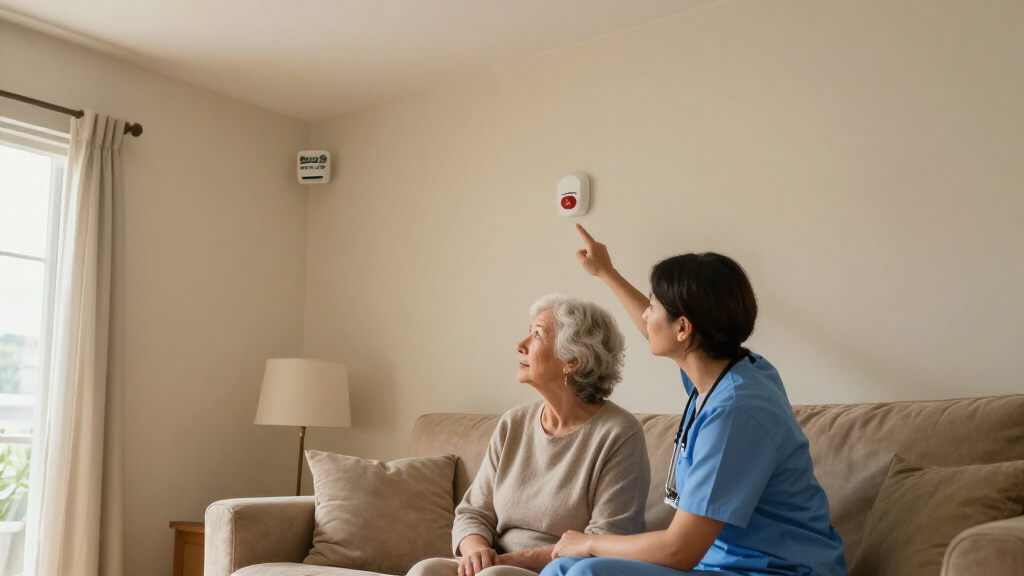
| Wearable alert button | Calling for help after a fall or illness | ✓ Faster access to help | ~ Moderate | Who receives alerts |
| Smart smoke and CO alarms | Audible and remote emergency warnings | ✓ Added reassurance | ~ Moderate | Testing and notifications |
| Door or motion sensors | Unusual inactivity or open-door alerts | ~ Helpful with boundaries | ~ Moderate | Privacy and data access |
Consent first · Use the least intrusive tool that addresses the agreed safety need.
Meet resistance with compassion
Resistance often protects something important: pride, privacy, familiarity, or control. Acknowledge that concern before returning to the safety issue.
Name what matters
“I understand that you want to make your own choices. I respect that, and I’m not trying to take over.”
Offer a small trial
Try one nightlight, one secured rug, or one temporary grab bar. A reversible experiment can feel safer than a permanent change.
Leave room to decide
Unless danger is immediate, pause the discussion. Gentle persistence and repeated listening often work better than pressure.
“I’m bringing this up because I care about you. Could we try one small change and see whether it makes things easier?”
Common family questions
Keep the conversation practical, respectful, and proportional to the concern. When health or mobility changes raise the stakes, professional guidance can help.
How do I avoid causing offense?
Begin with care, ask permission, and use shared language: “Could we look at this together?” Avoid making age or capability the focus.
What should we change first?
Start with bathroom support, stronger lighting, clear pathways, secure rugs, and stable handrails—especially where hazards occur daily.
Can meaningful fixes be affordable?
Yes. Decluttering, moving frequently used items, adding nightlights, securing rugs, and replacing bulbs can all help at modest cost.
When is professional help useful?
Consider an occupational therapist or qualified home-safety assessor after falls, mobility changes, cognitive concerns, or hospital discharge.
Plant seeds of care, not doubts.
The best safety conversation leaves your parent feeling heard, respected, and more confident at home. Progress can be gradual and still be meaningful.
safer at home,
independent for longer
How to Start the Conversation Without Making It Personal
Beginning a safety chat can be simple when you focus on shared concern rather than critique. For example, say, “I noticed some tricky spots in the house—maybe we could look at ways to make things easier for you.” This frames safety as a team effort, not a critique of their habits.
Pick a calm moment, like over coffee or during a quiet weekend. Avoid busy or stressful times. When your tone is gentle and your words show respect, your parents are more likely to listen without feeling judged.
fall prevention safety rails for seniors
As an affiliate, we earn on qualifying purchases.
As an affiliate, we earn on qualifying purchases.
3 Key Safety Changes That Make a Big Difference
| Safety Tip | Why It Matters |
|---|---|
| Install grab bars in bathrooms | Reduces fall risk during transfers and showers, preventing serious injuries. Falls are one of the leading causes of injury among seniors, and many falls occur in the bathroom where surfaces can be slippery and support is minimal. Installing grab bars provides a stable point to hold onto, which can significantly decrease the likelihood of losing balance at critical moments. |
| Improve lighting in hallways and stairs | Helps your parents see obstacles clearly, avoiding trips and falls. Poor lighting is a common hazard that increases the chance of missteps, especially during nighttime. Better illumination allows seniors to recognize hazards early, giving them more time to react and avoid accidents, thereby maintaining their independence longer. |
| Secure loose rugs or remove them altogether | Prevents slips on uneven or slippery surfaces. Rugs that are not securely fastened can easily slide or bunch up, creating a tripping hazard. Removing or securing rugs minimizes this risk, especially on hard flooring where a fall can lead to serious injury. These small adjustments are simple but can have a profound impact on safety. |
These small modifications are like adding safety rails to a country porch—simple but effective in keeping everyone steady and secure. They address common hazards that, if left unmitigated, can lead to falls and injuries, compromising independence and quality of life.
smart home safety devices for elderly
As an affiliate, we earn on qualifying purchases.
As an affiliate, we earn on qualifying purchases.
How to Gently Assess Your Parents’ Home for Hazards
Offer to do a walk-through together. Say, “Can I help you check if everything’s safe? Sometimes a fresh pair of eyes catches things we miss.” Look for tripping hazards, clutter, poor lighting, or uneven floors. Think of it as a friendly inspection rather than a critique.
For example, you might notice a stubbornly loose rug by the front door or a dimly lit stairway. Point out these hazards with a caring tone, like, “This rug could be a slipping hazard—let’s see if we can find a safer spot for it.”
Understanding why these hazards matter is essential. For instance, clutter can block pathways, making navigation difficult, especially if your parent has mobility issues or visual impairments. Poor lighting not only increases the risk of trips but can also cause disorientation, leading to further accidents. By identifying these hazards, you’re helping create a safer environment that supports their independence while reducing the risk of injury.
home safety assessment tools for seniors
As an affiliate, we earn on qualifying purchases.
As an affiliate, we earn on qualifying purchases.
Using Technology for Safer, Smarter Homes
Today’s tech offers simple, effective safety tools. Motion sensors, emergency alert systems, and smart lighting can make a big difference. For example, motion-activated lights turn on automatically when someone enters a room, reducing the chance of missteps in the dark.
According to Huckfarm, these gadgets are not just for convenience—they can alert family members if something’s wrong, like a fall or a sudden health issue. They’re like having a gentle, watchful eye that helps your parents stay independent longer. The tradeoff is that while these devices can be incredibly helpful, they require some initial setup and a bit of learning curve, which can be a barrier for some seniors. However, with patience and support, they can become valuable tools that empower your parents rather than intrude on their independence.
non-slip bathroom mats for elderly
As an affiliate, we earn on qualifying purchases.
As an affiliate, we earn on qualifying purchases.
How to Handle Resistance or Denial with Compassion
If your parents resist safety suggestions, remember: it’s normal. Many seniors feel proud of their independence or worry about losing control. Approach with empathy by saying, “I’m just worried because I care about you—and I want to make sure you’re safe and comfortable.”
Offer small, manageable changes, like adding a nightlight or securing a loose handrail. Sometimes, framing safety upgrades as ways to make their favorite activities easier helps them see the benefits. Recognizing their feelings of pride and independence is key—acknowledging these feelings shows respect and helps build trust.
For example, if they’re hesitant about installing grab bars, suggest trying one temporarily in the shower to see how it feels. This allows them to experience the benefit without feeling they are losing autonomy, which can reduce resistance and foster cooperation.
Frequently Asked Questions
How can I bring up home safety without offending my parents?
Begin with a caring tone and focus on shared concerns. For example, say, “I’ve noticed some things that might make your home even safer. Want to look at them together?” Framing it as teamwork keeps the conversation positive and respectful.
What are the most critical safety modifications I should suggest?
Key upgrades include installing grab bars in bathrooms, improving lighting, securing loose rugs, and removing clutter. These small changes can significantly cut the risk of falls and injuries.
How do I assess my parents’ home for hazards without seeming critical?
Offer to do a walk-through together, making it a team effort. Point out hazards gently, like, “This rug might slip—let’s see if we can find a safer spot for it.” Keeping the tone light helps your parents stay receptive.
Are there affordable ways to improve home safety?
Absolutely. Many safety upgrades—adding nightlights, securing rugs, or installing simple grab bars—are budget-friendly. Sometimes, just decluttering and improving lighting make a big difference without costing much.
When should I consider professional help or assessments?
If your parents have mobility issues, recent falls, or cognitive concerns, a professional home safety assessment can provide tailored recommendations. It’s a caring step that can catch hazards you might overlook.
Conclusion
Talking about home safety with your parents is about planting seeds of care, not planting doubts. Approach with warmth, respect, and patience. When safety becomes a shared goal, everyone feels stronger and more confident at home.
Imagine a cozy country porch—steady, welcoming, and safe. That’s the kind of environment you want to help your parents create for themselves, with love and gentle guidance.
Fall Picks
fall essentials
As an affiliate, we earn on qualifying purchases.