TL;DR

Turn quiet afternoons into listening time
- Thousands of audiobooks, podcasts and originals
- Listen on your phone, tablet or Echo — also offline
- Cancel anytime
The easiest kettles to fill and pour feature wide openings, clear water markings, and well-balanced handles. Choosing one with a simple design reduces spills and strain, making your daily routine safer and more enjoyable.
Imagine pouring boiling water into your favorite mug with ease, without wrestling with a heavy, awkward kettle. That’s what a thoughtfully designed kettle can do for your daily routine. It’s not just about looks—it’s about making a simple task safe, quick, and comfortable.
Whether you’re pouring tea for yourself or filling a pot for cooking, the right kettle makes all the difference. In this guide, you’ll learn what features to look for to choose a kettle that’s easy to fill and pour, especially if grip strength or mobility isn’t what it used to be.
A wide opening and clear water markings make filling easier and safer.
Choose a handle and spout designed for natural, controlled pouring.
Electric kettles with cordless bases and one-touch lids are best for effortless use.
Look for accessible features like low minimum fill and soft grips if grip strength is limited.
Always test pouring flow and drip performance, especially when buying online.
Choosing a Kettle That’s Easy to Fill and Pour
The best kettle is not simply the most powerful or attractive. It is the one that opens easily, shows its water level clearly, feels balanced in the hand, and pours boiling water exactly where you intend.
1 litre ≈ 1 kg
That weight is added to the kettle itself, making capacity and balance crucial to wrist comfort.
Tapered
A defined lip provides a practical balance of flow speed, accuracy, and drip control.
“A good pour should start without an extreme wrist turn—and stop without a final drip.”
The everyday usability testStart with the opening and water gauge
A broad opening reduces awkward positioning beneath the tap and makes cleaning easier. Pair it with high-contrast markings that remain visible from your normal filling position.
Wide, stable access
The lid should open far enough for the tap and stay open securely. A broad mouth also allows easier hand cleaning and descaling.
One-touch lid
A release near the handle reduces small, fiddly movements and makes filling easier when grip strength or dexterity is limited.
High contrast
Clear markings help prevent overfilling, escaping water, and unnecessary weight. Check visibility beneath your usual kitchen lighting.
Indicators on both sides
Dual gauges work for right- and left-handed filling and remain useful regardless of which direction the kettle faces.
Low minimum fill
Boiling one or two cups means less water to carry, faster heating, and less wasted energy during everyday use.
Open interior
A concealed heating element and removable filter simplify cleaning—provided the filter is easy to reinstall correctly.
The indicator must work where you actually fill
A gauge can be large yet ineffective if it sits behind the handle, lacks contrast, or disappears beneath condensation. View it from the tap—not only from the countertop.
Balance the handle, wrist, and spout
A comfortable empty kettle can feel completely different once filled. The handle should distribute pressure, remain cool, and keep the wrist in a natural position throughout the pour.
Find the balance point
A kettle that becomes front-heavy asks the wrist to compensate. Look for a handle positioned far enough from the body for finger clearance but close enough to maintain control.
Everyday suitability by spout
Relative guidance based on control, speed, versatility, and splash risk—not laboratory performance scores.
Choose for the way you pour
Shape suggests how a spout may behave, but it cannot guarantee a drip-free pour. Test with low, medium, and high fill levels whenever possible.
| Spout style | Best for | Pour character | Watch for |
|---|---|---|---|
| Tapered | Tea, coffee, instant foods, and cookware | ✓Controlled stream with practical speed | Some designs pour more slowly than wide spouts |
| Gooseneck | Pour-over coffee and precise brewing | ✓Slow, highly directed flow | Can feel unnecessarily slow for pots and routine cups |
| Wide | Fast emptying and filling larger cookware | ~High-volume stream | Greater splash risk and less fine control |
| Whistling | Traditional stovetop use | ~Audible boil alert | Cap operation, hot metal, steam exposure, and drips |
Electric kettle
Usually the more effortless option for limited grip, strength, or mobility.
- Automatic shutoff and boil-dry protection
- Cordless lifting from a powered base
- Push-button lid and one-handed operation
- Optional temperature and keep-warm controls
Stovetop kettle
Simple and versatile, but generally asks for more lifting, attention, and wrist control.
- No electrical base required
- Material must suit the chosen hob
- Handle and cap may become hot
- No automatic shutoff in standard models
For effortless daily use, prioritize an electric model with a 360-degree cordless base, one-touch lid, low minimum fill, visible gauge, and controlled tapered spout.
Reduce effort at every touchpoint
Accessible features are useful for everyone and especially valuable when grip strength, dexterity, mobility, or vision is limited.
Lightweight body
Compare both empty weight and the likely weight at your normal fill level.
Soft, broad handle
A larger non-slip surface reduces pressure and the need for a tight pinch grip.
One-touch release
A large control near the handle avoids twisting lids or manipulating small catches.
High-contrast gauge
Bold markings and boil indicators reduce guesswork when visual acuity is limited.
Low minimum fill
One-cup boiling reduces lifting effort while conserving time, water, and energy.
Kettle tipper
A tipper or hot-water dispenser can remove most lifting from the pouring action.
From tap to cup, every detail connects
A kettle is only truly easy to use when filling, lifting, pouring, and setting down form one smooth sequence.
See
Read the gauge clearly and select only the water required.
Fill
Open the broad lid with one hand and avoid splashing.
Lift
Use a cool, secure handle with balanced weight distribution.
Pour
Begin at a natural wrist angle and maintain a controlled stream.
Stop
Confirm the stream separates cleanly without running down the body.
One cup
Check whether the minimum marking is readable and whether the kettle pours without an excessive tilt.
Daily load
Assess handle comfort, balance, flow control, and the ability to stop without drips.
Maximum weight
Look for front-heavy handling, lid movement, splash risk, and uncomfortable wrist rotation.
Why a wide opening and clear water levels matter
A wide lid or filling opening is the secret to effortless filling and quick cleaning. When the opening is broad, you can fill the kettle more precisely, reducing the risk of spills and overflows. This is especially important for those with limited dexterity, as it minimizes the need for awkward maneuvering or multiple attempts to fill correctly.
Clear water-level markings are more than just visual aids; they are safety features that help prevent overfilling, which could lead to spills or boiling water escaping. High-contrast markings, visible from your usual filling position, enable quick and accurate measurement, reducing the need for guesswork. This accuracy not only enhances safety but also ensures the kettle functions efficiently, boiling only the amount needed and conserving energy.
In practical terms, a wide opening combined with clear markings minimizes the risk of accidents, such as splashes or burns, and makes cleaning easier — important considerations for maintaining safety and hygiene in your kitchen. The tradeoff might be that larger openings can sometimes make the kettle bulkier, but modern designs often balance size with ease of handling, making the benefits outweigh the inconvenience.
As an affiliate, we earn on qualifying purchases.
Pick the right handle and spout for easy pouring
The handle’s design impacts not just comfort but also safety. A handle that feels natural and secure in your hand reduces the effort needed to lift and pour, which is crucial for avoiding strain or accidental drops. Handles that are broad, soft, and ergonomically shaped distribute pressure evenly, decreasing fatigue during repeated use. When full, a well-designed handle helps maintain a balanced weight distribution, making pouring smoother and less taxing on your wrist, especially for individuals with weaker grip strength.
The spout shape plays a critical role in controlling the flow of water. A tapered, well-defined spout provides precision, allowing you to pour accurately into cups or narrow openings without splashing. This control is vital for safety; uncontrolled streams can cause hot water to spill, leading to burns or messes. For example, a narrow, gooseneck spout offers excellent precision for delicate tasks like pour-over coffee, but might be slower for filling larger pots. Conversely, a wide spout fills quickly but requires careful handling to prevent splashes.
Pouring should feel effortless—start with a steady flow that can be easily stopped without drips or splashes. Proper handle and spout design reduce the need for awkward wrist movements, decreasing the chance of accidents. The tradeoff is that a highly controlled spout might slow down filling, but the gain in safety and precision often outweighs this minor inconvenience, especially for everyday use.
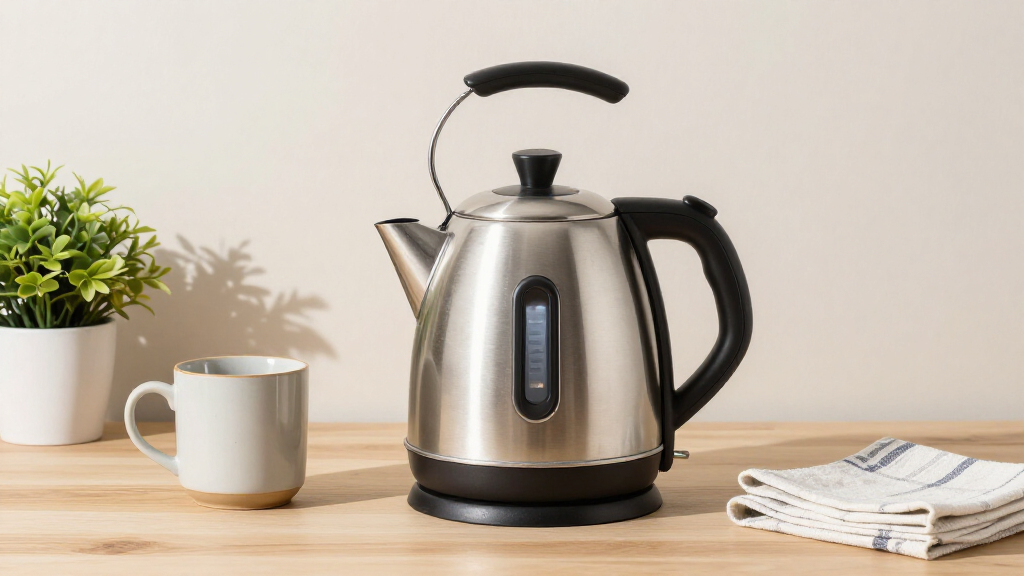
kettle with wide opening and water level indicator
As an affiliate, we earn on qualifying purchases.
As an affiliate, we earn on qualifying purchases.
Comparison of spout styles: Which one suits you?
| Spout Style | Best For | Pros | Cons |
|---|---|---|---|
| Tapered spout | General use, filling cookware | Good control, reduces splashing | Slower pour |
| Gooseneck spout | Pour-over coffee, precise pouring | Very controlled, slow flow | Slow for quick filling |
| Wide spout | Fast filling, large pots | Quick, easy to fill | More splashing risk |
| Whistling spout | Traditional stovetop use | Audible alert, traditional charm | Limited control, potential drips |
Choosing the right spout depends on your specific needs and how you typically pour. For everyday tasks, a tapered spout offers a balance between control and speed, helping prevent accidental spills. If you enjoy precision, especially for brewing or delicate pouring, a gooseneck spout provides slow, controlled flow—though it may be less practical for quick fills. Wide spouts are ideal for filling large pots rapidly but require careful handling to avoid splashes. Understanding these tradeoffs helps you select a spout that aligns with your routines, making daily pouring safer and more efficient.
balanced handle kettle for safe pouring
As an affiliate, we earn on qualifying purchases.
As an affiliate, we earn on qualifying purchases.
Electric vs. stovetop kettles: Which makes filling and pouring easier?
Electric kettles tend to be more user-friendly, especially for those seeking ease of use. They are often cordless, with push-button lids that open fully, reducing the effort needed to fill and pour. Their controlled pouring flow minimizes splashes and spills, which is essential for safety. Many models include automatic shutoff and temperature controls, adding convenience and reducing the risk of accidents or overheating. These features are particularly beneficial for older adults or those with mobility challenges, as they minimize manual effort and enhance safety.
Stovetop kettles, while simple and often more traditional in appearance, require manual handling and careful pouring. The handle may get hot, and the pouring process can demand more wrist strength, especially when the kettle is full. They lack automatic shutoff, so safety depends on user vigilance. However, well-designed stovetop kettles with wide spouts and ergonomic handles can still be quite manageable, especially if you prefer a classic look or don’t mind manual operation. The key consideration is that electric kettles generally streamline the filling and pouring process, reducing physical strain and increasing safety for those with limited strength or dexterity.
cordless electric kettle with soft grip handle
As an affiliate, we earn on qualifying purchases.
As an affiliate, we earn on qualifying purchases.
Accessible features for easier filling and pouring
If grip strength or mobility is limited, selecting a kettle with accessible features can significantly improve safety and ease of use. Lightweight models are easier to lift, while low minimum fill levels reduce the effort needed to handle a full kettle. One-touch lid opening mechanisms eliminate the need to manipulate small buttons or levers, which can be difficult for some users. A large, soft-grip handle provides better control and comfort, reducing the strain on weak or arthritic hands.
High-contrast water markings help prevent overfilling, especially important when visual acuity is limited. Audible or visual boil indicators ensure you are aware when the water is ready, avoiding unnecessary handling or guesswork. For example, a compact, lightweight kettle with a simple push-button lid and wide handle can be a game-changer for seniors or anyone with limited strength. Tippers or hot-water dispensers are alternative tools that can further reduce lifting and pouring effort, making daily routines safer and more manageable.
Latest design tricks to make filling and pouring even better
Modern kettles incorporate innovative features that enhance safety and convenience. Cup-based measurements allow you to boil just the right amount of water, saving energy and reducing waste. Double-wall construction keeps the exterior cooler to the touch and dampens noise, making morning routines quieter and safer. Soft-opening lids gradually release steam, reducing the risk of splashes and burns during opening.
Advanced models include digital temperature controls for precise brewing and quieter operation to avoid startling mornings. Larger, more intuitive buttons and clearer displays improve usability, especially for seniors or those with visual impairments. These improvements make kettles not only more functional but also safer, minimizing the risk of accidents caused by hot steam or heavy handling. However, it’s essential to balance these features with simplicity—overly complex models can be difficult for some users, so choose what truly enhances your routine without adding unnecessary complication.
What you should check before buying a kettle
Before purchasing, consider how easy it will be to fill and pour your chosen kettle. Check if the lid opens easily with one hand or if it requires two. Make sure the kettle fits comfortably under your tap without awkward positioning. Verify that the water level indicator is high-contrast and visible without leaning over or straining. When lifting, ensure the handle provides a secure grip and that it’s comfortable to hold—even when full. Test the pouring action: does it start smoothly without requiring excessive wrist movement? Does the flow stop cleanly without drips or splashes? Consider the weight of the kettle when full, as heavier models can be difficult for limited strength or mobility.
Read reviews carefully—look for mentions of drips, lid issues, or heaviness. Examine product images and specifications for details on handle design, minimum fill levels, and overall weight. These considerations help you select a kettle that will be safe, comfortable, and reliable in your daily routine.
Frequently Asked Questions
What type of kettle is easiest to fill?
A lightweight electric kettle with a wide, push-button lid is typically easiest. Filling through the spout can also work well if the opening is broad enough and designed for pouring water in safely.What type is easiest to pour?
A balanced kettle with a high, comfortable handle and a tapered spout offers the best control. It starts pouring smoothly without requiring wrist twists and stops cleanly without drips.Is a gooseneck kettle easier to pour?
It provides slow, precise control—great for pour-over coffee—but it pours more slowly, which might be less practical for quick filling or everyday use.What kettle is best for arthritis or weak hands?
Look for a small, lightweight kettle with one-touch lid opening, a large soft grip handle, and automatic shutoff. A tipper or hot-water dispenser can also make pouring safer and easier.Should I choose a smaller kettle?
A smaller kettle is lighter and encourages boiling only what you need. It may need more frequent refilling but offers easier handling for limited strength or mobility.Conclusion
When it’s easy to fill and pour, your mornings become calmer. A well-designed kettle is a simple pleasure—reducing spills, strain, and frustration. Think about your daily routines and pick features that make your life easier, one pour at a time.
Remember, a thoughtfully chosen kettle isn’t just about boiling water; it’s about making a small daily task safe, smooth, and satisfying. After all, a good pour can start your day with a little more country comfort.
Halloween Picks
halloween
As an affiliate, we earn on qualifying purchases.