
TL;DR

Turn quiet afternoons into listening time
- Thousands of audiobooks, podcasts and originals
- Listen on your phone, tablet or Echo — also offline
- Cancel anytime
Easy-grip grooming tools work because they reduce the grip strength and wrist rotation your hands need to finish a task — thicker handles, lighter weight, and angled heads do most of the work. Test any tool with the jar-lid rule: if you can hold it comfortably for 60 seconds without a death grip, it passes. Foam sleeves and cylindrical handles over 1.25 inches wide are the cheapest, most reliable upgrades.
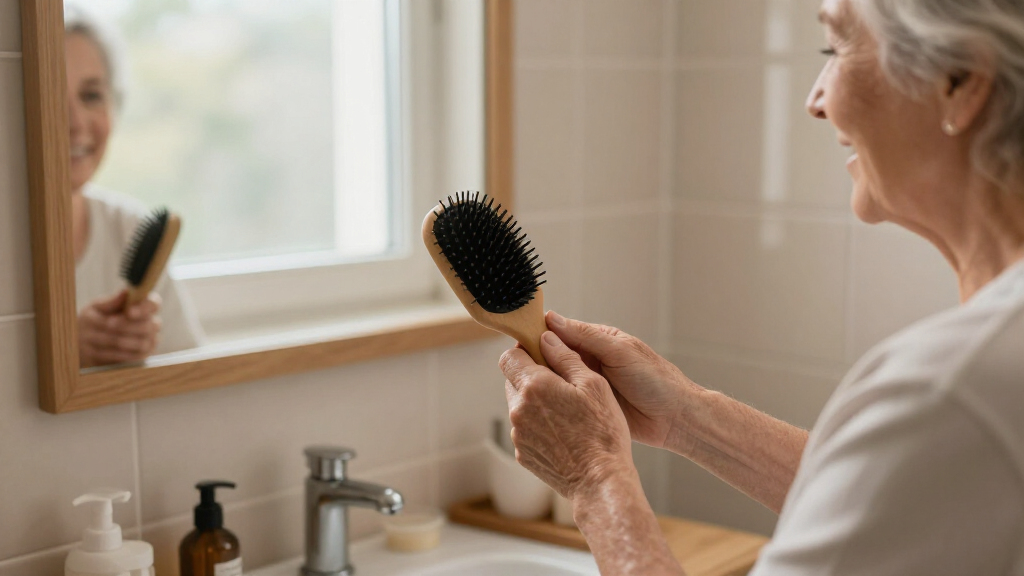
The brush slips out of your hand for the third time before you’ve finished the back of your head. By the time you set it down, your fingers ache more than they did when you started. If that sounds like a Tuesday morning you know, the problem isn’t your hands — it’s the handle.
Most grooming tools are designed for showroom shelves, not for real morning routines. Skinny metal handles, slippery chrome, awkward angles. They ask your grip to work harder than it should for a job that ought to be effortless.
In this guide, you’ll learn what actually makes a tool easy to hold (it’s three things, and none of them are expensive), how to test any tool in ten seconds at the store, and which small swaps make the biggest difference for hair, shaving, and nail care. No gadgets to fear, no fuss — just comfortable tools that let you get on with your day.
Choose handles 1.25–1.5 inches thick — a cylinder that wide lets your whole hand share the work instead of a fingertip pinch.
Run the 60-second hold test before buying: white knuckles or hand-shifting means the tool fails, no matter how pretty it looks.
Weighted razors with fat rubber handles let gravity press the blade, so your hand only steers.
A few dollars of foam tubing can retrofit your existing brush, comb, and razor handles in one afternoon.
If pain or dropping objects continues regardless of tools, an occupational therapist can match adaptations to your hands — this is routine, not a last resort.
Choosing Easy-Grip Grooming Tools for Daily Care
The brush slips out of your hand for the third time before you’ve finished the back of your head. The problem isn’t your hands — it’s the handle. Thicker handles, lighter weight, and angled heads do most of the work, and none of them are expensive.
Why Skinny Handles Make Simple Tasks Hard
A skinny handle forces a pinch grip — small muscles that tire fast. A thick handle lets your whole hand share the work. Think of carrying a full water bucket by the wire bail versus by a thick wooden yoke: same weight, completely different effort. Add wrist rotation for reaching the back of your head, and standard tools ask too much. Occupational therapy guidance points to the same three fixes: built-up handles, non-slip surfaces, and extended reach. Nothing exotic — just better shapes.
Thick, Cylindrical Handles
A cylinder about the width of a soup can lets your fingers relax around it instead of clamping. Some brushes come this way; others can be built up with foam tubing.
Non-Slip Grip Surface
Matte rubber or closed-cell foam holds steady with wet hands or lotion. Shiny metal and smooth plastic are the worst offenders — pretty on the shelf, treacherous at 7 a.m.
Light & Angled
Under 6 ounces for anything held overhead. Angled or bent-neck razors and brushes keep your wrist straight instead of cranking it sideways.
✗ Wire-Bail Tools (Hard)
- Slim chrome handles under ½ inch across
- Polished metal and smooth plastic that slide when wet
- Heavy brushes held above the shoulders for minutes
- Straight necks forcing sharp wrist angles
✓ Wooden-Yoke Tools (Easy)
- Fat 1.25″+ cylinders your whole hand wraps
- Rubber and foam that grip with lotion or water
- Featherweight bodies that disappear in your hand
- Angled necks that move work from wrist to tool
How to Test Any Tool in Ten Seconds
The 60-second hold: pick it up, hold it the way you’d actually use it, and count to sixty. If your knuckles go white or you reposition your hand, it fails. Here’s the full test, in order:
The Hold
Grip as you would at home for 60 seconds. A comfortable grip should feel like resting your hand, not wringing a washcloth.
The Wet Test
Dampen your fingers if you can, or imagine your morning routine. Lotion and water change everything.
The Reach Test
Mimic the motion — brush the air behind your head. If your wrist folds at a sharp angle, the tool asks too much.
The Weight Test
Hold it overhead at arm’s-length height for the full minute. Heaviness reveals itself fast.
If you have to think about your grip, the tool is wrong. A good handle disappears in your hand.
Tool by Tool: What to Look For
Each grooming task rewards a different handle style. A weighted razor lets gravity press the blade so your hand only steers; scissors-style nail clippers turn a hard pinch into an easy squeeze — the same leverage principle as good kitchen shears.
| Tool | Look For | Why It Helps |
|---|---|---|
| Hairbrush | Wide palm-grip handle, 1.25″+ diameter, lightweight body | Brush longer without fatigue; some have a horizontal palm-held bar you push instead of swing |
| Comb | Thick built-up handle or foam sleeve | Keeps fingers from pinching on a narrow spine |
| Razor | Weighted, fat rubber handle with angled neck | Weight does the work; grip stays relaxed around a wide barrel |
| Nail clippers | Wide lever or clamp-style with large handles | Multiplies finger pressure so you don’t need to squeeze hard |
| Toothbrush | Built-up grip or sliding sleeve | Cushions the joint; electric brushes with chunky handles are often easier |
| Nail file | Extra-wide emery board or cushioned file | Bigger surface = steadier control, fewer slips |
The Handle-Width Sweet Spot
A standard hairbrush handle is often under half an inch — a fingertip pinch for five to ten minutes of brushing. Compare grip effort across handle widths:
Budget Fixes That Cost Less Than Lunch
You don’t need to replace everything. One pack of ribbed foam tubing does the whole bathroom: cut a four-inch piece, slide it onto your slim brush handle, and it’s instantly a cushioned one-inch grip. If it slides, wrap a rubber band at each end or add double-sided tape underneath.
Foam Tubing
A few dollars a pack. Slips over most brush, comb, and razor handles in one afternoon.
Plumber’s Grip Tape
The stretchy, tacky kind tennis players use adds non-slip texture to anything smooth.
Terrycloth Wristband
A wristband or ace wrap around a handle adds softness and width for nearly nothing.
Suction-Base Nail File
Mounted to the counter, one hand does nothing at all — just run your nail across it.
Key Takeaways
Choose handles 1.25–1.5 inches thick — a cylinder that wide lets your whole hand share the work instead of a fingertip pinch.
Run the 60-second hold test before buying: white knuckles or hand-shifting means the tool fails, no matter how pretty it looks.
Weighted razors with fat rubber handles let gravity press the blade, so your hand only steers.
A few dollars of foam tubing can retrofit your existing brush, comb, and razor handles in one afternoon.
If pain or dropping objects continues regardless of tools, an occupational therapist can match adaptations to your hands — this is routine, not a last resort.
Why Skinny Handles Make Simple Tasks Hard
Easy-grip tools matter because a skinny handle forces a pinch grip, and a pinch grip uses small muscles that tire fast — while a thick handle lets your whole hand do the work. That’s the whole secret. A standard hairbrush handle is often under half an inch across, which means your thumb and two fingers carry the entire load for five or ten minutes of brushing.
Think of it like carrying a full water bucket by the wire bail versus by a thick wooden yoke. Same weight. Completely different effort. Your hands feel the same difference.
There’s a second culprit too: wrist rotation. Reaching the back of your head or trimming a thumbnail asks your wrist to twist into positions it doesn’t love anymore. Angled and long-handled tools move that work from the wrist to the tool itself.
According to guidance from occupational therapy resources on adaptive equipment, the most common fixes for difficult grooming are exactly these: built-up handles, non-slip surfaces, and extended reach. Nothing exotic. Just better shapes.
ergonomic nail clippers for seniors
As an affiliate, we earn on qualifying purchases.
As an affiliate, we earn on qualifying purchases.
The Three Features That Do All the Work
Easy-grip grooming tools come down to three features: handle thickness (aim for 1.25–1.5 inches), non-slip texture (rubber or foam, never polished chrome), and weight under about 6 ounces for anything you hold overhead, like a brush or dryer.
Here’s how each one earns its keep:
- Thick, cylindrical handles. A cylinder about the width of a soup can lets your fingers relax around it instead of clamping. Some brushes and combs come this way; others can be built up with foam tubing.
- Grip texture. Matte rubber or closed-cell foam holds steady even with wet hands or lotion. Shiny metal and smooth plastic are the worst offenders — pretty to look at, treacherous at 7 a.m.
- Light weight. A heavy brush held above your shoulders for five minutes is a workout nobody asked for. Compare weights in your hand before you buy.
- An angled or extended head. Razors and brushes with a bent neck keep your wrist in a friendly, straight position instead of cranking it sideways.
My neighbor swapped her slim chrome brush for a wooden one with a fat, smooth handle she’d had since the 1970s — dug out of a drawer, costing nothing. Her words: “Why did I ever stop using this?” Sometimes the easy-grip tool is already in your house.
easy-grip hairbrush for limited dexterity
As an affiliate, we earn on qualifying purchases.
As an affiliate, we earn on qualifying purchases.
How to Test Any Tool in Ten Seconds
You can judge any grooming tool with a simple in-store test I call the 60-second hold: pick it up, hold it the way you’d actually use it, and count to sixty. If your knuckles go white or you reposition your hand, it fails.
Here’s the full test, in order:
- The hold. Grip the tool as you would at home for 60 seconds. No clenching allowed — a comfortable grip should feel like resting your hand, not wringing a washcloth.
- The wet test. If you can, dampen your fingers at a display sink or imagine your morning routine. Lotion and water change everything.
- The reach test. Mimic the motion — brush the air behind your head, or reach as if toward your toes with the comb. Watch your wrist. If it folds at a sharp angle, the tool is asking too much.
- The weight test. Hold it overhead at arm’s-length height for the full minute. Heaviness reveals itself fast.
Rule of thumb from Huckfarm: if you have to think about your grip, the tool is wrong. A good handle disappears in your hand.
That ten seconds saves you from tools that look fine on the shelf and betray you by Wednesday.
non-slip grooming tools for arthritis
As an affiliate, we earn on qualifying purchases.
As an affiliate, we earn on qualifying purchases.
Tool by Tool: What to Look For in Each
Each grooming task rewards a different handle style, and this quick comparison shows the practical differences at a glance.
| Tool | Look For | Why It Helps |
|---|---|---|
| Hairbrush | Wide palm-grip handle, 1.25″+ diameter, lightweight body | Lets you brush longer without hand fatigue; some have a horizontal “palm-held” bar you push instead of swing |
| Comb | Thick built-up handle or foam sleeve | Keeps fingers from pinching on a narrow spine |
| Razor | Weighted, fat rubber handle with angled neck | Weight does the work; grip stays relaxed around a wide barrel |
| Nail clippers | Wide lever or clamp-style with large handles | Multiplies finger pressure so you don’t need to squeeze hard |
| Toothbrush | Built-up grip or sliding sleeve | Cushions the joint; electric brushes with chunky handles are often easier |
| Nail file | Extra-wide emery board or cushioned file | Bigger surface = steadier control, fewer slips |
One note on razors: a weighted razor lets gravity press the blade, so your hand only steers. Many people find this single change makes shaving comfortable again.
For nail clippers, look for the type with long levers or a scissors-style handle. They turn a hard pinch into an easy squeeze — the same leverage principle as good kitchen shears.
As an affiliate, we earn on qualifying purchases.
Budget Fixes That Cost Less Than Lunch
You don’t need to replace everything. Foam tubing — the ribbed, colorful kind sold for building up utensil handles — slips over most brush, comb, and razor handles and costs a few dollars for a pack. One pack does the whole bathroom.
Cut a piece about four inches long, slide it on, and instantly your slim brush handle becomes a cushioned one-inch grip. If it slides, wrap a rubber band at each end or add a strip of double-sided tape underneath.
Other cheap wins:
- A terrycloth wristband or ace wrap around a handle adds softness and width.
- Plumber’s grip tape (the stretchy, tacky kind tennis players use) adds non-slip texture to anything smooth.
- A suction-base nail file mounted to the counter means one hand does nothing at all — you just run your nail across it.
My own bathroom cabinet holds a comb wearing the same piece of blue foam for six years now. Washed, dried, still going. Country living has always been about making do well, and this is that tradition in miniature.
When Your Hands Need More Than a Better Handle
Sometimes a better handle isn’t the whole answer, and it’s honest to say so. If your hands are painful, swollen, stiff every morning, or regularly drop things regardless of the tool, that’s worth a conversation with your doctor or an occupational therapist — the specialists who match tools to real hands for a living.
This isn’t about giving anything up. It’s the opposite. A professional can point you toward exactly the right adaptations, sometimes through loan programs where you try before you buy. According to the American Occupational Therapy Association, adaptive equipment consultations are one of the most requested services for maintaining independence in daily routines.
In the meantime, better tools remain worth having — they just work best alongside good information, not instead of it.
A Morning Routine That Flows Again
Here’s what a comfortable routine looks like when the tools cooperate — five minutes, no drama:
- Brush hair with a wide-handled brush, working from the ends up, resting your elbow on the counter for the back sections.
- Shave or freshen up with a weighted razor, letting its weight do the pressing.
- Trim nails with a clamp-style clipper set on a towel on the table — seated, elbows supported, good light overhead.
- Smooth edges with a wide emery board or a suction-mounted file.
Notice the quiet additions: supported elbows, seated positions, good lighting. The tool is half the equation; positioning is the other half. A towel folded under your forearm turns any chair into a grooming station.
And keep a hook by the mirror so tools hang at hand height, handles facing out. Reaching into a drawer to fish out a slipping brush undoes all your good shopping.
Frequently Asked Questions
What diameter should an easy-grip handle be?
Aim for 1.25 to 1.5 inches (about 3–4 cm). That width lets your fingers wrap around in a relaxed fist rather than pinching. Anything slimmer can be built up with foam tubing to reach that range.
Are easy-grip grooming tools expensive?
No. Adaptive brushes, razors, and clippers typically cost the same as ordinary quality versions, and a pack of foam tubing — enough for your whole bathroom — runs just a few dollars. Often an old wide-handled tool already in your drawer works better than anything new.
What’s the difference between a built-up handle and a non-slip handle?
A built-up handle is thicker, which reduces the grip strength needed. A non-slip handle has rubber, foam, or textured coating, which stops slipping when hands are wet. The best tools have both — thickness plus texture.
Can foam tubing go on any tool handle?
Almost any straight handle — brushes, combs, razors, toothbrushes. It comes in different inner diameters, so measure your handle or buy an assorted pack. Secure it with a rubber band or double-sided tape if it slides, and replace it when the foam compresses flat.
Should I see a professional about grip difficulties?
If your hands are painful, swollen, or dropping things even with well-chosen tools, talk to your doctor or an occupational therapist. They can recommend specific adaptations — and many areas offer loan programs so you can try equipment before buying. This article shares general tips, not medical advice.
Conclusion
Comfortable grooming comes down to one decision made over and over: pick the tool your hand forgets it’s holding. Thick, textured, light, and angled — those four words will serve you in every aisle and every drawer.
Start small. Slip a piece of foam on your hairbrush tonight and see how tomorrow morning feels. The best changes are the quiet ones — the brush that stays put, the razor that glides, the routine that flows like it used to, back when nobody had to think about a handle at all.
Halloween Picks
halloween
As an affiliate, we earn on qualifying purchases.