
TL;DR

Turn quiet afternoons into listening time
- Thousands of audiobooks, podcasts and originals
- Listen on your phone, tablet or Echo — also offline
- Cancel anytime
Dressing aids are practical tools designed to help with dressing tasks, especially for those with limited mobility. Recent innovations focus on ergonomic, smart, and discreet designs that save time and effort, promoting independence every morning.
Imagine waking up and facing a mirror with a clutter of buttons, zippers, and tangled shoelaces. Mornings can feel like a small mountain for many older adults or people with limited dexterity. But what if a few simple tools could turn that mountain into a gentle hill?
In this guide, you’ll discover how dressing aids can transform your mornings. These little helpers aren’t just about convenience—they’re about dignity, safety, and reclaiming independence in daily routines. Let’s explore how the right tools make dressing smoother, quicker, and less frustrating.
Identify your dressing challenges and pick aids tailored to those tasks.
Ergonomic, lightweight, and discreet aids make daily routines more comfortable.
Practice using aids to build confidence and maximize their benefits.
Modern designs blend style and function—no need for bulky, clinical tools.
Start with one or two aids and expand as you discover what works best for you.
Dressing Aids That Make Mornings Simpler
Dressing aids are practical tools for buttons, zippers, socks, shoes, and hard-to-reach clothing. For older adults, people with arthritis, post-surgery recovery needs, or limited dexterity, the right aid can turn a frustrating morning routine into a calmer, safer start.
Well-chosen aids can cut dressing time by up to 50% while protecting confidence and dignity.
Small tools for the hardest morning moments
The most useful dressing aids remove bending, pinching, pulling, and fine hand movements from routine tasks without making the user feel dependent.
Sock aids reduce bending
A flexible tube guides socks over the foot, helping users avoid painful bending, overstretching, or balance risk.
Button and zipper aids improve grip
Large handles, loops, and magnetic zipper pulls make small closures easier for stiff, shaky, or painful hands.
Hooks and reachers extend range
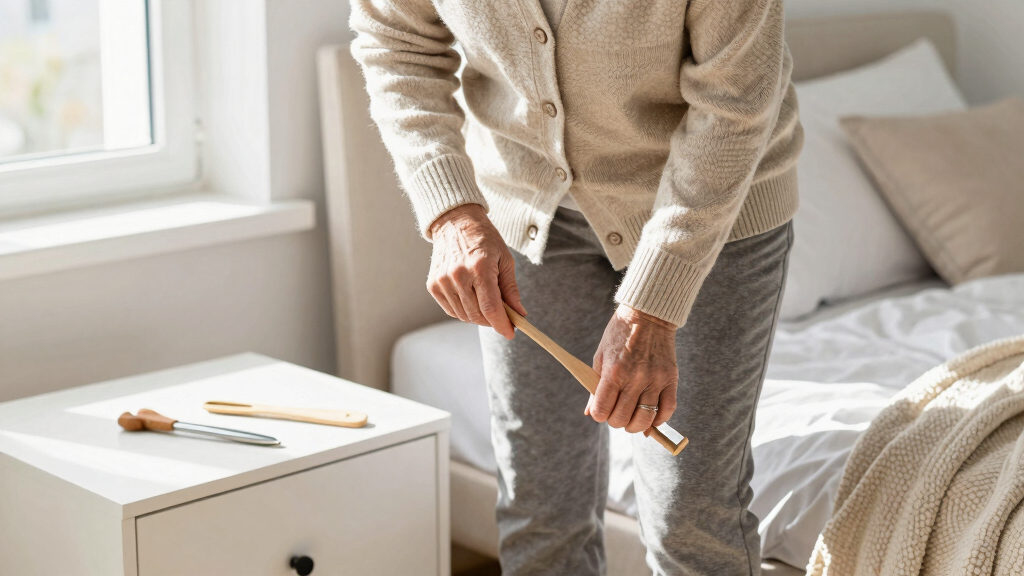
Long-handled tools help grasp shirts, pants, shoes, or dropped garments without bending or twisting.
No-tie laces save repeated effort
Elastic or magnetic laces keep shoes secure while allowing a quick step-in fit with fewer hand movements.
Velcro and magnets simplify fastening
Adaptive closures can replace buttons or zippers while still looking polished and everyday.
Practice turns tools into routine
A short learning period helps each aid feel natural, safer, and less like a special workaround.
A four-step path from frustration to flow
The best aid is not always the most advanced one. It is the one that fits the task, the clothing, the user’s grip, and the real pace of the morning.
Name the hard task
Socks, buttons, zippers, shoes, or reaching each call for a different support.
Match the aid
Choose a sock aid, zipper pull, reacher, closure swap, or no-tie lace.
Check comfort
Look for the right handle size, grip texture, weight, and portability.
Practice calmly
A few unrushed tries build confidence and reveal what truly works.
Popular dressing aids side by side
Use this quick comparison to pair the right tool with the part of dressing that causes the most effort or discomfort.
| Feature | Sock Aids | Button & Zipper Aids | Reachers & Hooks | No-Tie Laces |
|---|---|---|---|---|
| Ease of use | ✓Slides socks on with less bending | ✓Improves fine-motor fastening | ~May need a little coordination | ✓Quick slip-on shoe routine |
| Best for | Stockings, high socks, post-surgery recovery | Shirts, jackets, pants, coats | Clothing on floors, shelves, beds, or chairs | Sneakers and casual shoes |
| Design features | Flexible tube, non-slip pull straps | Magnetic closures, ergonomic handles | Long handle, textured grip, hook tip | Elastic stretch, magnetic or toggle closure |
| Limitations | ~Fit varies by sock thickness | ~Small buttons may still be tricky | ✗Not ideal for delicate garments | ~Formal shoes may need alternatives |
Where modern design is making the biggest difference
Recent developments focus on comfort, hygiene, discretion, and adjustable support rather than bulky clinical tools.
Balance simplicity with support
More features can help, but too much complexity can reduce daily use. The sweet spot is a tool that feels intuitive after a short practice period.
Margaret’s calmer morning
Margaret, 78, struggled with socks and zippers. After adding a sock aid and magnetic zipper pulls, she dressed faster, felt fewer aches, and had more energy for coffee and the garden instead of battling her clothes.
- 1Start specific. Choose the one task that creates the most pain, strain, or delay.
- 2Prefer ergonomic handles. Larger, textured grips help when hand strength is limited.
- 3Keep it discreet. Sleeker designs can support independence without feeling medicalized.
- 4Ask for training. Occupational therapists can demonstrate safer, more effective use.
How one aid changes the whole morning
The effect is bigger than a single fastened button or pulled-on sock. The right tool protects energy, confidence, and safety.
Quick answers before you buy
Most dressing aids are simple, affordable, and widely available, but the best choice depends on the person and the clothing they use every day.
Who benefits most?
People with arthritis, limited mobility, age-related dexterity changes, disability, or post-surgical recovery needs.
Are they hard to learn?
Most are intuitive. A few calm practice sessions or occupational therapy guidance can make use safer and smoother.
Do they work with all clothing?
They work best with socks, shoes, shirts, jackets, pants, buttons, and zippers. Delicate garments may need gentler handling.
Where can I find them?
Medical supply stores, pharmacies, online retailers, and occupational therapists are common sources. Coverage varies by program and country.
What Are Dressing Aids and Why Do They Matter?
At their core, dressing aids are specially designed tools that help you put on clothes and shoes with less effort. They matter because they support independence, especially if your hands wobble or your joints ache. For example, a sock aid can save you from bending and straining, making morning dressing less of a chore.
But beyond just easing effort, these aids have a profound impact on your psychological well-being. When you can dress yourself without assistance, it reinforces your sense of autonomy and dignity. Conversely, relying on caregivers can sometimes feel burdensome or diminish self-esteem. The tradeoff lies in choosing aids that provide enough support without making you feel dependent or labeled as ‘disabled.’ The key is to find tools that empower rather than stigmatize, fostering a mindset of self-reliance. According to Huckfarm, dressing aids are often recommended by occupational therapists to help older adults stay active and confident at home.
As an affiliate, we earn on qualifying purchases.
The Most Popular Dressing Aids and How They Help
Here’s a quick look at the main tools that make dressing easier:
- Sock and stocking ariers: Help slide socks on without bending or overstretching. Imagine slipping your foot into a soft, flexible tube that gently pulls the sock up your leg.
- Button and zipper aids: Larger handles or magnetic closures make fastening clothes a breeze, even with arthritis.
- Dressing hooks and reachers: Long-handled tools that grasp shirts, pants, or shoes, letting you avoid bending or stretching.
- Elastic and no-tie shoelaces: Replace traditional laces with stretchy or magnetic options for quick slips and secure fit.
- Velcro and magnetic closures: Swap buttons or zippers for easy-to-fasten strips that save time and effort.
These aids are not just about convenience—they can significantly influence your confidence and safety. For example, a friend with rheumatoid arthritis found a magnetic zipper pull so helpful that she could dress herself in minutes instead of struggling for ten. The implication is clear: well-chosen aids can reduce frustration, prevent injury, and foster independence, but they also require consideration of individual needs and preferences to avoid over-reliance or discomfort.
As an affiliate, we earn on qualifying purchases.
How Modern Design Makes Dressing Aids Even Better
Recent advances focus on comfort, ease, and style. Ergonomic handles with textured grips prevent slipping, even if your hands are shaky. Lightweight, antimicrobial materials keep aids clean and comfortable.
Some aids now feature adjustable lengths or interchangeable parts, customizing them for your specific needs. Sleek, discreet designs blend seamlessly into your wardrobe—no more bulky, medical-looking tools cluttering your closet.
For instance, a new sock aid uses a flexible, antimicrobial tube that’s gentle on skin and easy to clean. These thoughtful touches turn a simple tool into a trusted companion every morning. The tradeoff is balancing simplicity with functionality—more adjustable features can sometimes add complexity, so choosing aids that match your comfort level is essential for consistent use and confidence.
As an affiliate, we earn on qualifying purchases.
Choosing the Right Dressing Aid: A Quick Guide
Picking the perfect dressing aid depends on your specific challenges. Here’s a simple step-by-step approach:
- Identify your difficult tasks: Do socks, buttons, or shoes slow you down? Recognizing your primary challenges helps target the most effective tools.
- Match aids to your clothing: Use sock aids for stockings, zipper pulls for jackets, or no-tie laces for shoes. This tailored approach ensures each aid addresses a specific need, reducing unnecessary complexity.
- Consider grip and size: Larger handles help if grip strength is limited, while compact aids suit those who prefer portability. The tradeoff involves comfort versus portability—select what best fits your lifestyle and physical condition.
- Test a few options: Try different tools to see which feel natural and comfortable. Sometimes, what works in theory may not suit your daily routine, so hands-on experience is key to building confidence.
For example, someone with arthritis found a larger zipper pull and elastic shoelaces made mornings faster and less painful. The right choice can reduce morning stress and help you start your day on a positive note.
As an affiliate, we earn on qualifying purchases.
Compare Popular Dressing Aids Side-by-Side
| Feature | Sock Aids | Button & Zipper Aids | Reachers & Hooks |
|---|---|---|---|
| Ease of use | Slides socks on with minimal bending | Helps fasten buttons and zippers easily | Grasping clothing or shoes without bending |
| Best for | Stockings, high socks | Shirts, jackets, pants | Shirts, shoes, reaching high shelves |
| Design features | Flexible tube, non-slip grip | Magnetic closures, ergonomic handles | Long handle, textured grip |
Real-Life Success: How Dressing Aids Changed a Morning Routine
Meet Margaret, 78, who struggled with her zippers and socks every morning. After trying a few dressing aids—like a sock aid and magnetic zipper pulls—her routine transformed. Now, she gets dressed faster, with fewer aches and more confidence.
She describes her mornings as calmer, less rushed. Small tools, big difference. Every morning now feels like a chance to enjoy her coffee and her garden instead of battling her clothes.
Frequently Asked Questions
Who can benefit most from dressing aids?
Anyone with arthritis, limited mobility, or recovering from surgery can benefit. These tools are designed to reduce effort and promote independence for all levels of ability.How do I pick the right dressing aid for me?
Start by identifying which dressing tasks are hardest—like socks or buttons. Match aids to those tasks, considering handle size, weight, and ease of use. Trying a few options can help find what feels most natural.Are dressing aids difficult to learn to use?
Most are straightforward and intuitive. A little practice helps, and many aids come with simple instructions. With patience, using them becomes second nature.Can dressing aids be used with all types of clothing?
They work well for socks, shoes, shirts, and pants with buttons or zippers. But some very delicate or special garments may require different handling.Where can I find these aids?
They’re available at medical supply stores, pharmacies, online retailers, and through occupational therapists. Many are covered by health insurance, depending on your country.Conclusion
Morning dressing doesn’t have to be a daily battle. With the right aids, you can turn a chore into a graceful start to the day. Think of these tools as your companions—supporting your independence with every step.
Remember, a simple change today can bring more dignity and ease tomorrow. So, choose a dressing aid, give it a try, and enjoy mornings filled with calm and confidence. Your day begins with how you dress—make it a good one.
Halloween Picks
halloween
As an affiliate, we earn on qualifying purchases.