TL;DR

Turn quiet afternoons into listening time
- Thousands of audiobooks, podcasts and originals
- Listen on your phone, tablet or Echo — also offline
- Cancel anytime
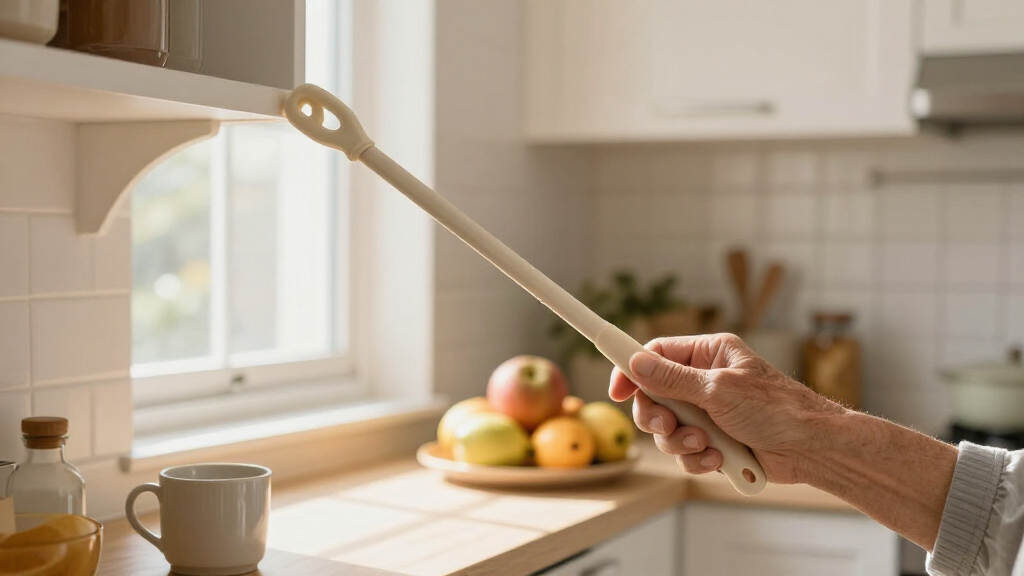
A long-handled reacher helps you pick up objects from floors, shelves, and behind furniture without bending or overreaching. It supports independence, reduces strain, and lowers fall risk—making daily chores safer and simpler.
Imagine reaching for a book on the top shelf without stretching on tiptoe or bending over awkwardly. That’s the magic of a long-handled reacher. This simple tool can turn a struggle into a breeze, helping you stay independent and safe in your daily routines.
Whether you’re recovering from surgery, managing arthritis, or just want to avoid unnecessary strain, a reacher is a quiet hero in the background. It’s not about replacing help — it’s about making your everyday life easier, with a little country charm.
Select a reacher that matches your typical tasks — don’t overshoot with extra length if control matters.
Look for features like soft triggers, textured jaws, and rotating heads to improve usability.
Use your reacher safely: avoid heavy, hot, or dangerous objects, and inspect it regularly for wear.
Having two reachers — one shorter for precision, one longer for reach — can cover most needs.
Modern designs with lightweight materials and ergonomic features make reachers easier and more comfortable to use.
How a Long-Handled Reacher Makes Life Easier
A little extra reach can remove a lot of unnecessary strain. A lightweight grabber helps retrieve everyday objects from floors, shelves, washing machines, and awkward corners—without risky bending, climbing, or overreaching.
Lower fall risk cited in the supplied research brief when risky bending and stretching are reduced.
Less bending, tiptoe stretching, and chair climbing.
A hand-operated trigger closes the gripping jaws.
A convenience tool—not a cane or substitute for safe mobility.
Small tool, meaningful freedom
A reacher extends the arm while helping the body stay in a more comfortable position. That can make routine chores feel safer, simpler, and more private for people managing pain, limited mobility, or post-surgery restrictions.
Do more without waiting
Retrieve dropped clothes, toiletries, paper, or lightweight household items without asking someone else each time.
Protect painful areas
Reduce deep bending and awkward twisting that may aggravate the back, hips, knees, shoulders, or arthritic joints.
Avoid risky stretches
Bring objects within reach instead of standing on tiptoe, leaning too far, or climbing onto unstable furniture.
Respect movement limits
After hip, knee, or back surgery, a reacher can help with daily tasks when bending or twisting is temporarily restricted.
Extend the comfort zone
Wheelchair and chair users can access nearby floors, higher surfaces, and objects that sit just beyond arm’s length.
Keep hands away
Pick up socks, garden debris, litter, and other unpleasant—but nonhazardous—items without direct contact.
From awkward object to easy retrieval
The benefit comes from changing the movement—not merely grabbing the item. Keep your posture steady, approach with control, and bring the object slowly toward the body.
Spot the lightweight object
Align the jaws carefully
Squeeze with gentle pressure
Bring it close without leaning
What matters in a well-designed reacher
Choose around your hands, posture, and most common tasks. Extra length can add range, but comfort and control are often more valuable than maximum reach.
Textured rubber jaws
Help hold smooth objects securely and reduce repeat attempts.
Low-force trigger
Requires less hand effort for arthritis or reduced grip strength.
Rotating head
Approaches objects horizontally or vertically in tight spaces.
Magnetic tip
Retrieves small metal items such as pins, clips, and some keys.
Light, balanced shaft
Reduces wrist and arm fatigue during repeated household tasks.
Lock, fold, or hook
Adds hands-free holding, easier storage, or help with dressing.
Choose reach you can comfortably manage
The ideal reacher should touch the floor without forcing the shoulder upward or making the user lean. Height, arm strength, seating position, and task type all influence the best fit.
Shorter & easier to steer
Useful for dressing, tabletop tasks, socks, pens, coins, and close-range retrieval where jaw placement matters.
Longer & farther reaching
Useful for floor pickups, high shelves, deep washing machines, and reaching from a wheelchair or seated position.
| Typical task | 26″ short | 32″ long | Feature to prioritize |
|---|---|---|---|
| Pick up a pen or coin | ✓ | ~ | Narrow, textured jaws |
| Pull up clothing | ✓ | ~ | Hook or dressing post |
| Retrieve from the floor | ~ | ✓ | Lightweight shaft |
| Reach a high shelf | ✗ | ✓ | Rotating, secure jaws |
| Use with weak grip | ✓ | ~ | Soft trigger or jaw lock |
Hot cookware or liquids
A weak grip or sudden spill can cause serious burns.
Glass, knives, or sharps
Use protective equipment and an appropriate disposal method.
A cane or balance aid
The shaft and jaws are not designed to bear body weight.
Unstable stacked items
Objects above or behind the target may fall unexpectedly.
Hinges, jaws, and grips
Replace a reacher that slips, bends, cracks, or feels loose.
Protect posture and balance
Stop if reaching makes you lean, twist, or lose stability.
Five takeaways
Match length to the task. Avoid unnecessary length when close control matters.
Prioritize comfortable controls. Soft triggers, textured jaws, and rotating heads improve usability.
Keep hazardous objects off-limits. Reachers are designed for light, stable, everyday items.
Consider owning two. A shorter precision tool and a longer reach tool cover different situations.
Use it as a supplement. Preserve appropriate movement and exercise recommended by your care team.
Quick answers
Can a reacher pick up pins, coins, or keys?
Often, yes. Narrow textured jaws help with coins, while a magnetic tip can retrieve compatible metal items.
Is a folding model always better?
It is easier to store and travel with, but the hinge may make it less rigid than a one-piece shaft.
Can it replace physical assistance?
No. It supports independence for suitable tasks but does not replace mobility aids, home modifications, or help with hazards.
Who may find one especially useful?
Older adults, wheelchair users, people with arthritis or back pain, and anyone following temporary movement restrictions.
Why a Long-Handled Reacher Boosts Your Independence
The main reason a reacher makes life easier? It allows you to do more without asking for help. Imagine being able to grab that dropped sock or reach for a can on the top shelf without risking a fall.
For example, after hip surgery, bending or twisting can be painful or risky. A reacher lets you pick up items from the floor or high shelves without moving too much or losing balance.
This increased capability directly impacts your confidence and safety, enabling you to perform daily tasks that might otherwise require assistance or pose a fall risk. The tradeoff is that over-reliance on a reacher for every task might limit your natural mobility or strength development, so it’s best used as a supplement rather than a replacement for physical activity.
As an affiliate, we earn on qualifying purchases.
How a Reacher Reduces Bending and Overreaching
Most of us know the feeling—stretching on tiptoes or bending over to pick up something. It can strain your back or knees, especially if mobility is limited. A long-handled reacher extends your arm, so you don’t have to.
For instance, a woman with arthritis in her hips uses a reacher to retrieve her slippers from under the bed. The tool’s length means she avoids dangerous stretches or falls.
Reducing overreaching is crucial because it minimizes the risk of muscle strains, joint injuries, and falls — common hazards for older adults. However, it’s important to recognize that longer reachers may sometimes decrease control, making precise movements more difficult. Finding the right balance between length and control is essential. Choosing a reacher that’s too long might make it harder to grasp small objects securely, while one that’s too short may not fully prevent overreaching. The key is to select a tool tailored to your typical tasks and physical comfort, thus optimizing safety and efficiency.
As an affiliate, we earn on qualifying purchases.
Picking the Perfect Reacher: What Features Matter Most
Choosing the right reacher depends on your needs. Here are key features to look for:
- Length: 26–32 inches is typical; longer gives more reach but less control.
- Grip: Rubberized or textured jaws hold objects securely, reducing the chance of dropping items and minimizing the need for multiple attempts, which can be unsafe.
- Trigger effort: Low-force triggers help those with weak grip or arthritis, making the tool easier to operate without strain.
- Rotating head: Adjusts for better angles in tight spaces, preventing awkward contortions that could cause injury.
- Magnetic tip: Handy for small metal objects like pins or keys, saving time and effort.
Understanding these features helps you choose a reacher that aligns with your physical abilities and the specific tasks you encounter daily. For example, if you have arthritis or limited hand strength, selecting a model with a soft trigger and textured grip can reduce fatigue and improve safety. Conversely, if you often need to reach high shelves or pick up items from the floor, a longer reacher with a rotating head will offer better versatility. Weighing these features against your typical use scenarios ensures that you select a tool that not only makes daily chores easier but also minimizes the risk of strain or injury.
As an affiliate, we earn on qualifying purchases.
Picking the Right Length: Short or Long, What’s Best?
A reacher’s length isn’t just about reach — it’s about control. A 26-inch model is easier to maneuver for close-up tasks, like picking up a pen or pulling on socks. A 32-inch reacher extends further, ideal for floor pickups or high shelves.
Imagine a person sitting in a wheelchair. They benefit from a longer reacher to grab objects near the floor without stretching or risking imbalance. Conversely, someone with limited hand strength may prefer a shorter model for better grip control.
Choosing the right length involves considering your typical tasks and physical stature. A shorter reacher offers better control and is less cumbersome, making it suitable for precision tasks like dressing or picking up small items. A longer reacher, while providing greater reach, can sometimes be more difficult to handle precisely, especially for those with weaker grip strength. Having both options— a shorter one for detailed work and a longer one for reaching distant or low-lying objects— allows you to adapt to different situations, enhancing safety and convenience across various tasks and physical conditions.
lightweight long reacher for seniors
As an affiliate, we earn on qualifying purchases.
As an affiliate, we earn on qualifying purchases.
Safety First: How to Use Your Reacher Safely
Reachers are handy, but safety comes first. Always use them within their weight limit. Never lift hot, sharp, or heavy items with one. For example, avoid trying to pick up a hot pan or a broken glass—these are better handled with gloves or a different tool.
Keep your reacher in good condition. Check for loose hinges, worn grips, or damaged jaws regularly. If it slips or bends, replace it. Regular inspection prevents accidents caused by equipment failure, which can lead to falls or injuries.
Remember, a reacher isn’t a support tool or a cane. Use it to extend your reach, not to balance or bear weight. Using it improperly can cause loss of control or damage, increasing risk of injury. Always use your reacher as intended, and avoid leaning heavily on it or using it for support. Proper handling ensures your safety and prolongs the life of your tool.
Latest Designs: What’s New in Reacher Technology?
Designs keep improving, focusing on comfort and control. Recent models feature softer triggers, wider and more textured jaws, and rotating heads for better angles. Some fold flat for travel or storage, while others include magnets or hooks for extra convenience.
For example, a new lightweight aluminum model with a locking grip and bright color makes it easy to spot and use. These innovations not only enhance usability but also reduce fatigue and increase safety during prolonged use. The ergonomic improvements help prevent hand strain and make the tool more accessible for users with limited dexterity.
Modern reachers are designed with user comfort and safety in mind, incorporating features that reduce the effort needed to operate them and improve control. These advancements make the tools more reliable and enjoyable to use daily, encouraging consistent use and fostering greater independence.
Frequently Asked Questions
Can a reacher pick up very small objects like pins or coins?
Yes, many reachers with narrow, textured jaws or magnets can retrieve small items like pins, coins, or keys. Performance depends on the shape of the jaws and the surface beneath the object, but they’re generally quite handy for tiny objects.
How much weight can a typical reacher lift?
Most household reachers are designed for light objects, usually up to 2-3 pounds. Always check the manufacturer’s limit, and avoid lifting heavy or unstable items, especially if they’re hot, glass, or fragile.
What length reacher should I buy for everyday tasks?
Typically, between 26 and 32 inches works well. Shorter models are easier to control for dressing or tabletop tasks, while longer ones help reach the floor or high shelves comfortably. Choose based on your height and typical tasks.
Are folding reachers as sturdy as rigid ones?
Folding reachers are convenient for travel and storage, but may be slightly less stable than rigid models. Quality varies—look for sturdy hinges and reliable locking mechanisms for frequent use.
Can someone with arthritis operate a reacher comfortably?
Yes, often. Look for models with padded, ergonomic handles and low-effort triggers. Testing different designs can help find one that’s comfortable to operate without pain or strain.
Conclusion
In a small, simple way, a long-handled reacher can transform your daily routine. It’s about staying safe, independent, and comfortable in your own home.
Think of it as a country friend — always there to lend a hand without fuss or fanfare. Keep one handy, and enjoy the little freedom it brings.
Cold & flu season Picks
humidifiers
As an affiliate, we earn on qualifying purchases.