TL;DR

Turn quiet afternoons into listening time
- Thousands of audiobooks, podcasts and originals
- Listen on your phone, tablet or Echo — also offline
- Cancel anytime
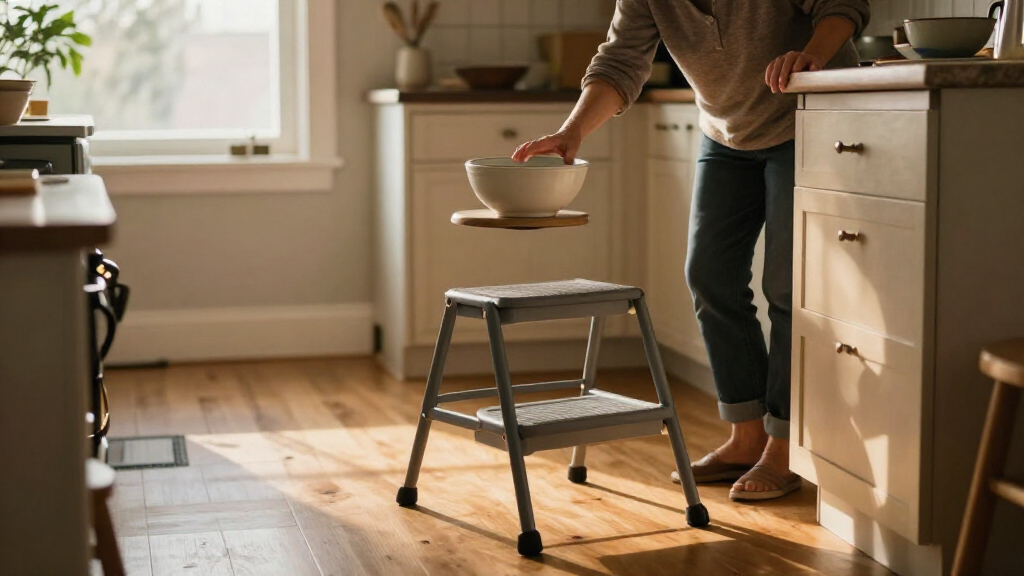
To reach a high shelf safely, use a step stool or ladder designed for the height, set it on a firm, level, dry floor, and follow its instructions. Face the steps, keep your body centered, and move the stool instead of leaning; ask for help with heavy or awkward items and store everyday essentials lower down.
Use a step stool or ladder designed for the shelf’s height, and follow its instructions and weight rating.
Place the equipment on a firm, level, dry floor; fully open and lock folding stools before climbing.
Face the steps, keep your body between the rails, and move the stool instead of leaning sideways.
Avoid carrying items that block your view or prevent you from holding on; arrange help for heavy or awkward objects.
Keep everyday items between waist and eye level, and skip climbing when you feel unsteady or tired.
HOME SAFETY · EVERYDAY REACH
Easy Ways to Reach High Shelves Safely
A jar on the top pantry shelf can turn a familiar kitchen into an unsteady place to stand. Choose climbing equipment made for the job, prepare your space, and keep your weight centered from first step to last.
Your weight rating includes what you carry.
Count your body weight and anything you take up. A bulky jar or appliance contributes to the ladder’s stated capacity.before you reach sideways.
01 / CHOOSE WELL
Start with the right step
The right height lets you reach comfortably while keeping your feet on a permitted step and your body within the rails.
Designed for climbing
Choose a step stool or ladder sized for the shelf. Follow its labels and instructions; never stand on a prohibited top step or cap.
Sound and secure
Look for a readable weight rating, firm steps, sound hinges, and nonslip feet. Set damaged equipment aside until properly repaired or replaced.
No chairs or boxes
Furniture and stacked objects can slide, rock, buckle, or tip. Their familiar feel does not make them safe for standing.
02 / PREPARE THE SPACE
Make the setup steady
Preparation is part of the task. Decide what you’ll take down and where it will go before you climb.
Clear, check, lock, look.
A stool needs solid ground and room to move. Do not wedge a towel, scrap of wood, or box under a leg to correct an uneven floor.
Clear the landing area
Move baskets, chairs, cords, and loose objects away.
Check the floor
Use a firm, level, dry surface. Clean spills first.
Open and lock
Fully open folding stools and secure spreaders as directed.
Check surroundings
Avoid doorways where someone could bump you; turn on enough light.
03 / CLIMB & REACH
A steady sequence
Keep the climb deliberate. If the shelf is off to one side, come down and reposition the stool.
Feeling dizzy, tired, unsteady, or uncomfortable? Skip the climb and ask for help. A nearby helper can pass items and keep the area clear, but cannot replace correct setup and careful use.
04 / HANDLE THE ITEM
Keep your grip and view clear
Plan the object’s path before climbing so you can focus on the steps and keep support available.
| Situation | Safer choice | Risky move |
|---|---|---|
| Heavy or bulky item | ✓ Ask someone to pass it once you’re positioned, or bring it down after you step off. | ✗ Climb while carrying it or let it block your view. |
| Awkward or fragile load | ✓ Arrange help before climbing, especially if both hands are needed. | ✗ Juggle a wide pan, plates, or glass bowl on the steps. |
| Small, light object | ✓ Reach only when stable; plan a place for it on the counter. | ✗ Tuck it under an arm if that weakens your grip or balance. |
| Weight capacity | ✓ Count your weight plus anything carried against the stated rating. | ✗ Treat the rating as covering only the person. |
MAKE REACHING RARE
Give everyday things an easier home
A small pantry reset can reduce repeat climbs and make cooking and putting things away more comfortable.
Keep frequent-use items between waist and eye level.
Move daily ingredients, dishes, and supplies to a comfortable zone. Reserve high shelves for items you use less often, and place heavy or awkward objects where you can handle them without climbing.
Less reaching · fewer climbs · more comfortable routines
Choose a step stool that lets you reach without stretching
Easy ways to reach high shelves safely begin with a step stool or ladder designed for the height of the task. Choose one that lets you reach the shelf while keeping your feet on a permitted step and your body within the side rails. A taller stool is not automatically better; the right height depends on the shelf, the equipment design, and its instructions.
Before you climb, check for a readable weight rating, secure steps, sound hinges, and nonslip feet. Remember that the rating covers your weight and anything you carry. A sturdy-looking stool with a loose hinge or cracked tread can still shift under you. If you notice damage, set it aside until it can be replaced or properly repaired.
Imagine reaching for a flour tin on the pantry’s upper shelf. A suitable stool gives you enough height to take it down with a comfortable reach, while a too-short one tempts you to stand on its top cap or stretch onto your toes. Follow the product’s labels and instructions, and never stand on a step marked as off-limits.
Newer household stools and ladders may have wider steps, handrails, locking mechanisms, or nonslip feet. These features can help, but they cannot make damaged equipment or an unsafe setup safe. Think of a step stool like a garden gate: sound hinges matter, but so does placing it on solid ground.
Products Worth Considering

Husqvarna 525P4S Gas-Powered Pole Saw with 12-Inch Bar

Greenworks 48V Brushless 3-in-1 Leaf Blower, Vacuum, and Mulcher with Two 4.0Ah Batteries

Husqvarna 455 Rancher Gas Chainsaw, 20-Inch Bar, 56 cc, 3.5 HP
As an affiliate, we earn on qualifying purchases.
Set up your stool so it stays put
To reach a high shelf safely, place your equipment on a firm, level, dry surface, fully open a folding stool, and lock its spreaders according to the instructions. Clear rugs, crumbs, cords, and anything else that could shift underfoot. A stable setup gives you a predictable place to climb and stand.
- Clear the landing area. Move baskets, chairs, and loose items away from the stool and the shelf.
- Check the floor. Make sure it is level and dry; wait until a spill is cleaned before climbing.
- Open and lock the stool. Confirm each part sits as intended and the feet rest flat.
- Check the surroundings. Keep clear of doorways where another person could bump the stool, and turn on enough light to see the steps.
For example, if you’re reaching above the kitchen counter, move the stool away from a swinging cupboard door and set it squarely on the bare floor. A mat that bunches under a foot can make a steady-looking stool rock. Don’t wedge a folded towel, scrap of wood, or box beneath a leg to compensate; find a suitable level spot instead.
Preparation is part of the task. Decide what you’ll take down and where you’ll set it before climbing. That way, you don’t have to shift your feet, twist around, or juggle an object while looking for somewhere to put it.
Climb facing the steps and keep your body centered
When reaching a high shelf, face the steps as you climb and descend, use a handhold when the design provides one, and keep three points of contact when the equipment allows. Once you are standing, keep your body between the side rails. If the shelf is out to one side, climb down and reposition the stool.
Move with care: place a foot fully on the step, pause to settle your balance, and then continue. Shoes with nonslip soles can help keep your feet planted. Slippers with floppy heels or bare feet on a slick step can make a routine reach less secure, especially if you’re moving quickly.
Picture a tall cereal tin tucked to the left in a cupboard. Leaning sideways may seem like the fastest way to grab it, but your weight shifts as your arm stretches. Climb down, move the stool closer to that side, and face the shelf again. A few extra seconds are easier than trying to recover from a wobble.
Staying centered is like carrying a tray across a kitchen: keeping it near your middle makes each small step steadier. A helper nearby can pass items or help keep the area clear, but holding the ladder does not replace safe placement and use. The stool still needs a solid floor, proper setup, and careful climbing.
Bring the item down without losing a handhold
For a safer reach, avoid climbing with a bulky, heavy, or fragile item in your hands, especially if it blocks your view or keeps you from holding on. Climb into position first, keep a hand free for support when possible, and have someone pass the object to you if the task calls for it. If you cannot manage it comfortably, ask for help.
Consider a heavy casserole dish on a top shelf. Its weight counts toward the stool’s stated capacity, along with your own, and its wide shape may hide a step as you climb. A helper can take it from you once you’re safely positioned, or bring it down after you have stepped off. This keeps your hands and sightline available during the climb.
For lighter objects, plan where you’ll place them before you reach. A small tin can be set on a nearby counter once you’re down; a glass jar may need two careful hands. Don’t tuck something under an arm if doing so makes your balance or grip less secure.
Ask for help with awkward loads. A large roasting pan, a stack of plates, or a fragile glass bowl can be difficult to handle from a step stool even if it isn’t especially heavy. If the task needs both hands, arrange help before climbing rather than trying to improvise from the shelf.
Skip chairs and other furniture, even for a quick grab
Chairs, tables, boxes, shelves, and stacked objects are not safe substitutes for a step stool or ladder designed for climbing. Furniture can slide, rock, or tip because it was built for sitting or holding household items, not for someone standing on it. A short reach does not make an unstable perch dependable.
A dining chair might seem handy when a mixing bowl is just out of reach. But chair legs can shift on tile, and a seat may tilt as you stretch toward a cupboard. A cardboard box can buckle, while a shelf may pull away from the wall if you lean on it. The familiar feel of these objects can hide how easily they move.
Use equipment made for climbing, and check that it is in good condition before each use. If your step stool is in another room, take a moment to get it rather than standing on the counter or piling books beneath your feet. That brief walk is part of the job.
Overreaching and improvised climbing are avoidable hazards during everyday tasks. If the floor is slippery or uneven, don’t try to steady the stool with a nearby object. Wait until you can place proper equipment on a firm, level, dry surface, or ask someone else to reach the shelf for you.
Make everyday shelves easier to use
One of the easiest ways to reduce climbing is to store the things you use most often between waist and eye level. Save high shelves for lightweight or rarely used items, and keep a suitable step stool accessible for occasional reaches. This simple arrangement can make daily cooking smoother without giving up useful storage.
For instance, if you bake every Sunday, keep flour, mixing bowls, and measuring cups on a shelf you can reach while standing on the floor. A large holiday platter might live higher up because you only take it down a few times a year. Put light paper goods on the upper shelf instead of a heavy appliance that would be awkward to lower.
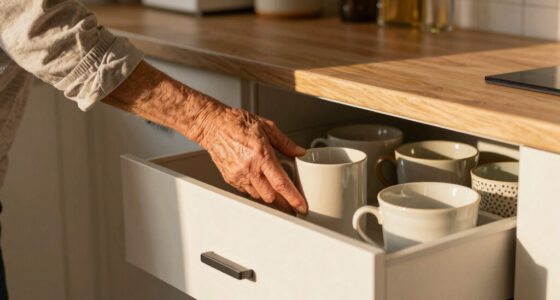
Take a quiet moment to notice which shelves ask you to stretch most often. Move a favorite teacup, pantry staple, or frequently used serving dish lower. If an item is too heavy or fragile for you to bring down comfortably, place it somewhere easier to reach or ask for help when you need it.
Storage can support independence. The goal is a kitchen that suits the way you live now, whether that means keeping soup bowls close at hand or leaving room for a stool beside the pantry. A thoughtful shelf arrangement can spare you repeated reaching and leave the high spaces for things you seldom use.
Know when to leave the climb for another day
If you feel dizzy, unsteady, fatigued, or uncomfortable on a ladder, don’t climb. Choose another way to get the item, or ask for help. Feeling confident on the floor does not mean every day is a good day to use a step stool.
Say you’ve been gardening all morning and want to reach a jar in the pantry. Tired legs or a moment of lightheadedness can make the steps feel less steady than usual. Sit down, rest, and ask someone else to get the jar if you still feel off. For medical concerns or decisions about your personal safety, consult a qualified professional.
Check the room as well as your own comfort. Poor light can make it harder to see a step edge; a busy doorway can bring someone unexpectedly close. If you can’t clear the area, get enough light, or set the stool securely, postpone the task.
There is no need to prove you can do every reach alone. Asking a neighbor or family member to bring down a heavy bowl is a practical choice that protects your comfort and keeps the task simple. A helper can pass the item, but your equipment still needs to be properly set up.
Frequently Asked Questions
What is the safest thing to use to reach a high shelf?
Use a stable step stool or ladder designed for climbing and tall enough for the task. Set it on a firm, level, dry surface and follow its instructions, including any limits on which step you can stand on.
Can I stand on a chair or table for a quick reach?
No. Chairs and tables are not designed for climbing and can slide, rock, or tip. Take the time to get a suitable step stool or ask someone to reach the item.
How high should my step stool be?
Choose one that lets you reach the shelf without standing on a prohibited top step or leaning far sideways. The right height depends on your shelf and the stool’s design, so follow its labels and instructions.
Should someone hold the ladder while I climb?
A helper can keep the area clear, help prevent the ladder from being bumped, or pass items. The helper does not replace proper placement and setup: put the equipment on a firm, level, dry surface and use it as directed.
Can I carry something while climbing?
Avoid carrying anything that blocks your view or stops you from holding on. Get into position first and ask a helper to pass up or receive heavy, fragile, or awkward items; remember that anything you carry counts toward the ladder’s weight rating.
What if my floor is uneven or slippery?
Wait until you can place the stool or ladder on a firm, level, dry surface. Don’t try to level it with boxes, folded cloth, or other improvised supports; move to a suitable spot or ask for help instead.