TL;DR

Turn quiet afternoons into listening time
- Thousands of audiobooks, podcasts and originals
- Listen on your phone, tablet or Echo — also offline
- Cancel anytime
Clear the porch, remove cobwebs, and sweep from the far end toward the exit so you collect debris without walking over clean areas. Match the broom and any cleaner to the porch surface, use a damp cloth or mop for fine dust and pollen, and let the floor dry before replacing mats and furniture. A quick weekly sweep is a sensible starting point; wind, trees, pets, and foot traffic may call for more frequent care.
Clear movable items and brush away cobwebs before sweeping, then work from the far end toward the exit.
Choose bristle stiffness for the surface: firmer for rough concrete, softer for delicate finishes, and a hand brush for corners.
Use a damp microfiber cloth or mop for fine pollen and dust that a dry broom could scatter.
Sweep weekly as a starting point, then adjust for wind, nearby trees, pets, and foot traffic.
Spot-clean with a surface-appropriate product, follow its label, and let the porch dry before replacing mats and furniture.
Clean the porch with less effort A simple routine that works
Clear the path, choose tools that suit the surface, and work toward the exit. A little regular care can keep debris from turning into a bigger cleanup.
Set up one clear pass
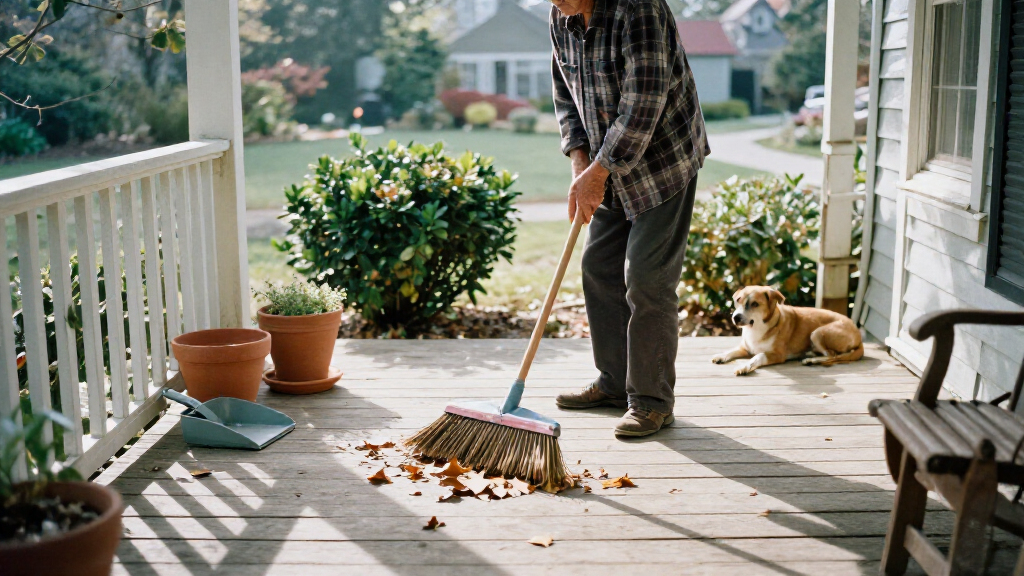
Move light items aside, brush down cobwebs, then sweep from the far end toward the exit.
Move chairs and mats; leave heavy planters in place and sweep around them.
Work in small sections and collect debris in a dustpan.
Wipe as needed, then let the floor dry before returning mats and furniture.
Match the broom to the surface
Choose bristles that gather debris without scuffing the finish.
| Porch surface | Starting tool | Care tip |
|---|---|---|
| Rough concrete | Firm outdoor broom | Use short strokes to gather grit. |
| Painted or smooth flooring | Soft or medium bristles | Abrasive bristles may mark finishes. |
| Wood or composite decking | Soft-to-medium brush | Check care guidance; do not force tools between boards. |
| Corners and edges | Angled broom or hand brush | Collect loosened debris with a dustpan. |
Keep dust from spreading
Use a lightly damp cloth or mop for fine pollen and dust that a dry broom could scatter.
- Sweep leaves and twigs before they get wet.
- Guide debris into a dustpan or collection spot.
- Wipe with a damp microfiber cloth or mop.
- Rinse or change the cloth as dust collects.
Clean only what needs it
Spot-clean visible grime with a product suited to the porch material.
- Check the surface guidance and cleaner label.
- Test an unfamiliar cleaner in a small, hidden area.
- Rinse if directed and avoid standing water.
- Never mix cleaning products.
Start with a clear path so one sweep does more
To make porch cleaning quicker, clear loose items first, remove cobwebs, and work from the far end toward the exit. That order gives you an open path and keeps you from stepping over the patch you just cleaned. For example, move a chair and its mat to the side before sweeping; otherwise, you may sweep around the legs and have to do another pass when you move them.- Move chairs, mats, planters, and small décor to a safe spot nearby. If a planter is heavy, leave it in place and sweep around it instead of straining to move it.
- Brush down cobwebs from corners and railings with a soft, long-handled brush. Do this before the floor so fallen dust and web strands land where you can collect them.
- Sweep from the farthest corner toward the doorway or steps. Work in manageable sections, guiding debris into a small pile or dustpan.
- Pick up the pile and check corners, board gaps, and the spot beneath the doormat.
- Wipe the railing and furniture with a damp cloth if they need it, then let the floor dry before putting things back.
Products Worth Considering

Greenworks 48V (2 × 24V) 20-Inch Brushless Cordless Push Lawn Mower with Two 4.0Ah Batteries and Dual-Port Charger

Greenworks 40V 16-Inch Brushless Push Lawn Mower with 4.0 Ah Battery and Charger

Orbit B-hyve Smart Indoor/Outdoor 12-Zone Sprinkler Controller
As an affiliate, we earn on qualifying purchases.
Pick a broom that suits your porch surface
The right broom is the one that gathers debris without scuffing or scratching your floor. A firmer broom suits rough concrete, where grit and leaves catch in the texture, while softer bristles suit smoother or more delicate surfaces. An angled broom can reach a corner or the edge along a wall with less bending.| Porch surface | Useful starting choice | What to watch for |
|---|---|---|
| Rough concrete | Firm outdoor broom | Use short strokes to gather grit instead of scattering it. |
| Painted or smooth flooring | Soft or medium bristles | Abrasive bristles may mark some finishes. |
| Wood or composite decking | Soft-to-medium brush | Check care instructions and avoid forcing tools between boards. |
| Corners and edges | Angled broom or hand brush | Follow with a dustpan so debris does not collect along the trim. |
Use small weekly sweeps to avoid a big cleanup
A brief sweep once a week is a reasonable starting point for many porches, and you can sweep more often when wind, trees, pets, or busy foot traffic leave visible debris. A calendar is less useful than noticing what your porch collects: a sheltered entry under an overhanging roof may stay tidy, while a porch beneath an oak can fill with leaves and seed pods in a day. A quick check after a windy afternoon can take less time than scraping up leaves that have gone damp overnight. For instance, if you see grit by the doorway on Tuesday, sweep that small area before it spreads through the house on shoes. During pollen season, dry yellow dust may cover the railing and mat; a dry broom can send some of it back into the air, so use a lightly damp cloth or mop for the fine layer. Think of upkeep as a few short visits, not a weekend project. Keep a broom and dustpan near the porch if you have a dry, convenient place to store them. Shake or clean the doormat regularly, since a loaded mat stops catching grit and may leave a dusty outline beneath it. A porch with less clutter under chairs and planters also gives leaves fewer hiding places.Lift pollen and fine dust without sending it flying
When pollen or fine dust coats the porch, pick it up with a lightly damp microfiber cloth or mop instead of sweeping vigorously. Damp fibers can hold onto fine particles; a dry broom may scatter them across the floor or into the air. Use only enough water to dampen the cloth, since a soaked mop can leave puddles or push dirt into joints. For a practical example, imagine a thin layer of pollen on a porch table and the boards beneath it. Wipe the tabletop first with a damp cloth, rinse or change the cloth as it gathers yellow dust, then use a damp mop on the floor. Work toward the exit so you don’t carry residue across an already cleaned section. For larger leaves and twigs, sweep or collect those first; a cloth is for the dusty film, not the whole job. If you have allergies or another health concern, use your own judgment about dusty chores and ask a qualified professional about personal precautions. This is household-cleaning guidance, not medical advice. Avoid directing debris into a drain, garden bed, or neighbor’s yard: gather it into a dustpan or collection spot, then dispose of it appropriately. A tidy pile is useful; a trail of blown pollen across the flower bed is just the same chore in a new place.Spot-clean grime with less water and the right cleaner
Sweep first, then spot-clean only the marks that need attention with water and a cleaner suitable for your porch material. Wood, composite decking, painted surfaces, stone, and concrete can have different care requirements, so check the surface maker’s guidance and the product label. If you are trying an unfamiliar cleaner, test it in a small, hidden area before using it across the floor. A muddy footprint by the steps may come away with a damp cloth, while a sticky spill may need a surface-appropriate cleaner and a gentle brush. Follow the cleaner’s directions, including whether you should rinse afterward, and avoid leaving standing water. On a wooden porch, excess water can linger in joints; on other surfaces, runoff may carry cleaner where you don’t want it. Let the floor dry before returning mats and furniture, since those items can trap dampness underneath. Don’t mix cleaning products. Bleach mixed with acids or ammonia can create dangerous fumes, and no porch stain is worth experimenting with combinations. If you are unsure whether a cleaner suits the material, stick with the manufacturer’s instructions or ask a qualified cleaning professional. A careful spot-clean often does the job without turning a small mark into a full porch wash.Choose detail tools that reach corners and board gaps
A hand brush, crevice tool, or suitable outdoor-rated vacuum can help collect debris from corners and between boards after the main sweep. These tools are most helpful for stubborn pockets of grit, cobwebs, or seed husks that a wide broom misses. They work best as detail tools; for an ordinary scattering of leaves, a broom is often simpler and quieter. For example, if crumbs and pine needles have settled between deck boards, try a narrow brush with gentle strokes. Don’t force it deep into a gap or scrape the edges. A vacuum may be convenient for dry debris, but check that the model is rated for outdoor use and follow its instructions. Battery-powered blowers and vacuums can move loose debris quickly, yet a blower can send dust toward an open door or over the neighbor’s fence, and powered tools can be noisy. If you use a blower, direct debris into a collection area and follow local noise rules. If the porch is small and the debris is light, a dustpan and hand brush may take less setup. The useful question is not which tool looks most powerful; it’s which one gathers the mess without making you clean the steps, garden path, and welcome mat afterward.Set up the porch so dirt stays away longer
A few small habits can keep dirt from returning as quickly: use a doormat, clean it regularly, clear wet leaves promptly, and leave enough space to sweep beneath furniture. These steps reduce the loose debris that gets tracked indoors or collects in corners. Making porch cleaning easier often starts before you pick up the broom. Suppose you come home after a breezy walk and find a ribbon of grit just inside the threshold. A sturdy mat outside and another inside can catch some of it, provided you shake or clean them often. If planters sit directly on the floor, raise or reposition them only if it is safe and practical; trapped leaves beneath them can otherwise stay unnoticed until you move them. A quick glance under a chair while you sweep can prevent a second cleanup later. Try this low-effort routine: keep the broom within easy reach, sweep when debris becomes visible, and do a more thorough pass once a week as a starting point. During leaf fall or windy weather, check more often. Sweep loose leaves before rain turns them into damp clumps. Your porch may need a different rhythm from your neighbor’s, but the goal is the same: a comfortable, clear entrance that stays ready for a quiet cup of tea or a visit from family.Frequently Asked Questions
How often should I sweep my porch?
Once a week is a reasonable starting point for many porches. Sweep more often when wind, nearby trees, pets, or foot traffic leave visible debris; a quick pass before leaves get wet can save effort later.
What kind of broom should I use on a porch?
Match the bristles to the surface: firmer bristles for rough concrete and softer bristles for smooth, painted, or delicate flooring. An angled broom can reach edges, while a hand brush helps with tight corners.
Should I sweep or hose down the porch?
Sweep first for ordinary leaves, grit, and loose debris. Use water only when the surface can handle it and a spot needs cleaning; avoid standing water and direct runoff away from drains, gardens, and neighboring property.
How do I remove pollen without spreading it?
Use a lightly damp microfiber cloth or mop for fine pollen instead of vigorous dry sweeping. Rinse or change the cloth as dust collects, and work toward the exit so you don’t carry residue over clean areas.
How can I clean between deck boards?
Try a narrow brush or suitable vacuum attachment with gentle strokes. Don’t force tools into the gaps, and check the decking maker’s instructions before using high pressure or a powered tool.
Can I use dish soap, vinegar, or bleach on my porch?
Cleaner suitability depends on the porch material and the product directions. Test an unfamiliar cleaner in a hidden spot, follow the label, and never mix cleaning products, especially bleach with acids or ammonia.