TL;DR
Composting transforms organic waste into nourishing soil and reduces landfill waste. For beginners, simple methods like bin composting or vermicomposting work best. With a few easy steps, you can turn scraps into garden gold in just a few months.
Imagine the cozy smell of freshly turned earth, the warm hum of worms working below the surface. Composting isn’t just for gardeners—it’s a simple, rewarding way to give your garden a boost and cut down on waste. If you’ve ever wondered how to start without feeling overwhelmed, this guide will show you how easy it can be.
Whether you have a small yard, a balcony, or just a few pots, composting fits into any space. You’ll learn straightforward methods, what to toss in, what to skip, and some handy tips from folks who’ve been doing it for years. Ready to turn scraps into soil magic? Let’s dig in.
Start with a simple compost bin or worm system—no fancy equipment needed.
Balance greens and browns for quick, odor-free composting—aim for 25-30 parts carbon to 1 part nitrogen.
Turn your pile every two weeks and keep it moist—your compost will thank you.
Avoid adding meat, dairy, and fats to prevent pests and odors.
Community programs and innovative tools make composting easier for seniors than ever before.
What is composting and why does it matter for you?
Composting is the natural process of breaking down food scraps, yard waste, and other organic materials into rich, dark soil. It’s nature’s recycling—no fancy equipment needed. For you, it means less trash, healthier plants, and a little piece of country charm right at home.
Plus, according to an anonymous researcher, composting can reduce household waste by up to 30%, which means fewer trips to the curb and a lighter footprint on the planet. This reduction not only helps decrease landfill overflow but also means you’re actively contributing to environmental conservation. By turning scraps into valuable soil, you’re creating a closed-loop system that benefits your garden and reduces reliance on chemical fertilizers, promoting healthier, more resilient plants. The tradeoff is that composting requires some patience and regular attention, but the long-term benefits—improved plant health, reduced waste, and environmental impact—far outweigh the minimal effort.

VIVOSUN Outdoor Tumbling Composter Dual Rotating Batch Compost Bin, 43 Gallon Black Door
Twin chambers: Two separate chambers allow one side to finish composting while leaving the other side available to…
As an affiliate, we earn on qualifying purchases.
As an affiliate, we earn on qualifying purchases.
Pick the easiest composting method for small spaces and beginners
For most seniors, the easiest way to start is with a simple compost bin or a worm (vermicomposting) system. These don’t require much space or equipment. Imagine a small, sturdy bin on your patio or a tidy worm box under your kitchen sink—both can turn scraps into soil in just a few months.
Here are two beginner-friendly options:
- Traditional compost bin: A simple container where you pile kitchen scraps and yard waste, turning it occasionally. Keep it moist and aerated. This method allows you to manage larger quantities of waste and is suitable if you have some outdoor space. The process of turning the pile introduces oxygen, which is vital because it speeds up decay and prevents foul odors. The tradeoff is that it might take longer to produce finished compost compared to other methods, but it’s forgiving and adaptable to your schedule.
- Worm bin (vermicomposting): A compact box filled with red wigglers that eat your vegetable peels and coffee grounds, producing rich compost and liquid fertilizer. This indoor method is ideal if space is limited or if you want quick results. Worms are sensitive to overwatering and improper bedding, so understanding their needs is essential. The benefit is that it produces high-quality compost rapidly—sometimes in as little as 2-3 months—making it a rewarding choice for beginners seeking quick, tangible results. The tradeoff is that worms require specific conditions, and managing their environment is crucial for success.
Both methods are forgiving, require little space, and turn waste into garden treasure fast, but choosing between them depends on your space, patience, and interest in managing live creatures.

The Original VermiHut® Plus 5-Tray Worm Compost Bin – Indoor & Outdoor Vermicomposting System, Continuous Flow Food Waste Recycler for Organic Composting & Gardening – Dark Green
Compact, High-Efficiency Footprint Designed to maximize composting capacity while minimizing floor space.
As an affiliate, we earn on qualifying purchases.
As an affiliate, we earn on qualifying purchases.
What you need to get started — simple tools and supplies
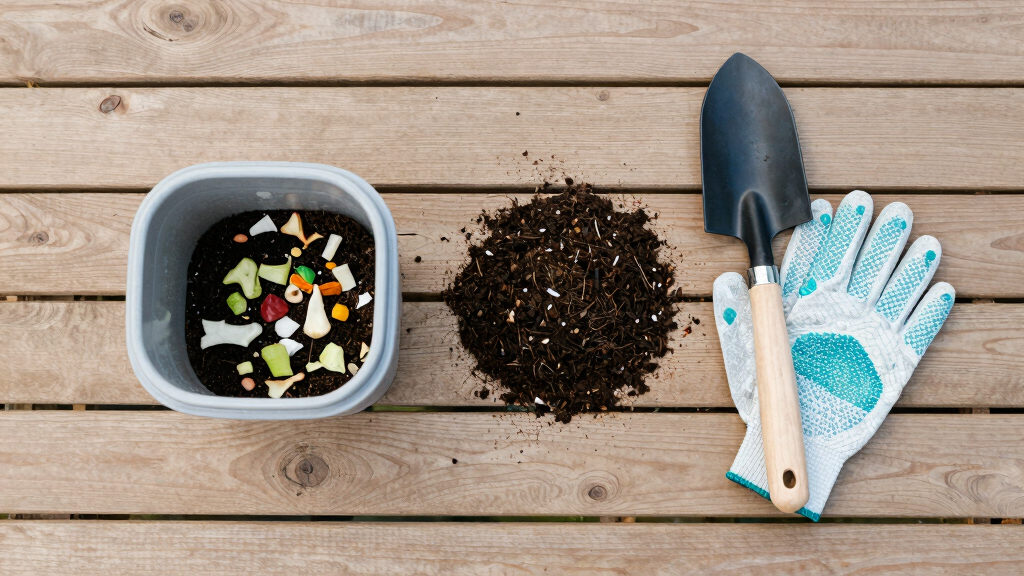
Starting your composting journey doesn’t mean buying a lot of fancy gear. Here’s what you’ll need:
- Compost bin or container: A simple plastic or wooden box with a lid. For indoors, a small worm bin works well.
- Kitchen scraps: Fruit peels, coffee grounds, eggshells.
- Yard waste: Leaves, grass clippings, small branches.
- Turning tool: A garden fork or a sturdy stick to aerate your pile.
- Water: A hose or watering can to keep it moist.
These basic tools are inexpensive and easy to find. The key is to keep your supplies simple and manageable. Using common household items like a sturdy stick or a garden fork makes it easy to turn and aerate your compost, which is essential for healthy decomposition. Maintaining proper moisture levels ensures microbes stay active, which speeds up the process. The tradeoff for simplicity is that you might need to be consistent with your turning and watering schedule to achieve the best results, but it’s a small effort for a big payoff.

No-Waste Composting: Small-Space Waste Recycling, Indoors and Out. Plus, 10 projects to repurpose household items into compost-making machines (No-Waste Gardening)
As an affiliate, we earn on qualifying purchases.
As an affiliate, we earn on qualifying purchases.
How to keep your compost happy and healthy in 3 simple steps
Composting is all about balance. Too wet, and it smells; too dry, and it slows down. Achieving the right conditions encourages beneficial microbes and worms to do their work efficiently. Here’s a straightforward process:
- Add layers: Alternate greens (food scraps) with browns (dry leaves or paper). Aim for a good mix—about 25-30 parts carbon to 1 part nitrogen. This ratio is important because it provides microbes with the energy and structure they need to break down materials effectively. Too much green material can cause odors and attract pests, while too much brown can slow the process. Striking the right balance creates a healthy environment for decomposition, leading to rich, dark compost faster and with fewer issues.
- Turn regularly: Every 2 weeks, use your garden fork or stick to mix everything up. This process introduces oxygen, which is essential for aerobic microbes that speed up decay and prevent foul odors. Regular turning also helps distribute moisture evenly, preventing dry spots or overly wet areas. The tradeoff is that frequent turning requires some effort, but it greatly improves compost quality and reduces the risk of unpleasant smells or pests.
- Keep it moist: Like a damp sponge. Add a splash of water if it feels dry, especially in hot weather. Maintaining proper moisture levels ensures microbial activity continues unabated. Too dry, and microbes become dormant, slowing decomposition; too wet, and the pile can become anaerobic and smelly. The goal is to keep the pile moist enough to support microbial life without becoming soggy. This balance is key to producing high-quality compost in the shortest time possible.
In a few months, you’ll notice the pile darkening and smelling earthy. That’s your cue—your compost is nearly ready for the garden. The deeper understanding of these steps helps you troubleshoot and optimize your composting process, ensuring consistent success and a sense of accomplishment.

Utopia Kitchen Countertop Compost Bin Kitchen with Charcoal Filter -1.3gallon Stainless Steel Kitchen Compost Bin Countertop – Ideal Kitchen Essentials or Small Composter for Under The Sink Trash
This Counter Compost Bin With Lid Having Capacity Of 1.3 Gallon Is Manufactured With Stainless Steel For Optimal…
As an affiliate, we earn on qualifying purchases.
As an affiliate, we earn on qualifying purchases.
Conclusion
Composting isn’t just for gardeners with sprawling yards. It’s a practical, satisfying habit that turns everyday scraps into garden gold. With just a little effort, you can enjoy healthier plants and a lighter waste load—plus a touch of country charm right outside your door.
Imagine the rich, earthy smell of finished compost, ready to nurture your roses or veggie patch. That’s nature’s magic—and it’s waiting for you to give it a try.