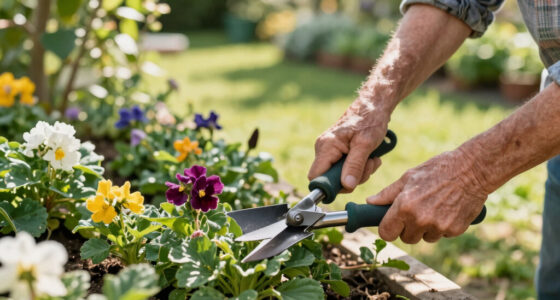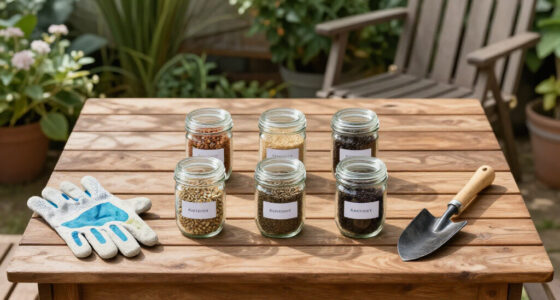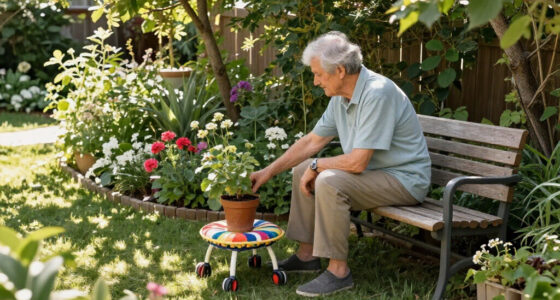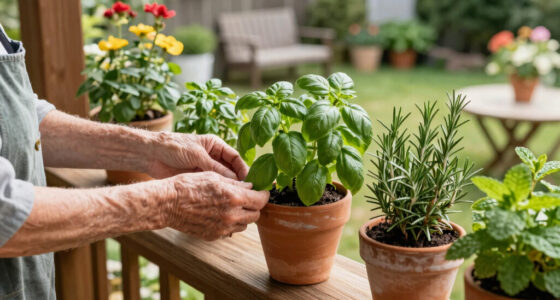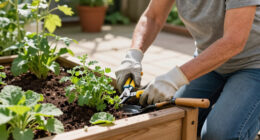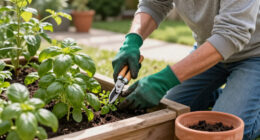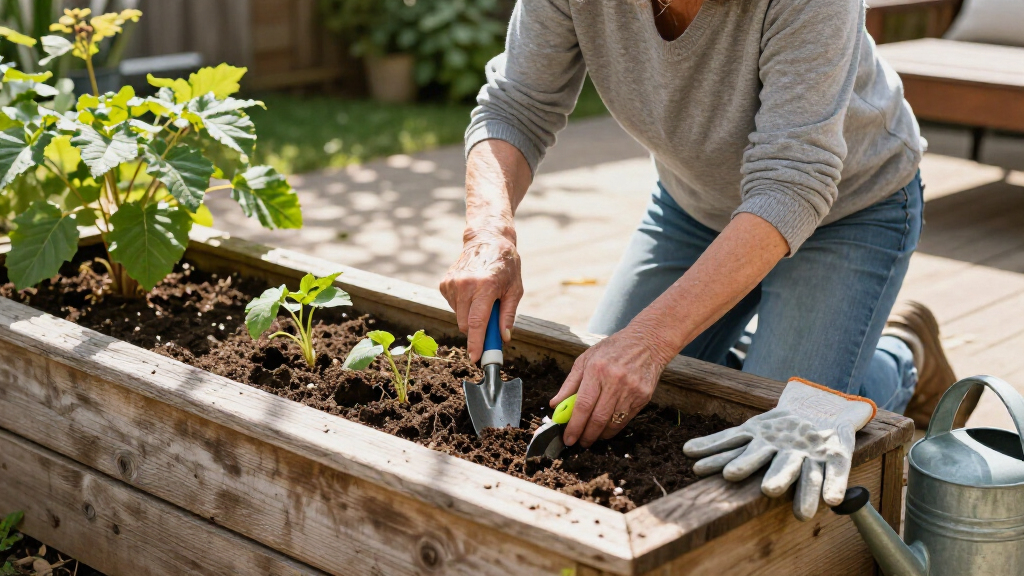
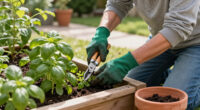
This guide helps older adults and their caregivers choose easy-to-handle gardening tools, prepare a small starter kit, and use the tools with less reaching, gripping, and bending. You do not need gardening experience: match each tool to the jobs you actually do, check how it feels before buying, and work in short sessions. Allow about 45-90 minutes to review needs, test or select tools, and organize them. Gardening time will vary by task and energy level.

Get comfort and care essentials delivered free — and shop member deals
- Fast, free delivery on millions of items
- Access to Prime Big Deal Days deals on October 6–7
- Prime Video, Amazon Music and more included

Grampa’s Weeder Stand-Up Weed Puller with Bamboo Handle
- ✔ Tool type: Stand-up weed puller
- ✔ Head design: Four-claw steel
- ✔ Handle length: 45 inches

2-in-1 Garden Hoe and Weed Puller Rake with Adjustable 61-Inch Handle
- ✔ Tool type: 2-in-1 garden hoe and weed-puller rake
- ✔ Rake width: 3.75 inches
- ✔ Handle length: Adjustable up to 61 inches

VEVOR Heavy-Duty Folding Garden Kneeler and Seat
- ✔ Product type: Folding garden kneeler and seat
- ✔ Maximum weight capacity: 330 pounds
- ✔ Weight: 6.06 pounds (2.75 kg)
Difficulty: Beginner | Time: 45-90 minutes to choose and prepare a kit; allow 10-20 minutes per gardening session
What You’ll Need
Tools & Materials:
- A written list of planned gardening jobs, such as pruning, weeding, watering, or planting
- Access to any current tools you can test for comparison
- A sturdy chair or bench and a stable work surface
- Gloves that fit comfortably, if needed
- A clean, dry place to store tools
Knowledge:
- Basic awareness of your comfort, grip strength, reach, and balance
- Ability to identify the plants or areas where tools will be used, or help from someone who can
Try tools in person when possible. A tool marketed for seniors is not automatically comfortable or safe for every person. Ask a garden center or occupational therapist about adaptations if arthritis, limited mobility, poor balance, or reduced hand strength affects your gardening. Choose a small kit first; you can add tools after identifying jobs that remain difficult.
Grampa’s Weeder Stand-Up Weed Puller with Bamboo Handle
When bending is the main obstacle, Grampa’s Weeder is the clearest match in this group. Its four-claw steel head is designed to grab weeds and roots while we work from a standing position, and the 45-inch bamboo handle keeps the task away from the knees. Compared with the adjustable hoe-and-rake, it is less of an all-purpose soil tool; its advantage is a focused setup for pulling weeds without kneeling.The important qualification is soil. The supplied description says the claws work best in softer ground, particularly after rain or watering, and may be less effective in hard clay or rocky soil. That makes timing part of the buying decision: gardeners who can weed after watering may get more from this simple approach than those facing compacted beds. The lifetime guarantee is another distinguishing feature, though it does not remove the need to match the tool to suitable ground.We rank it ahead of the other picks because it most directly reduces a common source of strain without adding setup or storage steps. Choose the 2-in-1 tool instead if you also want to rake or loosen soil, and choose the VEVOR kneeler if working low is comfortable but pressure on the knees is the concern. Skip this weeder if your garden is consistently rocky or very hard-packed.
Pros:
- Pulls weeds and roots from a standing position
- Four-claw steel head is designed to grip weeds
- 45-inch bamboo handle avoids a short, ground-level working position
- Includes a lifetime guarantee
Cons:
- May be less effective in hard clay or rocky soil
- Focused on weed pulling rather than loosening and raking soil
- Fixed 45-inch handle may not suit every user’s reach or storage needs
Best for: Gardeners who want to pull weeds and roots while standing, especially in softer soil or beds that can be watered before weeding.
Not ideal for: Gardeners working mainly in hard clay, rocky ground, or soil where the claws cannot readily penetrate.
Bottom line: For a senior seeking a straightforward way to pull weeds without kneeling, this is our strongest pick—provided the soil is soft enough for its claws.
“For a senior seeking a straightforward way to pull weeds without kneeling, this is our strongest pick—provided the soil is soft enough for its claws.”
2-in-1 Garden Hoe and Weed Puller Rake with Adjustable 61-Inch Handle
For gardeners who want one tool to handle more than weed pulling, this 2-in-1 hoe and rake offers the broadest task range in the lineup. Its 3.75-inch rake is intended to loosen soil, while the trapezoid hoe is designed to cut at or pull weeds. The four-section handle adjusts up to 61 inches, so we can set it up for standing work or shorten it for closer tasks. That flexibility is its main advantage over Grampa’s Weeder, which is more specialized and has a fixed 45-inch handle.The tradeoff is that flexibility does not make it a dedicated stand-up root puller. Its head combines two functions, whereas Grampa’s four-claw design is specifically aimed at gripping and removing weeds. Nor is this the most comfortable option for prolonged work at ground level; compared with the VEVOR kneeler, it provides no cushion or side handles. Its value is in reducing tool changes and adjusting reach, rather than supporting the body directly.The head is made from tempered spring steel, and the finish and stainless-steel fasteners are described as weather resistant. Those construction details may matter for a tool stored or used outdoors, but the available information does not include hands-on performance details. We place it second because its range and adjustable handle fit varied chores, while the stand-up weeder has a clearer advantage for seniors focused specifically on pulling weeds with minimal bending. Skip it if your priority is a cushioned seat or a claw head for root extraction.
Pros:
- Combines a rake and hoe for two garden tasks
- Handle adjusts up to 61 inches for standing or closer work
- Tempered spring steel head is designed to resist bending or snapping
- Weather-resistant finish and stainless-steel fasteners are specified
Cons:
- No hands-on performance details are provided
- Two-in-one head is less specialized for root pulling than Grampa’s four-claw design
- Does not cushion knees or provide support for rising from the ground
Best for: Gardeners who want adjustable reach and one long-handled tool for loosening soil and working on weeds.
Not ideal for: Anyone seeking a cushioned ground-level support, or a dedicated claw-style tool for pulling weeds and roots.
Bottom line: Choose this adjustable tool when reach and task flexibility matter more than a dedicated root-pulling head or a padded place to sit.
“Choose this adjustable tool when reach and task flexibility matter more than a dedicated root-pulling head or a padded place to sit.”
VEVOR Heavy-Duty Folding Garden Kneeler and Seat
Not every gardener wants to avoid getting close to the soil. If planting, pruning, or other detailed jobs are easiest from a low position, the VEVOR kneeler and seat focuses on making that posture more supported. It converts between a kneeling pad and a seat, uses 18 mm EVA foam, and adds side handles intended to assist as we lower ourselves or stand back up. Unlike either long-handled weeder, it does not remove the need to bend down; it aims to make ground-level work more manageable.Its foldable steel frame, stated 330-pound capacity, and weight of 6.06 pounds make portability and storage part of the design. Two tool bags keep supplies within reach, reducing the need to repeatedly get up for small items. That organization may be useful for longer planting sessions, but it cannot replace a long-handled tool for weed removal. Compared with the adjustable hoe-and-rake, the kneeler supports posture rather than reach; compared with Grampa’s Weeder, it suits a different way of gardening altogether.We rank it third for this particular roundup because the central promise is easier gardening for seniors, and the two long-handled options can reduce bending during weeding. Still, this is the most relevant choice when knee pressure is the main issue and a seat or padded kneeling surface fits the task. The product is described primarily for gardening and similar tasks, so we would not treat it as a general-purpose mobility aid. Skip it if getting down to the ground is difficult or unsafe.
Pros:
- Converts between a kneeler and a seat
- 18 mm EVA foam cushions ground-level work
- Side handles offer support when changing position
- Folds for storage and includes two tool bags
Cons:
- Requires getting down to the ground to use it
- Does not perform the weeding or soil-loosening tasks of the other picks
- Described primarily for gardening and similar tasks, not as general mobility equipment
Best for: Gardeners who prefer planting or tending beds close to the ground and want cushioning, side handles, and nearby tool storage.
Not ideal for: Anyone who needs to avoid lowering to the ground, or who wants a long-handled weeder to remove weeds while standing.
Bottom line: For seniors who can work low but need a cushioned surface and handles, this is the lineup’s most supportive option, not a substitute for a stand-up tool.
“For seniors who can work low but need a cushioned surface and handles, this is the lineup’s most supportive option, not a substitute for a stand-up tool.”
As an Amazon Associate we earn from qualifying purchases.
Before You Start
Write down three to five tasks you perform most often. This prevents buying a large set with tools you will not use. Check whether your garden beds are raised, whether you work from a chair, and how far you need to reach. Set a spending limit and check return terms before buying. Avoid working from an unstable ladder or stretching beyond a comfortable reach. If a tool causes pain, numbness, or loss of control, stop using it and try a different design or ask a health professional for advice.
Step-by-Step Instructions
Step 1: List the gardening jobs you need tools for
Write down your regular jobs and where you do them. Include the actual actions: cutting small stems, loosening soil, removing weeds, carrying water, or planting seedlings. Mark which jobs require kneeling, bending, reaching, or repeated squeezing. Note whether you work seated or standing and whether you can keep the garden close to your body.
Use this list to select tools for real tasks, not for a broad idea of what a gardener might need. For example, a person who grows herbs in containers may need a hand trowel and watering wand, but not a long-handled cultivator.
Tip: Ask a family member or caregiver to help record tasks if bending or walking around the garden is tiring.
Check: You have a short list of common jobs and know which movements or positions make each job harder.
Step 2: Choose a few useful tool types
Start with the tools that match your list. For pots and small beds, consider a lightweight hand trowel, a hand cultivator, and a watering can or hose attachment. For shrubs, consider bypass pruners sized for your hand. For beds that are hard to reach, consider a long-handled weeder or cultivator. For watering distant containers, consider a hose with a shutoff nozzle or a watering wand.
Choose bypass pruners for live, green stems; their blades pass each other like scissors. Anvil pruners press a blade against a flat surface and can crush soft stems. Check the tool maker’s cutting limit, and do not use hand pruners on branches that exceed it. A two-hand lopper or professional help may be safer for larger branches.
Tip: Do not buy every tool at once. A compact kit that covers your routine tasks is easier to carry, store, and maintain.
Check: Each item on your shortlist has a specific gardening job it will do.
Step 3: Test the grip, weight, and controls
Hold each candidate tool as you would during the job. Check that the handle fits your palm without forcing your fingers to stretch, that the tool feels balanced, and that you can operate its controls without excessive squeezing. For pruners, open and close the blades several times and test the safety lock. For a watering can, try its empty weight and imagine filling it only partway. For a long-handled tool, check that you can guide it without leaning or twisting.
Look for a non-slip, comfortably sized handle and a weight you can manage repeatedly. A rotating or padded handle may help some people, but it can feel awkward to others. Try the tool before deciding. If shopping online, compare dimensions and weight, and check the return policy.
Tip: Use gloves you expect to garden in while testing handles; gloves can change the fit and feel.
Check: You can hold and operate each tool with control, without pain, pinching, or needing to overreach.
Step 4: Set up a safe, reachable work area
Put tools on a stable table or cart near the garden area. Arrange them so you can reach them without bending deeply or twisting. Use a sturdy chair, raised bed, or garden kneeler with handles if it suits your balance and mobility. Keep paths clear of hoses, loose pots, and tools. Place water within comfortable reach, and plan a route back indoors that is firm and unobstructed.
Fill watering cans only to a weight you can carry safely. If carrying water is difficult, use a hose, a light container, or a small cart on a level path. Do not stand on a chair, stool, or unstable surface to reach plants; move the plant or use a suitable long-handled tool instead.
Tip: Work in a shaded, well-lit area when possible, and keep a phone or a way to call for help nearby if you garden alone.
Check: The tools, seat, water, and path are arranged so you can work without unsafe stretching or lifting.
Step 5: Use tools with controlled movements
Start with a short session and use the tool only for its intended job. Keep your wrist as straight as possible, bring the work closer rather than reaching, and use steady pressure instead of jerking. For weeding, loosen soil around the weed and pull gradually; avoid forceful twisting. For pruning, cut within the tool’s rated capacity and keep fingers away from the blades. Lock pruners when you set them down or carry them.
Pause when your grip weakens, your posture becomes uncomfortable, or you feel pain, dizziness, or unusual shortness of breath. Stop, sit in a safe place, and get help if symptoms are severe or do not settle. Take breaks before fatigue makes it harder to control tools.
Tip: Alternate tasks that use different muscles, such as watering and planting, rather than repeating a squeezing or bending motion for a long time.
Check: You can complete a small amount of work while keeping control of the tool and maintaining a comfortable position.
Step 6: Clean, inspect, and store the tools
After gardening, remove soil and plant debris with a brush or cloth. Dry metal parts before storage to limit rust. Follow the maker’s instructions for cleaning and oiling blades; keep sharp edges covered or stored where other people cannot touch them. Check pruner locks, handles, and fasteners for damage before the next session.
Store tools in a visible, dry place at a height you can reach safely. Use a wall rack, shelf, or labeled container that does not require climbing or lifting a heavy box. Keep sharp tools separate from gloves and other items so you can identify and pick them up safely.
Tip: Replace a tool with a loose handle, damaged blade, or unreliable lock instead of trying to work around the defect.
Check: Tools are clean, dry, undamaged, and stored where you can retrieve them without climbing or reaching unsafely.
Common Mistakes to Avoid
- Buying a large matching set before testing the tools. — Choose tools from your task list and test grip, weight, and controls first. Buy only a few items, then add more if a specific job calls for them.
- Choosing a tool that is too heavy or too large for repeated use. — Check the weight and handle size in person when possible. Test the tool with your usual gloves and return it if you cannot control it comfortably.
- Using a short-handled tool while bending or reaching too far. — Bring the work closer, sit at a stable work surface, or choose a suitable long-handled tool. Do not lean from a chair or stand on an unstable object.
- Continuing after pain or fatigue starts. — Use short sessions, take breaks, and stop when control or comfort declines. Change the tool or task rather than forcing the movement.
Troubleshooting
Problem: A pruner is difficult to squeeze or does not cut cleanly.
Solution: Check that the stems are within the tool’s stated cutting limit and that the safety lock is fully released. Clean the blades and follow the maker’s sharpening guidance. If squeezing still causes strain, try a smaller or ratcheting model designed for easier cutting, or ask someone else to handle thicker stems.
Problem: A long-handled tool feels awkward or makes you lean.
Solution: Stop using it and check whether the handle length and working angle suit your height and garden bed. Try a different length or work closer to the plants. Use a stable seat or ask for help rather than stretching.
Problem: A watering can is too heavy when full.
Solution: Fill it only partway, use a smaller can, or switch to a hose with a shutoff nozzle or watering wand. Keep the container close to your body and avoid carrying water over an uneven path.
Problem: Your hand slips on the handle or becomes sore.
Solution: Stop and check whether the handle is wet, dirty, or too small or large for your grip. Dry the handle, try a comfortable glove, or test a tool with a different grip. Do not wrap the handle in material that can loosen or interfere with controls.
What Success Looks Like
Your kit covers the gardening jobs you listed without unnecessary items. You can grip and operate each tool comfortably, reach the work without unsafe bending or stretching, and carry or move watering equipment within your ability. After a short gardening session, the tools remain controllable and you have no new pain or loss of balance. When finished, tools are clean, dry, inspected, and stored within safe reach.
Next Steps
Use the kit for several short gardening sessions and note which tools reduce effort and which still cause strain. Adjust the garden layout before buying more equipment: bring pots closer, clear walking routes, or move frequently used plants to a raised bed. Recheck handles, blades, and locks regularly. If gardening remains painful or difficult, ask an occupational therapist, physical therapist, or clinician about suitable adaptations and safe movement strategies. Replace tools that become damaged, loose, or difficult to control.
Frequently Asked Questions
What is the most useful first tool for an older gardener?
There is no single best tool for everyone. Choose the item that helps with your most frequent difficult job. A comfortable hand trowel may suit container planting, while a long-handled weeder or watering wand may help more in a larger garden.
Are ratcheting pruners easier to use?
They can reduce the force needed for some cuts by working through stages, but they may take longer and can feel bulky. Test the grip, opening action, and lock before buying, and follow the maker’s limits for branch thickness.
Are lightweight tools always the safest choice?
Not always. Low weight can make a tool easier to carry, but a poorly balanced or slippery tool can be harder to control. Test its grip and balance, and choose a weight you can manage through repeated movements.
How can I garden if bending or kneeling is difficult?
Use raised beds, containers placed at a comfortable height, a stable chair, or a suitable long-handled tool. Keep plants close and paths clear. Avoid unstable stools and do not reach beyond a secure sitting or standing position.
When should I replace a garden tool?
Replace or repair it when the handle is loose or cracked, the blade is damaged, the lock fails, or the tool slips or requires unusual force. Do not use a faulty tool while waiting for a replacement.
Fall Picks
fall essentials
As an affiliate, we earn on qualifying purchases.