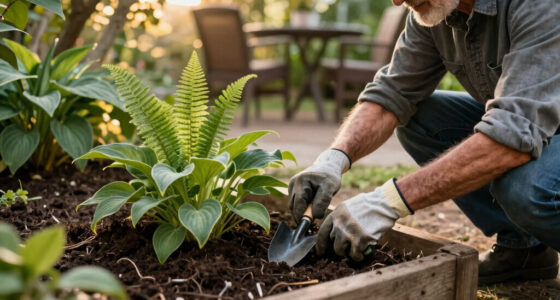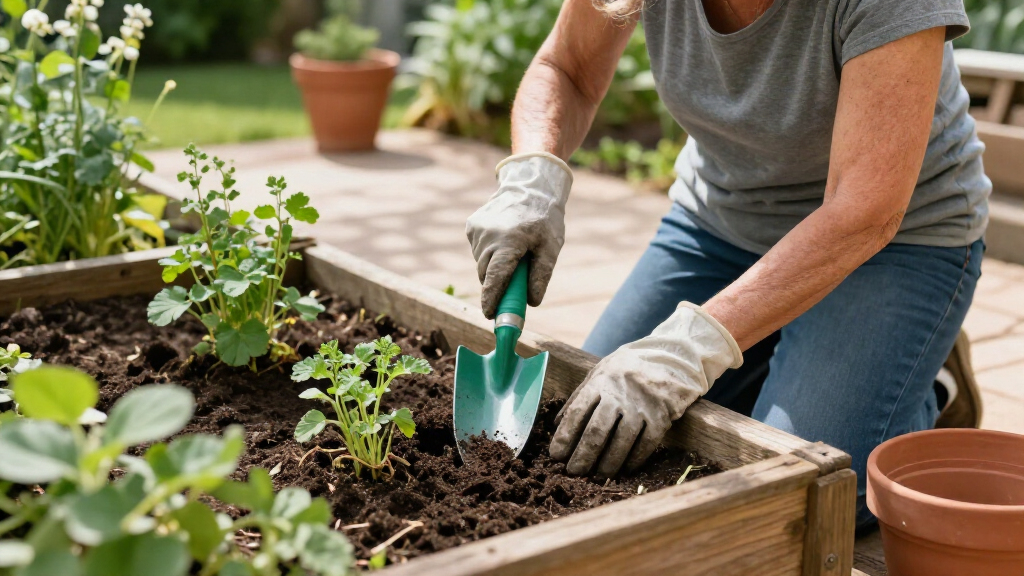
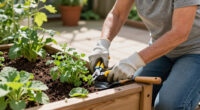
Choosing easy gardening tools for seniors often comes down to a practical tradeoff: less bending and reaching or less strain on hands and wrists. Long-handled garden tools address the first problem by moving digging, weeding, and cultivation farther from the body. Ergonomic tools address the second with shaped, padded, or rotating handles that can feel more comfortable during close work. Neither category solves every gardening difficulty, and a longer tool can be heavier or harder to control.

Give the gift of listening to someone you love
- Choose a 1-, 3-, 6- or 12-month membership
- They pick the audiobooks they love
- Easy to send by email

Grampa’s Weeder Original Stand-Up Weed Puller with Bamboo Long Handle
- ✔ Handle length: 45 inches
- ✔ Handle material: Bamboo
- ✔ Head material: Alloy steel

CKLT 2-in-1 Garden Hoe and Weed Puller Rake with Adjustable 61-Inch Handle
- ✔ Maximum handle length: 61 inches
- ✔ Handle construction: Four-section adjustable handle
- ✔ Head functions: Trapezoid hoe and weed-puller rake

Hivenlly 2-in-1 Adjustable Weed Puller and Garden Hoe
- ✔ Handle lengths: 16, 30, 45, and 60 inches
- ✔ Handle material: Stainless steel
- ✔ Head material: Cast steel
These options are compared because age alone does not determine which tool feels manageable. A gardener with back or knee discomfort may benefit most from extra reach; someone with arthritis, weak grip, or wrist pain may prefer ergonomic handles. The right choice also depends on the job: clearing a bed, planting seedlings, pruning, or working in a raised planter call for different tools. The comparison below focuses on reach, grip, weight, control, versatility, storage, and value so you can match the tool to the strain you want to reduce.
At a Glance
| Criteria | Long-handled garden tools | Ergonomic garden tools | Winner |
|---|---|---|---|
| Reach and bending | Long shafts let you work farther from the ground and bed edges. | Usually short-handled, so close work still involves bending or kneeling. | A |
| Grip and wrist comfort | Standard handles may require firm gripping; comfort varies by design. | Contoured, padded, or rotating grips can ease hand and wrist strain. | B |
| Weight and leverage | Extra length can add weight, though leverage may help with some tasks. | Many models are light; design and materials affect total weight. | Depends |
| Control and precision | Greater distance from the tool head can reduce close control. | Close positioning and shaped grips can help with careful, small tasks. | B |
| Task versatility | Strong for weeding, cultivating, raking, and some planting tasks. | Strong for pruning, potting, planting, and detailed bed work. | Depends |
| Storage and handling | Long shafts need more storage space and can be awkward to carry. | Compact models are easier to store and carry. | B |
| Value | Often a practical purchase when reach is the main problem. | Higher prices can pay off when grip comfort matters during frequent use. | Depends |
Grampa’s Weeder Original Stand-Up Weed Puller with Bamboo Long Handle
When the main problem is a scattering of taproot weeds and bending is uncomfortable, Grampa’s Weeder has the most direct design in this lineup. Its four-claw head is meant to grip a weed so it can be pulled from a standing position, and the 45-inch bamboo handle provides reach without requiring the user to crouch for every target. At 2.3 pounds, it is also the lightest of these three listed options, which may make repeated repositioning easier for some gardeners.This focused design is why we place it ahead of the more versatile hoes for general weed removal: the CKLT and Hivenlly ask the gardener to work the head across the soil, while Grampa’s Weeder is aimed at pulling weeds one at a time. That approach has a clear limit. It works best in soft, moist soil; hard clay or rocky ground can make the claws less effective. Watering first or waiting until after rain may be part of using it successfully. And unlike the adjustable alternatives, its handle is a fixed long reach, which can be awkward for close work or for users who prefer a shorter tool.
Pros:
- 45-inch bamboo handle supports stand-up weeding.
- Four-claw alloy steel head targets individual weeds and taproots.
- Listed weight of 2.3 pounds is the lowest among these three tools.
- Chemical-free approach to removing weeds.
Cons:
- Works less effectively in hard clay or rocky surfaces.
- Best results depend on soft, moist soil.
- Fixed handle length offers less flexibility for close or low-level work.
Best for: Gardeners who want to remove individual weeds while standing and can use the tool in soft, recently watered soil.
Not ideal for: People working mostly in hard or rocky ground, wanting a hoe for broad soil work, or needing a handle that adjusts shorter.
Bottom line: For standing removal of individual weeds in workable soil, Grampa’s Weeder is the most focused and straightforward pick in this comparison.
“For standing removal of individual weeds in workable soil, Grampa’s Weeder is the most focused and straightforward pick in this comparison.”
CKLT 2-in-1 Garden Hoe and Weed Puller Rake with Adjustable 61-Inch Handle
The CKLT is the better match when we want one long-handled tool to do more than lift individual weeds. Its head combines a trapezoid hoe and a 3.75-inch rake, so the gardener can loosen soil and work at weeds with the same tool. The handle adjusts through four sections and extends to 61 inches, giving it the longest maximum reach of the three listed options. That extra reach may suit taller users or beds where leaning forward is a particular strain.Compared with Grampa’s Weeder, the CKLT is more adaptable to ongoing soil work but less specialized for extracting one weed cleanly with claws. Compared with Hivenlly, its maximum handle length is slightly greater, while its listed weight is close at 2.93 pounds. The tradeoff is that the head is relatively narrow: at 3.75 inches, it is more suited to targeted or between-plant work than covering a broad open patch quickly. Hoeing and raking also require repeated manual effort. The adjustable sections provide options for reach, but buyers should consider whether assembling and handling a multi-section tool fits their routine.We give it the versatility role because the two head functions address more than weed removal alone. That makes it a reasonable choice for gardeners who tend small beds and want to loosen soil while standing. If the priority is pulling deep individual weeds in forgiving soil, Grampa’s Weeder has the more focused head; if the priority is a particularly short setting, Hivenlly has more explicitly listed length choices.
Pros:
- Handle adjusts and extends up to 61 inches.
- Hoe-and-rake head supports loosening soil and working weeds.
- Tempered spring steel head is designed to resist bending.
- Stainless steel bolts and a sand-texture finish are specified.
Cons:
- The 3.75-inch head is relatively narrow for broad coverage.
- Weed removal and soil work still require manual force.
- At 2.93 pounds, it weighs more than Grampa’s Weeder.
Best for: Gardeners who want an adjustable long handle and a combined hoe-and-rake head for small beds and routine soil work.
Not ideal for: People who need a wide head for large open areas or prefer a claw-style tool designed for lifting individual weeds.
Bottom line: Choose the CKLT when adjustable standing reach and two soil-working functions matter more than a specialized claw for individual weeds.
“Choose the CKLT when adjustable standing reach and two soil-working functions matter more than a specialized claw for individual weeds.”
Hivenlly 2-in-1 Adjustable Weed Puller and Garden Hoe
Hivenlly stands out for offering four stated handle lengths: 16, 30, 45, and 60 inches. That range gives the gardener a short setting for close-up jobs and longer settings for standing work, making it the most flexible choice here when tasks and reach vary. Its dual head combines a six-tine weed rake with a flat-edge hoe, so it can pull at weeds or level soil. Compared with the CKLT, its listed maximum is an inch shorter, but the short settings are spelled out and could be useful when a full-length tool would feel cumbersome.The added flexibility does not guarantee comfort for every user. Hivenlly lists a stainless steel handle, and the supplied product information cautions that the metal grip may be uncomfortable during extended use without gloves. This is a relevant consideration for seniors with sensitive hands or a preference for padded, shaped grips. Its cast steel head also means the user still needs to apply and control force; the dual function does not make weed extraction automatic.Next to Grampa’s Weeder, Hivenlly is the more adaptable tool for mixed tasks and changing reach, but it lacks the same dedicated four-claw extraction design and the soil-condition guidance is less specific. Against the CKLT, it offers more explicit shorter lengths, while the CKLT has the slightly longer maximum reach and specified tempered spring steel construction. We rank Hivenlly as the adjustable-length pick, especially for someone who alternates between standing and close work and is comfortable using gloves.
Pros:
- Four listed handle lengths, from 16 to 60 inches.
- Six-tine rake and flat hoe support different garden tasks.
- Cast steel head and stainless steel handle are specified.
- Shorter settings can suit close work when a long handle is inconvenient.
Cons:
- Metal grip may be uncomfortable during extended use without gloves.
- Manual weed pulling still requires physical effort.
- Maximum listed reach is shorter than the CKLT’s 61 inches.
Best for: Gardeners who switch between close-up tasks and standing work and want one tool with several handle lengths.
Not ideal for: People who find metal grips uncomfortable, want a padded handle, or prefer a dedicated claw head for individual weeds.
Bottom line: Hivenlly is the most flexible choice for gardeners who want several working lengths and can accommodate its metal grip.
“Hivenlly is the most flexible choice for gardeners who want several working lengths and can accommodate its metal grip.”
As an Amazon Associate we earn from qualifying purchases.
Key Differences
The biggest difference is where each type reduces effort. A long shaft changes your posture and working distance: it can spare repeated bending and help you reach across a bed, but the extra length may make a tool heavier at the far end. An ergonomic handle changes how your hand meets the tool. Its shape or padding may make gripping and repeated wrist movements easier, but it does not automatically bring ground-level work closer to you.
Task fit matters as much as the label. A long-handled cultivator may be useful for loosening soil, while a short ergonomic trowel can offer better control when placing a seedling. Gardeners with several limitations may find that a small set works better than choosing one category exclusively. Check the tool’s actual weight, grip thickness, shaft length, and balance before buying; terms such as “senior-friendly” do not guarantee that a specific model will feel comfortable or safe.
Detailed Comparison
Reach and bending (Long-handled garden tools wins — major)
Long-handled tools win by a major margin when the goal is to work from a standing position or reach into a bed without leaning as far. A shaft that puts the working head closer to the task can reduce repeated bending, though it cannot remove the need to get low for every job. Ergonomic hand tools are generally short, so they preserve the close reach needed for pots and seedlings but do little to reduce bending at ground level. For back or knee discomfort, start by identifying which routine jobs force the most uncomfortable posture.
Grip and wrist comfort (Ergonomic garden tools wins — major)
Ergonomic tools win by a moderate to major margin for gardeners whose hands tire quickly or whose wrists hurt during gripping and twisting. A larger, contoured, or cushioned handle may be easier to hold than a narrow straight one. Some models use rotating grips to change wrist motion, but comfort depends on the person and task. Long-handled tools can reduce how often you reach down, yet their leverage may require two hands or more force to steer. Try the grip in your hand where possible, especially if arthritis limits finger movement.
Weight and leverage (moderate difference)
The winner depends on the exact model and job. A longer shaft can improve leverage for certain movements, but it also places more material farther from the hand and can feel tiring when held out. Ergonomic tools are often compact, yet sturdy construction or a wide grip can still add weight. For a gardener with limited arm strength, a light, well-balanced tool may matter more than its category. Compare the listed weight and, if shopping in person, lift the tool in the position you expect to use it.
Control and precision (Ergonomic garden tools wins — moderate)
Ergonomic hand tools have a moderate advantage for close, careful work such as planting small starts or removing weeds beside desired plants. Keeping the hand nearer the tool head can make small movements easier to judge. Long handles increase reach but can make the head feel less precise, particularly in a crowded planter or narrow container. For broad strokes across an open bed, that distance matters less. Choose based on the tightest, most delicate task you do regularly, not just the size of the garden.
Task versatility (moderate difference)
This is a task-dependent tie. Long-handled rakes, weeders, and cultivators cover ground-level jobs across larger beds with less stooping. Ergonomic trowels, pruners, and hand forks suit planting, trimming, and container gardening where reach is already short. A gardener who does both kinds of work may need one tool from each group. Before buying a set, list the jobs you perform most often and check whether the tool head and shaft are designed for those tasks.
Storage and handling (Ergonomic garden tools wins — minor)
Ergonomic hand tools win by a minor to moderate margin for compactness. Short tools fit more easily in a small shed, carry bag, or storage hook and are less cumbersome to move between beds. Long-handled models need more vertical or horizontal room and may be awkward in tight paths. Wall hooks or a dedicated rack can make storage easier, so space is not a reason to rule them out if reach is the primary concern.
Value (moderate difference)
Value depends on which strain is costing you the most effort. A basic long-handled tool can be worthwhile if bending is the recurring obstacle and it replaces many uncomfortable trips to ground level. Paying extra for ergonomic handles makes sense when hand or wrist comfort affects frequent tasks and the grip demonstrably suits the user. A premium price alone does not promise better comfort. Compare construction, warranty, weight, and handle feel, and avoid buying a large bundle if only one or two tools match your needs.
Long-handled garden tools: Pros and Cons
Pros:
- Extends reach for many ground-level jobs.
- Can reduce repeated bending and kneeling.
- Useful for working across larger beds.
Cons:
- Long shafts can feel awkward or tiring to control.
- May take up more storage space.
- Extra reach does not guarantee an easy grip or low weight.
Ergonomic garden tools: Pros and Cons
Pros:
- Shaped or cushioned grips may ease gripping and wrist strain.
- Often offers better control for detailed work.
- Compact tools are easier to carry and store.
Cons:
- Short handles still require bending for ground-level tasks.
- Grip shapes do not suit every hand.
- Specialized designs may cost more than basic tools.
Who Should Choose What
Choose Long-handled garden tools if:
- You stand more comfortably than you kneel or bend and want to work in beds from a more upright position.
- Your regular jobs include weeding or cultivating across ground-level beds.
- You can comfortably manage the tool’s full weight and length.
Choose Ergonomic garden tools if:
- Hand strength, arthritis, or wrist discomfort makes narrow or straight handles tiring.
- You mostly plant, prune, or work in pots and raised planters.
- Close control and a manageable grip matter more than extra reach.
Skip both if: Neither category fits if you cannot comfortably lift or control the tool in use. Consider a seated garden setup, raised beds, lightweight tools with support, or help with tasks that require force.
Value for Money
Pay more only when a specific feature addresses a real limitation. For back or knee strain, the extra reach of a well-balanced long-handled tool may be more valuable than an expensive grip on a short tool. For hand or wrist strain, a comfortable ergonomic handle can justify a higher price if it makes frequent work easier to sustain. In either case, check the actual weight and grip before paying a premium; an uncomfortable specialty tool is poor value even if it carries a senior-friendly label.
For many gardeners, the strongest value is a small combination: one lightweight long-handled tool for broad ground-level work and one ergonomic hand tool for detailed tasks. Buy only the tools needed for recurring jobs. A complete set may look economical, but unused pieces add cost and storage demands without reducing strain.
Final Verdict
Choose long-handled garden tools if bending or reaching is the main obstacle. They are the clearer choice for standing work across ground-level beds, provided the shaft is not too heavy or unwieldy. Choose ergonomic garden tools if hand or wrist comfort and close control matter most. Their shaped grips can make detailed jobs easier to manage, but they will not solve the posture demands of ground-level work.
The biggest deciding factor is where discomfort begins: at the back and knees, or in the hands and wrists. If both are concerns, combine one tool from each category and test weight and balance before committing. For gardeners who cannot safely control either style, adapting the garden height or working position may help more than buying a different handle.
Frequently Asked Questions
Are long-handled garden tools better for seniors?
They can be a better fit when bending or reaching is the main source of strain. Their length can bring some tasks closer while you stand. They may feel awkward or heavy for people with limited arm strength, and they are less suited to precise work in pots or crowded beds.
Do ergonomic tools help with arthritis?
They may help when a wider, shaped, or cushioned grip is easier to hold than a narrow handle. Comfort varies by hand and tool, so check the grip size and the force needed for the task. Ergonomic design does not remove all hand strain.
Should I buy a full garden tool set?
Usually, choose tools for the jobs you do often. A long-handled weeder and an ergonomic trowel may be more useful than a bundle with several pieces you rarely use. Check each tool’s weight, reach, and grip before buying.
Can one type reduce both back and hand strain?
Some long-handled tools reduce the need to reach down, while ergonomic grips can make holding or steering more comfortable. But a long tool can still be tiring to hold, and a comfortable short tool still requires close work. A complementary pair may address both needs more effectively.