
TL;DR

Turn quiet afternoons into listening time
- Thousands of audiobooks, podcasts and originals
- Listen on your phone, tablet or Echo — also offline
- Cancel anytime
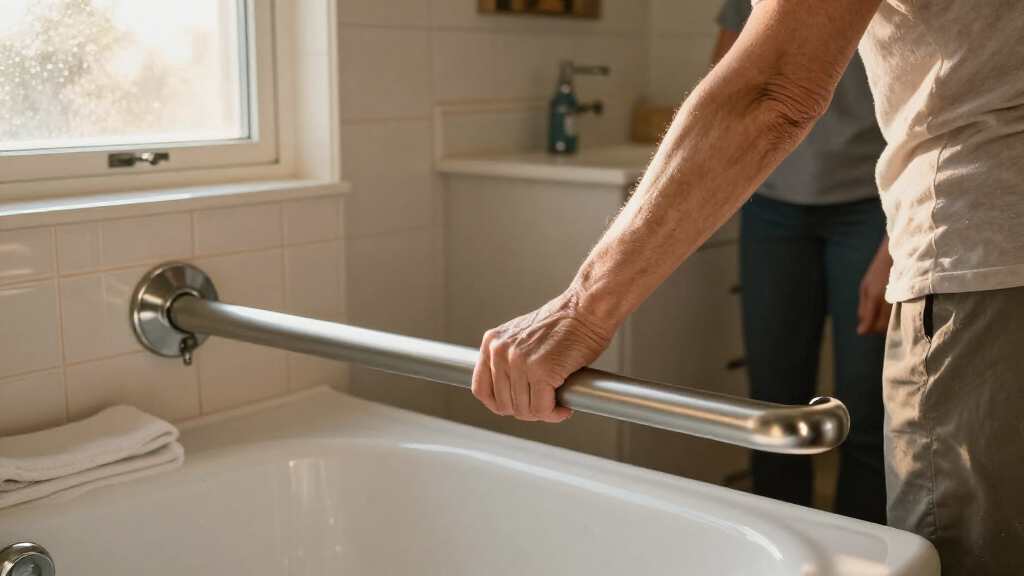
Fall prevention grab bars for seniors provide a steady handhold in places where wet floors, transfers, or steps can make movement less secure. Choose a bar suited to the task, anchor it to an appropriate structural surface, and place it where you naturally reach; check it regularly and ask a qualified installer for help if the wall or mounting method is uncertain.
A bathroom grab bar can look like a small detail until you need a steady hand while stepping over a tub edge or standing from the toilet. Then that smooth, firmly mounted rail can feel as reassuring as a porch railing on a frosty morning. Fall prevention grab bars for seniors are designed to provide stability and support during everyday movements, especially in areas like bathrooms where water and hard surfaces can make a slip more consequential.
The goal is not to make your home feel like a clinic. It is to make familiar routines feel comfortable and independent, whether you are reaching for a towel or stepping out of the shower. This guide explains where bars can help, how to choose one, why anchoring matters, and what to check over time, with practical examples for real homes.
One note on the numbers: the supplied research summary reports that properly installed bars may reduce fall risk by up to 60%, but it does not identify the underlying study or conditions. Treat that figure as a reported estimate, not a guarantee; a grab bar is one useful part of home safety, not a promise that falls cannot happen.
Place bars where you naturally reach during a transfer or step, especially beside toilets and at shower or tub entrances.
Choose a grip and finish that feel comfortable with damp hands, and check the product instructions and relevant safety standards.
A listed weight capacity does not guarantee safety unless the wall, fasteners, brackets, and installation also suit the load.
Ask a qualified installer for help if you are unsure about wall construction, plumbing, wiring, or the correct mounting method.
Inspect bars regularly for looseness, corrosion, cracks, or movement, and stop relying on any bar that feels unstable.
Where grab bars can make everyday movement steadier
Fall prevention grab bars for seniors are most helpful where you need to change position, balance, or direction, such as beside a toilet, at a tub or shower entrance, and along steps. Place them to support the movement you actually make, rather than choosing a spot only because it looks tidy on the wall. A well-placed handhold can make a routine feel more controlled without taking away your independence.
In a bathroom, think through the whole sequence: walking to the shower, stepping over the threshold, washing, and getting out. A bar inside the shower may help you steady yourself while standing, while a separate bar near the entrance may help with the step in or out. Near a toilet, a securely mounted bar can offer support as you sit and rise. The right location depends on your reach, the fixture layout, and the way you move.
Outside the bathroom, a rail at a short set of stairs or near a doorway can give you a useful handhold where a wall or railing is missing. For example, if you carry laundry down three basement steps, a bar or handrail may help you keep one hand available for balance. The bathroom remains a common focus because water and hard floors can combine into a slippery setting, but each home has its own tricky corners.
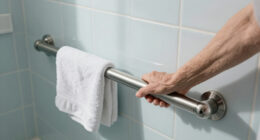
Try the movement without rushing and notice where you naturally reach. If you find yourself grabbing a towel rack, sink edge, or shower curtain rod, that is a sign to discuss a more suitable support with a qualified installer or occupational therapist. Towel bars and curtain rods are not designed to bear body weight, even when they feel firm by hand.
As an affiliate, we earn on qualifying purchases.
Choose a bar that fits your grip, wall, and routine
Choose a grab bar by matching its grip, length, material, and mounting method to the task and the wall where it will go. A bar that feels comfortable in a dry showroom may feel different with damp hands, so consider the surface texture and how easily you can wrap your fingers around it. The model should suit the person using it and the spot where it will be installed.
Many bars use stainless steel, coated metal, or plastic, and each brings tradeoffs in appearance, feel, and care. Stainless steel can suit a humid bathroom, while a textured grip may feel more secure to someone whose hands are often wet. Some designs have a warmer, less institutional look and can blend with brushed fixtures or pale tile. Style matters, too: a bar you accept and use is more helpful than one you dislike and avoid.
Product listings may state weight capacities in a range such as 250 to 500 pounds, according to the supplied research summary. That rating is not a complete safety test for your home: the wall material, fasteners, bracket design, and installation also matter. Look for clear product instructions and relevant standards or certifications, and ask the manufacturer or installer what the rating assumes.
Before buying, write down the location and what you need the bar to do. A short vertical bar by a tub entrance may support a different movement than a longer horizontal bar beside a toilet. Prices in the supplied summary range from about $20 for basic models to more than $100 for premium or smart options; compare installation requirements as well as the sticker price. A low-cost model is no bargain if it cannot be anchored properly in your wall.
As an affiliate, we earn on qualifying purchases.
How to plan a safe installation before drilling
Fall prevention grab bars for seniors only provide dependable support when the whole mounting system suits the wall and is installed according to its instructions. Do not choose a location based only on convenience or assume that any screw will hold. The first job is to identify the wall construction and the movement the bar needs to support; when either is unclear, a qualified installer can help.
- Map the movement. Decide whether you need help stepping into a shower, standing from a toilet, or moving along a short passage. For example, a bar at the tub entrance should be reachable before you lift your foot over the edge.
- Check the mounting surface. Find out whether the wall has studs, masonry, tile over a suitable backing, or another approved mounting surface. Do not rely on suction-cup products as a substitute for a structurally mounted support unless the manufacturer explicitly approves that use and the bar is intended for it.
- Match the product instructions. Use the specified fasteners and mounting method. A strong bar attached to an unsuitable surface can still fail, so the capacity printed on the package cannot replace correct installation.
- Test and inspect carefully. Follow the installer or product guidance for checking the finished bar. If it shifts, creaks, or feels loose, stop relying on it and arrange a repair.
Do-it-yourself installation may suit someone with the right tools and experience, but bathroom tile can crack and hidden plumbing or wiring can complicate drilling. A homeowner who is unsure where a stud sits should not guess. Professional installation costs more than a drill-and-go attempt, yet it can help protect both the wall and the person who depends on that handhold.
As an affiliate, we earn on qualifying purchases.
Compare common locations and bar styles before you buy
The best bar style depends on the movement it supports: horizontal bars can suit some transfers, while vertical or angled bars may be easier to reach during a step or change in position. There is no single layout that fits every bathroom. Your height, grip, fixtures, and preferred way of moving all affect the choice, so use the table as a planning aid rather than a universal prescription.
| Location or style | What it may help with | What to check |
|---|---|---|
| Beside the toilet | Steadying yourself while sitting or standing | Reach from your usual position; clearance around the toilet |
| At a shower entrance | Holding support while stepping in or out | Whether you can reach it before moving your feet |
| Inside a shower or tub | Balance while standing or changing position | Wet-hand grip, location, and secure anchoring |
| Vertical bar | A handhold at different heights during a step | Whether its length and position match your reach |
| Angled bar | A slanted grip for some standing or sitting movements | Whether the angle feels natural for the user |
Imagine a visitor who uses the left hand to steady herself as she rises from the toilet. A bar placed only on the right may look symmetrical, but it may not support her natural movement. A short test of reach and position before installation can reveal that mismatch.
Some newer products advertise adjustable, discreet, or connected features. The supplied research summary also mentions mounting systems that may simplify some installations and sensors linked to alerts or reminders. Features vary by product, and a sensor does not replace a correctly anchored bar or a reachable layout. Check the product’s actual instructions and capabilities rather than assuming that a modern design fits every wall or need.
As an affiliate, we earn on qualifying purchases.
Keep grab bars reliable with a simple monthly check
A regular check can catch a loose fastener, corrosion, or damage before you depend on the bar during a hurried moment. Look over each bar about once a month and after any noticeable change, such as a strong tug or bathroom renovation. The check takes only a minute, like glancing at the porch steps before bringing in groceries.
Look for movement at the brackets, gaps between the bar and wall, rust, cracked coatings, or sharp edges. Run a cloth over the surface to spot rough areas, then clean it with a product suited to the bar’s finish and the manufacturer’s care directions. A rusty or loose bar should not be treated as dependable just because it held steady last week.
For example, if a family member notices that the bar beside the shower shifts slightly when pressed, they should stop using it as a support and contact the installer or a qualified repair person. Do not solve a loose mount by tightening a random screw or adding adhesive unless the instructions specifically call for it. The problem may lie in the wall anchor or backing, not the visible bracket.
Maintenance supports safety, but it cannot fix an unsuitable installation. If the wall feels soft, tile has cracked, or the bar has pulled away, ask a professional to assess the mounting surface. Keep the product paperwork or take a photo of its label; that small detail can help an installer identify the correct replacement parts.
Make safer routines feel natural, not restrictive
Grab bars work best when they fit into the way you already move, rather than making every trip across the bathroom feel like a safety drill. A comfortable setup supports independence: you can reach a steady handhold, complete your routine, and keep the room looking like home. Good design can be as quiet as a familiar railing on a garden path.
Use the bar as support, not as a reason to rush or stretch beyond your balance. Keep frequently used items within easy reach, place a non-slip mat where appropriate, and keep the floor clear of laundry or bath rugs that can bunch up. These are practical steps, not guarantees against falls. The Centers for Disease Control and Prevention (CDC) advises bathroom grab bars as part of home safety measures for older adults and people with mobility challenges; a clinician or occupational therapist can help tailor suggestions to your situation.
Consider a Saturday morning example: you are preparing for a shower, and the clean towel is on the far side of the room. Reaching across a wet floor to grab it can undo the benefit of a well-placed bar. Put the towel within easy reach before turning on the water, and check that the path from the bedroom to the bathroom stays clear.
There is a useful balance here. A bar can offer a steady point of contact, but it cannot replace an appropriate handrail on stairs, good lighting, or attention to a slippery floor. For a home with several tricky spots, a qualified professional can help you prioritize changes that preserve comfort while addressing the movements that feel least secure.
Frequently Asked Questions
Where should grab bars go in a bathroom?
Common locations include beside the toilet, at the shower or tub entrance, and inside the bathing area. The best position depends on where you reach during the movement, so check the layout and your natural reach before installation.
Can I install a grab bar myself?
You may be able to install one if you have the right tools, understand the wall construction, and can follow the product’s mounting instructions exactly. If you are uncertain about studs, tile, plumbing, or suitable fasteners, use a qualified installer instead of guessing.
Are suction-cup grab bars safe to use?
A suction-cup bar should not be treated as a substitute for a structurally mounted support unless its manufacturer specifically approves it for the intended use. Read its instructions carefully, including surface restrictions and inspection requirements, and seek a professionally anchored option if you need a dependable weight-bearing handhold.
What should I look for when choosing a grab bar?
Check that the bar suits the task, offers a comfortable grip, resists bathroom moisture, and comes with clear mounting instructions and a stated capacity. Also confirm that the wall and installation method can support the bar; a product rating alone does not prove that a particular setup is safe.
How often should I inspect grab bars?
Check them about once a month and whenever you notice a change, such as movement, a loose bracket, corrosion, or cracked tile. If a bar shifts or feels unstable, stop relying on it and contact a qualified repair person or installer.
Do grab bars have to look institutional?
No. Many styles use discreet shapes and finishes that coordinate with bathroom fixtures, and some designs look much like ordinary towel rails while serving a different purpose. Choose a bar that suits your home, but do not trade secure mounting or a usable grip for appearance.
Conclusion
Choose the handhold for the movement, then make sure the wall can support it. A carefully placed, correctly anchored grab bar can help you move through familiar routines with more confidence, while thoughtful lighting, clear floors, and a reachable towel make the whole room easier to use. If you are unsure about placement or mounting, ask a qualified installer rather than guessing.
Let the bar blend into your home like a sturdy porch rail: ready when you need it, quiet when you do not.
Halloween Picks
halloween
As an affiliate, we earn on qualifying purchases.