TL;DR

Turn quiet afternoons into listening time
- Thousands of audiobooks, podcasts and originals
- Listen on your phone, tablet or Echo — also offline
- Cancel anytime
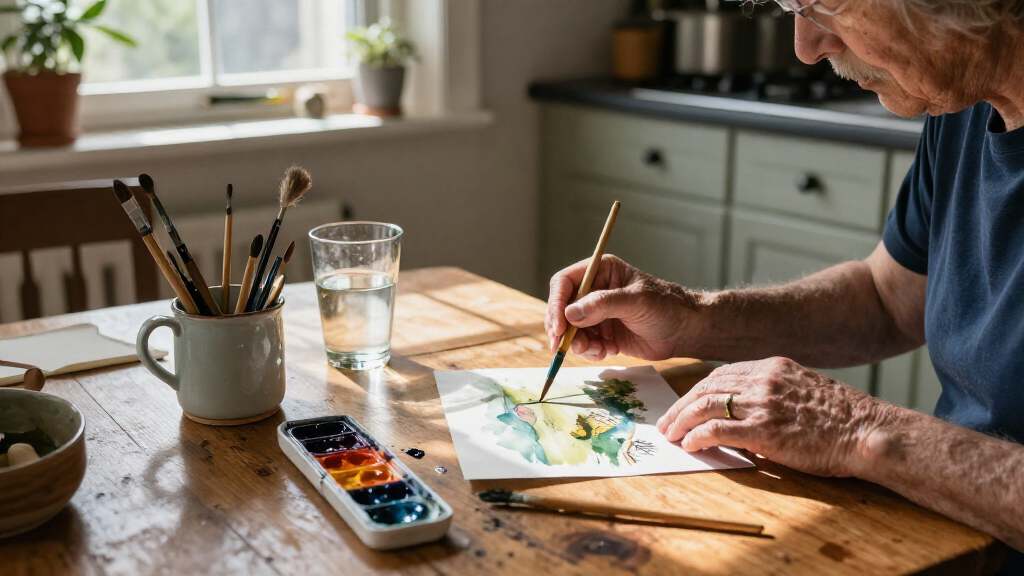
Simple painting hobbies to try at the kitchen table include watercolor postcards, acrylic panels, gouache studies, paint-by-number pictures, watercolor pencils, and painted stones. Start with a small project, use a surface made for your paint, cover the table, and keep art materials separate from food and cooking supplies. A few colors and a short session can be enough to make something you enjoy.
A postcard-sized painting can turn an ordinary afternoon at the kitchen table into something worth keeping. You do not need a studio or a cupboard full of paints; you need a little clear space, a suitable surface, and an idea small enough to enjoy finishing.
This guide walks you through simple painting hobbies you can try at home, from loose watercolor flowers to guided paint-by-number pictures. You will also find practical ways to choose supplies, protect your table, and pause a project without leaving a muddle behind.
Choose a project that fits your preferred style: guided kits, watercolor pencils, loose washes, or bold acrylic shapes.
Start small with a postcard, small panel, stone, or simple still life.
Match the paint to its surface; watercolor, acrylic, and ceramic projects have different material needs.
Cover the table, keep art supplies apart from food and cooking tools, and clean brushes according to their paint instructions.
A brief session focused on one small task can move a picture along without needing a full afternoon.
A small-space guide · Make something by hand
Simple Painting Hobbies to Try at the Kitchen Table
A postcard, a few colors, and a clear corner of the table can be enough. Find a painting style that fits your afternoon, choose a surface made for your paint, and make room for a hobby you can pause and enjoy.
Keep the first picture small enough to finish—or happily return to.
01 / Pick a project
Seven ideas that fit the table
Choose a familiar subject and a format that is easy to set out, finish, and put away.
Watercolor postcards
Paint a flower, hillside, or simple sky on absorbent postcard-size paper.
Acrylic panels
Try a small landscape or houseplant with opaque shapes and a limited palette.
Gouache studies
Make a small illustration or color study; wet gouache can be reworked.
Paint-by-number
Follow numbered areas when you want the composition planned for you.
Painted stones
Decorate a smooth stone with paint suited to the surface and its use.
Watercolor pencils
Draw leaves or a teacup, then soften selected marks with a damp brush.
Still-life studies
Paint a pear, mug, or small plant from life, noticing shape and light.
02 / Find your fit
Choose by the kind of afternoon
There is no universally easiest medium. The right choice is the one whose process sounds enjoyable to you.
A guided kit offers a clear route. Watercolor pencils begin with drawing. Loose watercolor welcomes flowing color, while acrylic supports bold, covered shapes.
Think of a small picture like a pot of soup simmering: tend it for a while, step away, and come back when it suits you. A little project keeps each decision manageable.
Set a pear by the window. Paint its curved green shape, one patch of yellow light, and a simple shadow.
03 / Make the materials work
Pair the paint with its surface
The surface affects how water behaves, how layers can be changed, and how sturdy the finished piece feels.
Made to handle water more comfortably than thin printer paper, which may buckle.
Try paper made for acrylics, a canvas panel, or primed wood for a steady base.
Check the paint label for suitable surfaces and directions for curing or sealing.
Gouache has an opaque, matte finish and can be reworked with water while wet. Watercolor pencils give you a choice: keep some lines crisp and soften others.
Check product instructions before you begin. Matching materials helps you spend more time painting and less time compensating for a surface that does not suit the medium.
04 / Set up and reset
A tidy table makes it easier to begin
Make protection and cleanup part of the setup, so pausing the project feels simple.
Protect the worktop
Lay down a washable tablecloth, plastic mat, or scrap paper before opening paint.
Keep food apart
Keep rinse water, paints, and tools away from food and cooking supplies; store art materials separately.
Gather a small kit
One suitable paint set, a few brushes, the right surface, water or palette, and paper towels are often enough.
Clean as directed
Close containers and rinse brushes as appropriate. Acrylic can be difficult to remove once dry.
05 / A flexible rhythm
Small steps add up to a finished picture
No studio or full afternoon needed. Come back to the work when you have a little time.
Pick a familiar subject.
Match paint and surface.
Work on one small task.
Pack up safely and neatly.
Add a detail when ready.
Brush control, color mixing, and judging how much water or paint to use improve with repetition. A brief session focused on one task can move a picture along.
Compact palettes, pre-printed kits, short tutorials, and hybrid materials offer more ways to begin. Availability and product details vary by location.
Choose a Painting Hobby That Fits Your Afternoon
Simple painting hobbies to try at the kitchen table work best when they suit your mood, space, and patience that day. If you want a clear path, choose a guided kit; if you like drawing, try watercolor pencils; if you would rather experiment, make a small color wash. Your first project can be modest and still feel satisfying.
Think of a small painting as a pot of soup simmering on the stove: you can tend it for a while, step away, and return when it suits you. A postcard, small panel, or single painted stone lets you work in short stretches. For example, you might sketch a red barn in the morning, then add the dark roof and a row of trees after lunch. The small scale matters because it keeps each decision manageable; you can practice one color or shape without committing to a large piece that may feel unfinished for days.
Use these preferences as a starting point, not a rulebook:
- Guided steps: paint-by-number kits offer outlines and numbered colors, reducing the planning involved so you can focus on brush control and filling shapes.
- Drawing first: watercolor pencils let you make pencil marks and soften them with a damp brush, combining the familiar control of drawing with the less predictable effect of water.
- Loose color: watercolor suits washes, flowers, and simple skies. Its transparent layers can look light and lively, though colors may spread or blend in ways that are harder to control.
- Bold coverage: acrylic can make opaque shapes on a compatible panel or paper. It hides earlier marks well, but it dries quickly, so it rewards having your colors and tools ready before you begin.
There is no single easiest medium for everyone. A tidy-minded beginner may enjoy the numbered spaces of a kit, while someone who likes a little surprise may enjoy watercolor’s soft edges. The useful choice is the one whose tradeoffs sound pleasant to you: more guidance and less improvising, or more freedom and more uncertainty.
Products Worth Considering

EVERECO Polycarbonate Greenhouse Panels, 8 ft × 4 ft × 0.24 in, 6-Pack

VEVOR 14-Pack Polycarbonate Greenhouse Panels, 2 × 4 ft

Traeger Westwood Wood Pellet Grill and Smoker, 653 sq. in., WiFIRE
As an affiliate, we earn on qualifying purchases.
Try These Seven Projects Without Taking Over the Table
Simple painting hobbies to try at the kitchen table include small projects that use familiar subjects and fit on one sheet or panel. A mug, a garden flower, or a postcard landscape gives you a clear place to begin. You can choose one project and finish it in a sitting, or return to it later. Familiar subjects are useful practice because you already know what they look like; that leaves you free to notice color, edges, and brush marks instead of inventing everything at once.
For instance, set a pear beside the window and paint its green body with one yellow patch where the light lands. It may look more like a pear than a perfect still-life study, and that is the charm. You are paying attention to shape and color, one brushstroke at a time. Looking closely at one simple object also shows how much a few choices can suggest: a curved outline, a shadow, and a highlight may be enough to make the fruit feel round.
- Watercolor postcards: Paint a simple sky, flower, or hillside on watercolor paper cut to postcard size. The small format encourages you to simplify the scene, while the paper gives watery pigment room to spread and settle.
- Acrylic panels: Use a small panel and a limited palette for a bold landscape or a painted houseplant. A rigid surface is steady under the brush and supports opaque layers, though acrylic can dry on brushes and palettes if left unattended.
- Gouache color studies: Try the opaque, matte paint for small illustrations or blocks of bright color. It can cover a previous color while wet, which makes corrections possible, but adding water later can reactivate earlier layers.
- Paint-by-number kits: Follow the printed areas when you want help planning the picture. The guide removes much of the composition work, though the printed design leaves less room to change the picture as you go.
- Painted stones or ceramics: Choose paint suited to the surface, then follow its label for curing or sealing. These objects can become small decorations, but the finish and durability depend on the material and product instructions.
- Watercolor pencils: Draw leaves or a teacup, then brush water across some marks. You can leave some lines crisp and soften others, giving you a way to control how painterly the result feels.
- Simple still lifes: Paint a piece of fruit, a mug, or a small plant from life. Working from an object lets you compare what you see with what you paint, building observation skills as well as confidence.
Keep the first attempt small. A little picture is easier to store, easier to finish, and forgiving when you want to try another idea next week. It also gives you a useful record of what you liked—perhaps a particular color, surface, or pace—before you invest in a larger project.
Match Your Paint to the Surface Before You Begin
The right surface helps your paint behave as expected: watercolor needs absorbent watercolor paper, acrylic needs a compatible surface, and ceramics may need specialty paint. Checking the label before you buy can save frustration later. Paint and surface are a pair, much like the right shoes for a garden path. The surface affects more than whether paint sticks: it changes how quickly water soaks in, how easily a layer can be corrected, and how sturdy the finished work feels.
Imagine brushing a watery blue sky onto thin printer paper: the sheet may buckle, and the color may spread unevenly. Watercolor paper is made to handle water more comfortably. Acrylics suit paper made for acrylic, canvas panels, or primed wood; a small panel can be a practical place to start when you want a sturdier feel. Choosing a compatible surface reduces avoidable frustrations, so you can spend your attention learning the paint rather than trying to compensate for buckling or poor adhesion.
Gouache has an opaque, matte finish and can be reworked with water while it is wet, which makes it handy for small illustrations. Watercolor pencils offer another route: you draw first, then use a damp brush to soften selected marks. If you decorate a stone, glass item, or ready-to-paint ceramic, check the paint instructions for that specific material. Specialty paints may involve drying, curing, or sealing steps; skipping them can affect the finish, so the label is part of the project plan.
As a real-world example, if you want to paint a blue-and-white teacup, you could sketch it on watercolor paper with pencils, or block it in with acrylic on a small compatible panel. The subject stays the same; the surface and feel of the session change. Paper makes the image light and easy to store, while a panel gives you a firmer support and a more solid finished object.
Start With a Small Kit and Spend Only as You Need
You can begin painting with one suitable paint set, a few brushes, an appropriate surface, water or a palette, paper towels, and a covering for the table. A large collection of colors is not required. Starting small lets you discover what you enjoy before buying more supplies. It also makes setup less demanding: fewer choices mean less time arranging materials and more time trying the actual activity.
For a watercolor postcard, for example, you might set out a compact palette, two brushes, watercolor paper, a water jar, and a piece of scrap paper for testing color. With acrylics, a small panel and a few colors can be enough for a simple flower. Mixing yellow and blue to make green can be part of the fun; it is a little like finding the right seasoning by taste. A limited palette may not produce every color you imagine, but working within it helps you learn how colors influence one another.
Choose supplies for the project rather than a dream of every project you may someday try. A few handy checks:
- Read the surface label: make sure the paper or panel suits your chosen medium. The right surface can prevent frustrating results that might otherwise seem like a problem with your skill.
- Begin with a few colors: a limited palette keeps the table clear and gives you practice mixing. You trade convenience for learning; premixed colors save time, while mixing helps you understand how to make new shades.
- Pick a compact project: a postcard or small panel costs less to start than a large canvas. A smaller work also needs less storage and gives you a natural endpoint.
- Store art tools apart: keep paints, brushes, and rinse water separate from cooking supplies. A dedicated tray or box makes it easier to set up and put away materials without mixing them into the kitchen routine.
Compact travel palettes, pre-printed kits, short online tutorials, and step-by-step classes offer convenient ways to learn. Availability and details differ, so check the materials list before starting a project at home. A tutorial that uses a different paint or surface may still offer ideas, but its techniques might not transfer exactly.
Set Up Your Kitchen Table for a Calm, Tidy Session
A kitchen table can be a practical painting spot because it offers a steady surface, good light, and room to keep supplies together. A washable tablecloth, plastic mat, or scrap paper helps protect the top. Keep rinse water and paints away from food, drinks, and cooking tools. Treating setup as part of the hobby makes it easier to begin and limits the amount of cleanup waiting for you afterward.
On a bright morning, you might clear one end of the table, move the fruit bowl out of the way, and set your postcard on a scrap of cardboard. Place your water jar where your elbow will not catch it. A small tray can corral pencils, brushes, and paint tubes, like a shallow garden basket holding seed packets and twine. The tray gives the supplies a boundary, which helps a small work area feel organized without needing a permanent studio.
A comfortable setup should let you see your work without crowding your hands. If the light falls behind you, your shadow may cover the page; shifting the chair or turning the paper can help. Keep any drink intended for painting separate from a glass of water you plan to drink, and store materials away after the session. Clear separation helps avoid confusion and protects the kitchen’s everyday use.
Before you begin, make a quick place for each item: paper in the center, paint to one side, rinse water farther from the edge, and a towel within reach. These small choices leave you room to focus on the cheerful little details: a lemon-yellow window, a soft green leaf, or the shine on a favorite mug. If you know where everything belongs, you can return to the painting after a pause without having to rebuild your workspace.
Use Short Sessions to Finish More Little Pictures
A short painting session can be enough to make progress; there is no required length for a beginner. Set yourself one small task, such as mixing three greens or painting the outline of a cottage. A clear stopping point makes it easier to return without feeling you need a whole free afternoon. Small goals also make practice easier to notice: rather than judging whether the whole picture is good, you can see whether you tried a new color or made a steadier line.
For example, spend one session drawing a simple landscape on a postcard, then paint the pale sky and let it dry. Later, add the dark line of a hedge and a red roof. Watercolor, acrylic, and gouache each handle drying and reworking differently, so check the paint directions and allow time where needed. Working in stages can be especially useful at home because it gives you a natural moment to put materials away and reclaim the table.
Practice builds familiarity with brush control, color mixing, and how much water or paint to use. You may find that a brush holds more water than you expected, or that a color looks different once it dries. Those small surprises are part of learning, not a reason to abandon the picture. Noticing what happened gives you something specific to try next time, such as using less water or testing a color on scrap paper first.
Try repeating one subject in different colors. A mug painted once in blue and once in warm red gives you a simple way to notice how color changes a picture’s mood. Like planting the same seeds in different corners of the garden, the subject stays familiar while the result changes. Repetition keeps the task manageable while making the differences in your choices easier to see.
Make Cleanup Part of the Painting Routine
Prompt, careful cleanup helps protect your brushes, table, and household routine. Close paint containers, rinse brushes when appropriate, reshape the bristles, and let them dry before storing them. Follow the product instructions, especially for specialty paints and surfaces. A few minutes of care at the end preserves tools for another session and keeps wet materials from spreading into the rest of the kitchen.
Acrylic paint can be difficult to remove after it dries, so rinse acrylic brushes promptly according to the paint directions. Watercolor and gouache also need sensible brush care; do not leave brushes standing bristle-down in a jar, where the tips can bend. Lay them flat or let them dry with the bristles supported. Care is especially useful with a modest kit: when you have only a few brushes, a damaged one can limit the next project.
Suppose you finish a small blue landscape just before supper. Put the picture somewhere safe to dry, close the paints, wipe the mat, and move the rinse water away from food preparation. Keeping art tools in a separate box or tray makes the next session easier and reduces the chance that a brush ends up beside a cooking spoon. This small routine lets the table return to its usual purpose without making painting feel like a disruption.
Take a moment to check the surface instructions before washing or sealing painted ceramics and stones. Some projects need a particular curing process; others are decorative only. A tidy finish is part of the pleasure, leaving your table ready for a cup of tea or tomorrow’s little painting.
Frequently Asked Questions
What is the easiest painting hobby to start with?
The easiest choice depends on what you enjoy. A paint-by-number kit offers guidance, watercolor pencils combine drawing with paint effects, and a small watercolor postcard gives you room to experiment with washes.
What supplies do I need to start painting at home?
Begin with a paint set suited to your project, a few brushes, the right paper or surface, water or a palette as needed, paper towels, and a table covering. A small set of colors is enough to start.
Is watercolor or acrylic better for beginners?
Both can suit beginners, though they feel different. Watercolor uses water for thinning and cleanup but can spread unpredictably; acrylic is more opaque and versatile, but it dries quickly and needs prompt brush care.
Can I paint at the kitchen table without making a mess?
Yes. Cover the table, use small containers, keep rinse water away from the edge, and separate art supplies from food and cooking tools. Clean up promptly, especially after using acrylic paint.
What can I paint if I have no ideas?
Try a mug, a piece of fruit, a houseplant, a simple landscape, or a pattern of colored shapes. Painting the same subject in two different color schemes can also give you a fresh idea without needing a new setup.
How should I clean and store brushes?
Follow the paint maker’s directions, rinse brushes promptly when needed, reshape the bristles, and let them dry before storing. Avoid leaving brushes bristle-down in water, which can bend their tips.
Conclusion
Choose one small project, gather only the supplies it needs, and give yourself permission to learn as you go. A postcard sky or a painted pear does not have to be grand to bring color to an ordinary day.
When the brushes are rinsed and the table is clear, you will have a little picture to keep—and perhaps a reason to set out the paints again next week.