
TL;DR

Turn quiet afternoons into listening time
- Thousands of audiobooks, podcasts and originals
- Listen on your phone, tablet or Echo — also offline
- Cancel anytime
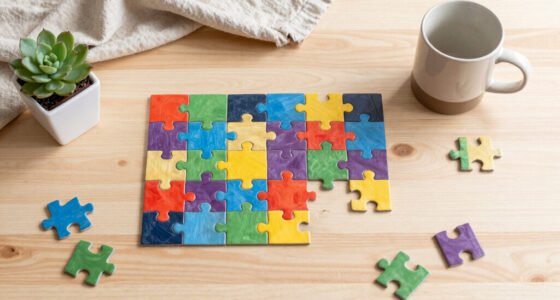
Getting started with jigsaw puzzles again is easiest when you choose a manageable piece count and a subject you love. Set up a stable, well-lit space and use simple sorting strategies to keep the experience relaxing rather than frustrating.
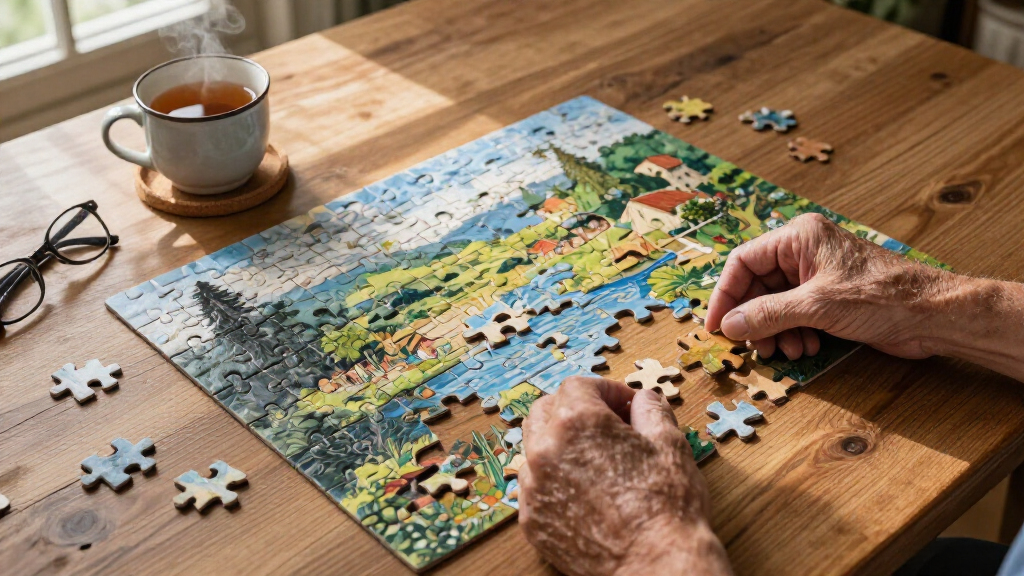
There is a specific kind of silence that settles over a room when you are deep in a puzzle. It is not empty; it is full of quiet focus, the soft click of cardboard fitting together, and the slow unfolding of a picture. If you haven’t picked up a box in years, that memory might feel distant, like a song you used to know by heart but can’t quite sing anymore.
You might worry that your hands aren’t as steady as they used to be, or that a thousand pieces seem like too much work. That is a fair concern. But getting started with jigsaw puzzles again doesn’t require you to tackle a masterpiece on day one. It is about finding a rhythm that suits your current pace of life, whether that means ten minutes with your morning coffee or an hour after the garden is watered.
This guide is here to help you ease back into the hobby with dignity and comfort. We will look at how to choose a puzzle that invites you in rather than challenging you, how to create a workspace that respects your body, and how to enjoy the process without the pressure of finishing.
Choose a puzzle based on image clarity and personal interest, not just piece count.
Set up a well-lit, comfortable workspace with enough room to sort pieces without stress.
Use simple sorting strategies like finding edges first, but feel free to start with distinctive objects instead.
Keep sessions short and flexible to prevent fatigue and maintain enjoyment.
Embrace modern options like digital puzzles or personalized photos if they suit your lifestyle.
Choosing a Puzzle That Feels Like a Treat, Not a Task
The first step in getting started with jigsaw puzzles again is selecting a box that sparks joy, not dread. You are not training for a competition. You are looking for a pleasant way to spend time. Start with a subject that you genuinely love. If you adore birds, pick a puzzle featuring a vibrant flock of cardinals or blue jays. If you love your kitchen garden, find one with a basket of heirloom tomatoes or a row of sunflowers.
Image choice matters more than piece count. A 500-piece puzzle with a complex, detailed image can be harder than a 1,000-piece puzzle with large, distinct blocks of color. Look for clear, varied imagery. Strong color differences and recognizable objects make sorting easier and more satisfying. Avoid puzzles with large areas of uniform blue sky or dark forest green, as these can be frustrating to distinguish.
Consider the physical format. Large-piece puzzles are easier on the eyes and fingers, making them a wonderful choice if you want to avoid straining. They allow you to see the details clearly without needing to squint. On the other hand, if you have limited table space, a mini puzzle might fit better on a side table next to your favorite armchair.
Here is a quick guide to help you match a puzzle type to your current mood and space:
| Puzzle Type | Best For | Why It Works |
|---|---|---|
| Large-Piece | Comfort & Visibility | Easier to handle and see; reduces eye strain. |
| Standard (500-750) | Balance & Focus | Manageable session length; satisfying progress. |
| Mini/Compact | Small Spaces | Fits on a side table; quick to set up. |
| Personalized Photo | Emotional Connection | High motivation; meaningful subject matter. |
Products Worth Considering

Sinimaka 8-Pack Polycarbonate Greenhouse Panels, 8 x 4 ft, 6mm Twin-Wall, UV-Coated Translucent

Orbit B-hyve XR 16-Zone Indoor/Outdoor Smart Sprinkler Timer
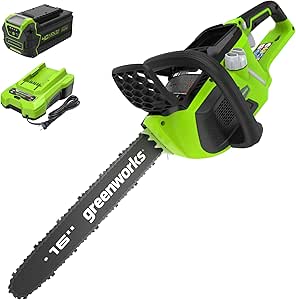
Greenworks 40V 16-Inch Brushless Cordless Chainsaw with 4.0Ah Battery and Charger
As an affiliate, we earn on qualifying purchases.
Setting Up a Workspace That Respects Your Body
A frustrating puzzle session often starts with an uncomfortable chair or poor lighting. You want a space where you can sit for an hour without your back aching or your eyes feeling tired. Start with a stable, well-lit surface. Natural light is best, as it shows the true colors of the pieces. If you are puzzling in the evening, use a lamp with a bright, warm bulb that casts light directly onto the table, not into your eyes.
Make sure you have enough room to spread out. You do not need a banquet table, but you do need enough space to sort pieces without them sliding off the edge. If you do not have a dedicated puzzle table, consider a puzzle board or a mat. These allow you to roll up the puzzle at the end of the day, protecting your progress and clearing your dining table for meals.
Small tools can make a big difference in organization. Use small bowls or trays to sort pieces. You might have one bowl for edges, one for sky, and one for the main subject. This keeps your workspace tidy and prevents the feeling of being overwhelmed by a sea of cardboard. A comfortable chair with good back support is non-negotiable. If you need a cushion for extra comfort, use one. There is no rule against making yourself cozy.
Remember, the goal is sustainability. If your setup feels cramped or uncomfortable, you will not want to return to it tomorrow. Take the time to arrange your space so that it feels like an invitation to relax, rather than a chore to complete.
Simple Sorting Strategies That Reduce Overwhelm
Many people feel stuck before they even begin because they try to solve the whole puzzle at once. The secret to getting started with jigsaw puzzles again is to break the task into small, manageable steps. You do not need to organize every single piece before you start building. In fact, trying to sort all 1,000 pieces at once can be exhausting.
Start by finding the edge pieces. This is a common strategy because it creates a frame, giving the puzzle a defined boundary. It provides a sense of structure and accomplishment early on. However, this is not a rule. If you prefer to start with a distinctive object, like a red barn or a yellow sunflower, do that instead. The best strategy is the one that keeps you engaged.
Once you have a border or a central image, sort the remaining pieces by color or pattern. Turn pieces image-side up if you can. This makes it easier to spot matching colors. If the puzzle is large, sort only a portion of the pieces at a time. Work on the sky, then the grass, then the flowers. This keeps the pile manageable and prevents visual clutter.
- Find the edges: Look for pieces with one flat side.
- Build the frame: Assemble the border to define the space.
- Sort by color: Group pieces by dominant colors (blue, green, red).
- Focus on details: Pick out pieces with distinct features like text or unique shapes.
- Build in sections: Work on one area at a time rather than the whole picture.
Keep the box lid nearby as a reference, but do not feel pressured to match every tiny detail immediately. Let your eyes rest on the image occasionally, then return to the pieces. The process should feel like a gentle unfolding, not a frantic search.
Making the Hobby Fit Around Your Daily Life
One of the greatest joys of jigsaw puzzles is their flexibility. Unlike a garden that needs watering at specific times, a puzzle waits patiently for you. You can pick it up for ten minutes or two hours. This makes it an ideal hobby for a later life that values independence and comfort. You do not need to commit to a daily schedule. If you feel like puzzling on Tuesday, do it. If you prefer to read on Wednesday, leave the puzzle on the table.
Short sessions count. You do not need to finish a puzzle in one sitting. In fact, taking breaks can help you see the image with fresh eyes. If your eyes feel tired or your hands feel stiff, step away. Make a cup of tea, listen to a favorite song, or step outside to watch the birds. Returning to the puzzle after a break often makes the next piece easier to find.
Consider the social aspect. Puzzles can be a solitary, meditative activity, or they can be a shared experience. Invite a friend over for coffee and a puzzle. Work on it together while you chat. This turns the hobby into a social ritual, fostering connection without the pressure of a formal event. Alternatively, pair puzzling with an audiobook or a favorite radio program. The background noise can make the quiet focus of the puzzle feel even more cozy.
There is no “right” way to enjoy this hobby. Some people like to finish a puzzle in a weekend; others take a month. Both are valid. The key is to keep the experience enjoyable. If you find yourself getting frustrated, put the puzzle away for a few days. There is no deadline. The picture will still be there when you are ready to return.
Handling Frustration and Keeping It Fun
Even the most peaceful hobby can have moments of frustration. You might search for an hour for a single piece, only to find it under the table. Or you might realize you have placed a piece incorrectly, forcing you to undo your work. These moments are normal. They are part of the process, not a sign that you should stop.
When you feel stuck, change your approach. If you are struggling with a section of blue sky, move to a different part of the puzzle. Work on the green grass or the red flowers. Switching focus can give your eyes a rest and often helps you spot the missing piece when you return. If the frustration feels overwhelming, take a break. Step away from the table. The puzzle is not going anywhere.
Remember that piece counts are only a rough guide. A 500-piece puzzle with a complex image can be harder than a 1,000-piece puzzle with simple blocks of color. Do not judge your skill by the number on the box. Judge your experience by how you feel. If you are enjoying the process, you are doing it right.
“The goal is not to finish the puzzle as quickly as possible, but to enjoy the quiet time spent with it.”
Physical puzzles create a finished image that you can display, but framing is optional. You can take it apart and start again, or share it with a friend. There is no pressure to preserve every puzzle. The value is in the time spent, not just the final result.
Exploring Modern Options for Traditional Hobbies
If you are getting started with jigsaw puzzles again, you might be surprised by how much the hobby has evolved. While the core experience remains the same—fitting cardboard pieces together—there are new options that can make the hobby more accessible and enjoyable.
Digital puzzles are a convenient alternative if you have limited space or want to avoid the mess of sorting pieces. Apps and websites allow you to solve puzzles on a tablet or computer. You can change the piece count, use hints, and save your progress instantly. While they lack the tactile satisfaction of physical pieces, they are a great option for travel or small apartments.
Personalized puzzles are another modern trend. You can have a puzzle made from a photograph of your garden, your family, or a favorite vacation spot. These puzzles carry emotional weight, making them more meaningful to complete. However, choose your photo carefully. A picture with distinct colors and details is much more satisfying than one dominated by a single shade.
Community options have also expanded. Online groups and local events allow you to connect with other puzzlers. You can share tips, trade puzzles, or even meet up for a puzzling afternoon. This sense of community can add a new layer of enjoyment to the hobby, turning a solitary activity into a shared passion.
Frequently Asked Questions
What size puzzle should I start with?
A 300–500 piece puzzle is a common starting point for someone easing back in. However, choose based on the image complexity and your available time, not just the number. A simpler image with 500 pieces may be easier than a complex one with 300.Should I always do the border first?
No, it is not required. While assembling the border provides structure, some people prefer to start with a distinctive object or a specific color area. Choose the strategy that feels most engaging to you.How do I store an unfinished puzzle?
Use a puzzle mat or board that can be rolled up or moved easily. If you don’t have one, cover the puzzle with a large board or sheet to protect it from dust and pets. Avoid moving the puzzle without support to prevent pieces from shifting.Are digital puzzles as enjoyable as physical ones?
It depends on your preference. Digital puzzles save space and offer convenient features like hints and easy storage. Physical puzzles provide a tactile experience and a tangible finished image. Both have their merits.What should I do with a completed puzzle?
You can frame it, take it apart to do it again, or donate it to a local library or community center. If you plan to give it away, check that all pieces are present to ensure the next puzzler has a complete experience.Conclusion
Getting started with jigsaw puzzles again is about reclaiming a quiet, satisfying ritual. It is not about speed or skill, but about finding a pace that suits your life. Choose a picture you love, set up a comfortable space, and let the pieces come together at their own rhythm.
So, find that box in the closet, or pick out a new one that catches your eye. Pour yourself a cup of tea, sit down, and begin. The picture is waiting for you.