
TL;DR

Turn quiet afternoons into listening time
- Thousands of audiobooks, podcasts and originals
- Listen on your phone, tablet or Echo — also offline
- Cancel anytime
Simple sewing projects for relaxing days are small, useful makes such as fabric bookmarks, sachets, napkins, felt ornaments, and drawstring bags. Start with stable cotton or felt, gather a few basic tools, and choose hand sewing or machine sewing to suit your mood; a project can stay enjoyable even when you pause before it is finished.
A sewing machine can sit quiet in the corner while you make something lovely by hand. A needle, a little thread, and a square of cotton can be enough for a peaceful hour at the kitchen table.
Simple sewing projects for relaxing days are small, approachable makes that give you room to enjoy the work without wrestling with complicated patterns. You can make a bookmark for your current read, a sachet for a linen drawer, or a hemmed napkin from fabric you already have.
This guide walks you through choosing a comfortable first project, gathering basic tools, and working at a pace that suits you. You’ll see which ideas are easiest by hand, where a sewing machine helps, and why a neat result matters less than an enjoyable afternoon. Think of the process like tending a small garden bed: a little care, one task at a time, and something useful at the end.
Choose a small make such as a bookmark, sachet, or felt ornament when you want a clear finish and simple seams.
Start with stable quilting cotton or felt; stretchy and slippery fabrics can be harder to control.
A needle, thread, scissors, pins or clips, a measuring tool, and an iron cover many beginner projects.
Hand sewing works well for many small items; a machine can speed up longer seams and repeated hems.
Pause whenever a step feels fiddly. A project waiting safely in its basket is still a good use of your afternoon.
Simple Sewing Projects for Relaxing Days
Small, useful sewing projects make room for a calm afternoon. Choose a simple shape, work by hand or machine, and pause whenever you like.
Pick a project for your mood
Straightforward shapes let you focus on stitching instead of complicated construction.
Fabric bookmark
Join two rectangles, turn, and press for a useful finish.
Lavender sachet
Stitch two squares, fill if suitable, and close the opening.
Reusable napkin
Hem cotton or linen squares with simple straight seams.
Drawstring bag
Make a useful pouch with a cord channel to sew.
Gather a few basics
A small, tidy setup can make it easier to settle into a project.
- Needle and thread
- Fabric scissors and pins or clips
- A measuring tool and an iron
- Stable quilting cotton or felt
Choose how to sew
- Good for small items like sachets, bookmarks, and felt ornaments
- Lets you stitch at a slower pace
- Can speed up longer seams
- Useful for repeated hems, such as napkins
Make a bookmark, one step at a time
Use stable cotton and place the patterned sides together.
Leave a small opening so you can turn the fabric right side out.
Ease the corners, press flat, and close the opening with small stitches.
Choose a small project that leaves room to enjoy the stitching
Simple sewing projects for relaxing days work best when you can understand the shape, take one step at a time, and stop without losing your place. A bookmark, sachet, or felt ornament asks for only a few pieces and basic seams, so you can spend your attention on the pleasant rhythm of stitching instead of a complicated fit.
Start by asking what sounds satisfying today. If you want a quick finish, a bookmark made from two rectangles can feel just right; if you like hand stitching, a felt leaf or star offers a chance to make small decorative stitches along the edge. A drawstring bag gives you a useful pouch, though its cord channel calls for a little more measuring than a flat ornament.
Time estimates in tutorials are guides, not promises. Cutting fabric, pressing folds, learning a new technique, or unpicking a crooked seam can take longer than expected. If you sit down after lunch to make a sachet and finish only the seams, you can tuck the work into a basket and fill it tomorrow.
That pause counts as part of the project. The aim is a pleasant activity, not a race to a finished object. Leave yourself a note about the next step, such as “fill and close the opening,” and the work will be easy to pick up again.
Products Worth Considering
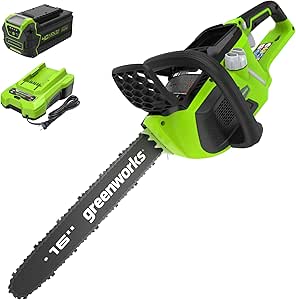
Greenworks 40V 16-Inch Brushless Cordless Chainsaw with 4.0Ah Battery and Charger

Orbit B-hyve XR 16-Zone Indoor/Outdoor Smart Sprinkler Timer

Orbit B-hyve XD 4-Port Smart Hose Watering Timer with Wi-Fi Hub
As an affiliate, we earn on qualifying purchases.
Gather five basic supplies before you begin
You can sew many small projects with a short list of supplies: needle and thread, fabric scissors, pins or clips, a measuring tool, and an iron. A sewing machine is optional for hand-sewn projects, while good light and a clear patch of table make the work easier to manage.
Choose fabric that behaves well under your fingers. Quilting cotton is a steady woven fabric for bookmarks, napkins, and bags, and felt works nicely for ornaments because it does not fray like woven cloth. Stretchy jersey, slippery satin, and very lightweight fabric may shift or curl, which can turn a restful project into a bit of a wrestling match.
Before cutting, check that your fabric is clean and suitable for the intended item. Washing can help when shrinkage or dye transfer could matter; pressing smooths wrinkles so measurements are easier to follow. For a napkin that will be washed often, for example, prewashing its cotton can help avoid a surprise change in size later.
Keep needles and scissors in a safe place between sessions, and follow your machine maker’s instructions if you use one. An iron gets hot, so place it securely and let it cool before putting it away. A tidy tray for small tools can make the whole setup feel like an invitation rather than a chore.
Make a fabric bookmark for a satisfying first finish
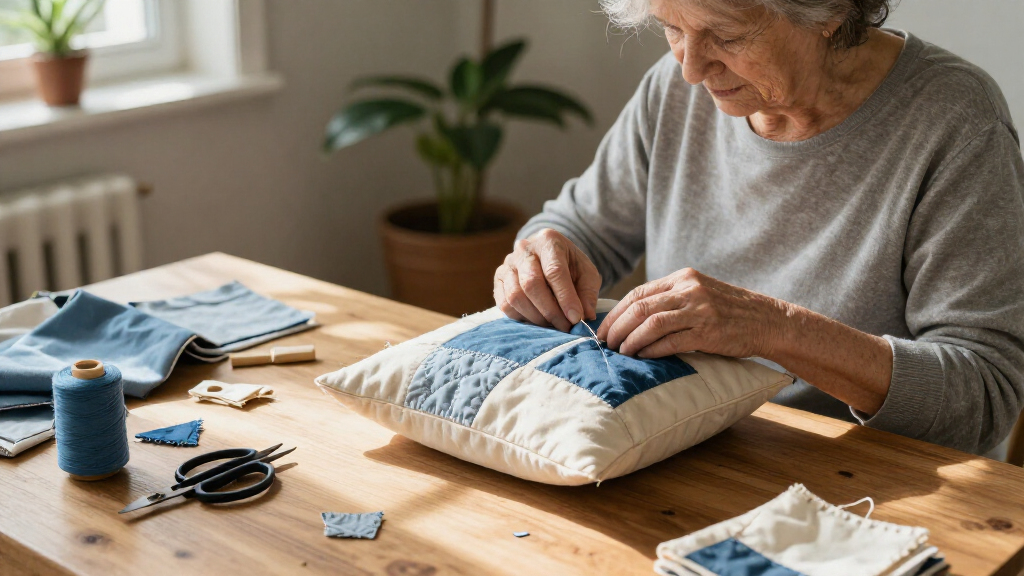
A fabric bookmark is a good first project because it uses two simple rectangles, a straight seam, and a small opening for turning the fabric right side out. The finished piece slips neatly between the pages of a novel or garden journal, and you can hand sew it slowly or use a machine for the longer edges.
Cut two matching rectangles from stable cotton, place their right sides together, and stitch around the edges while leaving a small gap. Turn the bookmark through the gap, ease its corners gently into shape, press it flat, then close the opening with a few small stitches. If you prefer an even simpler version, fold one rectangle lengthwise and sew the open sides.
For a real afternoon example, use a scrap of blue-and-white gingham left from a kitchen project and pair it with a plain cotton backing. The print gives the bookmark charm without adding extra sewing steps. You might add a short ribbon at one end, but skip it if you want to keep the construction easy.
Turning a small shape can feel fiddly, especially at the corners. Use a blunt tool, such as the end of a pencil, with care, and avoid pushing hard enough to pierce the fabric. A slightly rounded corner is perfectly serviceable; it still marks your place while you enjoy the soft feel of handmade cloth.
Sew a lavender sachet from two small fabric squares
A simple sachet is a small fabric pouch made by stitching two squares together, leaving an opening, adding a suitable filling, and closing the gap. Its compact size makes it a friendly hand-sewing project, and a pair of squares cut from a cotton scrap can become a tidy addition to a drawer or a thoughtful small gift.
Place the fabric squares with their patterned sides together and sew around three sides, or around all four while leaving an opening near one edge. Turn the pouch right side out, add dried lavender if it suits the recipient, then close the opening with neat stitches. If the recipient has sensitivities or simply dislikes scented items, choose an unscented filling or make the sachet as a small fabric pouch instead.
Imagine using a leftover floral cotton from a pillowcase repair. The little pouch can match a linen cupboard without requiring a whole new length of fabric. A narrow ribbon loop is optional, though leaving it off keeps the sewing simple and avoids adding another small part to attach.
A sachet does not need to be perfectly square to be useful. Secure your knots and keep the opening closed so the contents stay inside. This is a lovely project for practicing steady stitches: each one brings you a little closer to a finished object, and no one will measure the seams with a ruler.
Turn plain cotton into napkins you’ll use every day
Reusable napkins are made by hemming the edges of square cotton or linen pieces, giving you practical straight-line sewing practice and an item you can use at meals. They suit a hand-sewing session or a sewing machine, and making a small set lets you repeat the same simple task without learning a new construction for each piece.
Begin with a square of stable fabric in a size that feels comfortable on your table. Fold each raw edge inward, press it flat, then fold it again to hide the cut edge and stitch the hem. Pressing is more than a finishing flourish: it holds the fold in place and makes the seam easier to sew evenly.
If you have an old cotton tablecloth with a worn center but sound edges, check whether a clean section can become a napkin. For a new project, prewash fabric when shrinkage or color bleeding could be a concern. A first napkin can be a little uneven at the corners; use it for a weekday supper and save the more carefully matched pieces for guests if you like.
Napkins take longer than a tiny sachet because you sew around all four sides, but they reward steady work with everyday usefulness. Make one at a time, or cut several squares and hem them over a few afternoons. Your hands learn the repeated motion, and the stack of finished cloth grows at a relaxed pace.
Try felt ornaments when you want easy hand stitching
Felt ornaments are small shapes sewn from felt, a useful choice for beginners because its edges do not fray like woven cotton. You can cut two matching shapes, stitch around most of the outline, add a little filling if desired, and finish the last stretch with decorative stitches.
Draw a simple heart, leaf, star, or bird on paper first, then use it as a guide to cut two pieces of felt. Place the shapes together and sew around the edge with a running stitch or blanket stitch. A few contrasting stitches can turn a plain green leaf into something cheerful, much like a bright ribbon on a familiar basket.
For example, a quiet winter afternoon might be the right time to make a pair of small red hearts from felt scraps. Leave them flat for a simple ornament or add a modest amount of filling before closing the edge. If you add a hanging loop, stitch it securely and keep small parts away from young children.
Felt shapes can be forgiving, but cutting still takes care. Keep scissors steady and choose a design with broad curves rather than tiny points for your first try. If a stitch lands a little unevenly, it becomes part of the handmade character, not a reason to abandon the work.
Compare hand sewing with machine sewing before you pick a project
Hand sewing suits small projects when you want a quiet, portable task, while a machine helps you stitch longer seams or repeat an item several times. Your best choice depends on what feels comfortable that day: a slow row of hand stitches can be calming, and a machine can make hemming a batch of napkins feel quicker.
| Project | Hand sewing | Machine sewing |
|---|---|---|
| Felt ornament | Easy to carry and decorate by hand | Usually unnecessary for a small shape |
| Bookmark | Works well for short seams | Convenient for straight, even edges |
| Napkin | Possible, though four hems take time | Speeds up repeated hems |
| Drawstring bag | Doable, with care around the channel | Useful for longer seams and the casing |
These are general guides, not rules. A person who enjoys hand stitching may happily hem a napkin over two evenings, while someone who finds the needle awkward may prefer a machine and a larger work surface. On a day when setting up the machine feels like too much, a felt ornament may be the kinder choice.
Try one short seam before committing to a whole project. It gives you a chance to notice whether the pace, tools, and fabric suit you. The goal is to choose a method that feels manageable, not to prove that one way of sewing is better than another.
Keep the session calm with a few simple habits
A calm sewing session starts with one small goal, a comfortable place to sit, and the tools laid out before you begin. Choose a project that fits the time and energy you have, work through one step at a time, and give yourself permission to pause when the light fades or your concentration wanders.
- Choose one small make. Set out fabric for a bookmark or one sachet rather than cutting several projects at once.
- Prepare your work. Smooth the fabric, measure carefully, and place scissors, thread, pins, and your instructions within reach.
- Sew a short stretch. Finish one seam or one edge, then check that your thread and fabric still feel easy to handle.
- Pause or continue. If you stop, leave a note about the next step and store needles and scissors safely.
Suppose you start a drawstring bag after breakfast and discover that turning the narrow channel feels fiddly. Set it aside and switch to hemming a small cotton square, or simply pause for a cup of tea. A new technique can ask for more patience than expected; that does not mean you chose badly.
Comfortable light helps you see the thread and fabric, and keeping the table clear gives your hands room to move. If sewing becomes frustrating, stop before the irritation takes over the afternoon. A good session can end with one neat seam and a project waiting in its basket.
Use scraps for small gifts without adding complicated steps
Small fabric scraps are well suited to small projects, including bookmarks, sachets, felt ornaments, and patchwork coasters. The key is to match the scrap’s size and condition to the project: a narrow strip may suit a bookmark accent, while two similar squares can become a pouch or sachet.
Sort scraps by fabric type and weight before choosing a pattern. A firm cotton piece is easier to handle than a slippery scrap, and felt works well for shapes that need an exposed edge. If your pieces differ greatly in thickness, keep them separate for a first project so seams stay easier to sew.
Imagine saving a handful of cotton offcuts from hemming curtains. One square might become a sachet, while two coordinated pieces could make a bookmark for a friend who enjoys reading by the window. For a coaster, scraps can be layered with batting, though the extra thickness takes more effort and may be a better next step after you have practiced simpler seams.
There is satisfaction in turning a useful leftover into something small and finished. Still, do not feel you must rescue every scrap. If a piece is too small, worn, or awkward for your chosen project, set it aside for another use or let it go; the sewing should remain pleasant, not become a sorting obligation.
Frequently Asked Questions
Can I sew these projects by hand?
Yes. Sachets, felt ornaments, bookmarks, and many small pouches can be hand sewn with a needle and thread. A machine is handy for long seams or making several items, but you do not need one for every project.
What is the easiest sewing project for a complete beginner?
A small felt ornament or a simple sachet makes a friendly first project because each uses small pieces and straightforward construction. A hemmed napkin is another good choice if you want to practice sewing a straight line.
What fabric should I use for beginner projects?
Try stable quilting cotton or felt first. Cotton is useful for bookmarks and napkins, while felt is convenient for ornaments because it does not fray like woven cloth. Stretchy or slippery fabrics can shift more as you work.
How long will a small sewing project take?
It depends on the project, your pace, and whether you are learning a new step. A small item may take less than an afternoon, but cutting, pressing, and fixing a seam can add time. Treat a tutorial’s estimate as a guide and pause whenever you like.
What can I make from leftover fabric?
Try a bookmark, sachet, felt ornament, or small pouch if you have scraps of a suitable size. Check that pieces are in good condition and similar in weight when the project needs two layers. A thicker layered coaster can be a next step once you feel comfortable sewing simple seams.
How can I make sewing feel less stressful?
Pick one small project, set out your supplies, and work in comfortable light. Focus on one step at a time, and pause if a technique starts to feel frustrating. You can leave a note about the next step and return another day.
Conclusion
Choose one small project, gather a few comfortable tools, and let the stitching set the pace. A slightly crooked bookmark or a sachet finished tomorrow can still bring the pleasure of making something useful with your own hands.
When the afternoon light rests on the table and the thread finds its way through the cloth, you already have the heart of a relaxing sewing day.