
TL;DR

Turn quiet afternoons into listening time
- Thousands of audiobooks, podcasts and originals
- Listen on your phone, tablet or Echo — also offline
- Cancel anytime
The easiest way to clean a deck or patio is to sweep away dry leaves and dirt, then wash small sections with a surface-compatible cleaner, water, and a soft brush. Work at a comfortable pace, follow the label and manufacturer’s directions, and avoid excessive pressure that can damage boards, finishes, or joints.
A green film on the steps can turn a pleasant morning trip to the garden into a slippery surprise. The good news: cleaning your deck or patio does not have to mean wrestling furniture, scrubbing for hours, or firing up a pressure washer.
You can make the job gentler by clearing loose debris first, choosing a cleaner suited to your surface, and washing one small area at a time. This guide walks you through practical ways to clean wood, composite, concrete, stone, or pavers while keeping the work manageable and your outdoor space welcoming.
Think of the job as tending a garden path: small, regular care keeps it pleasant, while a little attention to shade, drainage, and fallen leaves can help grime stay away. You will also find guidance on slippery buildup, furniture, household cleaners, and when it makes sense to ask for help.
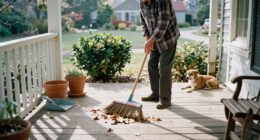
Sweep away dry leaves and loose dirt before washing so grit does not scrape the surface.
Use a cleaner labeled for your specific material, follow its directions, and test any cleaner or tool on a hidden spot.
Clean in small sections with a hose and soft-bristle brush; use a pressure washer only if the surface maker allows it.
Clear drains, trim plants that hold moisture against the surface, and clean spills promptly to slow grime buildup.
Ask for help with extensive stains, damaged boards, difficult access, or equipment you do not feel comfortable using.
Simple Deck and Patio Cleaning Without the Strain
Sweep first, then wash one small section at a time with a surface-compatible cleaner, water, and a soft brush. A gentle method protects the surface and makes the work easier to manage.
A gentle cleaning routine
Let the cleaner and brush do the work while you set a comfortable pace.
Sweep away dry leaves and dirt so grit does not scrape the surface.
Follow the product label and surface maker’s guidance; test a hidden spot first.
Use a hose, suitable cleaner, and soft brush, then rinse as directed.
Let the section dry fully before shifting furniture and cleaning the rest.
Match care to the surface
Wood, composite, concrete, stone, and pavers can react differently to cleaners and pressure.
Protect the grain
Choose a wood-labeled cleaner; excessive pressure can gouge boards or strip finishes.
Check the brand guide
Care instructions vary, so confirm the cleaner and method with the surface maker.
Mind the joints
Use compatible cleaner and controlled rinsing to avoid disturbing joints or bedding.
Make the job manageable
A few small adjustments can reduce lifting, bending, and rushed scrubbing.
- Move furniture in stages and clean the open area first.
- Use long-handled tools and work in small sections.
- Choose a mild, dry day and take breaks when needed.
- Sweep regularly and clear drains and gaps.
- Trim plants that hold moisture against the surface.
- Clean spills and slippery buildup promptly.
Avoid damage and slips
Dirt, algae, and mildew can make surfaces slippery when wet; shade, damp conditions, nearby trees, and poor drainage can speed buildup.
Start with a gentle clean that does the job
The simplest deck and patio cleaning routine is to remove loose debris, wet a small area, apply a suitable cleaner as its label directs, and gently brush or rinse. This order helps keep grit from scraping the surface and gives the cleaner a fair chance to work without demanding a marathon scrubbing session.
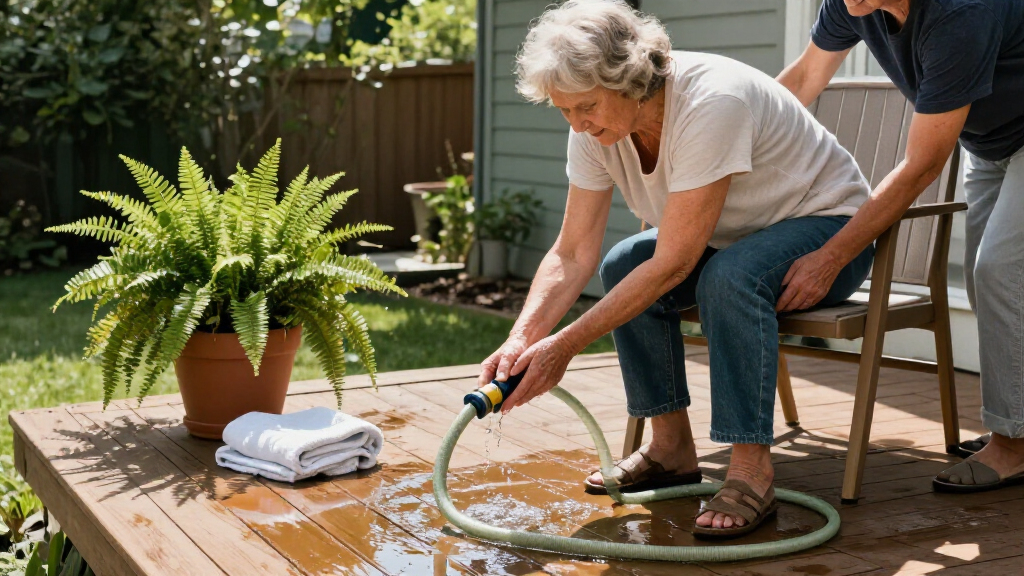
Begin on a dry day by moving a few light items and sweeping away leaves, seed pods, and loose dirt. A leaf blower can help with dry debris if you already use one comfortably; a broom works just as well. Then wash a manageable patch with a garden hose and a soft-bristle brush. Follow the cleaner’s directions for how long it should sit and how to rinse it.
For example, if the chairs cover half the patio, clean the open half first instead of clearing the whole space. You can rinse, let that section dry fully, and then move the chairs over to finish the rest. A small bucket, nearby hose, and long-handled brush can save repeated bending and make the work feel more like a brief porch chore than an all-day project.
Use this simple sequence:
- Clear the surface: Move a few items and sweep away leaves and loose dirt.
- Check the care guidance: Match the cleaner and method to the surface and its manufacturer’s instructions.
- Test a hidden spot: Test any cleaner or tool in an inconspicuous area before treating the whole surface.
- Wash a small section: Apply and rinse as directed, then move on when you feel ready.
That measured pace is useful when one corner has stubborn grime but the rest only needs a rinse. Let the cleaner and the brush do the work; aggressive scrubbing often adds strain without improving the result.
Products Worth Considering

Greenworks 48V (2 × 24V) 20-Inch Brushless Cordless Push Lawn Mower with Two 4.0Ah Batteries and Dual-Port Charger

Greenworks 40V 16-Inch Brushless Push Lawn Mower with 4.0 Ah Battery and Charger

Traeger Woodridge Wood Pellet Grill & Smoker, 860 Sq In, WiFi
As an affiliate, we earn on qualifying purchases.
Match your cleaner and tools to the surface
Deck and patio surfaces can react differently to cleaners, scrubbing, and pressure, so choose a method that fits the material. Wood, composite boards, concrete, natural stone, and pavers each have their own care needs; a product that suits one surface may stain or dull another.
Start with the care guide for your deck or patio, especially with composite decking, since different brands can give different instructions. Use a cleaner labeled for your material and follow the label exactly. If you are unsure, test any cleaner on a discreet spot and let it dry so you can check for discoloration before continuing.
Imagine a shaded wood deck with a few dark patches beneath a planter. A soft brush and an approved wood cleaner are a gentler first try than a high-pressure blast that could rough up the grain or strip a finish. On pavers, grime may sit along the joints, so controlled rinsing and a compatible cleaner can help avoid disturbing the bedding material.
Household favorites such as bleach, vinegar, or dish soap are not automatically safe for every surface. They may affect finishes, nearby plants, or specific materials, and they do not replace the manufacturer’s guidance. If the stain is rust, grease, or leaf tannin, look for a product designed for that stain and surface rather than escalating to a stronger general cleaner.
Pressure washers can gouge wood, remove protective finishes, or push water into joints. If your surface maker permits one, follow its pressure and nozzle guidance and keep the spray moving. For many routine cleanups, a hose, appropriate cleaner, and soft brush are enough—and much easier to control.
Make the work easier on your back and your afternoon
You can reduce the effort of deck and patio cleaning by dividing the job into short sections, using long-handled tools, and moving furniture in stages. A steady pace gives you room to notice drips, slippery patches, and loose boards without making the work feel like a race.
Pick a mild, dry day when you are not rushing to use the space again. Gather the broom, hose, brush, cleaner, and any gloves required by the label before you start. Clear one side of the patio, wash it, and leave enough time for the surface to dry as the product directions require. Then shift the furniture and finish the other side.
For instance, a small bistro table and two chairs can move to the lawn or a clear corner while you wash beneath them. If they are awkward or heavy, clean around them first and ask someone you trust to help shift them later. You do not need to lift everything in one go to make visible progress.
Long handles help you reach without leaning far across wet boards, while a soft brush lets you clean at a comfortable pace. Work from the far edge toward an exit so you do not have to cross a freshly washed, slick patch. Take a break when your grip or footing feels tired; the patio will wait.
Choose the smallest helpful task if you have only a little time. Sweeping up last night’s leaves or clearing a drain can make the space look better in minutes and may prevent damp debris from sitting against the surface until your next wash.
Clear slippery green buildup without making the surface worse
Green algae, mildew, and wet organic debris can make outdoor surfaces slippery, so remove buildup with a cleaner approved for your material and rinse as directed. Avoid trying to solve every dark patch with extra pressure or a stronger chemical; a harsh method can harm the surface and still leave the underlying damp conditions unchanged.
Shade, nearby trees, damp weather, and poor drainage all encourage grime to return. A north-facing step beneath an overhanging shrub, for example, may stay wet long after the sunny part of the deck dries. Clean that spot when you notice the film, then look for practical ways to let it dry faster, such as trimming plants that press against the boards or clearing a blocked drain.
Start by sweeping away leaves and loose growth. Apply the surface-compatible cleaner according to its label, give it the directed time to work, and use a soft brush only where needed. Rinse as directed and keep people and pets off the wet area until it is safe and dry. Keep runoff away from garden beds and waterways where possible, and store cleaning products securely.
While you clean, take a moment to notice loose boards, splinters, or slippery areas near steps. These observations do not require you to tackle a repair immediately; they help you decide whether a small fix or professional help is needed. If a patch remains slick after cleaning, or the surface seems damaged, pause and check the manufacturer’s guidance before trying another method.
For an ordinary leaf-stained corner, gentle cleaning may be enough. Persistent grease, rust, or tannin stains can call for a product made for that specific mark and surface. Follow its directions and test it discreetly, since stain removers can be more aggressive than everyday cleaners.
Keep grime from settling back in between washes
Regular sweeping, clear drainage, and prompt cleanup of spills can help keep a deck or patio cleaner between full washes. Small habits matter because wet leaves and dirt that sit in shaded corners have more time to leave marks and hold moisture against the surface.
After a windy afternoon, sweep the leaves away before they turn soggy. Clear gaps and drains so water can move off instead of pooling near the house. If a planter leaves a damp ring on the boards, shift it when practical and check that water can drain beneath it.
Take a simple patio table as an example. A spilled drink, muddy boot prints, and a few fallen leaves are easier to wipe or sweep that day than after weeks of foot traffic and rain. Keep a broom or brush nearby, and clean spills using a method safe for the surface rather than letting them dry in place.
A quick check after washing also gives you a chance to notice whether water drains away or lingers in the same corner. If plants crowd the deck, trim them back enough to improve airflow while respecting their growing needs. These steps will not keep every stain away, especially beneath trees, but they can reduce the buildup that makes a bigger cleaning day necessary.
Use the surroundings as your reminder. A shady patch that stays damp may need more frequent sweeping than a sunny, open area. Regular care can be as simple as a few minutes with a broom after a storm and an occasional wash when the surface needs it.
Know when a helper or professional makes sense
Ask for help when the surface is damaged, the staining is extensive, access is difficult, or the cleaning method would require equipment you do not feel comfortable using. Getting assistance can preserve your independence by letting you enjoy the finished space without taking on a job that feels unsafe or overly tiring.
A few loose leaves and a small patch of ordinary dirt are usually manageable with a broom and hose. A high deck above a steep slope, widespread slick growth, or boards with splinters and soft spots call for more care. If you would need to lean over a railing, carry heavy containers, or work on a wet ladder, leave that part to someone equipped for it.
Say a stubborn stain covers several boards, and the care guide does not recommend your usual cleaner. Rather than mixing household products or turning the pressure up, ask the manufacturer or a qualified local professional which method suits the surface. You can still handle lighter sweeping and keep the area clear while you wait for guidance.
When arranging help, describe the material, the kind of stain, and any finish you know about. Ask what cleaning approach they plan to use and whether nearby plants need protection. These details help you understand the work and care for your garden at the same time.
There is no single schedule for every deck or patio. Shade, weather, trees, foot traffic, and drainage all change how quickly grime appears. Let what you see guide the next light cleanup, and save a more involved wash for when it is genuinely needed.
Frequently Asked Questions
What is the easiest way to clean a deck or patio?
Sweep away leaves and loose dirt first, then use a cleaner labeled for your surface with a hose and soft-bristle brush. Work in small sections and follow the label’s directions for application and rinsing.
Can I use a pressure washer on my deck?
Sometimes, but check the deck manufacturer’s care instructions before using one. Too much pressure or an unsuitable nozzle can gouge wood, strip finishes, or force water into joints; a hose and soft brush may be enough for routine dirt.
How often should I wash my patio?
It depends on shade, rainfall, foot traffic, nearby trees, and drainage. Sweep regularly and wash when you see buildup; a shaded area beneath trees may need attention sooner than a sunny, open patio.
Can I use bleach, vinegar, or dish soap?
Do not assume a household cleaner is safe for every surface. Check the surface maker’s instructions and the product label, and test any cleaner in a discreet spot before using it across the deck or patio.
How can I clean without moving all the furniture?
Move the furniture to one side, wash the open area, and let it dry as directed before shifting the pieces and cleaning underneath them. If something is heavy or awkward, ask for help rather than straining to move it.
How do I slow down green algae or mildew?
Use a surface-compatible cleaner according to its label, rinse as directed, and let the area dry fully. Sweeping away leaves, clearing drains, and trimming plants that hold moisture against the surface can help slow regrowth.
Conclusion
Start with a broom, a suitable cleaner, and one small section. That gentle routine can lift ordinary grime without turning a pleasant outdoor space into a demanding project.
When the boards are clean and dry, set the chairs back beneath the open sky and let the afternoon settle in. A little steady care is often all it takes to make the deck or patio ready for another cup of tea.