
TL;DR
Open a free Amazon Business account
Business pricing, bulk buying and tax-exempt orders.
Create a free accountAs an affiliate, we earn on qualifying purchases.
Lightweight cookware is designed to be easier to lift and pour, helping you cook comfortably and safely. Advances in materials and design make it durable, eco-friendly, and perfect for everyday use, whether at home or on the go.
There’s nothing quite like the comfort of a cozy kitchen where lifting heavy pots doesn’t leave you aching. If you’ve ever strained to lift a cast-iron skillet or juggle a steaming pot, you know how weight can turn a simple task into a challenge. But today’s lighter cookware options are changing that story. They’re made to be easier to lift, pour, and handle—without losing the quality or safety you need.
In this guide, you’ll learn what makes lightweight cookware so user-friendly, what types are best for your needs, and how to choose pieces that stay durable over time. Whether you’re cooking for yourself or sharing family meals, these tips will help you keep your kitchen cozy, safe, and country charming.
Choose anodized aluminum or titanium for the lightest, most durable cookware options.
Select smaller sizes and ergonomic handles to make lifting and pouring easier.
Use gentle cleaning methods and store carefully to extend the life of lightweight pieces.
Lighter cookware reduces strain, making cooking safer and more comfortable for everyone.
Modern designs often combine lightweight materials with smart features like heat-insulating handles and collapsible shapes.
Lightweight Cookware That’s Easier to Lift and Pour
TL;DR: Lightweight cookware is designed to reduce strain, improve control, and make everyday cooking safer. Modern anodized aluminum, titanium, ergonomic handles, and balanced shapes help pots and pans feel easier in the hand without giving up durability.
Up to 50% less weight, with everyday heat performance intact.
Studies and manufacturer data show anodized aluminum and titanium cookware can meaningfully cut weight while still supporting even heating, durability, and smoother pouring.
Lightness is a design system, not just a thinner pan.
Truly easy-to-handle cookware balances material, size, grip, and pouring geometry. The best pieces feel steady when empty and predictable when filled with soup, sauce, or a hearty country-kitchen stew.
Anodized Aluminum
Light, responsive, and excellent at conducting heat. It is a practical everyday choice when you want fast warm-up, lower lifting strain, and reasonable durability.
Titanium
Very light and highly durable, especially useful for camping, compact kitchens, and cooks who want less wrist fatigue. The tradeoff is usually higher cost.
Ergonomic Handles
Silicone or Bakelite grips stay cooler, improve hold, and help prevent slips. A light pan with a poor handle can still feel awkward, so grip quality matters.
Pick cookware by the moment of use.
Before comparing brands, map the cooking task: how much food you make, how far you carry it, whether you pour hot liquids, and how much grip strength you want to conserve.
Size First
Choose 1–2 quart pieces for solo meals, reheating, sauces, and lighter daily lifting.
Material Next
Use anodized aluminum for affordable heat response or titanium for maximum weight savings.
Grip Check
Look for wide, heat-resistant handles that fit the hand without twisting or pinching.
Pour Test
Favor curved edges, balanced bases, and stable shapes that direct liquids cleanly.
Best materials for lighter lifting and steady pouring.
Each material solves a different kitchen problem. Aluminum prioritizes heat and affordability, titanium prioritizes durability and weight reduction, and non-stick coatings prioritize cleaning ease.
| Material | Weight | Heat Conductivity | Durability | Best Use | Easy Pour Score |
|---|---|---|---|---|---|
| Anodized Aluminum | Light | ✓ | High | Everyday skillets, saucepans, family meals | High |
| Titanium | Very Light | ~ | Very High | Travel, camping, compact kitchens, high mobility needs | Very High |
| Non-stick Coatings | Varies | ✓ | Moderate | Eggs, delicate foods, low-effort cleanup | Medium |
| Traditional Stainless Steel | Heavier | ~ | High | Browning, searing, long-term durability | ✗ |
Where the weight savings show up.
Lightweight cookware pays off most when the pan is filled, hot, and moving from stove to counter. The goal is less strain, fewer awkward wrist angles, and smoother control.
Older cooks benefit from every ounce saved.
Less cookware weight can reduce strain on wrists, shoulders, and joints, especially when lifting stew pots, pouring hot water, or moving pans between stove and sink.
Design can matter as much as material.
A wide base, curved rim, and secure cool-touch handle can make a lightweight pan feel safer and more controlled during the actual pour.
Keep light cookware smooth, safe, and long-lasting.
Lightweight pieces reward gentle habits. Protect coatings, avoid sudden temperature shocks, and store with soft separators so the cookware remains easy to clean and dependable over time.
Use Soft Tools
Choose wood, silicone, or plastic utensils. Metal can scratch non-stick finishes or weaken anodized surfaces.
Wash Gently
Use warm water, mild soap, and a soft sponge. Avoid abrasive scrubbers that wear down protective surfaces.
Stack Carefully
Place soft cloths between pans, check silicone or Bakelite handles for cracks, and avoid overheating empty cookware.
From material choice to safer cooking.
The most comfortable cookware is the result of connected decisions. A lighter alloy alone helps, but the full benefit comes when size, handle, balance, and care all work together.
What Makes Cookware Truly Lightweight and Easy to Handle?
Lightweight cookware isn’t just about being thin or small. It’s a careful balance of materials, design, and size that makes lifting and pouring effortless. Think of a thin aluminum pan that heats quickly but feels like holding a feather in your hand. That’s the magic of good lightweight design.
Materials like anodized aluminum and titanium are game-changers. Anodized aluminum is about 30-50% lighter than traditional stainless steel and offers excellent heat conduction, which means faster cooking and less energy use. Titanium, used in camping gear, weighs roughly half as much as stainless steel but can handle high temperatures and rough handling with ease. Choosing between these materials involves tradeoffs: aluminum heats up faster but can be more prone to dents if mishandled, while titanium offers superior durability and weight savings, but often at a higher price point.
Handles matter too. Ergonomic grips made from silicone or Bakelite stay cool and provide a solid hold, reducing the risk of slips or burns. The shape of the pot or pan can also help—wide, balanced bases reduce tipping, and curved edges make pouring smoother, minimizing spills and splashes—especially important for those with limited strength or dexterity.
Understanding these design features is crucial because the right combination can significantly influence safety and ease of use. For example, a lightweight pan with poorly designed handles might still be difficult to control, negating the benefits of its lightness. Conversely, a well-designed handle that stays cool and offers a secure grip can prevent accidents and reduce fatigue, making cooking safer and more enjoyable.

CAROTE 20pcs 4-Ply Premium Hard Anodized Pots and Pans Set Non Stick with Detachable Handle, Dishwasher/Oven Safe, RV Kitchen Cookware Set Nonstick, Induction Cookware, Large Capacity Pans and Pot Set
- Space-Saving Design: Handles detach for easy stacking
As an affiliate, we earn on qualifying purchases.
As an affiliate, we earn on qualifying purchases.
How to Pick the Most Manageable Cookware for Your Kitchen
- Size matters: Choose pots and pans that suit your cooking style. Smaller sizes (like 1-2 quarts) are easier to lift and pour, especially if you mostly cook for one or two. Larger cookware can be cumbersome and might negate the benefits of lightweight materials if they become too heavy when filled. Selecting appropriately sized pieces ensures that you’re not fighting against unnecessary weight, which can lead to fatigue or accidents, especially for those with limited strength.
- Material choice: Opt for anodized aluminum or titanium for lightness and durability. While aluminum offers excellent heat conduction and affordability, titanium provides superior strength and weight savings but may come at a higher cost. The choice depends on your budget and how much weight reduction matters to you. Considering these tradeoffs helps you balance cost and convenience, ensuring you get cookware that truly simplifies your cooking without compromising longevity.
- Handle design: Look for handles with a comfortable grip, made from heat-resistant silicone or Bakelite—these stay cool and give you control. Handles that are too small or poorly shaped can cause discomfort or slips, especially if you have arthritis or limited grip strength. Ergonomically designed handles improve safety and ease of use by reducing strain and preventing accidental drops, which could cause injury or damage to the cookware.
- Balance and shape: Select pieces with a wide base and curved edges for stability and easy pouring. A well-balanced pan reduces the effort needed to lift and control, while curved edges help direct liquids smoothly, reducing spills and messes that can be hazardous or frustrating. Properly balanced cookware minimizes the physical effort required and enhances safety, especially when handling hot or heavy contents.
For example, a 1.5-quart anodized aluminum saucepan with a silicone handle can be lifted with a gentle grip, pouring sauces or reheating soups without strain. Choosing the right size, material, and handle design can significantly reduce fatigue and increase safety in your daily cooking routine, making kitchen tasks more manageable and less risky.

CAROTE 19pcs Pots and Pans Set Non Stick, Detachable Handle Cookware Set
- Space-saving Design: Handles detach for easy stacking
- Easy to Clean: Non-stick surface for effortless cleanup
- Versatile Use: Removable handle for oven, grill, fridge, and table
As an affiliate, we earn on qualifying purchases.
As an affiliate, we earn on qualifying purchases.
Compare the Best Materials for Lightweight, Easy-to-Pour Cookware
| Material | Weight | Heat Conductivity | Durability |
|---|---|---|---|
| Anodized Aluminum | Light | Excellent | High |
| Titanium | Very Light | Good | Very High |
| Non-stick Coatings | Varies | Good | Moderate |
Aluminum and titanium stand out for their lightness and ability to distribute heat evenly. Aluminum heats quickly and is generally more affordable, making it ideal for everyday cooking, but it may scratch more easily and require careful handling. Titanium, being extremely lightweight and durable, offers long-lasting performance and is less prone to warping or damage, though often at a higher price. Non-stick coatings add ease of cleaning and prevent food from sticking, but they can wear faster if scratched or overheated, which could compromise safety and performance. Understanding these tradeoffs helps you select cookware that balances weight, durability, and cost according to your needs.

Odoland 29pcs Camping Cookware Mess Kit, Non-Stick Lightweight Pots Pan Kettle, Collapsible Water Container and Bucket, Stainless Steel Cups Plates Forks Knives Spoons for Outdoor Backpacking Picnic
- Complete 29-Piece Camping Set: Includes pots, pans, utensils, and containers
- Ideal for Groups of 4+: Suitable for large camping or emergency use
- Multiple Water Storage Options: Collapsible water container and bucket included
As an affiliate, we earn on qualifying purchases.
As an affiliate, we earn on qualifying purchases.
Care Tips to Keep Your Lightweight Cookware in Top Shape
Lightweight cookware needs gentle handling to last. Always use wooden, silicone, or plastic utensils—metal can scratch non-stick surfaces or damage anodized coatings. Wash by hand with warm water and a soft sponge, avoiding abrasive scrubbers that can wear down surfaces. Proper cleaning preserves the integrity of the material and prevents scratches that could weaken the cookware or cause health concerns if particles flake off.
Store your cookware carefully—stack with soft cloths between pieces to prevent scratches. If your handles are made from silicone or Bakelite, check regularly for cracks or wear. Proper care extends the lifespan of your cookware, ensuring it remains safe, functional, and easy to handle for years. Additionally, avoiding sudden temperature changes and not overheating empty cookware helps maintain the structural integrity and prevents warping or damage.

VocVoi Titanium pans for cooking,12" Nonstick pro frying cookware
- Material: Pure titanium construction for durability
- Nonstick Surface: No-coating, smooth food release
- Heat Resistance: Oven safe up to 1000°F
As an affiliate, we earn on qualifying purchases.
As an affiliate, we earn on qualifying purchases.
Why Lighter Cookware Is a Game-Changer for Older Cooks and Country Kitchens
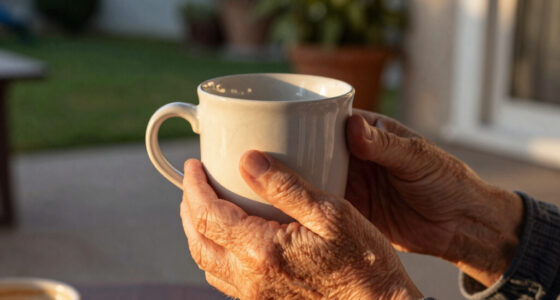
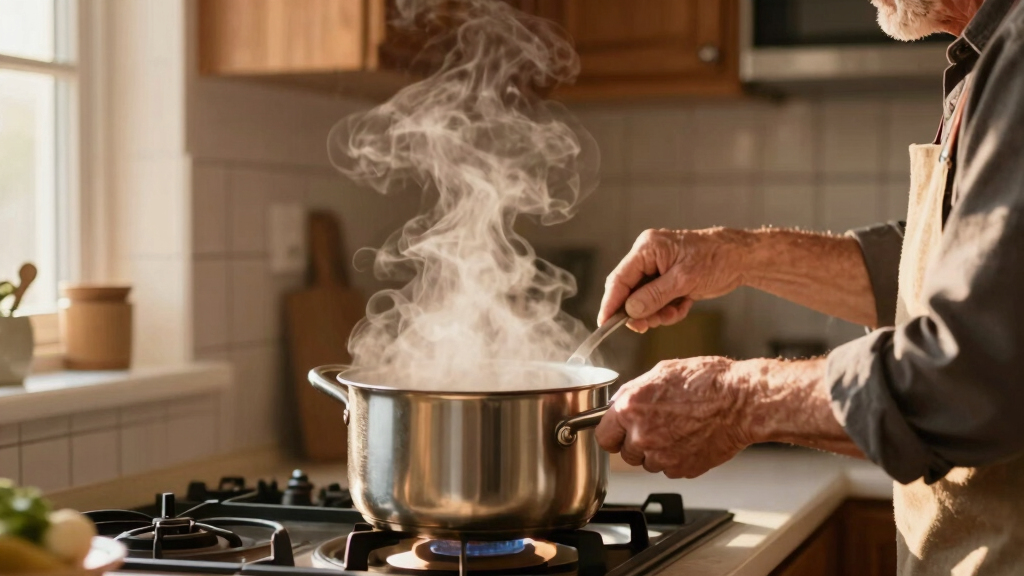
When you’re lifting pots filled with hearty stews or pouring from a steaming kettle, every ounce saved matters. Lighter cookware reduces strain on joints and muscles, making everyday tasks safer and more comfortable. It turns a heavy chore into a simple, flowing motion.
Imagine a chilly morning, lifting a lightweight cast-iron skillet that feels nearly weightless. Or pouring a hot brew from a titanium kettle that’s so easy to handle, you hardly feel the heat. These small comforts add up, turning your kitchen into a haven of ease and country charm. The implications are significant; reduced physical strain can prevent injuries, especially for those with joint issues or limited strength, and can make cooking more enjoyable rather than a tiring task.
According to an anonymous researcher, users report a 40-50% reduction in effort when switching from traditional to lightweight cookware, especially for those with joint issues or limited strength. This reduction not only enhances safety but also encourages more frequent cooking, fostering independence and a sense of culinary freedom in your country kitchen.
Frequently Asked Questions
What is the lightest material for cookware that’s still durable?
Titanium is one of the lightest and most durable materials used in cookware. It weighs about half as much as stainless steel and can handle high temperatures, making it ideal for those needing lightweight, long-lasting options.Can I use lightweight cookware on all types of stoves, including induction?
Not all lightweight cookware works on induction stoves. Look for pieces with a magnetic base made of aluminum or titanium with a ferromagnetic layer. Many modern lightweight pots and pans are designed to be compatible with induction cooktops.How do I know if my lightweight cookware will last?
Check the material and construction. Anodized aluminum and titanium are highly durable and resistant to warping. Proper care—gentle cleaning and avoiding metal utensils—also helps keep your cookware in good shape for years.Are there eco-friendly lightweight cookware options?
Yes. Many brands now use recyclable materials and environmentally friendly coatings. Look for non-toxic, PFOA-free non-stick surfaces and cookware made from sustainably sourced aluminum or titanium.Conclusion
Switching to lightweight cookware doesn’t mean sacrificing quality. It’s about making your kitchen tasks safer, easier, and more comfortable—especially as the years go by. With a little know-how, you can fill your shelves with pots and pans that lift like a feather and pour like a charm.
Picture yourself stirring a pot or pouring a cup of tea with ease and grace. That’s the simple joy of choosing the right lightweight cookware. It’s not just about convenience, it’s about keeping your kitchen warm, welcoming, and safe for years to come.
Back to school Picks
back to school
As an affiliate, we earn on qualifying purchases.