
TL;DR

Get comfort and care essentials delivered free — and shop member deals
- Fast, free delivery on millions of items
- Access to Prime Big Deal Days deals on October 6–7
- Prime Video, Amazon Music and more included
An organized kitchen with everything within reach can cut prep time by up to 30% and boost safety. Simple zoning, smart storage, and regular decluttering transform your space into a functional haven.
Imagine opening your kitchen cabinet and everything you need is right there, just at your fingertips. No digging, no rummaging, just smooth, easy access. That’s the magic of a well-organized kitchen.
Whether you’re downsizing, aging in place, or just tired of the clutter, the goal is simple: make your kitchen work for you. In this guide, you’ll learn how to arrange your space so every pot, pan, and spice is exactly where you need it — no more wasted steps or frustration.
Prioritize storing your most-used items at eye level and within arm’s reach to cut down on unnecessary movement.
Divide your kitchen into zones to streamline workflow and make cooking more efficient.
Use vertical space and wall-mounted solutions to maximize storage without cluttering counters.
Regularly declutter to keep your kitchen functional and welcoming.
Incorporate modern, eco-friendly storage options to keep your space stylish and sustainable.
Organizing the Kitchen So Everything Is Within Reach
TL;DR: A well-zoned kitchen can cut prep time by up to 30%, reduce rummaging, and make everyday cooking safer. The formula is simple: keep high-use items at eye level, group tools by task, use vertical storage, label clearly, and declutter on a steady rhythm.
No digging. No wandering. Just smooth, easy access.
Think of the kitchen as a workflow map: coffee by the machine, knives by the prep board, pots by the stove, cleaning supplies away from food zones.
Build the kitchen around reach, frequency, and task.
Accessibility is not only about storage volume. It is about placing the right item in the right zone at the right height, so routine actions become almost automatic.
Keep favorites visible.
Store coffee mugs, everyday utensils, spices, cutting boards, and pans at eye level or in shallow drawers close to the activity they support.
Give every area one job.
Prep tools near the counter, cookware near the stove, cleaning supplies near the sink, and pantry goods where they can be scanned quickly.
Move storage upward.
Wall racks, hooks, magnetic strips, stacking bins, and tall pantry containers turn unused height into practical, reachable storage.
From crowded cabinets to calm routines.
Use this sequence when resetting a kitchen, downsizing, aging in place, or making a small kitchen work harder without adding clutter.
Audit
Pull out the items you use daily, weekly, rarely, and never.
Zone
Group tools by prep, cooking, cleaning, pantry, and serving tasks.
Elevate
Use racks, hooks, risers, and stackable containers to claim vertical space.
Label
Make ingredients and categories instantly readable for everyone.
Reset
Declutter monthly so the system stays useful instead of decorative.
Where the biggest time savings usually appear.
The largest gains come from reducing search time, wasted movement, and repeated decisions during common cooking routines.
Access impact by habit
Prep-time reduction spectrum
Organized kitchens commonly target a 20–30% reduction in cooking and prep friction when high-use items are visible, sorted, and close to the work zone.
Choose storage by how often you use it.
The best system is flexible: keep daily items fast, weekly items findable, and rare items out of prime kitchen real estate.
| Storage Choice | Best For | Speed | Clutter Risk | Accessibility | Eco-Friendly Option |
|---|---|---|---|---|---|
| Open shelf | Daily mugs, bowls, oils | ✓ Fast | ~ Medium | Excellent at eye level | Reclaimed wood shelf |
| Pull-out drawer | Pots, pans, heavy items | ✓ Fast | ✓ Low | Great for mobility | Bamboo dividers |
| Clear container | Flour, rice, beans, snacks | ✓ Fast | ✓ Low | Easy visual scan | Glass jars |
| Deep cabinet | Seasonal gadgets | ✗ Slow | ~ Medium | Poor without bins | Reusable fabric bins |
| Wall hooks | Utensils, pans, towels | ✓ Fast | ~ Medium | Strong reach value | Steel or wood rail |
Keep the system useful, not rigid.
Good organization lowers friction. Over-organization can add rules that no one follows. Aim for systems that are visible, forgiving, and easy to reset.
Accessibility beats perfection.
Put the most-used items where they are easiest to grab, even if that means breaking a traditional cabinet category. A coffee station that saves three steps every morning is doing its job.
Decluttering protects the layout.
Too many “reachable” items become counter clutter. A monthly check of expired spices, unused tools, and broken utensils keeps prime zones clear.
Common kitchen organizing decisions.
Use these quick rules when deciding what to move, what to label, and what deserves the easiest-to-reach storage space.
How do I organize a small kitchen?
Prioritize vertical storage, pull-out organizers, wall hooks, and fewer duplicates. Store rarely used gadgets outside the prime cooking zone.
What belongs at eye level?
Daily dishes, spices, oils, coffee supplies, utensils, and pantry staples you reach for several times a week.
How can I improve accessibility?
Use pull-out shelves, lighter containers, lower reachable storage, clear labels, and avoid placing heavy or sharp objects above shoulder height.
How often should I declutter?
Do a quick monthly reset and a deeper seasonal review. Remove expired food, broken tools, unused gadgets, and duplicate items.
How to Keep Your Most-Used Items Right at Your Fingertips
The first step to organizing for ease is knowing what you use every day. Think about your morning coffee, your favorite cooking utensils, or that spice you reach for constantly.
Store these essentials in accessible spots—at eye level or within arm’s reach. Use open shelves or shallow drawers for quick grab items. For example, place your coffee mug, sugar, and filters near the coffee machine, so everything’s in one cozy corner.
By grouping daily essentials together, you cut down on unnecessary steps and make your routine smoother.
Why does this matter? When frequently used items are within easy reach, you reduce the physical effort and mental clutter involved in searching for them. This not only saves time but also minimizes frustration, especially when you’re in a hurry or tired. However, be mindful of tradeoffs—keeping too many items accessible can lead to clutter if not regularly maintained. The key is to find a balance that keeps your essentials handy without overwhelming your space.
kitchen drawer dividers for utensils
As an affiliate, we earn on qualifying purchases.
As an affiliate, we earn on qualifying purchases.
Divide Your Kitchen Into Zones to Simplify Your Day
Think of your kitchen as a small town. Each zone has a job: prep, cooking, cleaning, storage. When everything is in its zone, you won’t waste time wandering around.
For example, keep knives, cutting boards, and mixing bowls in the prep area. Pots, pans, and utensils near the stove. Cleaning supplies in one corner, away from food prep zones.
Label zones with small signs or color-coded containers to reinforce where things go. This visual organization helps your brain associate specific areas with specific tasks, streamlining your workflow. It’s about creating mental maps that allow you to perform routine activities more instinctively, reducing decision fatigue during busy cooking sessions.
However, consider that overly rigid zones might limit flexibility, especially in small kitchens. The tradeoff is between efficiency and adaptability—sometimes, a well-planned multi-purpose zone can serve you better than strict separation. The goal is to make your kitchen intuitive, so you spend less time searching and more time enjoying your cooking.
As an affiliate, we earn on qualifying purchases.
Maximize Vertical Space for More Storage Without Clutter
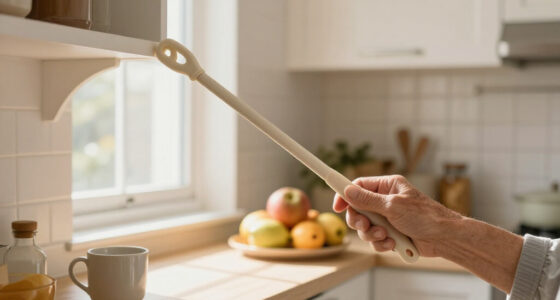
The walls and vertical surfaces in your kitchen are gold mines waiting to be tapped. Installing wall-mounted racks, hooks, or pegboards can free up counter space and keep utensils or pots within arm’s reach.
Picture a row of hooks holding your favorite frying pans, or a magnetic strip for knives—everything visible and easy to grab. This approach not only saves space but also makes your tools more accessible during cooking, reducing the need to rummage through drawers. It creates a visual cue that encourages you to keep only frequently used items on display, which can help prevent clutter from accumulating.
Stacking containers or tall pantry cabinets also make good use of vertical space, turning empty walls into practical storage areas. But be aware of the tradeoff: too many wall-mounted items can create visual clutter or make cleaning more difficult. The key is to balance accessibility with aesthetics, ensuring your vertical storage solutions enhance both function and appearance.
For example, a hanging pot rack above the island can hold your most-used pots, freeing cabinet space for less-frequently used items. This method keeps your kitchen organized and your most-used tools front and center, making cooking more efficient and enjoyable.
As an affiliate, we earn on qualifying purchases.
Organize Drawers and Cabinets for Speed and Ease
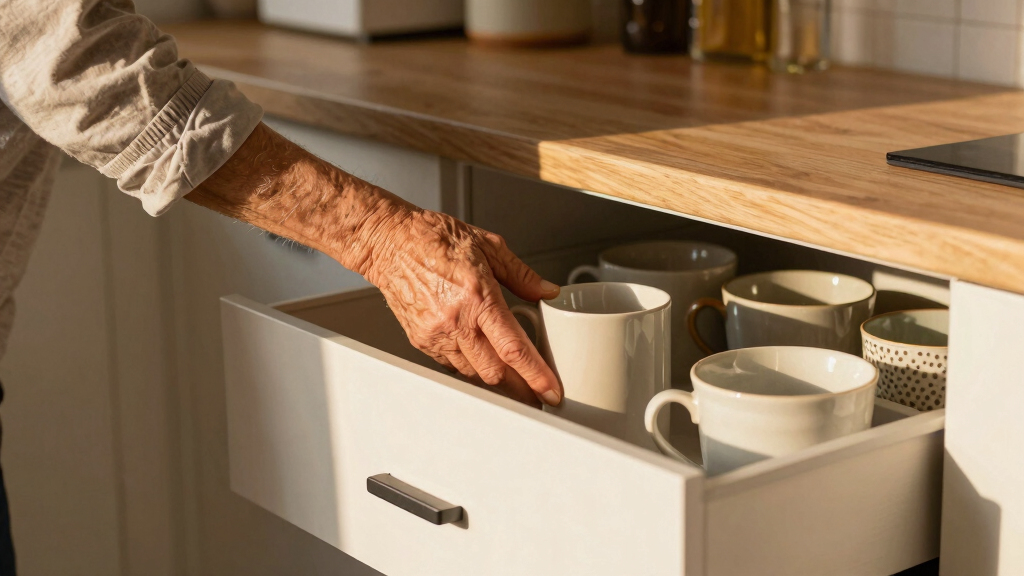
Ever reached into a drawer and had to dig to find that one spoon? Drawer and cabinet organizers fix that. Use dividers, trays, or small containers to keep everything sorted.
Place your most-used utensils in easy-to-reach drawers, while less-used gadgets go higher or deeper. For example, keep a dedicated drawer for everyday silverware and another for seasonal gadgets.
Label containers or use clear bins so you instantly see what’s inside. This reduces clutter and saves time hunting for a teaspoon or a measuring cup. The deeper the clutter, the longer it takes to find what you need—so thoughtful organization directly impacts your efficiency. Well-organized drawers also minimize stress because you’re not constantly searching or misplacing items, which can be frustrating and time-consuming. The tradeoff, however, is that over-organizing can sometimes lead to rigid systems that are hard to change, so aim for flexible solutions that can evolve with your needs.
As an affiliate, we earn on qualifying purchases.
Use Clear Containers and Labels to Find Things Fast
Opaque bags and jars slow you down. Switching to transparent containers makes it easy to spot flour, rice, or beans at a glance.
Label each container with big, clear lettering or simple icons—think a picture of a wheat stalk for flour. This helps everyone in the house find what they need without guesswork. Clear containers also allow you to monitor quantities easily, preventing surprises when ingredients run out unexpectedly. Additionally, labels create a consistent visual language, reducing decision fatigue during busy cooking times. The tradeoff is that labels require maintenance—labels can fade or peel over time—so choose durable options and revisit your labels periodically. Incorporating a visual system enhances efficiency and keeps your pantry looking tidy, making ingredient retrieval intuitive and quick.
Choosing eco-friendly options like glass or bamboo containers can add a warm country charm to your space, too, while supporting sustainability.
Declutter Regularly to Keep Your Kitchen a Happy Place
Clutter builds up fast. Regularly, take a few minutes to clear out expired spices, unused gadgets, or broken utensils. Less stuff means less stress.
Create a simple schedule—once a month, check your pantry and drawers. Ask yourself: Do I still use this? Does it work? If not, it’s time to say goodbye. This process not only keeps your space tidy but also prevents the accumulation of unnecessary items that can cause decision fatigue and frustration. Regular decluttering allows you to reassess your needs and adjust your storage solutions accordingly, ensuring your kitchen remains functional and inviting. The tradeoff is that it requires discipline and consistency—skipping it can lead to clutter creep, undoing all your efforts. Making decluttering a routine is a small investment that pays off in a more organized, stress-free kitchen environment.
Latest Trends in Kitchen Organization You’ll Love
Modern storage isn’t just about neatness — it’s about smarter, greener, easier solutions. Think pull-out shelves that glide smoothly, lazy Susans that turn your corner cabinets into gold mines, and modular organizers that adapt to your needs.
Eco-friendly materials like bamboo and reusable containers are gaining popularity, blending sustainability with style. Adjustable-height shelves and ergonomic designs make the kitchen accessible for everyone.
Smart technology, like inventory apps, helps track what’s in your pantry, preventing waste and saving money.
For example, a sliding shelf in a deep cabinet can turn a forgotten back corner into a treasure trove of spices and canned goods.
Staying updated with these trends allows you to incorporate innovative solutions that enhance both functionality and aesthetics, making your kitchen not just organized but also inspiring. The tradeoff is that some modern solutions may require an initial investment or installation effort, but the long-term benefits in efficiency and style are often worth it.
Putting It All Together: Your Step-by-Step Action Plan
- Identify your most-used items and store them at eye level or within easy reach.
- Divide your kitchen into zones based on activities like prep, cooking, and cleaning.
- Use vertical space by installing hooks, racks, or tall cabinets for frequently used tools.
- Organize drawers with dividers and label containers for quick access.
- Switch to clear containers with labels for ingredients and dry goods.
- Set a monthly decluttering routine to keep clutter from creeping back.
Follow these steps, and you’ll transform your kitchen into a space where everything is just right where it should be.
Frequently Asked Questions
How do I organize a small kitchen to maximize space?
Use vertical storage like wall-mounted racks, stackable containers, and slim pull-out drawers. Keep only essentials on counters and choose multi-purpose tools to reduce clutter. Regularly purge unused items to free up space for what you truly need.What are the best storage solutions for frequently used items?
Place everyday essentials in open, accessible drawers or on open shelves near your prep area. Use labeled containers for spices and dry goods so you can see at a glance. Keep utensils in a jar or drawer with dividers for quick grab-and-go access.How can I make my kitchen more accessible for people with mobility issues?
Install lower shelves or pull-out drawers for easy reach. Use lightweight, easy-to-open cabinet hardware. Keep frequently used items at waist level, and consider ergonomic tools that reduce strain during food prep.How often should I declutter my kitchen?
Aim for a quick tidy-up once a month. Check for expired items, unused gadgets, and cluttered spaces. Regular maintenance prevents buildup and keeps your kitchen inviting and easy to use.What materials are best for eco-friendly storage containers?
Glass and bamboo are popular choices, both durable and sustainable. Look for containers with airtight lids to keep food fresh, and choose options that are easy to clean and reuse for years.Conclusion
Imagine a kitchen where every item is a quick reach away—a space that feels natural and inviting every time you cook or clean. That’s what proper organization can do for you.
Start small, take it step by step. Your perfect, accessible kitchen is closer than you think. Just open the door, and everything will be right where you need it—ready for your next cozy meal or cheerful chat in your country home.
Fall Picks
fall essentials
As an affiliate, we earn on qualifying purchases.