TL;DR

Turn quiet afternoons into listening time
- Thousands of audiobooks, podcasts and originals
- Listen on your phone, tablet or Echo — also offline
- Cancel anytime
Reducing effort in food prep is less about rushing and more about streamlining movements, choosing the right tools, and prepping smart. Using sharp knives, stabilizing surfaces, and batching tasks can cut prep time and effort significantly. Frozen vegetables and prewashed greens are handy shortcuts to save time without sacrificing freshness.
Imagine slicing into a ripe tomato, the blade gliding effortlessly through its delicate skin. No excessive pressure, no slipping, just smooth work. That’s the magic of sharp tools and smart prep. When you make food preparation easier, it feels less like a chore and more like a cozy part of your day.
In this guide, you’ll discover simple tricks and practical tools to cut your effort, save your strength, and keep your kitchen safe. Whether you’re slicing vegetables, peeling garlic, or organizing ingredients, these tips help you work smarter—without sacrificing quality or safety.
A sharp knife reduces effort and increases safety—keep yours honed regularly.
Stabilizing your cutting surface prevents slips and speeds up prep.
Batch tasks and organize ingredients beforehand to minimize trips and wasted motion.
Use appliances and shortcuts like frozen vegetables and prewashed greens for quick prep.
Prioritize safety—sharp knives, cut-resistant gloves, and proper technique keep you safe and effective.
How to Chop and Prep Food with Less Effort
Effortless prep is not about rushing. It comes from reducing unnecessary movement, choosing tools that fit the job, stabilizing the work surface, and organizing each task before the first cut.
A commonly cited comparison for a sharp knife versus a dull blade.
A comfortable chef’s knife or santoku handles most routine prep.
Smooth, deliberate motions reduce fatigue and improve consistency.
Three adjustments remove most of the struggle.
Choose the right blade
Use a chef’s knife or santoku for general chopping, a paring knife for small produce, and a serrated knife for bread or delicate-skinned tomatoes.
Stop the board sliding
Place a damp towel or nonslip mat underneath. Use a board large enough to hold both the ingredient and the finished pieces without crowding.
Guide, do not force
Keep the tip close to the board and use a smooth rocking or forward-down motion. Curl fingertips under and guide the blade with your knuckles.
Turn scattered chores into one continuous workflow.
Set out the station
Board, knife, ingredients, scrap bowl and storage containers.
Wash in batches
Clean all produce together instead of returning to the sink.
Peel and trim
Complete the same action across several ingredients.
Chop in order
Mild flavors first; vegetables before raw meat.
Move once
Send finished food directly to its pan, bowl or container.
Rock forward. Keep the motion low.
Repeatedly lifting the entire knife wastes motion. Using the length of the blade creates leverage, makes cuts more consistent, and reduces wrist and hand fatigue.
Illustrative cutting-force comparison
Visualization reflects the supplied claim of 60% less force. Treat the percentage as an illustrative estimate; the cited source is anonymous.
Use the simplest tool that genuinely saves work.
| Tool | Best use | Small job | Large batch | Cleanup load | Effort verdict |
|---|---|---|---|---|---|
| Chef’s knife / santoku | General vegetables, herbs, meat | ✓ Excellent | ~ Moderate | ✓ Low | Best everyday default |
| Mini chopper | Garlic, herbs, nuts, small batches | ✓ Excellent | ✗ Limited | ~ Medium | Saves repetitive wrist motion |
| Food processor | Slicing, shredding, grating, bulk chopping | ✗ Excessive | ✓ Excellent | ✗ High | Worth it for volume |
| Kitchen shears | Herbs, scallions, greens, pizza | ✓ Excellent | ~ Moderate | ✓ Low | Fast and highly controllable |
| Mandoline | Uniform vegetable slices | ~ Moderate | ✓ Excellent | ~ Medium | Use the guard every time |
| Immersion blender | Puréeing soup directly in the pot | ~ Moderate | ✓ Excellent | ✓ Low | Avoids heavy transfers |
Shortcuts are tools, too.
Frozen chopped vegetables
Already cleaned, cut, long-lasting and often ready to cook from frozen.
Prewashed greens
Remove washing, drying and trimming from salads and quick meals.
Peeled garlic and shredded cabbage
Useful when grip strength, time or energy is limited.
Precut squash or rotisserie chicken
Outsource the hardest cutting and move directly to assembly or cooking.
Knife or appliance?
A gadget earns its storage space only when the saved labor exceeds assembly, cleanup and storage effort.
Use the knife.
Consider a processor.
Use immersion blending.
The low-effort prep chain
Each improvement supports the next, turning preparation into a calmer and safer sequence.
The kitchen habits with the highest return.
Keep knives sharp and choose a comfortable blade for the job.
Secure the cutting board and create flat surfaces on round foods.
Batch similar tasks to eliminate repeated trips and decisions.
Use appliances and prepared ingredients where they save real labor.
Protect energy with good posture, breaks and adaptive tools.
Safety before speed
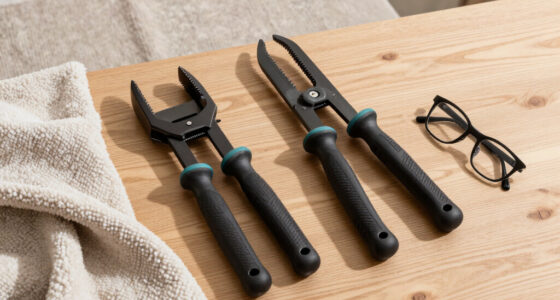
A sharp knife, nonslip board, claw grip and controlled motion form the essential safety system. For arthritis, tremors, weakness or one-handed mobility, consider rocking knives, adaptive boards, produce holders, cut-resistant gloves and electric choppers. Stop when fatigue begins to affect control.
Start with the Right Knife for Every Job
The easiest way to cut with less effort? Use a sharp, well-fitting knife. A dull blade wastes your strength and increases slip risk. When a knife is sharp, it slices through food with minimal force, reducing hand fatigue and the risk of accidental slips that could cause injury. Choosing the right knife—such as a 6-8 inch chef’s knife or santoku—ensures you have control and leverage for various tasks, from slicing tomatoes to chopping herbs. Remember, a dull knife doesn’t just slow you down; it can be dangerous because more force means a higher chance of losing control. Investing in a good knife and keeping it sharp is a foundational step toward effortless prep and safer cutting practices.
As an affiliate, we earn on qualifying purchases.
Secure Your Cutting Surface for Safer, Faster Prep
A stable surface is essential not just for safety but also for efficiency. When your cutting board slips or wobbles, it forces you to slow down, apply more force, and be extra cautious—adding effort and risk. Using a damp towel or silicone mat underneath the board creates friction that keeps it in place, allowing you to focus on your cutting rather than stabilizing. Creating flat surfaces on rounded ingredients—like slicing a potato or halving an onion—further enhances stability, preventing dangerous slips that could lead to cuts. By investing a moment in securing your workspace, you reduce the physical effort needed to hold ingredients steady and minimize the chance of accidents, making your prep quicker and safer.
As an affiliate, we earn on qualifying purchases.
Master the Efficient Cutting Technique
Efficient cutting isn’t just about speed; it’s about technique that minimizes effort and maximizes safety. Using a smooth rocking or forward-down motion allows you to leverage the full length of the blade, reducing the force needed to cut through food. Holding your food with a curled claw grip positions your knuckles as a guide for the blade, which not only helps in making uniform cuts but also keeps your fingers safe from accidental nicks. When chopping an onion, for example, making several lengthwise cuts and then slicing across is more efficient than random chopping, because it reduces unnecessary movements and ensures even pieces that cook uniformly. Focusing on a controlled, deliberate motion—rather than brute force—means less fatigue and more consistent results, especially important for those with limited hand strength or joint issues.
As an affiliate, we earn on qualifying purchases.
Organize Your Workspace Before You Start
Organization is the secret to reducing effort and mental load during prep. When everything is within reach and tasks are grouped, you avoid unnecessary back-and-forth, which can drain your energy and slow you down. Setting out your knife, cutting board, bowls, and ingredients before beginning ensures a smooth workflow. Grouping similar tasks—like washing all produce first, then peeling, then chopping—streamlines the process and reduces the need to search for tools or ingredients mid-task. For example, washing all your vegetables at once and then peeling and chopping in batches not only saves time but also minimizes the mental clutter that can lead to mistakes or overlooked steps. This pre-planning creates a rhythm in your prep, making it feel more manageable and less physically taxing.
As an affiliate, we earn on qualifying purchases.
Let Appliances Do the Heavy Lifting
Modern appliances are game-changers for reducing effort in the kitchen. Using a food processor for slicing, shredding, or chopping large quantities can save a significant amount of physical exertion, especially when dealing with bulky or repetitive tasks. Mini choppers are ideal for garlic, herbs, and nuts, allowing you to achieve fine results quickly without the strain of manual chopping. For instance, tossing garlic cloves into a mini chopper produces minced garlic in seconds, saving your wrists from repetitive motion and reducing cleanup time. However, it’s important to choose appliances that are easy to operate and clean—otherwise, they can become more of a hassle than a help. Proper use and maintenance of these tools ensure you maximize their benefit without adding to your workload.
Use Smart Shortcuts and Prepping Hacks
Prewashed greens, frozen chopped vegetables, peeled garlic, and pre-shredded cheese are invaluable time-savers. These shortcuts reduce the number of steps and physical effort required, enabling you to prepare meals more quickly and with less fatigue. Frozen vegetables, in particular, are a smart investment; they come cleaned, pre-cut, and ready to cook, eliminating the effort of washing, peeling, and chopping fresh produce. For example, adding frozen peas directly into a stir-fry or tossing pre-cut peppers into a soup minimizes prep time and effort. While these shortcuts can sometimes compromise the freshness or texture slightly, they allow you to focus your energy on cooking rather than prep, making the process more manageable—especially after a long day or when mobility is limited.
Reduce Strain and Avoid Fatigue During Prep
Fatigue often results from poor ergonomics and overexertion. Working at the right height—such as a sturdy, stable table—helps keep your shoulders relaxed and wrists straight, reducing muscle strain. Sitting during long sessions can help distribute effort more evenly and prevent fatigue, especially for those with joint issues. Taking short breaks to stretch or shake out your hands and arms helps maintain circulation and reduces stiffness. Switching between different tasks, like slicing and stirring, prevents overuse of the same muscle groups, which can lead to soreness or fatigue. Using lightweight tools and appliances with large, easy-to-press buttons also minimizes effort. These small adjustments can make a big difference in how comfortably and efficiently you work, allowing you to prep longer without discomfort.
Quick, High-Impact Prep Hacks for Everyday Foods
Streamlining common prep tasks can save you considerable effort and time. For onions, cutting through the root and peeling while keeping the root intact helps hold the layers together, making slicing faster and more uniform. Crushing garlic with the flat of your knife releases the oils and makes mincing easier, especially when followed by a quick pass through a garlic press. Bundling herbs and slicing with kitchen shears reduces the effort of chopping with a knife and speeds up the process. Instead of chopping bell peppers through the middle, slicing around the seed core saves effort and avoids unnecessary waste. For cherry tomatoes, placing them between two lids and slicing horizontally ensures uniform pieces with minimal effort. These hacks are designed to simplify your routine, reduce repetitive motions, and conserve your energy.
Stay Safe While Cutting — It’s Not About Speed
Prioritizing safety is crucial, especially when trying to cut more efficiently. Keeping knives sharp reduces the force needed and prevents slips caused by dull blades. Always dry your knife handles to prevent slipping and cut away from your body to avoid injuries. Using a hand guard or cut-resistant glove provides an extra layer of protection, particularly for those with limited grip strength or arthritis. Never attempt to catch a falling knife—trust your grip and control to prevent accidents. Unplugging electric appliances before reaching near blades and washing equipment thoroughly after handling raw meat or seafood are essential safety steps that protect you and prolong the life of your tools. Remember, rushing can lead to mistakes—taking your time with proper safety measures ensures you work effectively without risking injury.
New Tools and Trends Making Prep Easier
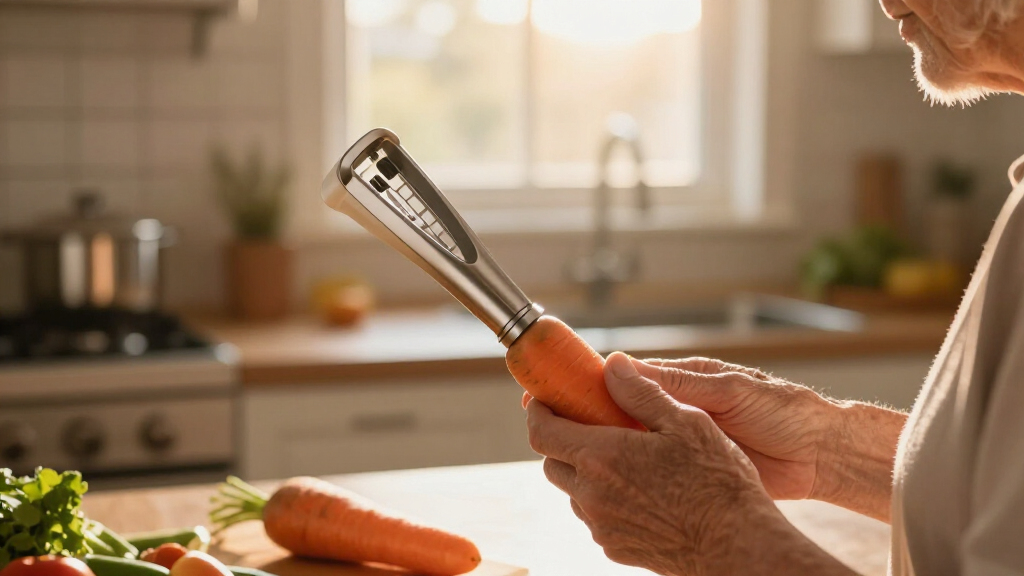
Advances in kitchen technology are making effortful prep less daunting. Rechargeable cordless choppers, ergonomic utensils, and adaptive cutting boards are designed to reduce strain and improve control, especially for those with limited strength or mobility. Meal kits and frozen ingredients further simplify prep by providing pre-measured, pre-cut items—saving time and effort. For example, a push-down vegetable chopper can produce uniform dice quickly, but it requires careful handling and thorough cleaning to maintain safety and efficiency. While these tools and trends can greatly ease your workload, it’s important to evaluate their suitability for your needs and ensure you use them safely. Embracing these innovations can turn a tedious task into a quick, manageable routine while enhancing safety and comfort in your kitchen.
Frequently Asked Questions
How can I chop vegetables faster?
Use a sharp knife, stabilize your board, and make batch cuts. Group similar tasks—peeling all produce first, then chopping—so you don’t lose momentum. Focus on practical sizes that cook evenly rather than perfect cuts.
Is a food processor worth using?
Yes, especially for large volumes or repetitive tasks like shredding cheese or slicing bulk vegetables. For small jobs, hand chopping may be quicker if you’re only preparing a few ingredients.
Are vegetable choppers actually useful?
They can save effort on repetitive dicing, especially for large batches. Their usefulness depends on blade quality, ease of cleaning, and whether they suit your hand strength. For some ingredients, a knife remains faster and more flexible.
What is the easiest knife for a beginner?
A 6-8 inch chef’s knife or santoku with a comfortable, nonslip handle is ideal. It offers versatility and control, making chopping safer and less tiring for newcomers.
How do I prevent fatigue during long prep sessions?
Work at a comfortable height, take short breaks, switch tasks often, and use lightweight or ergonomic tools. Sitting at a stable table can also help reduce strain, especially if you have arthritis or limited grip strength.
Conclusion
When you work with intention—using sharp tools, smart organization, and helpful shortcuts—food prep becomes less of a chore and more of a cozy routine. It’s about making your kitchen work for you, not the other way around.
So next time you step into the kitchen, think about how you can streamline your process. A little planning and the right tools turn chopping from a burden into a breeze, leaving you more time for the simple joys of country living.
Cold & flu season Picks
humidifiers
As an affiliate, we earn on qualifying purchases.