
TL;DR

Turn quiet afternoons into listening time
- Thousands of audiobooks, podcasts and originals
- Listen on your phone, tablet or Echo — also offline
- Cancel anytime
Turning soil gently in a raised bed improves aeration and compost incorporation while protecting soil life. Using tools like broadforks and avoiding deep disturbance keeps your soil healthy without harm.
Imagine a quiet, sunny morning in your garden. You reach for your broadfork, a tool that feels more like a gentle handshake than a chore. You know that a light touch can do more good than harsh digging. That’s the essence of gentle soil turning—protecting the tiny universe beneath your plants while giving your garden a fresh boost.
Most gardeners don’t realize how much harm aggressive turning can do. It disrupts the delicate web of earthworms, microbes, and plant roots that keep your soil rich and alive. Today, you’ll learn simple, kind ways to aerate and refresh your raised bed soil—ways that respect the soil’s natural rhythm and your peaceful gardening rhythm.
Use a broadfork or garden fork for gentle aeration, avoiding deep, aggressive turning.
Aerate your raised beds once or twice a season—preferably early spring and late summer.
Always check soil moisture before turning—aim for moist but not soggy soil.
Top-dress with compost or organic matter after gentle turning to boost fertility.
Consider mulches, cover crops, and minimal disturbance techniques to keep soil alive and thriving.
The Gentlest Way to Turn Soil in a Raised Bed
Turning soil gently improves aeration and compost incorporation while protecting the tiny living network beneath your plants. The goal is not to flip the bed upside down. It is to loosen, breathe, feed, and leave the soil community intact.
80%
Beneficial soil microbes can be better preserved when broadforking avoids full soil inversion.
4-6 in.
The sweet spot for shallow loosening, compost mixing, and root-zone aeration.
1-2x
Aerate per season, usually in early spring and after harvest or late summer.
Aerate the bed without scrambling the soil ecosystem.
Gentle turning is closer to a light massage than a rough shake. It opens pore space for water and oxygen, blends compost near the surface, and keeps earthworms, roots, microbes, and soil aggregates mostly where they belong.
Keep Aggregates Intact
Soil clumps hold water, exchange nutrients, and create habitat. Deep flipping breaks them apart and can make beds less resilient.
Protect Soil Life
Earthworms and microbes thrive when layers are loosened, not inverted. Less chaos below means stronger nutrient cycling above.
Reduce Compaction
Gentle aeration restores pore space so roots can reach oxygen and water without the damage caused by aggressive digging.
How to gently turn soil in a raised bed.
Work from the edge inward, loosen rather than flip, and finish with organic matter on top. The bed gets refreshed while its living architecture stays mostly in place.
Check Moisture
Choose a day when soil crumbles easily. Skip soggy soil because it compacts; skip dusty soil because it fractures.
Insert at Edge
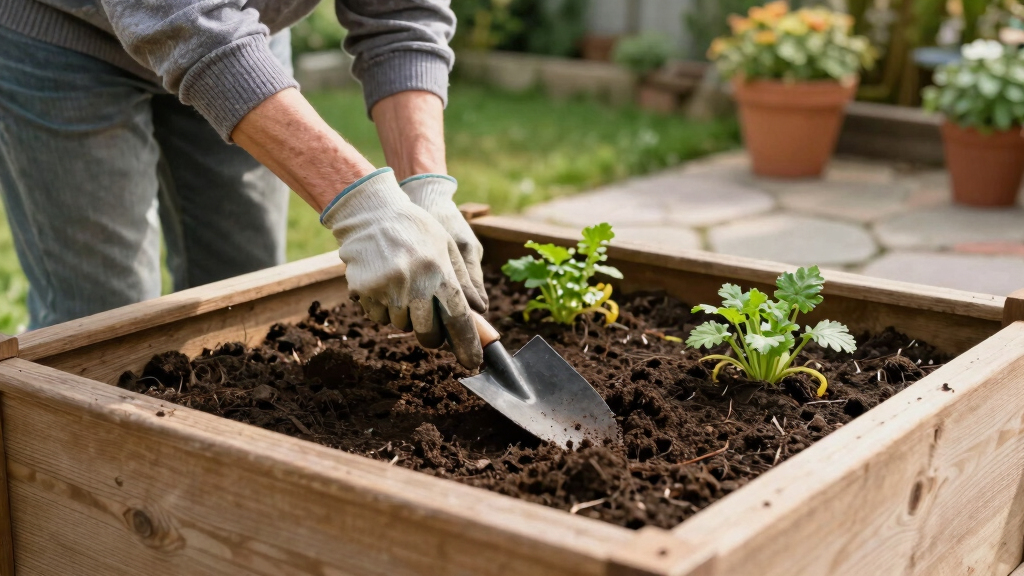
Push a broadfork or garden fork straight down along the outer edge, then work inward in small sections.
Rock, Do Not Flip
Gently rock the tool back and forth. Focus on loosening the top 4-6 inches without turning layers upside down.
Top-Dress
Add compost or organic matter, then settle it lightly with hands or a rake. No heavy digging required.
Less turning builds a steadier soil foundation.
Organic gardening guidance increasingly favors no-till and minimal-till methods because deep turning can reduce microbial activity, accelerate erosion, and weaken moisture retention over time.
Key insight: The gentlest way to turn soil in a raised bed is to loosen it with a broadfork, avoid flipping layers, and feed from the top with compost, mulch, cover crops, and steady organic matter.
Choose the lightest tool that solves the problem.
A broadfork is best for compacted or larger beds. A garden fork suits quick aeration. A hand rake belongs near the surface, where compost and mulch can be spread without disturbing deeper life.
| Tool Type | How It Works | Best For | Soil-Life Impact |
|---|---|---|---|
| Broadfork | Pushes down and gently lifts compacted layers without flipping soil over. | Large raised beds, organic gardens, deep aeration. | ✓ Low disturbance |
| Garden fork | Pokes and loosens shallow layers, creating channels for air, water, and compost. | Smaller beds, quick seasonal aeration, light mixing. | ~ Moderate touch |
| Hand rake | Fluffs the surface, breaks small clumps, and spreads organic matter. | Compost spreading, mulch smoothing, surface refresh. | ✓ Very gentle |
| Rototiller | Mechanically churns and flips the bed, disrupting layers and aggregates. | Rare reset situations, not routine raised-bed care. | ✗ High disruption |
When to Aerate
Once or twice per season is usually enough. Aim for early spring before planting and late summer or after harvest when the bed needs renewal.
- Soil should be moist but not wet.
- Avoid working around fragile seedlings.
- Aerate only when compaction is visible or likely.
Moisture Readiness
The right day is the day the soil crumbles. This quick spectrum keeps the decision simple.
From gentle touch to stronger harvests.
Healthy raised beds are built through connected habits: loosen lightly, keep roots breathing, feed from above, and let soil organisms do the quiet work.
Why Gentle Soil Turning Is Better for Your Garden
Gentle soil turning means using light touch and proper tools to aerate and incorporate organic matter without disturbing the soil ecosystem. It’s like giving your garden a gentle massage instead of a rough shake.
This approach preserves beneficial microbes, earthworms, and the soil structure. When you avoid deep, aggressive turning, you prevent soil compaction, which can block water and air from reaching roots. Soil compaction is a silent threat; it reduces pore space, making it harder for roots to access oxygen and water. Over time, this can lead to stunted plant growth, increased susceptibility to diseases, and poor nutrient uptake. For example, a gardener in Kentucky found that using a broadfork once a season kept her raised beds loose and thriving for three years without needing heavy tilling. This method maintains the delicate balance within your soil, ensuring that beneficial organisms continue to thrive and support plant health.
Deep turning or aggressive tilling may seem like a quick fix to loosen soil, but it often does more harm than good. It can break apart soil aggregates—clumps of mineral particles and organic matter—that are vital for water retention, nutrient exchange, and providing habitats for microbes and tiny soil creatures. Disrupting these structures can lead to increased erosion, reduced fertility, and a less resilient soil ecosystem. Therefore, gentle methods that preserve these natural structures are essential for long-term soil health and plant vitality.
As an affiliate, we earn on qualifying purchases.
How to Gently Turn Soil in Your Raised Bed in 4 Easy Steps
- Choose a dry, but not too dry or wet, day—so the soil crumbles easily but isn’t sticky or clumpy. Proper timing ensures you minimize soil disturbance while maximizing aeration benefits.
- Insert a broadfork or garden fork into the soil at the edge of your bed, working from the outer edge inward. This method allows you to loosen the soil gently, reducing compaction and preserving underground life.
- Gently rock the tool back and forth, loosening the soil without flipping it over. Focus on the top 4-6 inches—enough to aerate and mix in compost. This shallow disturbance helps maintain the soil’s natural structure, which is critical for microbial habitats and root health.
- Afterward, lightly sprinkle with compost or organic matter and press down lightly with your hands or a rake—no heavy digging needed. This topdressing provides essential nutrients and encourages microbial activity, supporting plant growth without disturbing the soil’s integrity.
This simple process refreshes the soil, helping roots breathe and absorb nutrients better. By avoiding deep disturbance, you preserve the soil’s natural structure and microbial life, which are critical for nutrient cycling and plant health. Gentle aeration encourages beneficial organisms to thrive, creating a resilient soil ecosystem that supports vigorous plant growth and reduces the need for chemical inputs.
As an affiliate, we earn on qualifying purchases.
Compare Gentle Tools for Soil Aeration in Raised Beds
| Tool Type | How It Works | Best For |
|---|---|---|
| Broadfork | Loosens soil deeply with minimal disturbance; pushes down into the soil and gently lifts, breaking up compacted layers while preserving soil structure and microbial habitats. | Large raised beds, organic gardens, when you want deep aeration without flipping soil |
| Garden fork | Gently pokes and loosens soil surface and shallow layers, creating small channels that improve aeration and help incorporate compost or amendments. | Smaller beds, quick aeration, and mixing compost |
| Hand rake | Lightly fluffs soil surface, breaks up clumps, and spreads organic matter superficially, without disturbing deeper layers. | Surface aeration, spreading mulch or compost |
Understanding how each tool interacts with your soil helps you choose the right approach. For instance, a broadfork’s deep yet gentle action preserves microbial habitats while aerating thoroughly, making it ideal for revitalizing compacted soil. Using a garden fork or hand rake is suitable for lighter, surface-level adjustments, ensuring you don’t disturb the deeper soil layers that house essential organisms. Choosing the right tool and technique means you can maintain a healthy, thriving soil ecosystem with minimal disturbance, which is crucial for long-term productivity and soil resilience.
As an affiliate, we earn on qualifying purchases.
Why Less Turning Means More Healthy Soil in the Long Run
Research from organic gardening circles shows that frequent deep turning can reduce beneficial microbes by up to 50% over time. It’s like disturbing a busy ant colony—chaos instead of harmony. When you turn the soil deeply, you break apart the natural soil aggregates that have formed over time, which are essential for water retention, aeration, and nutrient exchange. This disruption can lead to a decline in microbial diversity and activity, impairing the soil’s ability to sustain healthy plant life. Conversely, gentle aeration techniques preserve these aggregates, fostering a stable environment where microbes flourish and help plants access nutrients more efficiently. A gardener who stopped heavy tilling after three years saw her soil’s organic matter increase by 12%, according to her soil tests. This improvement underscores how minimal disturbance supports a resilient, fertile soil that can better withstand droughts, pests, and diseases over the long term.
Deep turning can also lead to erosion and nutrient leaching, especially in areas with heavy rainfall. When you disturb the soil’s surface and break apart its natural aggregates, you expose more soil particles to wind and water erosion. This not only depletes your soil’s nutrients but also leaves your garden more vulnerable to weeds and degradation. On the other hand, minimal disturbance techniques—like mulching, cover cropping, and shallow aeration—help maintain soil integrity and conserve moisture, which are critical for long-term health. Over time, these practices build a more resilient soil profile, capable of supporting healthy plants even under challenging conditions. The tradeoff is clear: less disturbance means a more stable, fertile foundation that sustains your garden for years to come.
organic gardening compost spreader
As an affiliate, we earn on qualifying purchases.
As an affiliate, we earn on qualifying purchases.
When and How Often Should You Turn or Aerate Your Raised Bed?
Turning soil once or twice a season is enough for most raised beds. The best times are early spring—before planting—and after harvesting in late summer or fall. These periods allow you to prepare the soil for the upcoming or just-finished growing season, ensuring that the benefits of aeration are maximized without unnecessary disturbance. Proper timing is crucial because aerating during overly wet or dry conditions can do more harm than good. If the soil is too wet, it can become compacted further, and if it’s too dry, it may be too hard to loosen effectively. Always check moisture levels first—soil should be moist but not soggy or crumbly. Over-aerating can disrupt the microbial balance and soil structure, decreasing its ability to hold nutrients and water. By timing your efforts thoughtfully, you support a dynamic yet stable soil environment that promotes continuous plant health and productivity. For instance, a gardener in Maine aerates her beds in April and September, aligning with natural soil cycles, which helps her maintain healthy, vigorous plants year-round. Proper scheduling ensures that aeration enhances soil vitality without causing unnecessary stress or disruption.
Alternatives to Turning Soil That Keep Your Garden Happy
If turning feels like too much work or risks disturbing your plants, consider these alternatives:
- Mulching with straw, leaves, or wood chips to improve soil moisture and temperature. Mulches create a protective layer that conserves water, moderates soil temperature, and suppresses weeds, all while supporting soil microbial activity by providing organic matter as they decompose.
- Planting cover crops like clover or vetch to fix nitrogen and loosen soil naturally. These living roots penetrate compacted layers, break up soil structure, and add organic matter when they’re turned under or decompose.
- Adding compost as a top dressing in spring and fall to boost nutrients without turning. This method feeds beneficial microbes and integrates organic matter gradually, fostering a healthy soil food web.
These methods work by enhancing soil health and structure through natural processes. Mulches help retain moisture, suppress weeds, and moderate soil temperature, creating a more stable environment for roots. Cover crops serve as living soil conditioners—their roots penetrate compacted layers, and when they decompose, they enrich the soil with organic matter and nutrients. Top dressing with compost introduces vital microbes and nutrients directly, supporting microbial activity and plant growth without physical disturbance. Embracing these techniques means you support a vibrant, living soil that sustains your garden for years to come, reducing the need for invasive turning and fostering a more resilient garden ecosystem.
Frequently Asked Questions
Can I use a regular garden fork instead of a broadfork?
Yes, a regular garden fork works fine for light aeration and loosening soil, especially in smaller raised beds. Just be gentle and avoid forcing it too deep to prevent damaging roots or microbes.How do I know if my soil needs turning or aeration?
Check if water pools on the surface or if the soil feels compacted when you stick a trowel in. If it’s hard, dense, or water runs off instead of soaking in, it’s time to aerate gently.Is it safe to aerate around existing plants?
Absolutely. Work carefully around roots and avoid disturbing the main root ball of established plants. Gentle, shallow aeration helps roots breathe without harm.How long does it take to aerate a raised bed?
Most beds can be gently aerated in about 10-15 minutes, especially if you have a small to medium-sized garden. It’s quick and simple when using the right tools.Will turning soil disturb my planting schedule?
Not if you plan ahead. Aerate in early spring before planting or after harvest. It’s a light touch that prepares your soil for healthy growth without disrupting your schedule.Conclusion
Gentle soil turning isn’t just kinder to the earth beneath your feet—it’s smarter gardening. It keeps your soil lively, your plants happy, and your back comfortable. Remember, sometimes less really is more—less disturbance yields richer, more resilient soil.
Next time you reach for your tools, choose the gentle path. Your garden will thank you with lush growth and healthy roots—like a cozy, thriving country homestead in full bloom.
Fall Picks
fall essentials
As an affiliate, we earn on qualifying purchases.