TL;DR

Turn quiet afternoons into listening time
- Thousands of audiobooks, podcasts and originals
- Listen on your phone, tablet or Echo — also offline
- Cancel anytime
A cozy outdoor rug instantly elevates your covered porch, making it more inviting and comfortable. Focus on weather-resistant materials, proper sizing, and easy maintenance for lasting beauty and coziness.
Imagine stepping onto your porch and feeling an instant wave of warmth and comfort. That’s what a cozy rug can do for your outdoor space. It transforms a simple covered porch into a welcoming haven—perfect for relaxing mornings or lively evenings with friends.
But not all rugs are created equal. Choosing the right one means considering weather, style, and your daily life. In this guide, you’ll learn how to pick, place, and care for a rug that stays beautiful and inviting year-round.
Choose weather-resistant materials like polypropylene or outdoor wool for longevity.
Select a size that leaves a border around your seating area for balance and style.
Use a non-slip pad or backing to keep your rug safely in place.
Regular cleaning with vacuuming and hose-downs keeps your rug looking fresh.
Eco-friendly, textured, and patterned rugs are trending, adding both style and sustainability.
Adding a Cozy Rug to the Covered Porch
A weather-ready rug turns a simple porch into a soft, welcoming room outdoors. The winning formula is durable fiber, balanced scale, slip-safe placement, and a cleaning routine that never lets moisture linger.
Choose for the porch you actually live on
Even a covered porch encounters damp air, tracked-in dirt, UV exposure, and occasional rain. Start with climate and cleaning needs, then select the texture and look you love.
Polypropylene
Mold-resistant, fade-resistant, quick-drying, and forgiving of spills. A strong fit for busy family porches and changeable weather.
Outdoor wool
Warm and tactile underfoot, with a more refined indoor feel. Choose a rug specifically treated and constructed for protected outdoor use.
Jute & natural fiber
Renewable, textured, and full of country character, but vulnerable to moisture. Reserve it for deeply covered, reliably dry porches.
| Material | Moisture resistance | Softness | Easy cleaning | Eco profile | Best setting |
|---|---|---|---|---|---|
| Polypropylene | ✓ Excellent | ~ Medium | ✓ Excellent | ~ Recycled options | Active, exposed porch |
| Outdoor wool | ✓ Good | ✓ Plush | ~ Moderate | ✓ Natural fiber | Protected lounge area |
| Jute / sisal | ✗ Limited | ~ Textured | ✗ More care | ✓ Renewable | Deep, dry coverage |
| Hybrid blend | ✓ Very good | ✓ Comfortable | ✓ Easy | ~ Balanced | Style plus practicality |
Six steps from bare floor to porch retreat
Measure
Map the porch and furniture footprint before shopping.
Choose
Match fiber, pile, and drying speed to exposure.
Pad
Add an outdoor-rated, non-slip underlay.
Flatten
Smooth wrinkles and let curled corners relax.
Secure
Use outdoor-safe tape or weights where needed.
Maintain
Remove dirt, rinse when needed, and dry fully.
Never return a damp rug to a damp floor. Complete drying prevents trapped moisture, mildew, odor, fiber damage, and staining beneath the rug.
Frame the room, then layer the warmth
A rug should visually gather the seating—not float like an island beneath a coffee table. Let furniture touch the rug and preserve breathing room around its perimeter.
The balanced footprint
Leave approximately 12–18 inches of visible porch floor where space allows. At minimum, place the front legs of the main seating pieces on the rug.
rest on the rug
Material trade-off index
Relative planning scores help reveal why no single fiber wins every category.
Use a geometric, plaid, or botanical rug as the visual base.
Pull one or two rug colors into cushions and throws.
Pair woven fibers with wood, soft textiles, and greenery.
Lanterns and gentle lighting turn evenings into an invitation.
Practical rugs are getting more personal
Current options combine responsible materials, expressive surfaces, and adaptable sizing—making it easier to balance country charm with modern outdoor performance.
Recycled fibers
Recycled-plastic yarns offer durability and easy cleaning with a more resource-conscious story.
Textured weaves
Raised patterns and woven detail add warmth without relying on a deep, slow-drying pile.
Hybrid materials
Natural and synthetic fibers combine softness, visual character, and stronger weather performance.
Modular sizing
Flexible pieces and custom dimensions make awkward porch layouts easier to define beautifully.
Every good choice supports the next
Resists moisture, fading, and daily wear.
Defines the seating area without crowding it.
Keeps corners flat and movement controlled.
Connects color, texture, seating, and light.
Protects appearance, hygiene, and lifespan.
How to Pick a Rug That Lasts Through Weather and Wear
Choosing the right material makes all the difference. Weather-resistant fibers like polypropylene or outdoor wool stand up to humidity, sun, and foot traffic. A plush, textured rug adds warmth underfoot, while stain-resistant options keep spills at bay. For example, a polypropylene rug from Huckfarm can handle damp mornings after rain and still look cozy.
Look for rugs with quick-drying properties and easy-to-clean surfaces. Regular brushing or vacuuming keeps dirt at bay, and a hose-down every now and then keeps it fresh. Think of your rug as the foundation for comfort—choose wisely, and it’ll serve you well for years. The material you select impacts not only durability but also maintenance needs and comfort. For instance, natural fibers like jute are eco-friendly and soft but may require more care and less resistance to moisture, making them suitable only in very protected areas. Conversely, synthetic options like polypropylene are designed specifically for outdoor use, resisting mold, mildew, and fading, which are common issues in outdoor environments. Understanding these tradeoffs helps you balance aesthetics, comfort, and longevity, ensuring your investment pays off in the long run.
Why does this matter? Because the choice of material directly influences how long your rug will last, how much maintenance it will require, and how comfortable it feels underfoot. A rug that’s not suited for outdoor conditions might look fine initially but could quickly deteriorate, leading to additional costs and frustration. On the other hand, selecting durable, weather-resistant fibers may mean a higher upfront cost but will save you money and effort over time, making your outdoor space more enjoyable without constant replacement or cleaning headaches.
Products Worth Considering

8×16 ft Walk-In Greenhouse – Heavy-Duty Outdoor Greenhouse

Orbit B-hyve XR 8-Zone Indoor/Outdoor Smart Sprinkler Controller
Orbit B-hyve XR Smart Indoor/Outdoor Sprinkler Controller, 16 Zones
As an affiliate, we earn on qualifying purchases.
Design Tips: Making Your Porch Look Warm and Welcoming
Color and pattern set the mood. Soft earth tones like warm beige or gentle greens create a cozy vibe, while bold patterns add personality. Measure your space carefully—too small or too large can throw off the look. For a typical porch, a rug that leaves a 12-18 inch border around the edges works well, creating balance and framing your seating area.
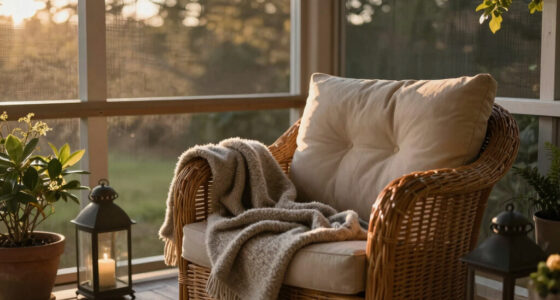
Layer your space with cushions, throws, and lanterns to add texture and warmth. Picture a plaid throw draped over a rocking chair, with a patterned rug anchoring the scene—instant country charm.
Choosing the right size and style isn’t just about aesthetics; it influences how inviting your porch feels. A rug that’s too small can make the space look disjointed, while one that’s too large might overpower the area or be difficult to clean. Proper sizing creates a harmonious look that invites relaxation. The color and pattern should complement your overall outdoor decor, reinforcing the cozy, welcoming atmosphere. For example, pairing a textured, patterned rug with soft cushions and warm lighting can transform a simple porch into an intimate retreat. Remember, the goal is to create a layered, inviting space that encourages lingering and socializing, so select styles that resonate with your personal country charm and lifestyle preferences.
Why does this matter? Because visual harmony and comfort are key to making your porch a true extension of your home. An appropriately sized rug with colors and patterns that resonate with your personal style can turn a plain porch into a cozy haven. It’s not just about aesthetics—these choices influence how often you’ll want to spend time outside and how welcoming your space feels to guests. Investing in the right size and style means fewer rearrangements later and a more relaxing atmosphere that encourages you to unwind and enjoy outdoor living to the fullest.
Step-by-Step: How to Safely Place and Care for Your Outdoor Rug
- Measure your porch to find the perfect rug size. Accurate measurements prevent the rug from looking out of scale and ensure a balanced appearance.
- Choose a rug with a non-slip backing or add a non-slip pad underneath. This step is crucial for safety, especially on smooth surfaces, and prevents accidents caused by slipping or bunching.
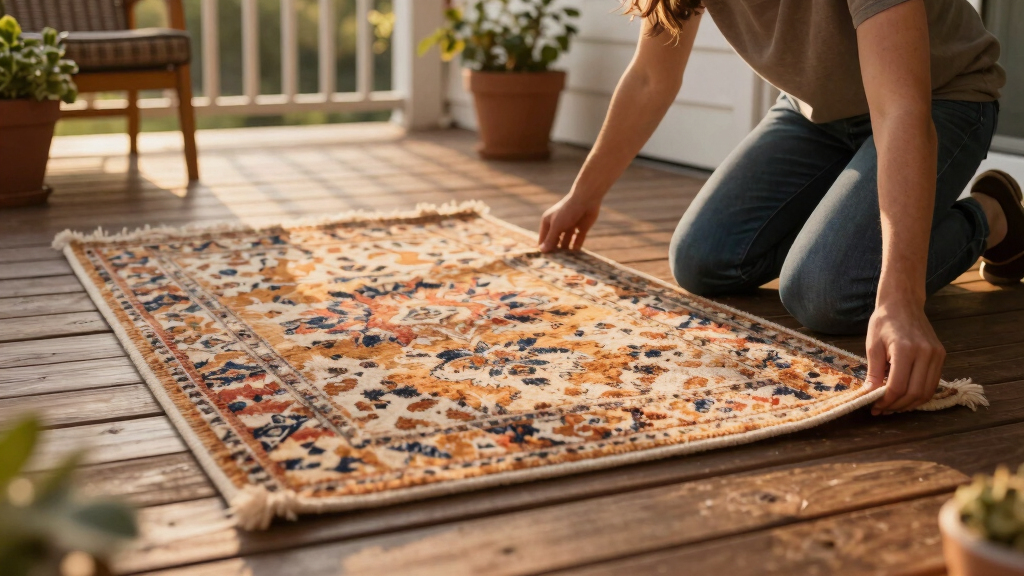
- Lay the rug flat, smoothing out wrinkles or bubbles. Proper placement enhances the aesthetic and prevents tripping hazards.
- Secure the edges if needed with outdoor-safe tape or weights. This helps maintain the rug’s position in windy conditions or during heavy foot traffic.
- Regularly vacuum or shake out dirt, and hose down when dirty. Consistent cleaning prevents the buildup of debris that can degrade the fibers and affect appearance.
- Allow it to dry completely to prevent mildew. Moisture trapped under or within the rug can lead to mold growth, which damages the material and creates health concerns.
Why is this important? Proper placement and maintenance extend the life of your rug and keep your outdoor space safe and inviting. A rug that shifts or develops mold can become a hazard or an eyesore, discouraging use and reducing the comfort of your porch. Investing time in these steps ensures your outdoor area remains a cozy, safe retreat that welcomes family and friends alike, and prevents costly replacements or repairs down the line.
Latest Trends: Eco-Friendly and Stylish Outdoor Rugs
More homeowners are choosing sustainable options. Rugs made from recycled plastics, jute, or bamboo are both eco-friendly and durable. Textured weaves and bold patterns are also gaining popularity, adding visual interest without sacrificing practicality.
Hybrid materials combining natural fibers with synthetic ones give you the best of both worlds—long-lasting, soft, and eco-conscious. Modular or custom-sized rugs let you tailor your porch to your exact space, making it uniquely yours.
And yes, many of these rugs are designed for easy cleaning—stain-resistant and quick-drying, perfect for country living with a modern twist.
Choosing eco-friendly materials often involves tradeoffs. Natural fibers like jute are biodegradable and renewable but may be less resistant to moisture and wear, requiring more frequent replacement. Synthetic blends, on the other hand, excel in durability and ease of maintenance but may raise concerns about environmental impact. The key is balancing sustainability with practicality—selecting options that align with your values while still meeting your lifestyle needs. Innovations in textile technology are continually improving the eco-friendliness of synthetic options, offering you stylish, sustainable choices that withstand outdoor conditions while reducing your environmental footprint.
Key Facts You Need to Know Before Buying
A good outdoor rug can boost your porch’s charm and comfort significantly. Choosing weather-resistant materials extends its lifespan by up to 50%, according to Huckfarm. Regular cleaning keeps it looking fresh, and measuring carefully ensures a perfect fit.
Investing in quality now saves money later—cheaper rugs often wear out fast. Remember, your outdoor space should feel like an extension of your home, warm and inviting.
Your Top Questions About Outdoor Rugs Answered
What is the best type of rug for a covered porch? Outdoor rugs made from polypropylene, natural fibers like jute, or synthetic blends are best for weather resistance and durability.
How do I keep my outdoor rug clean? Regular vacuuming, spot cleaning with mild soap, and hose-downs are simple ways to maintain its look.
Can I use a regular indoor rug outside? Usually not—indoor rugs aren’t built to handle moisture, sun, or dirt and will wear out faster.
How do I prevent slipping? Use a non-slip outdoor rug pad or choose rugs with a built-in grip backing.
What size should I pick? Measure your porch, leaving a border of 12-18 inches for a balanced look.
Are eco-friendly options available? Yes, many brands now offer sustainable outdoor rugs made from recycled or natural fibers.
How can a rug make my porch feel cozier? Pair it with cushions, throws, and warm lighting for a country-cozy vibe.
Frequently Asked Questions
What is the best material for a porch rug?
Weather-resistant materials like polypropylene, outdoor wool, or synthetic blends stand up to moisture, sun, and foot traffic, making them ideal choices for covered porches.How often should I clean my outdoor rug?
Vacuum weekly, spot clean as needed, and hose down the entire rug every few months to keep it looking fresh and free of dirt and debris.Can I put any rug outside?
No, indoor-only rugs are not designed for outdoor conditions. They tend to wear quickly and can be damaged by moisture and sunlight.How do I keep my outdoor rug from slipping?
Use a non-slip outdoor rug pad or opt for rugs with a built-in grip backing to prevent accidents on your porch.What size is best for my porch?
Measure your space carefully, leaving a border of about 12-18 inches around the edges to create a balanced, inviting look.Conclusion
Adding a cozy rug to your covered porch isn’t just about looks—it’s about creating a space where you feel truly at home. With the right choice, your porch becomes a warm, inviting escape, no matter the weather or season.
Remember, a well-chosen outdoor rug can last for years if you care for it properly. So, gather your measurements, pick a style that speaks to your country soul, and make your porch the heart of your home’s outdoor living.