TL;DR

Turn quiet afternoons into listening time
- Thousands of audiobooks, podcasts and originals
- Listen on your phone, tablet or Echo — also offline
- Cancel anytime
The best mulch for keeping weeds down and backs happy combines effective weed suppression with easy application. Organic mulches like bark chips or straw work well, especially when used with weed barriers. Proper depth and materials can reduce bending and strain, making gardening safer and more enjoyable.
Ever tried to tame a garden bed and found yourself bending, stretching, and battling weeds? You’re not alone. The right mulch can turn this chore into a peaceful, satisfying part of your day.
In this guide, you’ll learn which mulches do the best job at keeping weeds at bay—without putting your back out. Plus, tips on choosing options that are safe, easy, and beautiful for your country garden.
A 2-4 inch layer of organic mulch like bark or straw effectively reduces weeds by up to 90%.
Lightweight mulches and proper application techniques can significantly cut back on bending and back strain.
Eco-friendly mulches, such as shredded leaves and biodegradable fabrics, are safe, sustainable options for senior gardeners.
Regular topping up and use of borders help mulch stay effective and in place through changing weather.
Combining mulch with weed barriers provides the best long-term weed suppression with less physical effort.
The Best Mulch for Keeping Weeds Down and Backs Happy
TL;DR: The best mulch combines strong weed suppression with easy application. A 2-4 inch layer of organic bark, wood chips, straw, or shredded leaves can protect soil, cut back on bending, and make garden care feel less like a wrestling match.
Good mulch is gentle armor: fewer weeds, healthier soil, happier backs.
Pick mulch by weed control, weight, and soil benefit.
Organic mulches improve soil as they break down. Inorganic mulches last longer, but they do not feed the garden. The best choice is the one that keeps weeds down without making maintenance physically punishing.
Wood chips and bark
Very effective weed suppression, especially with a barrier beneath. Lasts around 3-4 years and stays light enough for careful spreading.
Straw
Easy to carry and spread around vegetables and borders. It decomposes in 6-12 months, so plan on regular top-ups.
Shredded leaves
Free, natural, and soil-building when available. Best weed control comes when leaves are shredded and paired with edging or fabric.
The right layer does most of the work.
Weeds need light. Mulch blocks it. The trick is applying enough material to form a barrier without burying crowns, stems, or young seedlings.
Depth spectrum
Less than 2 inches lets weeds sneak through. More than 4 inches can trap moisture against stems and make spreading harder on your back.
Weed control score
Which mulch keeps weeds out with the least fuss?
Use this as a practical filter: durability matters, but so do weight, soil health, and how often you are willing to refresh the bed.
| Type of mulch | Weed control | Durability | Ease of use | Soil benefit | Back-friendly? |
|---|---|---|---|---|---|
| Wood chips / bark | ✓ Very effective | 3-4 years | Light, easy to rake | ✓ Adds organic matter | ✓ Strong choice |
| Straw | ✓ Good in beds | 6-12 months | Very light | ✓ Breaks down quickly | ✓ Easiest to spread |
| Composted leaves | ~ Moderate | 1-2 years | Easy if shredded | ✓ Excellent | ✓ Good seasonal option |
| Rubber or gravel | ✓ Excellent | Many years | Low upkeep after install | ✗ Does not feed soil | ~ Heavy to place |
Best for country beds
Bark chips or shredded wood give a tidy look, strong weed control, and slow soil improvement with manageable annual care.
Best for seniors
Choose lighter bags, smaller loads, a scoop, and a rake. Work from the edge inward so your body does less twisting.
Apply mulch in a flow that avoids repeat bending.
A smooth process matters as much as the mulch itself. Prep once, spread evenly, then contain the edges so storms do not undo your work.
Clear first
Pull visible weeds and level loose soil so the mulch layer does not need rework.
Place loads
Use a wheelbarrow or small buckets to stage mulch near the bed.
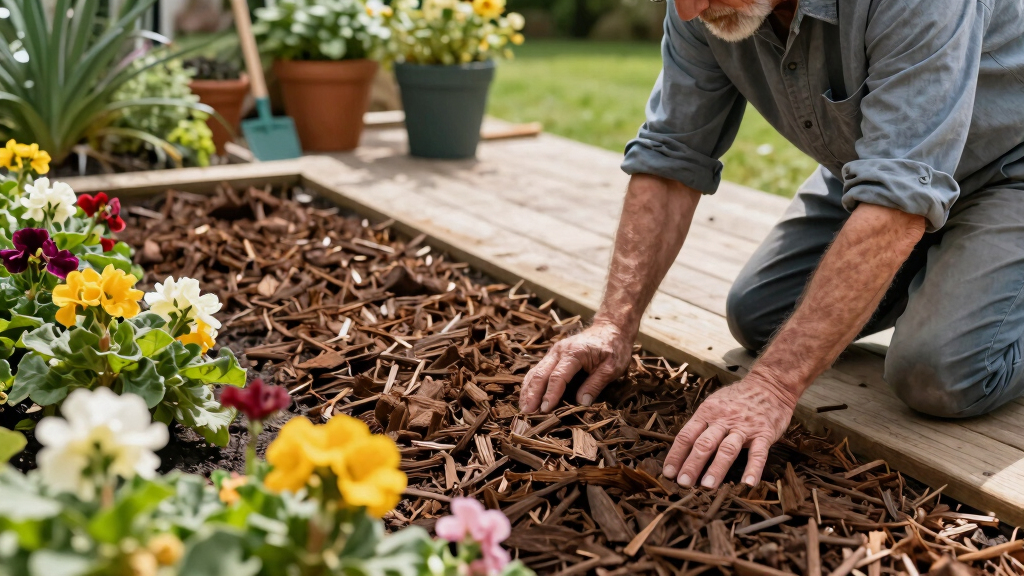
Spread 2-4
Keep the layer even and pull mulch away from stems and trunks.
Rake flat
A long-handled rake smooths the surface without repeated stooping.
Edge beds
Borders keep mulch in place and reduce heavy maintenance later.
How one good mulch layer changes the whole garden.
The most effective setup connects materials, depth, barriers, and maintenance. Each piece lowers weed pressure while reducing the amount of physical effort needed through the season.
Make mulch last longer without extra strain.
Mulch works best as a system. Keep the layer topped up, use borders to stop washout, and combine organic mulch with biodegradable fabric where long-term suppression matters most.
Top up before gaps appear
As organic mulch decomposes, its weed-blocking power fades. A light annual refresh is easier than a full rescue job after weeds take hold.
Use borders and barriers
Edging keeps mulch where it belongs. Weed barriers or biodegradable fabric add longer suppression with less pulling later.
Why the Right Mulch Makes Weeding Easier and Your Back Happy
The right mulch acts like a shield, blocking sunlight and preventing weeds from sprouting. It also keeps soil moist and moderates temperature—great for your plants and easier on your back.
Imagine spreading a layer of bark chips or straw in just 15 minutes. You’ll notice fewer weeds and less bending, making gardening feel more like a relaxing country stroll.
Using mulch at a depth of 2-4 inches is ideal. Too thin, and weeds sneak through; too thick, you risk smothering your plants or making it heavy to spread. Finding this balance ensures you get the benefits without unintended consequences, like suffocating roots or making it difficult to plant new seedlings.
As an affiliate, we earn on qualifying purchases.
Which Mulches Do the Best Job at Keeping Weeds Out?
| Type of Mulch | Weed Control | Durability | Ease of Use |
|---|---|---|---|
| Wood Chips / Bark | Very effective, especially with a weed barrier | Lasts 3-4 years | Easy to spread, lightweight |
| Straw | Good for vegetable beds and flower borders | Decomposes in 6-12 months | Simple to spread, inexpensive |
| Composted Leaves | Moderate, best with a barrier | Lasts 1-2 years | Easy, especially if shredded |
| Inorganic (Rubber, Gravel) | Excellent for weed suppression | Lasts many years | Requires minimal upkeep |
Organic mulches like bark or straw are popular for a reason—they’re natural, improve soil, and are gentle on the back. Inorganic options last longer but don’t feed the soil. Choosing the right type depends on your priorities: if you want a low-maintenance, long-lasting solution, inorganic mulches might suit you better. However, they don’t enrich the soil, so over time, you may need to add compost or fertilizers. Organic mulches decompose gradually, adding valuable organic matter that feeds your plants and improves soil structure—benefits that support a healthy, thriving garden. The tradeoff is that organic mulches may need replacing more often, but they promote a natural ecosystem. Consider your garden’s needs, your physical comfort, and your long-term goals to make the best choice.
As an affiliate, we earn on qualifying purchases.
How to Apply Mulch Without Bending Your Back
- Choose lightweight mulch like shredded bark or straw to make spreading easier and less tiring.
- Clear weeds and loose soil first to ensure a smooth, even surface, reducing the need for rework and minimizing strain.
- Spread your mulch evenly at 2-4 inches deep. Using a wheelbarrow or a scoop allows you to handle the material without heavy lifting or awkward bending, which can cause back pain. Proper depth prevents weeds from emerging and avoids smothering your plants, while also making the process less physically demanding.
- Use a rake or your hands to distribute the mulch, keeping the surface flat and neat. This step helps avoid unnecessary bending and ensures an even layer for maximum effectiveness.
- Edge your beds with simple borders to keep mulch contained, reducing the need for frequent top-ups and preventing heavy lifting during maintenance.
Imagine a sunny afternoon, a gentle breeze, and the satisfying feel of mulch crumbling softly under your hands. That’s gardening made easy—and gentle on your back.
weed barrier fabric for garden beds
As an affiliate, we earn on qualifying purchases.
As an affiliate, we earn on qualifying purchases.
Eco-Friendly Mulch Options That Keep Your Garden Green and Safe
Many gardeners now prefer eco-friendly mulches that are safe for children, pets, and beneficial insects. Recycled wood chips, shredded leaves, straw, and biodegradable fabrics fit the bill.
Using natural materials not only helps the environment but also nurtures your soil as they decompose over time. Plus, these options tend to be lighter and easier to handle.
For example, shredded leaves are free and abundant in fall, making them a perfect, natural mulch that enriches your soil and keeps weeds at bay.
Choosing eco-friendly mulches often involves considering their breakdown rate and how they impact soil health. Natural mulches decompose gradually, adding organic matter that improves soil fertility and structure. This continuous nutrient supply supports healthy plant growth and reduces the need for chemical fertilizers. Additionally, safe mulching materials prevent potential harm to children, pets, and beneficial insects, creating a garden environment that’s both beautiful and sustainable.
As an affiliate, we earn on qualifying purchases.
Tips for Making Your Mulch Last Longer and Work Smarter
- Apply a thick layer of 2-4 inches for best weed suppression. This depth creates a physical barrier that blocks sunlight and prevents weed seeds from germinating, which is the most effective way to keep weeds at bay.
- Top up mulch annually to maintain effectiveness, recognizing that as mulch decomposes, its weed-blocking ability diminishes. Regular replenishment ensures your garden stays protected without the need for extra weeding or chemical controls.
- Use edging or fabric barriers to prevent washout in heavy rain. Proper barriers keep mulch in place, reducing the need for frequent reapplication and preventing physical strain from moving heavy materials back into place.
- Choose lighter, manageable mulches if bending is a concern. Lighter materials require less effort to spread and reduce physical discomfort, making the process safer and more accessible for seniors.
- Combine mulch with weed barriers for enhanced control. While this method can be very effective, it may require occasional adjustment or maintenance to keep the barriers functioning properly, but it significantly reduces the physical effort needed for weed control.
Think of mulch as your garden’s gentle armor—when properly maintained, it keeps weeds out and your back pain-free. Regular inspection and replenishment ensure it continues to perform its role effectively, saving effort and reducing discomfort over time.
Your Garden’s New Best Friend: Mulch That Keeps Weeds and Backs Happy
Picking the right mulch isn’t just about beauty; it’s about making gardening easier and safer. Organic options like bark chips and straw are gentle, effective, and good for your soil.
Apply in a 2-4 inch layer, use lightweight tools, and add a border to keep everything in place. With a little planning, your garden can stay lush, weed-free, and kind to your back.
So, next time you’re out in the sun, spreading mulch, remember: you’re not just gardening. You’re creating a peaceful, manageable retreat that keeps your soil healthy and your back happy.
Frequently Asked Questions
What is the easiest mulch to spread for seniors?
Straw or shredded bark are lightweight and easy to spread with a simple rake or even by hand. They require less bending and lifting, making your gardening safer and more enjoyable.
How often should I replace or top up my mulch?
Most mulches need topping up every 1-3 years, depending on the type and your local climate. Regular replenishing keeps weeds at bay and maintains soil health.
Can mulch really help reduce back pain during gardening?
Absolutely. Using lightweight mulches, spreading them at the right depth, and minimizing bending all help prevent back strain. Plus, fewer weeds mean less digging and pulling.
Are inorganic mulches better for weed control?
Inorganic mulches like rubber or gravel last longer and are excellent at weed suppression but don’t improve soil health. Organic options boost soil over time but may need replacing more often.
What’s the safest mulch for children and pets?
Untreated, natural mulches like straw, shredded leaves, or wood chips are safest. Avoid chemically treated or rubber mulches to keep your loved ones safe.
Conclusion
Choosing the right mulch transforms gardening from a back-breaking chore into a peaceful part of your country life. Focus on lightweight, natural options, and apply at just the right depth. Your garden—and your back—will thank you.
Imagine a sunlit morning, a gentle breeze, and a garden free of weeds. That’s the simple joy of a well-mulched bed, made easy and safe for every gardener’s touch.
Cold & flu season Picks
humidifiers
As an affiliate, we earn on qualifying purchases.