TL;DR

Turn quiet afternoons into listening time
- Thousands of audiobooks, podcasts and originals
- Listen on your phone, tablet or Echo — also offline
- Cancel anytime
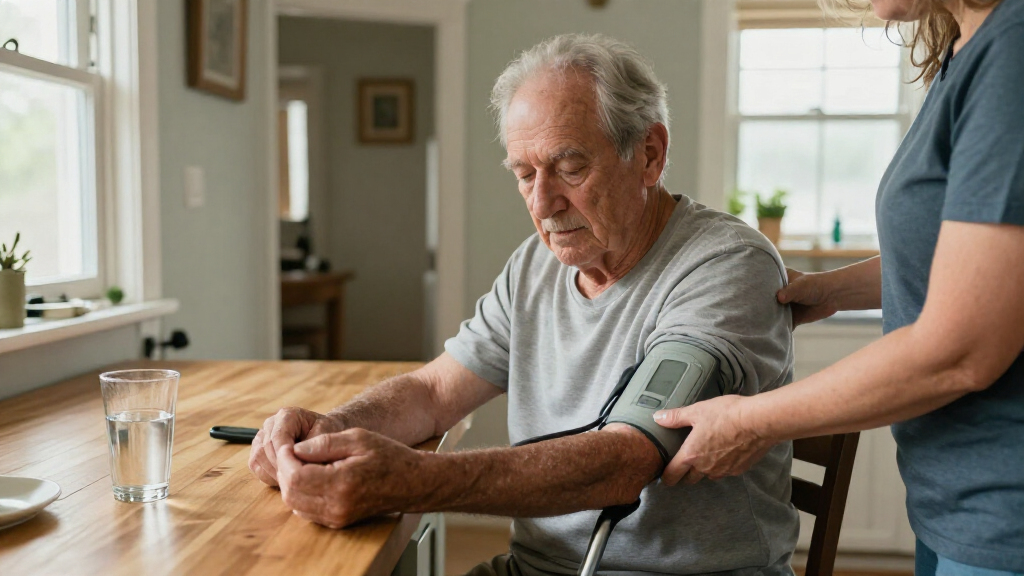
A preliminary study presented at the American Heart Association’s 2026 Hypertension Scientific Sessions found that adults older than 78 with masked high blood pressure had a 70% higher rate of falls than peers whose readings were high both at home and in a medical office. The findings suggest home readings can reveal information missed by office checks, but the study does not establish that masked hypertension caused the falls.
A preliminary study of 758 adults older than 78 found that people with masked high blood pressure—normal readings in a medical office but high readings at home—had a 70% higher rate of falls than peers whose blood pressure was high in both settings. The research, presented at the American Heart Association’s Hypertension Scientific Sessions 2026, points to home measurements as a possible way to identify risk that office checks alone may miss; it does not show that the blood pressure pattern caused falls.
Researchers classified participants by comparing blood pressure measured in medical and home settings. The groups included 34.5% with sustained high blood pressure, meaning readings were high in both settings; 17% with white coat high blood pressure, which was high in the office but not at home; 15.4% with masked high blood pressure; and 33.2% with normal readings in both settings.
Over a median follow-up of 350 days, 23.4% of participants reported having fallen at least once during the previous 12 months. The report says the masked high blood pressure group had a 70% higher rate of falls than the group with sustained high blood pressure. It also reports that, when office and home readings were analyzed as continuous measures, lower office blood pressure relative to home blood pressure was associated with a higher incidence of falls.
The results were presented as preliminary research at the meeting in Arlington, Virginia, held Oct. 7–11. The source report does not provide a published journal paper or enough study-design detail to assess all possible explanations for the association. Fall history was self-reported, and the reported follow-up period was a median of 350 days.
Why Home Readings May Matter
The result matters because an office measurement may not capture a person’s usual blood pressure. If readings are high at home but not during a clinic visit, clinicians and patients could miss a pattern relevant to care. The study suggests that comparing readings across settings may provide additional information for assessing older adults, rather than relying on office readings alone.
Falls can have serious consequences for older people. The U.S. Centers for Disease Control and Prevention identifies falls as the leading cause of disability and functional decline among adults 65 and older. The study’s presenting author, Frances Wang, said home readings may help identify hidden high blood pressure and potential fall risk. The findings do not establish that treating masked high blood pressure would prevent falls, or that the blood pressure pattern itself explains why participants fell.
The report also complicates a familiar focus on low blood pressure as a fall concern. It cites emerging evidence linking high blood pressure at home with more falls in older adults. That makes accurate measurement across settings potentially useful, while leaving clinicians to interpret readings alongside a person’s broader health and fall history.
home blood pressure monitor for seniors
As an affiliate, we earn on qualifying purchases.
As an affiliate, we earn on qualifying purchases.
Office and Home Readings Differ
Masked high blood pressure describes a pattern in which blood pressure appears normal in the office but is high outside it, such as at home. White coat high blood pressure is the reverse pattern: readings are high in the office but not at home. Sustained high blood pressure means readings are elevated in both settings. These categories explain why a single clinic measurement may not reflect every person’s readings in daily life.
The American Heart Association’s 2025 joint guideline recommends annual blood pressure monitoring for all adults. It recommends home monitoring to help confirm an office diagnosis of high blood pressure and to track readings and progress as part of an integrated care plan. The guideline’s recommendations provide context for the new findings, but do not mean this study proves home monitoring prevents falls.
“These findings highlight that, in addition to office blood pressure measurement, home blood pressure readings can be an important way to identify hidden high blood pressure at home and risk of falls in older adults.”
— Frances Wang, Ph.D., M.S., study presenting author and researcher at Beth Israel Deaconess Medical Center
automatic blood pressure cuff for elderly
As an affiliate, we earn on qualifying purchases.
As an affiliate, we earn on qualifying purchases.
What the Study Cannot Establish
The findings show an association, not cause and effect. The study does not explain why the masked high blood pressure group had a higher fall rate, whether blood pressure variability played a role, or whether other differences between participants contributed. Watson said the reason remains unknown and described blood pressure regulation as a possible area to investigate.
The source report does not give the number of falls in each blood pressure group, confidence intervals, or a detailed account of how researchers accounted for other fall risks. It also does not report whether participants’ blood pressure treatment changed during follow-up. Because the findings are preliminary and falls were self-reported, the size and reliability of the relationship require further assessment.
The reported 70% comparison is specifically between older adults with masked high blood pressure and those with high readings in both the office and at home. It should not be read as a comparison with every participant or as a prediction of an individual’s chance of falling.
As an affiliate, we earn on qualifying purchases.
Further Research and Clinical Review
The research was presented at the American Heart Association’s scientific meeting; the supplied report does not state when a full peer-reviewed paper or additional analysis will be available. Further studies could examine whether the association holds in other groups, how blood pressure patterns relate to fall timing, and whether accounting for other health factors changes the result.
For now, the American Heart Association guideline supports home blood pressure monitoring as part of care to confirm and track high blood pressure. Wang encouraged older adults, family members and caregivers to share home readings with a health care team. The study does not offer a treatment recommendation for preventing falls. Decisions about blood pressure measurement and care should be discussed with a qualified health professional.
fall prevention assistive devices for seniors
As an affiliate, we earn on qualifying purchases.
As an affiliate, we earn on qualifying purchases.
Key Questions
What does masked high blood pressure mean?
It means blood pressure is normal in a medical office but high at home. The study compared readings from both settings to group participants.
How much higher was the fall rate?
The masked high blood pressure group had a 70% higher rate of falls than participants with high readings in both the office and at home. This is a group comparison from preliminary research, not an estimate of any one person’s risk.
Did the study prove that high blood pressure causes falls?
No. The research found an association and did not establish why the fall rate was higher or whether the blood pressure pattern caused the falls.
What did the study report about falls overall?
During a median follow-up of 350 days, 23.4% of the 758 participants reported at least one fall during the previous 12 months. The study report says fall history was self-reported.
What should older adults do with home blood pressure readings?
The American Heart Association recommends home monitoring as part of care to help confirm an office diagnosis and track blood pressure. Wang advised sharing readings with a health care team; people should discuss their own care with a qualified health professional.
Source: rss
Halloween Picks
halloween
As an affiliate, we earn on qualifying purchases.