
TL;DR

Turn quiet afternoons into listening time
- Thousands of audiobooks, podcasts and originals
- Listen on your phone, tablet or Echo — also offline
- Cancel anytime
A University at Buffalo randomized study found that food-insecure adults over 65 used produce in home-delivery programs more often than participants given vouchers for a market. Redemption—defined by the researchers as preparing and consuming the produce—was 89.2% in both delivery groups and 28.3% in the market-voucher group.
A 12-week randomized study of 67 food-insecure adults, mostly over age 65, found that participants used produce more often when food prescriptions were delivered to their homes than when they received vouchers to collect food at a market. Researchers at the University at Buffalo reported redemption of 89.2% in both delivery groups, compared with 28.3% in the voucher group, suggesting that removing the trip to a market may help address a major barrier to food access.
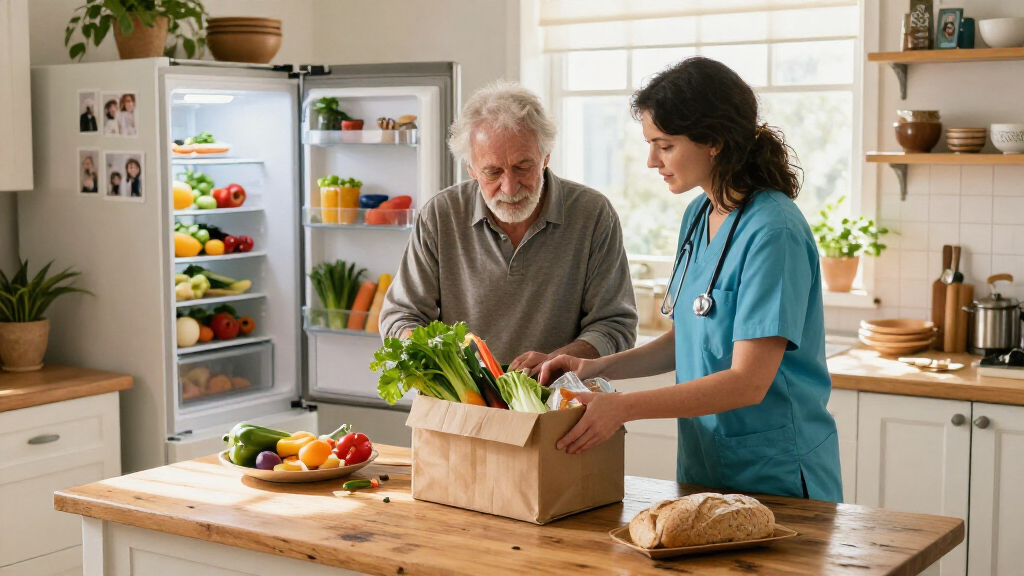
The study compared three approaches: weekly boxes of fresh produce delivered to the home, home-delivered meal kits containing produce and ingredients for three meals, and vouchers redeemable at a mobile market or participating food markets in Buffalo. Each group included about one-third of the participants. People receiving produce boxes could customize their selections, while meal-kit participants chose from five or six options each week.
Researchers defined redemption as preparing and consuming the delivered produce. By that measure, both home-delivery groups reached 89.2%; the market-voucher group reached 28.3%. The meal kits did not produce higher use than produce boxes alone. According to study author Lucia A. Leone, the additional meal-kit components may not have changed how participants used the produce, while the larger quantity of food helped improve food security.
The study also recorded favorable participant ratings: people in both delivery groups scored the program above 9 out of 10 and said they would recommend it. Leone said some deliveries went unused when participants were away or already had enough food on hand. The findings were published in Frontiers in Public Health in 2026.
Delivery Removes Market Barriers
The results point to a practical design issue for food prescriptions: offering assistance may not be enough if recipients must travel to collect it. Leone told Medical Xpress that transportation needs and concern about being seen seeking help at a food pantry can discourage people from redeeming vouchers. Bringing food to the home may reduce those obstacles for older adults who have limited transport or feel uncomfortable visiting a distribution site.
Low redemption can limit the reach of programs intended to improve access to fresh food. In this study, the difference between delivery and vouchers was large, but it should be read within the study’s setting and sample: 67 participants recruited from primary care clinics in one area. The finding does not establish that every delivery program will achieve similar use or health outcomes. The study measured food use and program experience, not whether participants’ health improved.
Program design also matters beyond the delivery method. Participants could select or customize food, and researchers noted positive responses to the driver who made deliveries. Leone said a consistent, personable contact may help participants engage with a program. Large-scale programs, including those tied to Medicaid, may find it harder to offer the same degree of customization.
As an affiliate, we earn on qualifying purchases.
How the Buffalo Trial Worked
The trial recruited 67 adults from primary care clinics at Erie County Medical Center in Buffalo. Participants had reported experiencing food insecurity at times; most were African American and over 65. They were assigned to one of two home-delivery approaches or the standard-of-care voucher approach for 12 weeks.
The voucher group could use its food prescriptions at the ECMC mobile market or at FeedMore Western New York markets. The delivery groups received food without needing to travel to redeem a voucher. The study was conducted with FreshFix, a local food delivery company. Its authors described delivery as the default, while participants could customize orders if they wished. The paper, by Lucia A. Leone and colleagues, is titled “A randomized controlled study comparing three food prescription programs for older adults: program design, implementation, and utilization.”
“The problem historically with food prescription programs is that people get the vouchers but don’t redeem them.”
— Lucia A. Leone, corresponding author and associate professor at the University at Buffalo, speaking to Medical Xpress
fresh fruit and vegetable meal kit
As an affiliate, we earn on qualifying purchases.
As an affiliate, we earn on qualifying purchases.
Limits of the Findings
The study involved 67 participants in Buffalo and lasted 12 weeks, so it is not clear whether the same redemption rates would hold in other communities, with larger programs, or over a longer period. The source report does not give detailed results on longer-term health outcomes or specify whether delivery changed participants’ health beyond food security.
It is also unclear which parts of the delivery model contributed most to higher use. Home delivery, the option to customize food, the relationship with a regular driver, or other features may have played a role. The study found no added produce-use benefit from meal kits compared with produce boxes, but it does not establish why that was the case or whether other groups would respond differently.
As an affiliate, we earn on qualifying purchases.
Researchers Plan a Family Trial
Leone and colleagues plan a similar study with families experiencing food insecurity who receive Medicaid and have children ages 2 to 6. The research is to be conducted with local pediatric practices. The population presents different program-design challenges from the older adults in the Buffalo trial, and the new study may test whether delivery and food-program features work similarly for families with young children.
Until further results are available, the current findings support home delivery as a promising way to improve food-prescription use among the older adults studied, rather than as proof that one model will work for every population or program.
As an affiliate, we earn on qualifying purchases.
Key Questions
What did the food-prescription study find?
In a 12-week randomized study, produce redemption—defined as preparing and consuming the food—was 89.2% in both home-delivery groups and 28.3% in the group given market vouchers.
Did meal kits lead to more produce use than produce boxes?
No. The study reported the same redemption rate, 89.2%, for meal kits and produce boxes. The researchers said the kits did not appear to increase produce use in this group.
Who took part in the study?
The study included 67 adults recruited through primary care clinics at Erie County Medical Center in Buffalo. Participants had experienced food insecurity at times; most were African American and over 65.
Does the study prove that food delivery improves health?
No. It found higher produce use in the delivery groups and reported program ratings, but the source does not establish longer-term health effects or show that the results apply to all food-insecure populations.
What research is planned next?
The University at Buffalo researchers plan to study a similar program with Medicaid families experiencing food insecurity and children ages 2 to 6, in partnership with local pediatric practices.
Source: rss
Cold & flu season Picks
humidifiers
As an affiliate, we earn on qualifying purchases.